 THE PERANAKAN
Baba Bryan Tan recounts the highlights of TPAS’ exchanges with the PPCM and PPBNM over Chinese New Year 2026.
A journey to the heartland of Peranakan heritage
Melaka holds a singular place in the Peranakan story. It was here that the earliest waves of Chinese settlers took root, intermarried with local communities, and gave rise to the vibrant, syncretic culture that we in Singapore continue to celebrate today. It was with this spirit of shared heritage and kinship that the General Committee members of The Peranakan Association Singapore (TPAS) made a meaningful visit across the Causeway, calling on two of Melaka’s most distinguished Peranakan organisations.
Our President, Nyonya Genevieve Peggy Jeffs, led the delegation on what proved to be a deeply enriching day of cultural exchange, fellowship, and the forging of stronger ties between our associations — ties as intricate and enduring as the beadwork on a well-loved kasut manek.
First Stop: Persatuan Peranakan Cina Melaka (PPCM)

Persatuan Peranakan Cina Melaka (PPCM) 149, Jalan Tun Tan Cheng Lock (Heeren Street), 75200 Melaka, Malaysia
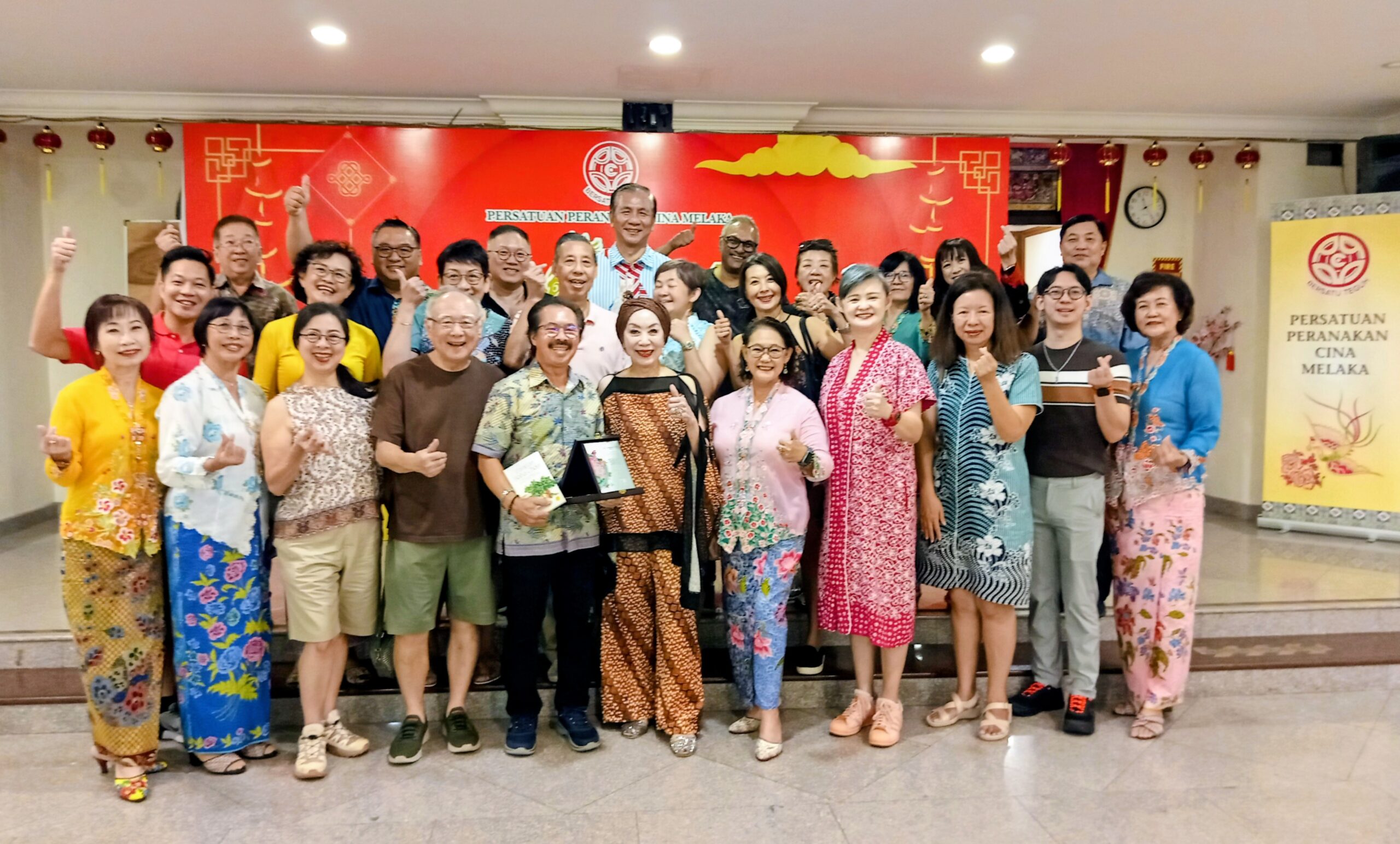
Founded in 1900, PPCM is the oldest Peranakan association in Malaysia — a distinction that was palpable the moment our committee stepped through its doors. The premises comprise two beautifully adjoining preserved pre-war Peranakan houses, with a characteristic front hall typical of the era. Situated on the storied Heeren Street, the clubhouse sits in what is considered the Peranakan core area of Melaka and continues to serve as a focal point for the congregation of the Peranakan community in this historic city.
The TPAS General Committee was warmly welcomed by the PPCM President Peter Ong, who graciously led us on a comprehensive tour of the clubhouse. The ground floor opens into a grand front hall adorned with ancestral portraits, antique furniture, and the distinctive Peranakan porcelain that speaks to the community’s love of colour and craftsmanship. Every corner tells a story — of families, of rituals, of the people who made Heeren Street their world.
The Manek Manek Room
A highlight of the tour was the Manek Manek Room on the second floor — a dedicated space celebrating one of the most iconic and painstaking Peranakan crafts. Manek manek, the art of beadwork, is central to Peranakan material culture. Peranakan beaded slippers, known as kasut manek, were handmade with much skill and patience: strung, beaded and sewn onto canvas with tiny, faceted glass cut beads, with traditional designs featuring European floral subjects with colours influenced by Peranakan porcelain and batik sarongs.
The room is a treasure trove of:
- Completed kasut manek and beaded accessories
- Beading frames, tools, and materials that illustrate the painstaking craft process
- Archival photographs and displays documenting the tradition across generations
- Finished works ranging from slippers to decorative panels, each a testament to the extraordinary patience and artistry of Nyonya craftswomen
The Manek Manek Room is both a living archive and an inspiration — a reminder of what it means to keep a culture alive through the dedication of one’s hands.
A Scrumptious Nyonya Feast and Exchange of Gifts
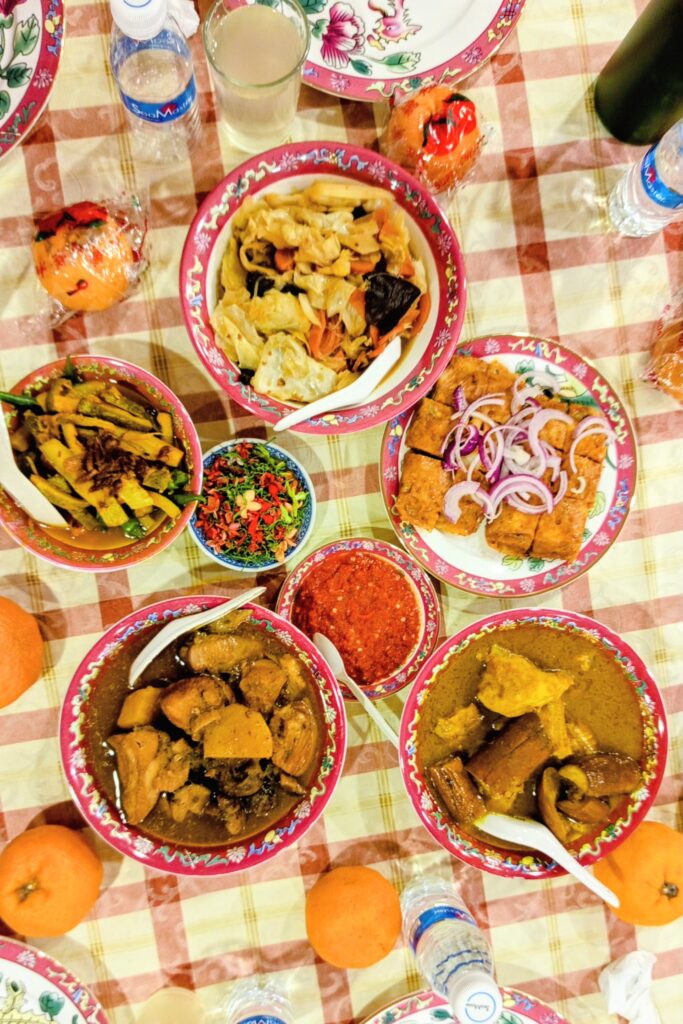
After the tour, the PPCM committee honoured us with something that warmed every heart at the table: a scrumptious home-cooked Peranakan meal, lovingly prepared and served with the generous hospitality that is so characteristic of our Melakan cousins. Dishes steeped in the rich, complex flavours of Nyonya cooking — aromatic, spiced, and deeply soulful — reminded us why Peranakan cuisine is considered among the most distinctive in all of Southeast Asia.
Left: The scrumptious lunch served by the PPCM
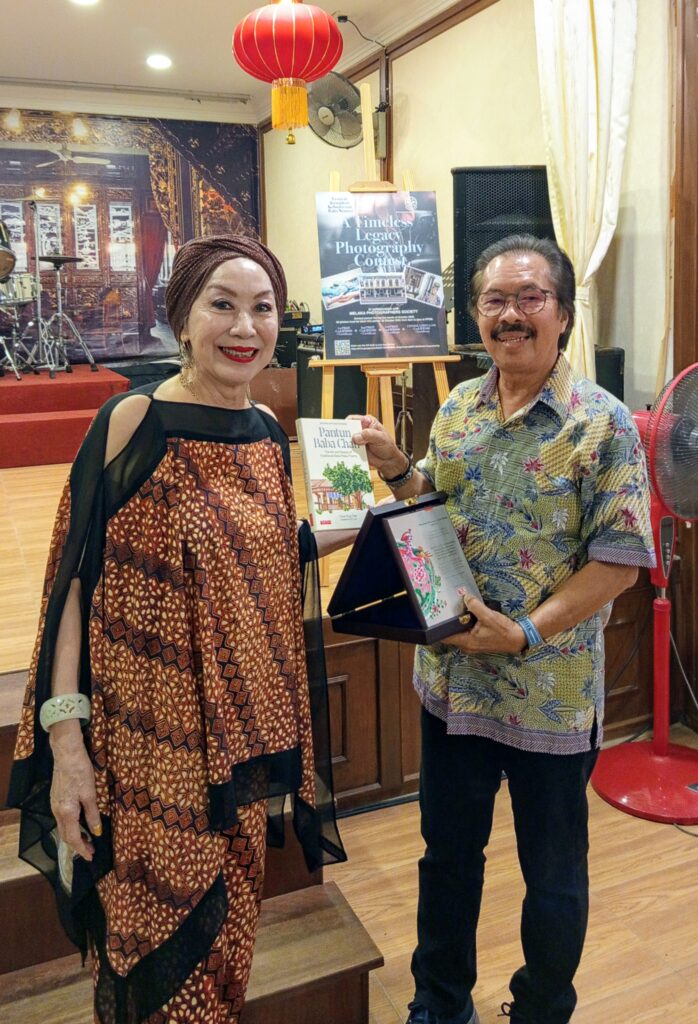
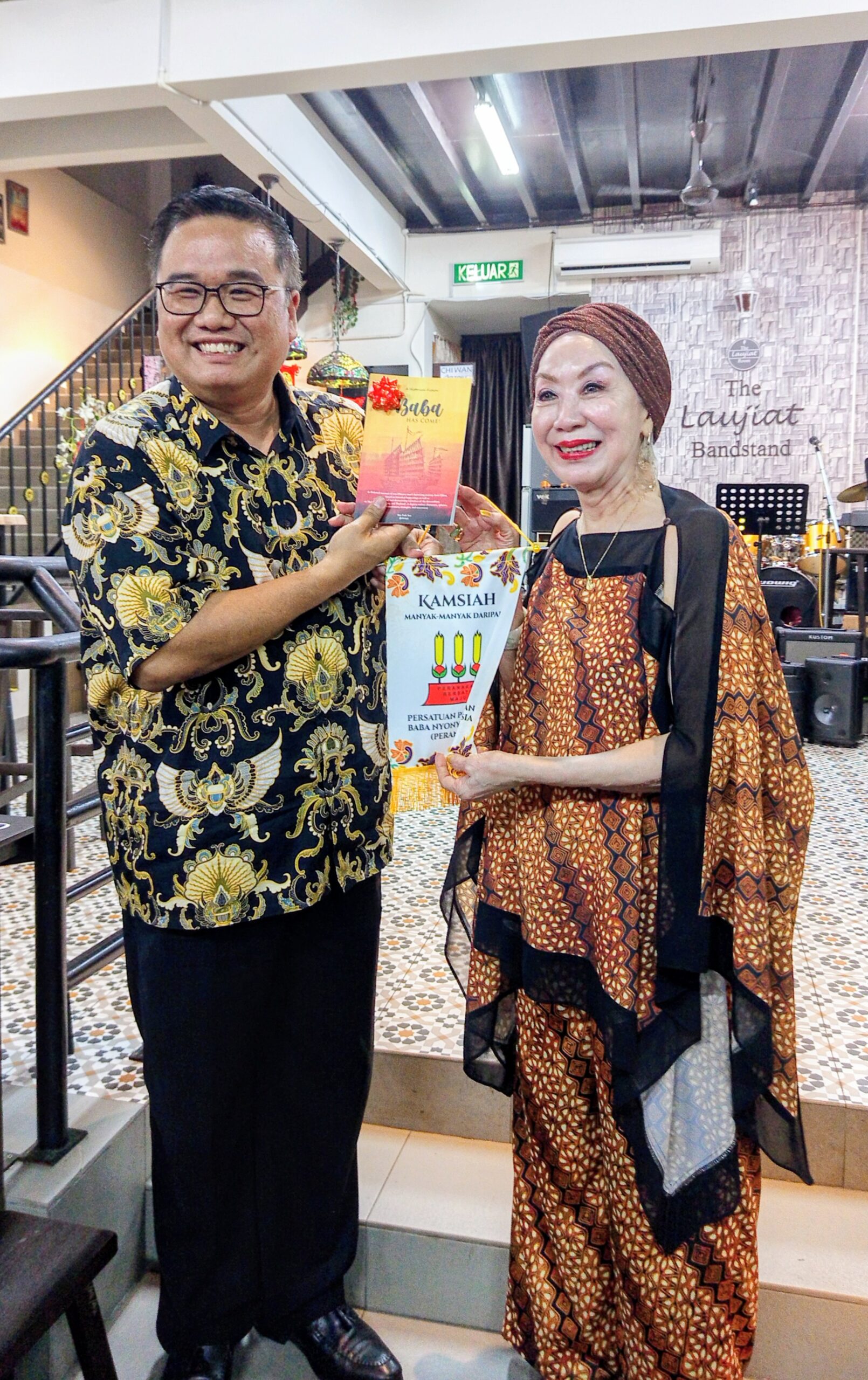
In a moment that marked the spirit of the day, our President Nyonya Genevieve Peggy Jeffs presented the PPCM President Baba Peter Ong with a plaque of recognition and collaboration on behalf of TPAS — a symbolic gesture of the enduring bonds between our two associations. Both committees then gathered for joint association photographs, a visual record of the friendship between two communities that share the same roots.
Right: PPCM President Peter Ong exchanges gifts with TPAS President Genevieve Peggy Jeffs
Second Stop: Persatuan Peranakan Baba Nyonya Malaysia (PPBNM)
Persatuan Peranakan Baba Nyonya Malaysia (PPBNM) Wisma Peranakan, 243 Jalan Tengkera, 75200 Melaka, Malaysia
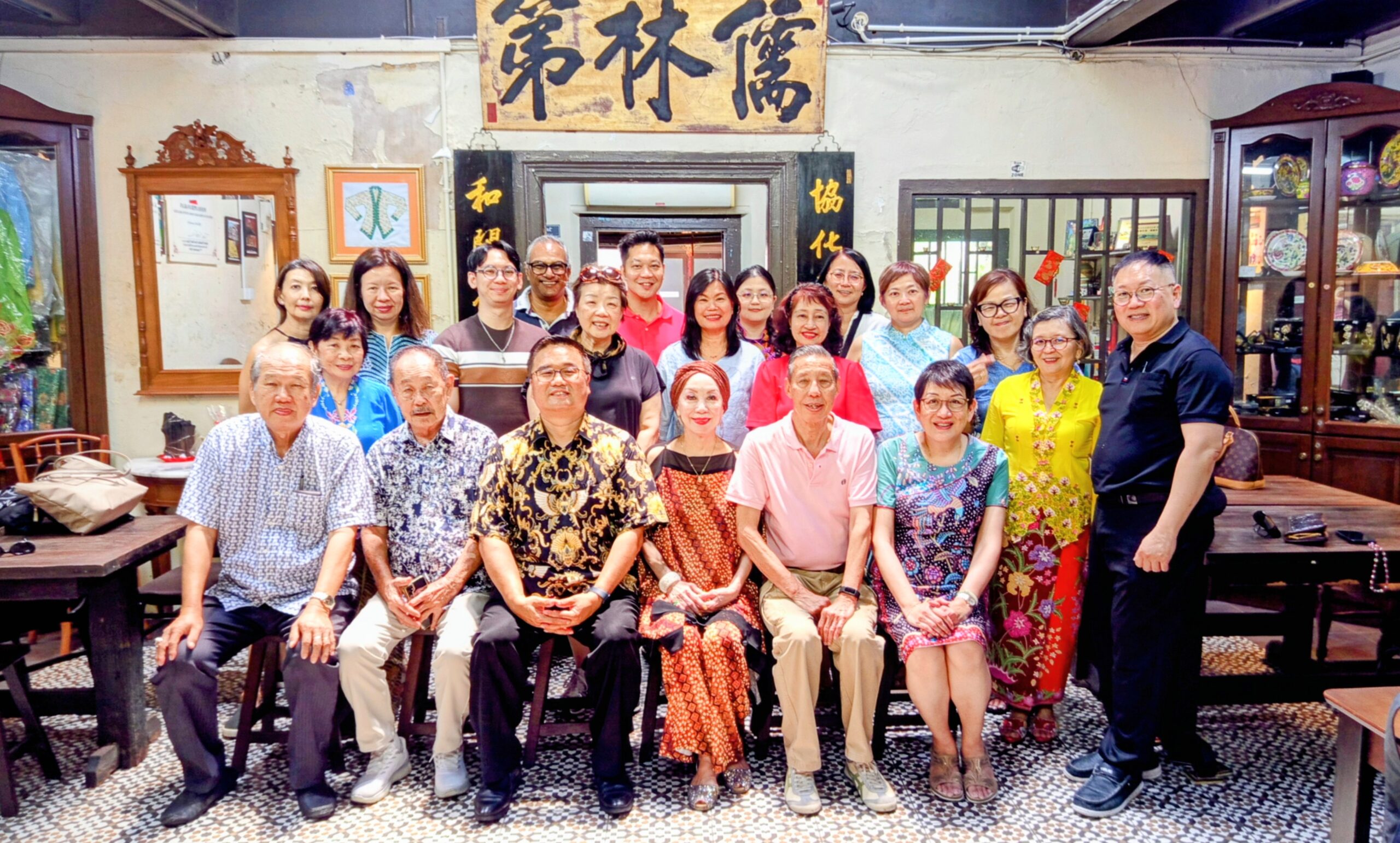
Our second visit took us to Wisma Peranakan on Jalan Tengkera — the home of the Persatuan Peranakan Baba Nyonya Malaysia (PPBNM). Founded in 1986, the association was established with the objective of preserving and promoting the arts and culture of the Malaysian Peranakan Chinese community, encompassing language, costumes, food, drama, music and recreation. Today, PPBNM has more than 3,000 members across seven states in Malaysia, making it one of the most active Peranakan associations in the region.
We were hosted with great warmth by the PPBNM committee and their President, Datuk Ronald Gan, a tireless advocate for the Baba Nyonya community who has championed the Wang Kang ceremony — a shared intangible cultural heritage of Malaysia and China — and has worked to promote Peranakan culture on the international stage.
Addresses from Both Presidents
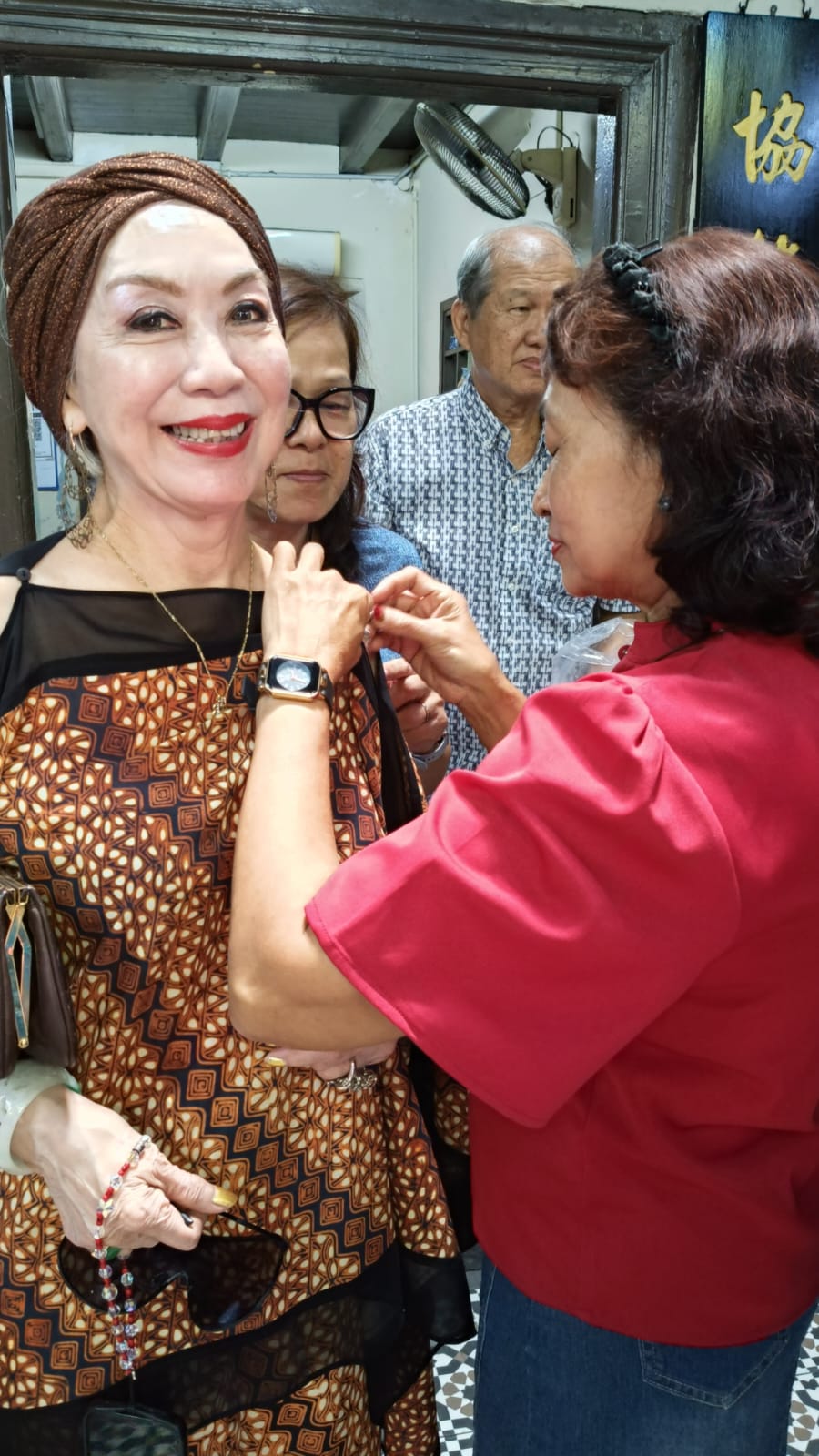
Right: TPAS President Genevieve Peggy Jeffs receives a pin from members of the PPBNM
With both General Committees assembled, Datuk Ronald Gan and Nyonya Genevieve Peggy Jeffs each delivered heartfelt addresses that spoke to the past and future of Peranakan culture. They reflected on the community’s remarkable journey — from its origins in the Straits Settlements to its present-day challenges of cultural preservation in a rapidly changing world. The addresses were a stirring reminder that our work as association leaders is not merely administrative; it is the work of cultural stewardship, carried forward from one generation to the next.
The Laujiat Room: Where Music Lives
One of the most delightful surprises of the Wisma Peranakan tour was the Laujiat Room — a social and musical space that perfectly embodies the convivial, community-centred spirit of the Peranakan way of life. The Laujiat Room is where the Baba Nyonya community gathers to celebrate their shared identity and heritage.
The room houses an array of musical instruments laid out and ready for use. Members are welcome to drop in, pick up an instrument, and simply enjoy themselves — particularly during the association’s vibrant social nights. It is the kind of space that speaks volumes about what a Peranakan association should be: not merely a heritage organisation, but a living, breathing community hub where culture is played, sung, and danced into the present.
A Parting Gift: The PPBN Store
Before we bid farewell to Wisma Peranakan, members had the pleasure of browsing the association’s in-house store — a small but well-curated shop offering Peranakan books, gifts, and cultural paraphernalia. From publications on Baba Nyonya history and language to keepsakes and souvenirs, the store offered an opportunity to bring a little piece of Melaka home.
Closing Reflections
The TPAS delegation’s visits reaffirmed that the Peranakan story is one story — told in different accents, served with different recipes, but rooted in the same extraordinary heritage that has shaped our communities across generations. TPAS extends its deepest gratitude to the Presidents and committees of both PPCM and PPBNM for their extraordinary generosity, warmth, and hospitality. We look forward to continuing this conversation — and to many more shared chapters ahead.
***
Please click here to read Baba Emeric Lau’s article on our activity-filled time in Melaka.