 THE PERANAKAN
Nyonya Eunice Yap attends Housing Ancestral Altars – a talk by Peter Lee held at the ACM.
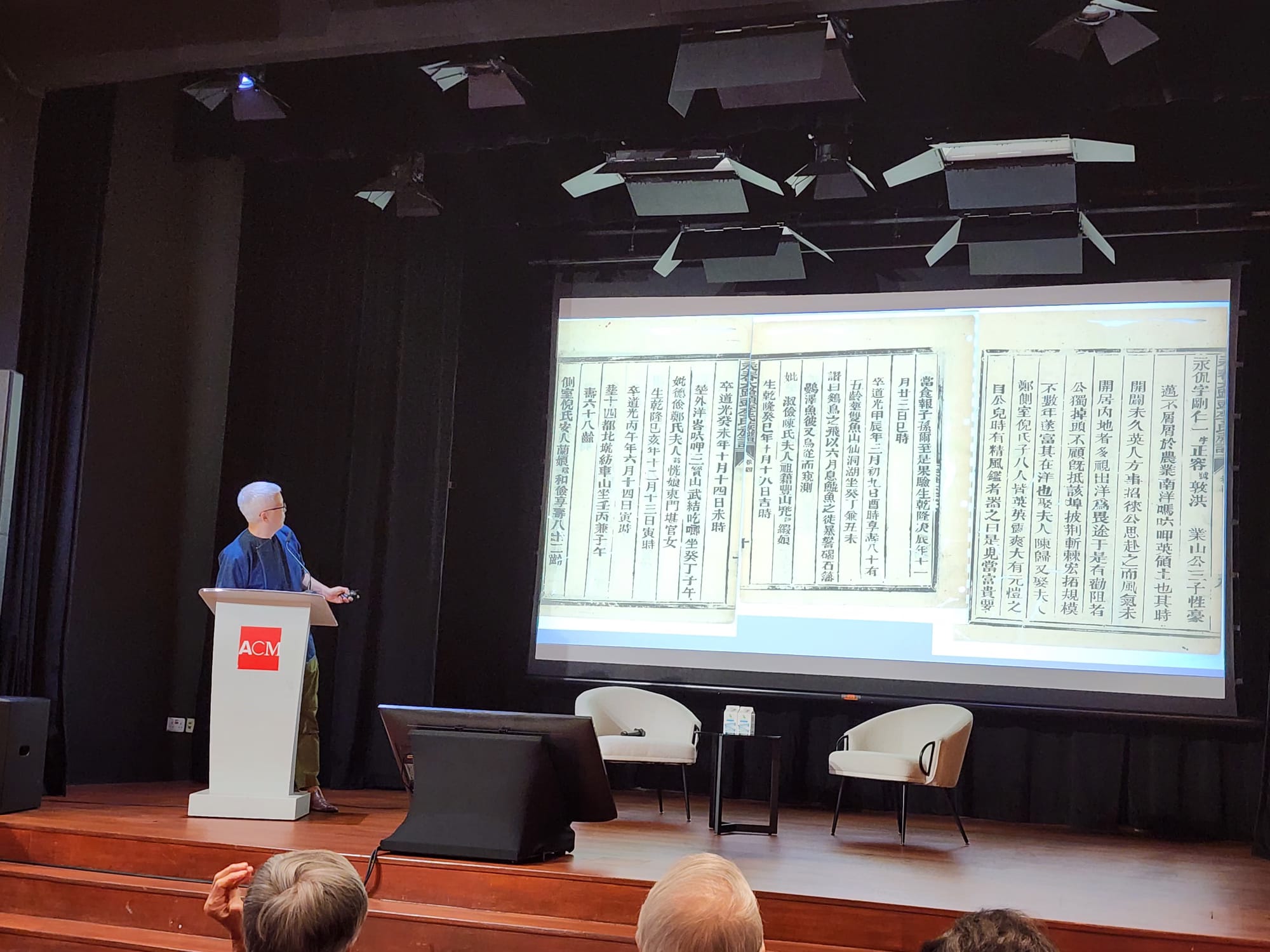
Peter Lee shared the origins of ancestral altars and how these were adapted and improvised throughout Southeast Asia to reveal that our Peranakan culture is dynamic, modern and flexible. What resonated with this writer most is when he said that history cannot be seen through the rule book – people usually don’t comply and we should celebrate how Peranakans have “misbehaved” throughout!
What was interesting was the detailed Cult (an audience member recommended the word “Veneration” instead) of Ancestors, from funerals to ancestral grounds, and from death anniversaries to kinship, all built on the Confucius foundation of xiao (孝or hao in Hokkien). From a humanistic point of view, this is a form of remembrance rather than prayers.
The evolution of ancestral ritual was even more insightful. Peter shared that the first tombstone was found in Brunei in 1264 and photos were taken during a funeral in Batavia (Batavia was the headquarters of the Dutch East India Company and as such, it was the most powerful center of trade and power in Southeast Asia, and dominated the region until the founding of Singapore in 1819. Batavia was built near the site of the Sundanese principality of Jayakerta. Batavia | Encyclopedia.com) in 1708. He also shared that Baba GT Lye mimicked the funeral wailing which was recorded for the previous iteration of exhibits at The Peranakan Museum!
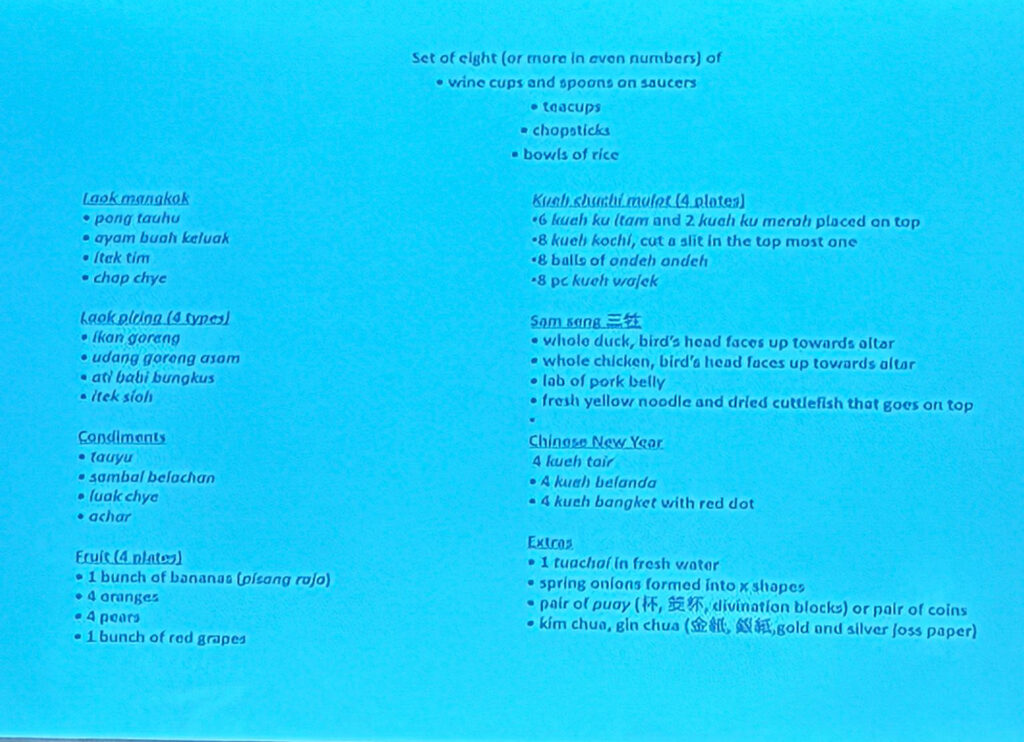
Clarifications were also made on Rumah Abu – the abu (ashes) is not from the deceased ancestors but literally from the incense papers burnt during the ceremony. Funeral rites were very detailed with white kueh ku, white ribbons, and white lace covering the coffins and a detailed list of food, condiments, fruits and kueh that is accompanied by a set of eight – or more, but always in even numbers – of wine cups and spoons on saucers, teacups, chopsticks and bowls of rice. And I always thought Peranakans makan sama tangan (ate using our hands)!

I have been enlightened! Knowledge sharing sessions like this must be a cornerstone of our ongoing quest to learn, adapt and thrive.
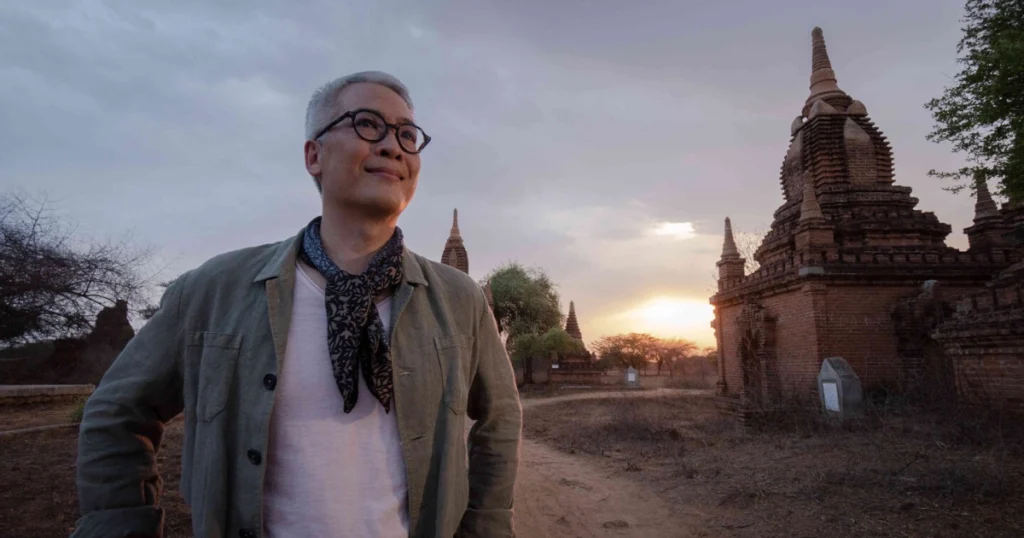
Peter Lee is an independent art and heritage consultant, and the Founding Curator of the NUS Baba House – a historical house museum managed by the National University of Singapore. He has curated exhibitions related to Singapore and Southeast Asian material culture since 1998 at venues in Singapore and Japan. He is the curatorial advisor for Peacock Power: Beauty and Symbolism Across Cultures, now on view at the Peranakan Museum, the host of three seasons of Channel News Asia’s The Mark of Empire and manages a family collection of textiles and 19th-century photography.

Naomi Wang is Tun Tan Cheng Lock Curator of Peranakan Art at the Peranakan Museum and Senior Curator for Southeast Asia at the Asian Civilisations Museum. She developed the jewellery galleries at both museums and co-curated the exhibitions Port Cities: Multicultural Emporiums in Asia (2016), Raffles in Southeast Asia: Revisiting the Scholar and Statesman (2019), and Batik Nyonyas: Three Generations of Art and Entrepreneurship (2024). She holds an MA in Art History and Archaeology from SOAS University of London.