 THE PERANAKAN
Architects Lim Huck Chin and Fernando Jorge document the evolution of Heeren Street in Malacca. Condensed from their 2006 book, Malacca: Voices from the Street.
In this second of a two-part report, we delve into the changes on Heeren Street from the mid-1800s. Read Part 1 here.
Heeren Street is Transformed
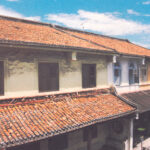
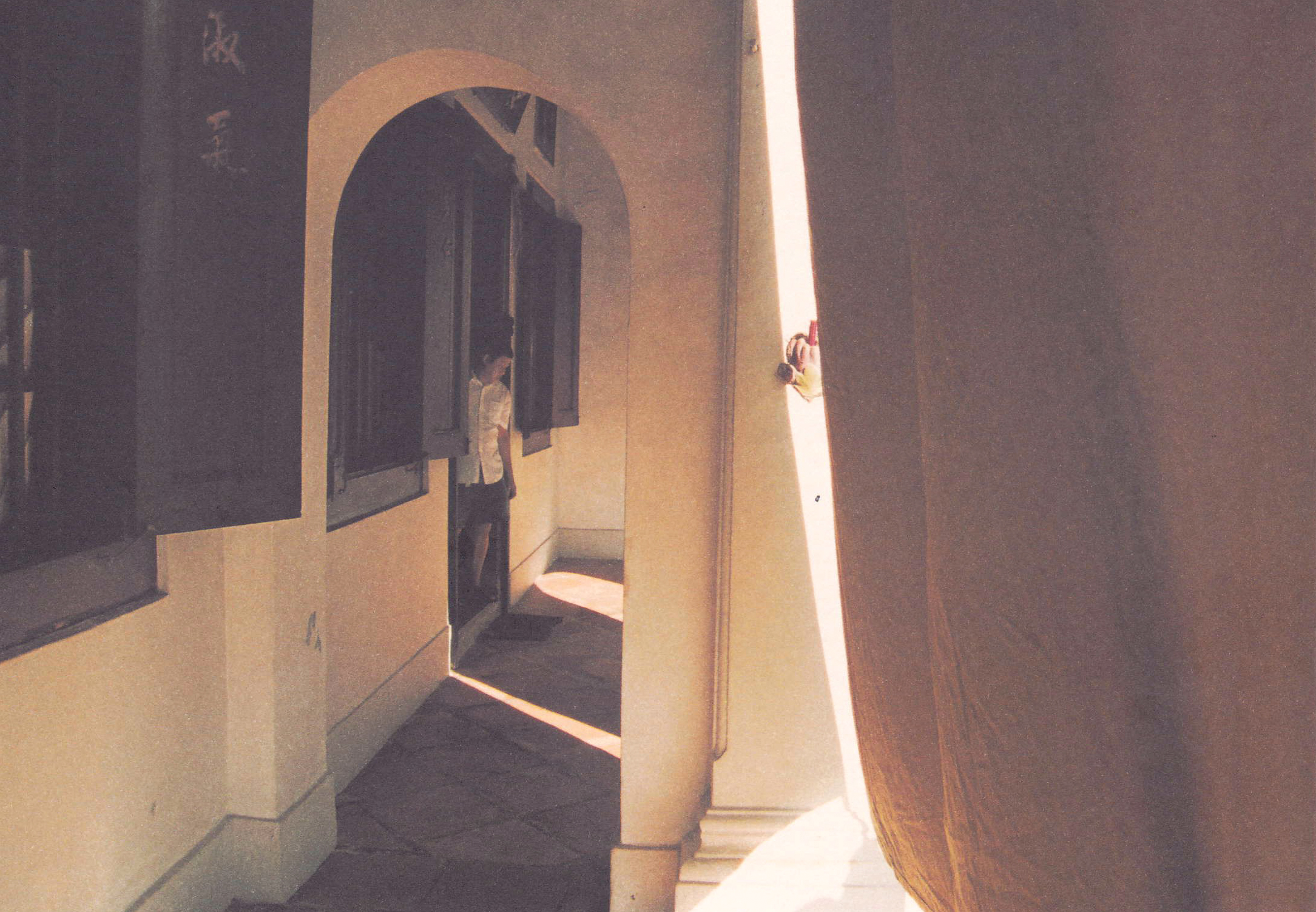
From the mid-1800s, Heeren Street’s Dutch houses were occupied by the new “gentlemen” of Malacca. Modifications were carried out to accommodate the social and cultural traditions of the buildings’ new Chinese occupants. Artisans were brought in from China to craft, paint and gild interiors, and embellish once-plain exteriors with Chinese motifs and emblems representing longevity, luck and fortune. A spatial hierarchy was devised for building interiors to suit the occupant’s social customs. The editor of the Straits Times in the 1920s noted on a visit to Malacca: “Heeren Street possesses all the finest and richest-adorned houses of the wealthy Chinese residents. They are all small in frontage, but appear to reach far back. Their frontage is adorned with painted pictures and adorned still further with pottery figures. I travelled several times up and down Heeren Street and found no two houses alike.”¹
Meanwhile, Richard Sidney, author of See Malaya by Train, wrote: “Rich Chinese now inhabit the first narrow street on the non-European side of the river, and their houses need to be studied in detail.” Despite changes to the buildings, Sidney observed, many Dutch traits and features had been retained: “Here we get traces of Dutch occupation, in fact many of the houses are pure Dutch adapted to suit the needs of present owners.”2

From the early 19th century to World War Two, Heeren Street evolved as a gallery of Straits Chinese material aspirations. The road was dominated by them; they had established an enviable place of residence, fortified by their reputation as elite of Malacca’s merchant class. Heeren Street became an exclusive place through which few outsiders passed and into which few dared venture uninvited. In both private and public realms, rules of conduct and protocol, and a staunch adherence to tradition, governed the lives of the Straits Chinese—men, women and children alike.
The Nyonya’s Evolution
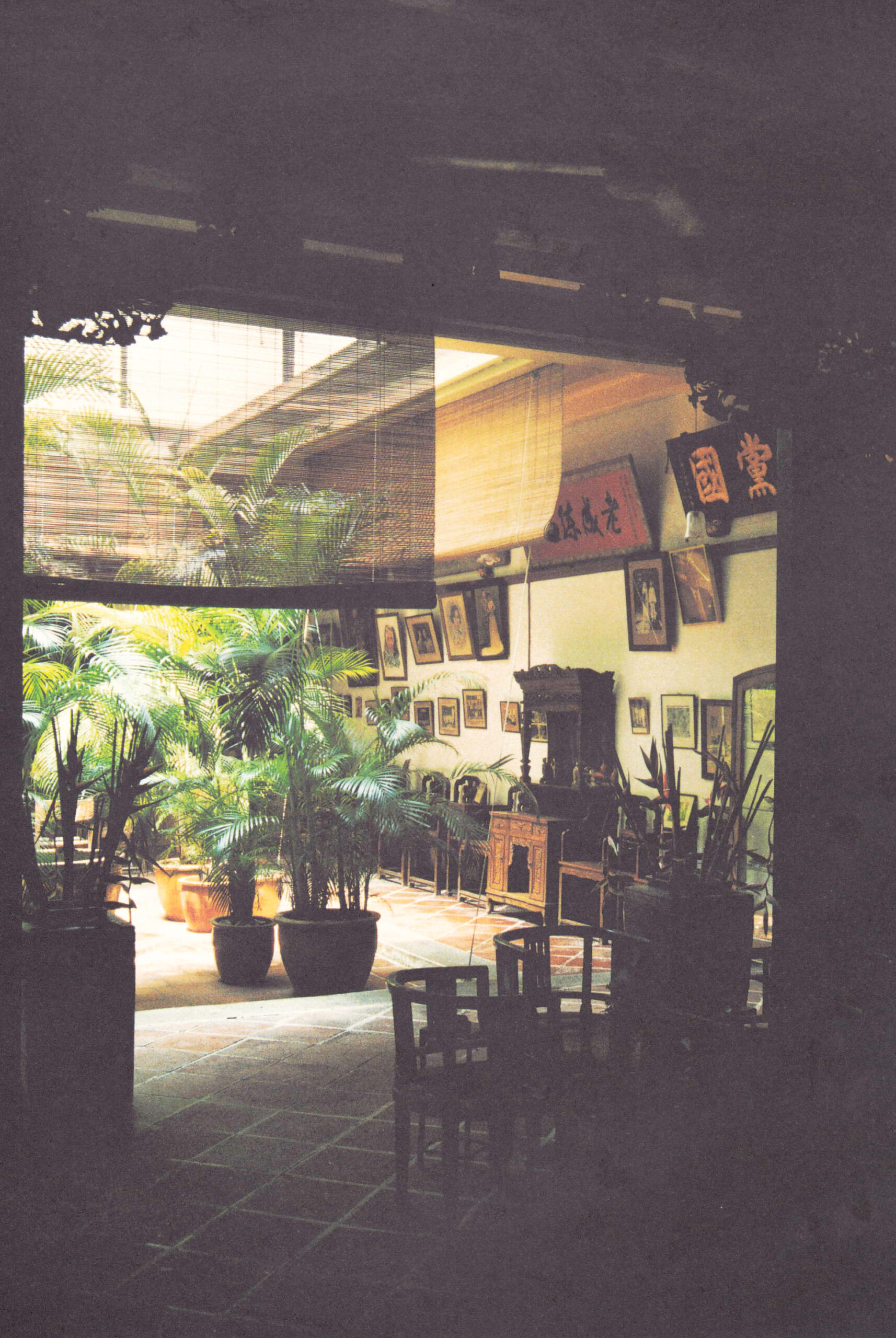
The nyonya, in particular, was much restricted by social dictates. She was mostly confined to her home, in which she was permitted access to only certain rooms, especially when male visitors were present; she was kept away from the public gaze for most of her life; and she was distanced from any formal education.
Even when outside her house, she remained imprisoned: “Not many decades ago, the Nyonya was a modest, retiring creature, as fearful to be seen of the male sex as a rabbit to be observed by the sportsman. In those halcyon days, there was no travelling for the Nyonya except in closed-up palanquins like hammocks called ‘redis’.
“A ‘redi’ was a kind of canvas hammock suspended from a pole carried by two Malays, and the lady occupant and hammock were covered over by a broad piece of kajang palm leaves… As soon as the age of 14 or 15 was reached, the girls were warned off the hall and the verandah…. In the gloom of ignorance they must develop whatever womanly virtues they possess, and they may while away the tedium of their confinement by devotion to needlework, cookery, or such other menial occupations, which shall have the effect of keeping them to the earth, earthy.”3
But as old rules and restrictions were discarded, a new attitude in education for girls took root. It was an enlightened baba who laid the foundations of the nyonya’s liberation: in 1904, the Methodist Girls School was established in the house of Tan Keong Keng (1844–1915)4 at 142 Heeren Street. The school’s location enabled the daughters of Straits Chinese families to receive an education close to home, within the safe harbour of their community. In the words of the Straits Chinese Magazine: “There can be no general improvement in the social condition of the race until the women are refined and elevated by a sensible education and by the increase in social amenities which only enlightenment can ensure.”5 One year after its opening, 29 young nyonya had enrolled at the school.
Adapting European Style and Practices
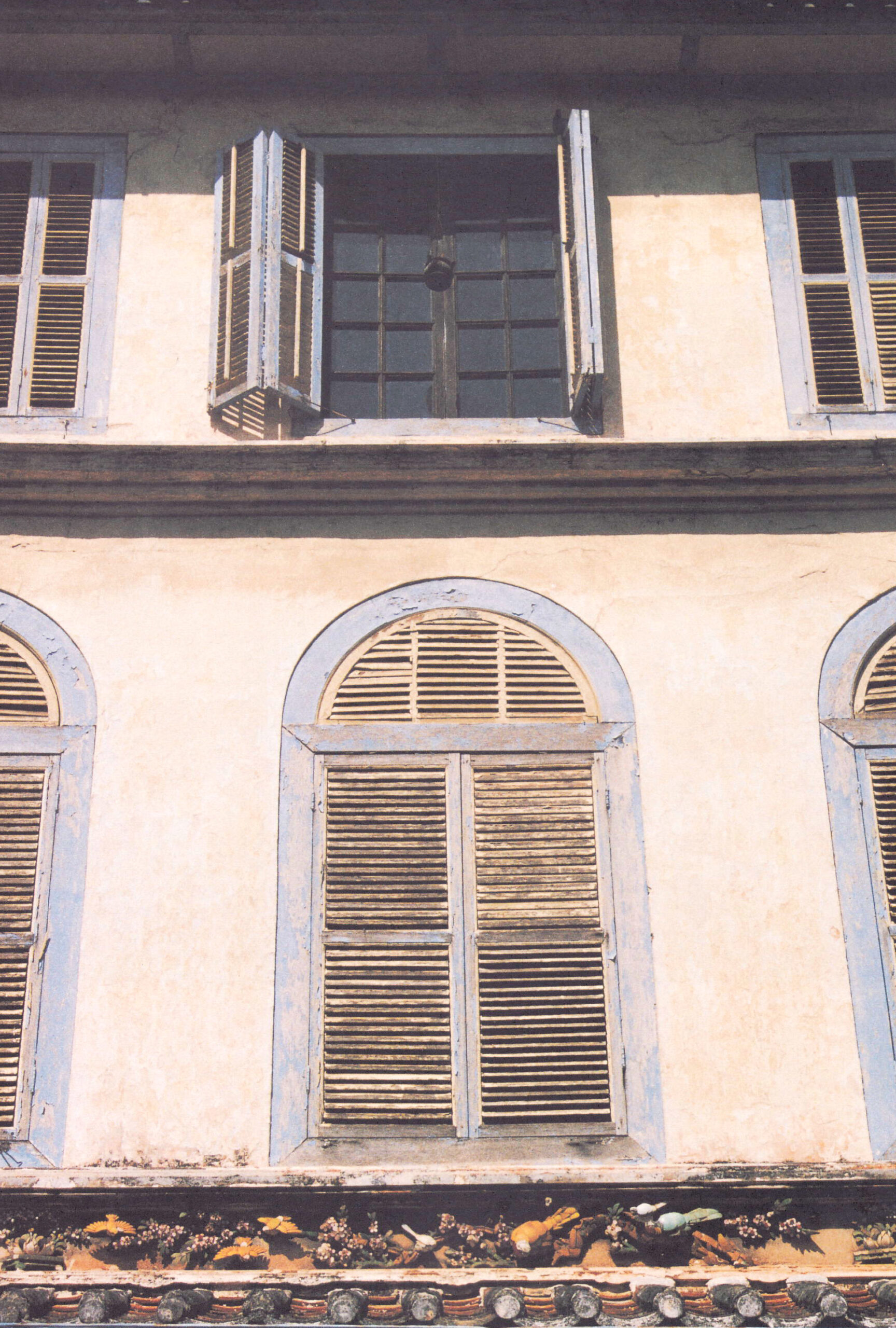
At the turn of the 20th century, the homes and lifestyle of the Straits Chinese, too, began to move away from the constraints of thousand-year-old traditions; they started to reflect a more Western aesthetic, due in part to increasing contact with the British. House interiors, in particular, became influenced by Victoriana: imported floor and wall tiles, furniture, lamps, prints and all sorts of decorative objects from Europe found their place alongside traditional Chinese furnishings and curios. Prints of English hunting scenes and Britain’s royal family were displayed opposite embroidered silk panels from China, Victorian brass lamps hung beside hand-painted Chinese lanterns.
In time, Straits Chinese manners and social practices were influenced by the West, initially among the baba, who had since the early 1800s become increasingly close to the British in business, civic and social affairs. Municipal Councillor and Malacca Free School trustee Tan Loh Seng (1836–1874) epitomized the baba’s Western outlook: “Mr Tan Loh Seng [who] was very respected and esteemed by all the Europeans (as well as Chinese) here on account of his gentle manner and amiability of disposition, was also a very liberal-minded person, and took a lively interest in every good work…. Mr Loh Seng had a very fair knowledge of the English language, and a liking for European manners and customs.”6
By the turn of the 20th century, many baba were sent to England for an education in the best schools and universities. The Straits Chinese, indeed, prided himself on his command of the Queen’s English and knowledge of Western literature and the arts. When asked if he was Chinese, he would declare himself to be a British subject.
When invited to dinner at the home of a baba, members of the town’s European community often sat down to meals that were Western throughout and accompanied by fine wines. No expense was spared at dinner parties given by Straits Chinese Tan Soo Hock (1883–1936),7 whose brilliantly-illuminated house at No. 129 became, on these occasions, the talk of the town: “A merry little dinner party was given by Mr Tan Soo Hock at his residence in Heeren Street, on Saturday night, to a number of the host’s friends…. The facade of Mr Soo Hock’s residence lent itself admirably to electrical decorative purposes… the result being a feast of dazzling, multi-coloured electric lights, which delighted not only the guests but also hundreds of spectators.”8 No. 111, home of distinguished statesman Tan Cheng Lock (1883 – 1960)9, and acquired by Tan’s grandfather Tan Choon Bock in 1875, also saw frequent dinner parties.
As their Western outlook increased, a more liberal sense of dress and social decorum became accepted: “The staid, old people too are coming round slowly but surely to more enlightened views of things in general. Where they would formerly be shocked at anything out of the ordinary, they will now pretend not to see and not to know, often perhaps putting on a smile only. They do not now object to their sons wearing white shoes, nor do they see anything really wrong in their daughters driving about with one or two of the carriage windows open or pulled down.”10 The transformation accelerated as more aspects of the Western world entered the homes and lives of the Straits Chinese. English education, magazines and Hollywood movies helped disseminate ideas of Western sophistication. Among the baba, traditional modes of dress, like the tutup (a Chinese jacket) and the queue (hair worn as a pigtail), gradually disappeared, giving way to well-cut suits, preferably in white! By the 1930s, the nyonya had also become more style-conscious: body hugging cheongsam and high heels represented the epitome of liberation. An increasing preference for Western dress, food and music thus defined a new generation of baba and nyonya.
Social and recreational clubs were formed, as the Straits Chinese men emulated their counterparts in Malacca’s European community, whose life revolved around places such as the Malacca Club, established in 1888. The baba wasted no time, forming the Malacca Chinese Club (Chee Lan Teng to the Chinese) the following year; with 12 founding members, it had premises at 178 Heeren Street, near Tranquerah Road.
Other clubs quickly followed: the Chinese Lawn Tennis Club, founded in 1893; the Malacca branch of the Straits Chinese British Association (SCBA), founded in 1900 and whose first president was Lee Keng Liat (1851–1917), son of Lee Quee Lim, and first vice-president was Tan Chay Yan (1878–1916)11; and the Malacca Chinese Literary Association (MCLA), founded in 1912. At these clubs they played billiards, bowls and other European games, and drank brandy and soda.
The Straits Chinese love affair with the West was reinforced by travel to England, Continental Europe and the United States. In 1937, Justice of the Peace Ee Kong Guan (1869–1941)12 and his family sailed to England to attend the coronation of King George VI. Many returned from pleasure trips abroad with enticing pictures and stories of an increasingly familiar world, inspiring others to set out.
For all his eager embrace of the West—its costume, cuisine, art and entertainment—the Straits Chinese remained faithful to tradition. Filial piety, ancestor-worship and the observance of festivals such as the Chinese New Year, the most auspicious in his calendar, were close to his heart.
Traditions Continue
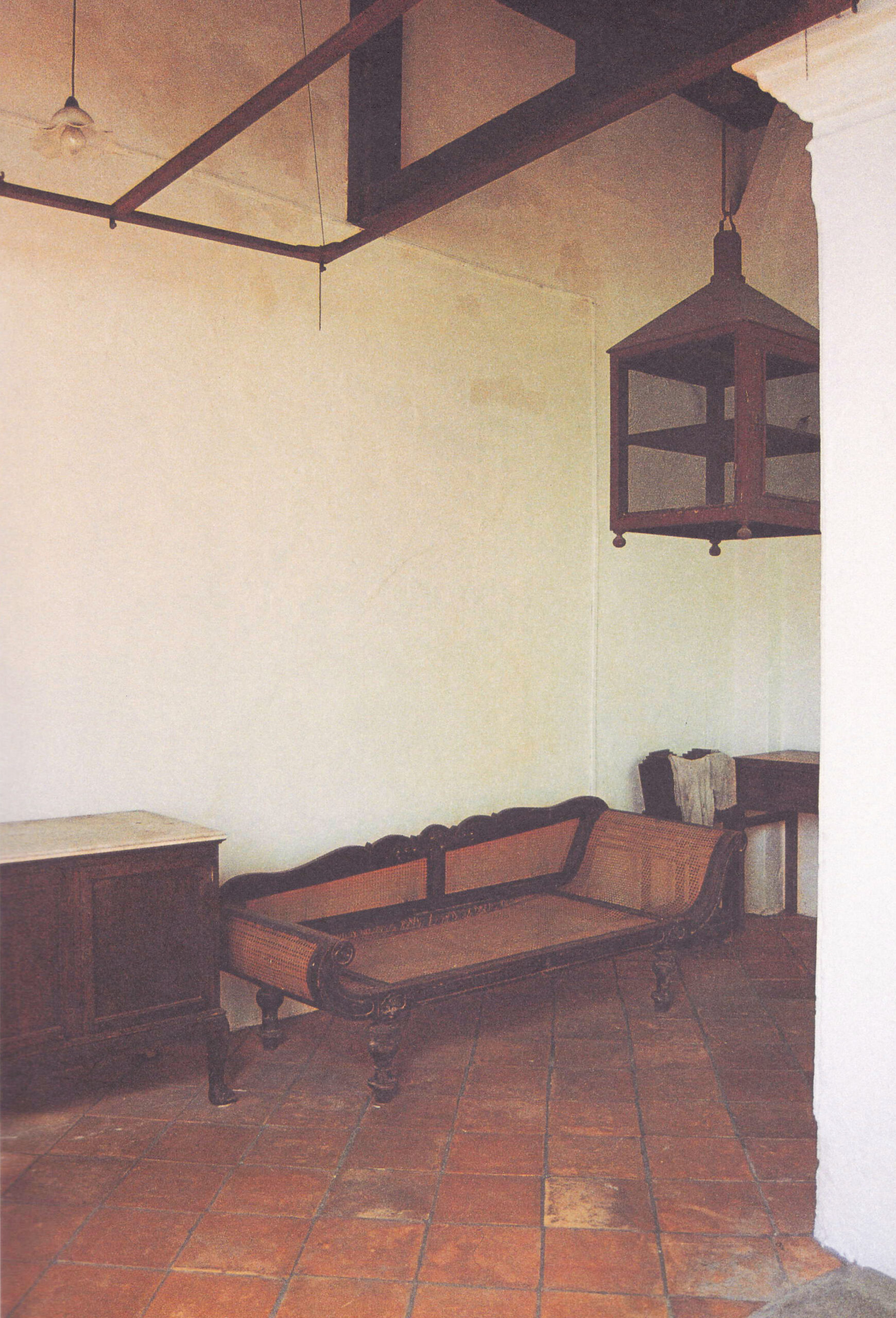
“All the lights and lanterns of private residences and business premises were kept burning till a late hour,” wrote the Malacca Guardian on 3 February 1930, as Chinese New Year celebrations commenced. “Heeren Street in particular was in all its glory with beautifully dressed altars, heavily laden tables of offerings and luxuriously furnished and brilliantly lit halls. Red was the predominant colour everywhere, although various pleasing shades were used. Some of the halls had a typical Chinese setting, with rows of black wood chairs on either side and these were covered with silver embroidered satin.”13
Today, Heeren Street’s handful of remaining families still conscientiously burns offerings for the departed during the Hungry Ghost Festival, appeasing the souls of the dead who, it is believed, return to roam among the living. The festival, which takes place each Seventh Lunar Month of the Chinese calendar, is marked by that most quintessential element of Chinese festivities: the burning of paper offerings. Piles of meticulously-folded pieces of paper, symbolically painted, are set ablaze on the street at dusk, after a series of rituals conducted at the families’ ancestral altar inside the house. Children are warned not to venture out, lest they be led astray by ghostly visitors.
Land reclamation since the 1980s has robbed Heeren Street of its seaside. The houses now look out to a suburban landscape of cement and bitumen instead of to the Straits of Malacca.
NOTES:
- Malacca Observer, 2 March 1925, p. 8
- Straits Times (Singapore), in Malacca Guardian, 16 February 1931, p. 5
- Straits Chinese Magazine (Singapore), December 1903, p. 129
- Tan Keong Keng, son of Malacca Straits Chinese Tan Choon Bock, was known for his charity and support of education in Malacca; he travelled widely in Europe and lived in the United States in the 1860s. He died in Singapore.
- Straits Chinese Magazine (Singapore), December 1903, p. 129
- Straits Times (Singapore), 17 October 1874, p. 2
- Tan Soo Hock, great-grandson of Malacca Straits Chinese Tan Kim Seng, was Justice of the Peace from 1911; and member of the Municipal Commission (1910–1932). His public and civic service was extensive: Hon. President of several schools, including the Pay Fong School; first captain of the Chinese Company in the Malacca Volunteer Corps; prominent rubber planter and merchant.
- Malacca Observer, 2 February 1925, p. 8
- Tan Cheng Lock, whose ancestor Tan Hay Kwan arrived in Malacca in the 1770s, was Justice of the Peace and member of the Municipal Commission (1912–1922); owned rubber estates and was director of many rubber companies; member of the Legislative Council (Straits Settlements) from 1923 to 1935; president of the SCBA (1928–1934); active in philanthropy and politics; co-founded the Malayan Chinese Association in 1949. Heeren Street was renamed Jalan Tun Tan Cheng Lock in his honour in 1962.
- Straits Chinese Magazine (Singapore), September 1906, p. 143
- Tan Chay Yan, grandson of Tan Tock Seng, a Malacca Straits Chinese, was member of the Municipal Commission and made Justice of the Peace at age 24; he was the Malay Peninsula’s first rubber planter in 1896, with estates in Bukit Lintang, Malacca; president of several clubs, including the Chinese Lawn Tennis Club; co-founder of the Pay Fong School (1913). He and his wife were known for their philanthropy. Ancestral home at 73 Heeren Street.
- Ee Kong Guan, son of Ee Say Swee, a Malacca Straits Chinese, was a prominent tapioca and rubber planter, and extensive landowner; first vice-president of the Malacca Chinese Chamber of Commerce in 1912. His son, Ee Yew Lin, president of the SCBA (1955–1977), became a community leader. Ancestral home at 108 & 110 Heeren Street.
- Malacca Guardian, 3 February 1930, p. 8
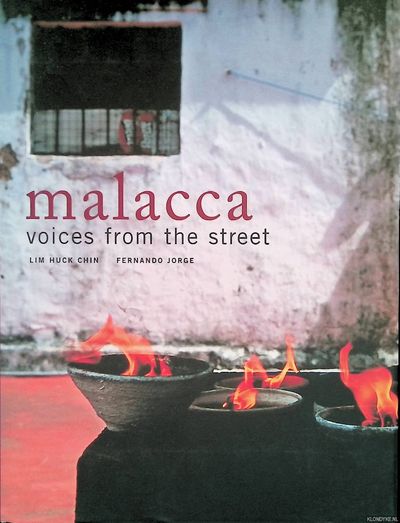
Malacca: Voices from the Street is the culmination of a six-year project by Portuguese architect Fernando Jorge and Malaysian architect Lim Huck Chin. Between 1999 and 2005, the authors documented Malacca’s heritage architecture and communities through photographs and over 150 interviews. Research was also carried out in Kuala Lumpur, Singapore, The Hague, London and Lisbon. At the core of the project was an interest in Malacca’s stories from the “man-in-the-street”, from marginalized historical communities and from the city’s often unrecognized but precious built fabric. That interest motivated the project. Just as first contact between Lisbon and Malacca 500 years ago enlightened Europe and the Orient, Malacca: Voices from the Street offers a new perspective on the city’s social and cultural history. Within its pages are over 200 colour photographs and a compelling account of Malacca’s past and present.