 THE PERANAKAN
Architects Lim Huck Chin and Fernando Jorge document the evolution of Heeren Street in Malacca. Condensed from their 2006 book, Malacca: Voices from the Street.
This first of a two-part report traces the beginnings of what was to become Malacca’s most prestigious street.
The March of the Bourgeoisie
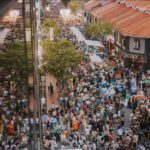
As the elegantly-caparisoned elephant and its mounted mahout began to move with the throng, the funeral procession commenced its slow, midday progress down the street. Relatives of the deceased, friends and acquaintances, members of government and associations, people from Malacca’s different communities—all followed the coffin in carriages and on foot. An army of boys was mounted on 160 horses and ponies.
The cortege made its way past dense crowds of onlookers, its passage to the family burial ground enlivened by musicians. The Malacca Band, leading the procession and playing The Dead March in Saul, was accompanied by gong-beaters—present in force—who occasionally varied their performance by throwing their instruments into the air and catching them as they fell.

The procession included the customary display of emblems, and bearers of innumerable flags and banners adorned with inscriptions and written tributes. Alongside were carried hundreds of paper objects, replicas of material goods made for the Afterlife. The catafalque, richly draped and decorated, was borne above the sea of mourners.
Large crowds from town and countryside had been drawn to the spectacle on 16 April 1890—the funeral of one of Malacca’s most notable millionaires. With this grand display of pomp and ceremony, Lee Quee Lim1 (b. 1824)—described as having been a “very kind and noble-hearted gentleman”2 —was carried on his final journey from his residence at 57 Heeren Street.
Historical Background
Families such as Lee’s were part of a community in Malacca described by the Straits Times in 1861 as “the rich Chinese population living on the seaside.”3 On Heeren Street resided the town’s wealthiest merchant elite, where their elaborate festivals and rituals—in both life and death—were performed. But the houses in the area were dominated by Chinese residents beginning only in the 19th century,
Early Merchant Groups
Since the Sultanate, the seashore north of the Malacca River had been a favoured address for successive merchant groups. Early records mention the Tamil keling of South India4 and Muslim Gujeratis. The wealthiest Hindu merchant recorded was Nina Suryadeva. The Hindu community frequently as advisors to Portuguese captains, establishing close ties with the Portuguese Crown. In the second half of the 16th century, the Hindus lost the prominence when the number of Portuguese private merchants increased, while a considerable number of Hindus converted to Christianity.
The Dutch Period
The siege of 1641 delivered victory to the Dutch. The arrival of the Dutch brought change to the area; an exodus of Indians took place, and the area known as Campon Chelin5or Keling was replaced by Kampong Belanda6 (Dutch Village). The road was given the name Heeren Straat (Gentleman’s Street).
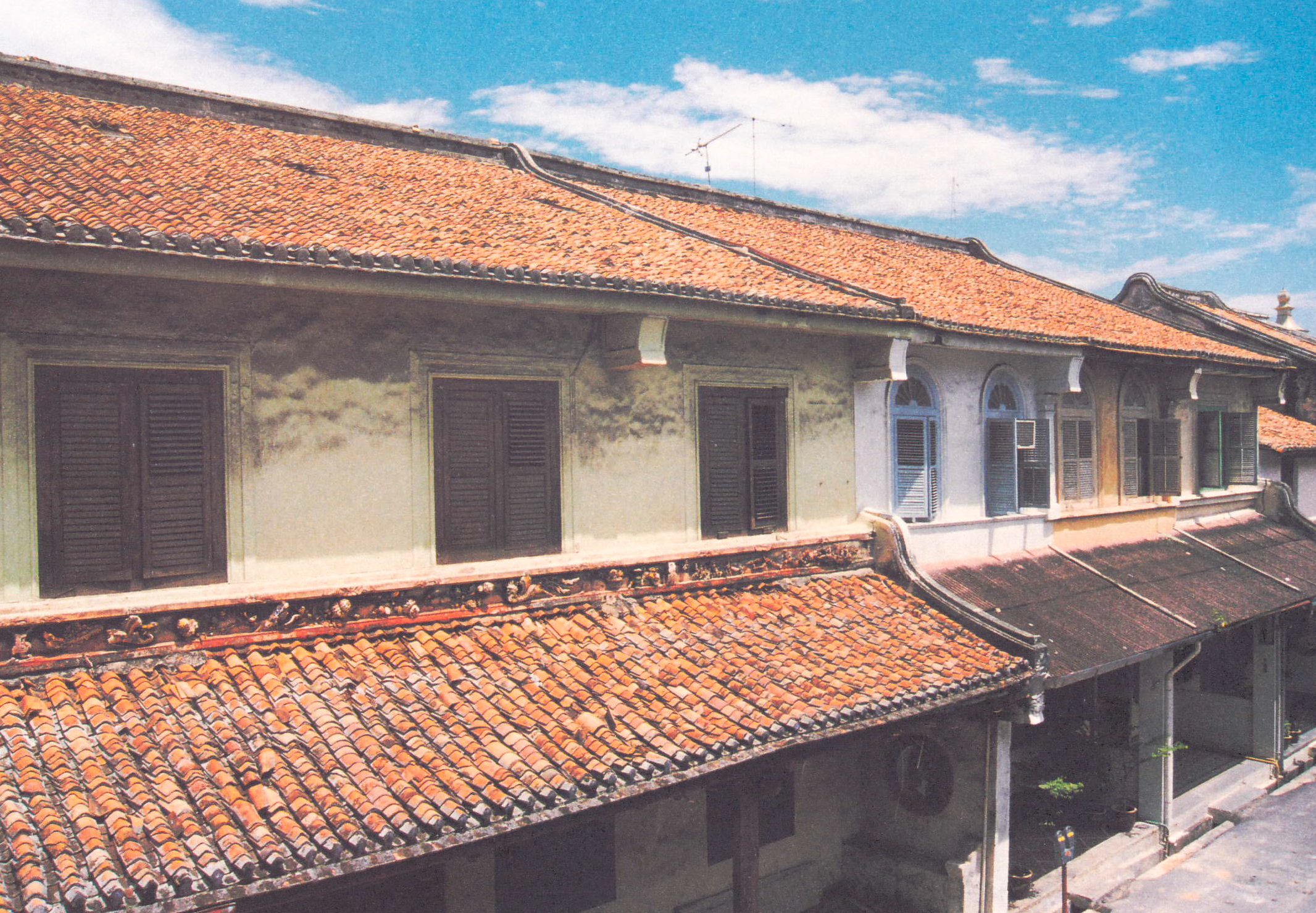
By the middle of the 18th century, residents represented the uppermost echelon of Malacca’s population. The buildings’ typical plan—long as a result of taxes imposed on street frontage—incorporated open courtyards. Notable Dutch-period architecture includes:
- No. 101: Known for its sombre noble frontage and funnel-shaped gable ends.
- No. 74: Retains Dutch-period design solutions and timber-and-brick structure.
During Malacca’s Dutch years, the number of Chinese fluctuated. It climbed from 160 in 1675 to 426 in 1678 before falling to 292, or 6.5% of the population, ten years later, then rising again in the second half of the 1700s. The Chinese population was slow to grow mainly due to the limited economic opportunity the port-city offered compared to Batavia. However, the Chinese community began to thrive after 1750, when Malacca became a port serving a growing trade between China and Europe.
The Rise of the Chinese in Malacca
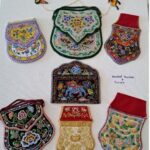
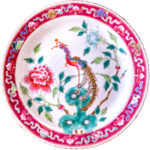
The port-city’s Chinese merchants and traders — in Malacca since the Sultanate — had been largely transient, their arrival and departure determined by seasonal monsoons. Many who settled in Malacca planted roots for successive generations of Chinese, who became known as Peranakan China (the Malay term for local-born Chinese), a community unique to the Malay Archipelago. Through their long residence in the region, as well as their adoption of aspects of local culture, custom and practice while retaining Chinese traditions, the Peranakan China evolved and developed a self-conscious identity, distinct from that of later Chinese migrants, who came from the mid-1800s on in search of wealth and with the dream of returning to China. Local-born men of the Peranakan China came to be known as baba, and the women as nyonya.
The Chinese arrivals were chiefly interested in trade, but also comprised builders, artisans and craftsmen who supplied the labour needed at a time in which the construction of Chinese homes, trading-houses and clan houses was increasing. The Chinese lived mainly in the area known as Kampong China, an area bounded by First Cross Street, Second Cross Street and Kampong Pantai.
Until the early 19th century, local-born Chinese took considerable interest in the arrival of junks from China, for these brought not only new goods, but welcome batches of prospective husbands for the daughters who, according to tradition, had either to marry local-born Chinese or immigrants from China; sons, however, could—and often did—take Malay girls to wife.
By the early 1800s, the Chinese had acquired control of the city’s trade, many arriving after Malacca’s cession to the British in 1825 and drawn by the business prospects of the place. The 1828 census showed 2,354 Chinese living in town7, comprising the local-born (known to the British as Straits Chinese) and their China-born brethren.8 Chinese merchants derived considerable profit from the growing trade with Singapore: by 1845, as much as half Malacca’s trade was with its sister Straits Settlement to the south and was controlled by an elite Chinese business community, which had won the confidence and respect of administrators. In time, the Straits Chinese replaced the Eurasians as the backbone of the local bourgeoisie.
If by the late years of Dutch rule a small number of properties on Heeren Straat had been acquired by an emerging class of wealthy Chinese merchants, the road underwent a complete metamorphosis following Malacca’s transition to British administration. With the departure of Dutch merchants and their families, many houses on Heeren Street (the name adopted by the British) were put up for sale: an advertisement in the Malacca Observer and Chinese Chronicle of 24 August 1829 offered a “well-known” brick dwelling near the Tranquerah Gate formerly belonging to a certain Joseph Minass. Potential buyers were enticed with the following description: “The house is situated on the seaside, with a view of shipping in the roads in a very healthy part of Malacca, and may be considered a purchase well worth the consideration of persons wishing to lay out their Capitals to advantage.”9 Heeren Street, long an enclave for the privileged, now attracted Malacca’s moneyed and most ambitious Chinese, the large majority from among the local-born community. These began to acquire Heeren Street houses, owning all its finest properties by the mid-1800s. The transformation did nothing to diminish the prestige with which Heeren Street had become synonymous during Dutch rule; it merely reinforced the road’s renown, which had begun with its earliest keling merchants 400 years before.
NOTES:
- Lee Quee Lim, whose ancestor Lee Say Gee arrived in Malacca in the early 1660s, was president of the Eng Choon Association (1875–1890); he had large interests in the steamship business. His son, Lee Keng Liat, was a community leader; member of the Municipal Commission from 1883 and president of the Eng Choon (1890–1917); the younger Lee owned rubber and sago plantations.
- Straits Times (Singapore), 22 April 1890, p. 1
- Straits Times (Singapore), 2 March 1861, p. 1
- Benua Keling, continent of the keling, is the Malay name for the Coromandel Coast or India in general.
- Kampong, the Malay word for village or settlement, spelt variously Campon, Campong and Kampung. Thus, Kampong Keling: the Keling Village.
- Belanda, the Malay name for Holland adopted from the Portuguese Holanda.
- According to the 1828 census, the total number of Chinese in Malacca (including suburbs and countryside) was 4,742.
- Malacca Observer and Chinese Chronicle, 24 August 1829, p. 1
- Malacca Observer, 2 March 1925, p. 8
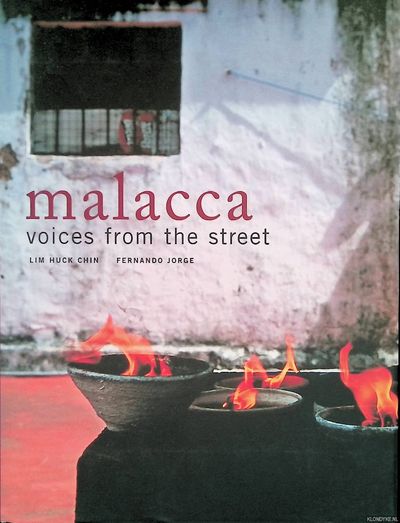
Malacca: Voices from the Street is the culmination of a six-year project by Portuguese architect Fernando Jorge and Malaysian architect Lim Huck Chin. Between 1999 and 2005, the authors documented Malacca’s heritage architecture and communities through photographs and over 150 interviews. Research was also carried out in Kuala Lumpur, Singapore, The Hague, London and Lisbon. At the core of the project was an interest in Malacca’s stories from the “man-in-the-street”, from marginalized historical communities and from the city’s often unrecognized but precious built fabric. That interest motivated the project. Just as first contact between Lisbon and Malacca 500 years ago enlightened Europe and the Orient, Malacca: Voices from the Street offers a new perspective on the city’s social and cultural history. Within its pages are over 200 colour photographs and a compelling account of Malacca’s past and present.