 THE PERANAKAN
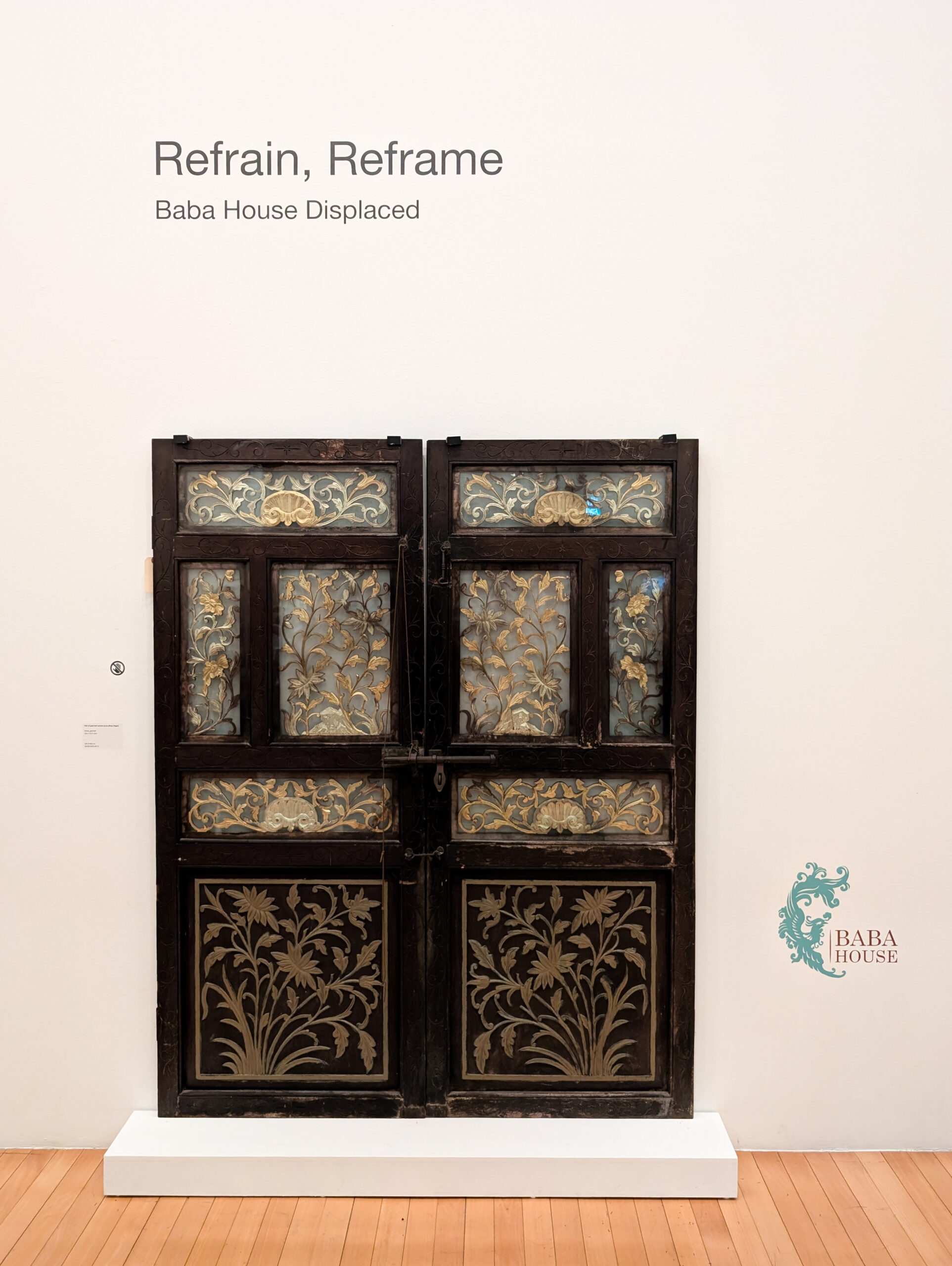
Nyonya Theresa Tan checks out Refrain, Reframe – Baba House Displaced, which runs at NUS Museum until 25 September 2027. This new exhibition showcases artefacts from NUS Baba House, grouped by function, material and thematic connections, while it undergoes a physical makeover.
Refrain, Reframe – Baba House Displaced opens at NUS Museum, inviting visitors to encounter one of Singapore’s most familiar Peranakan heritage spaces in an unfamiliar way.
It is an exhibition about NUS Baba House without the house.
NUS Baba House is temporarily closed for a makeover, and its collection has moved to NUS Museum for Refrain, Reframe – Baba House Displaced.
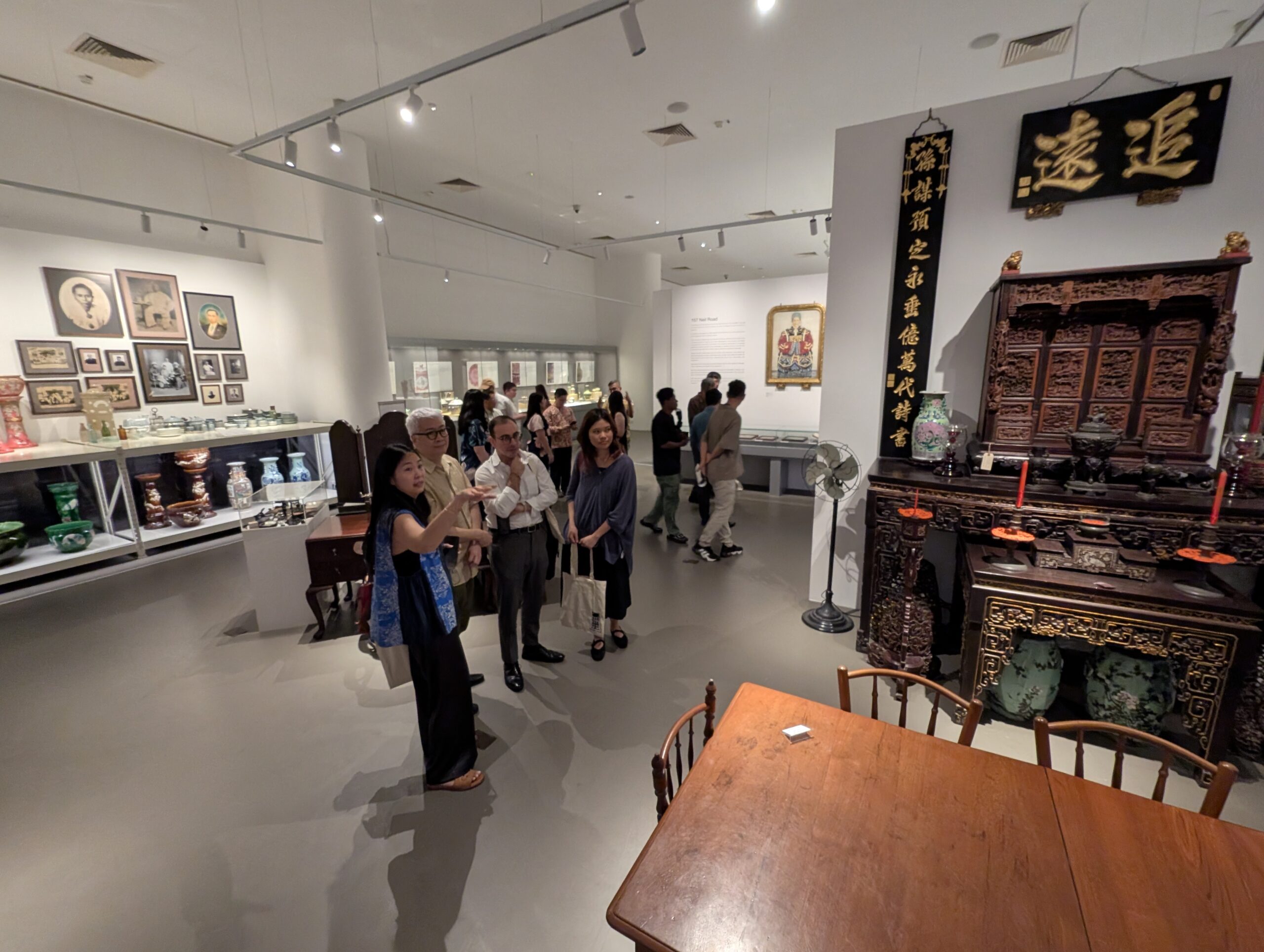
For many who have visited NUS Baba House, its objects are usually encountered within context — furniture belongs to particular rooms; ceramics are part of the table and kitchen settings or displayed at the altar for ceremonial purposes; and architectural details contribute to the lived experience of a home. The house offers a sense of continuity — a physical place through which Peranakan history can be encountered.

With the temporary closure of NUS Baba House, that familiar experience has been interrupted. Rather than attempting simply to recreate the experience of the house elsewhere, this exhibition asks what happens when its objects and material traces are removed from their domestic setting.
What do we notice when the house is no longer there?
Ms Yvonne S.Z. Tan, curator of the exhibition, said, “When the familiar rooms of the Baba House are temporarily absent, its objects begin to tell different stories. Refrain, Reframe – Baba House Displaced invites us to encounter these objects not as fixed symbols of heritage, but as material witnesses to histories of movement, exchange and care. Heritage is not simply inherited, it is continually interpreted through the relationships we create with objects, places and one another.”
When objects leave the house
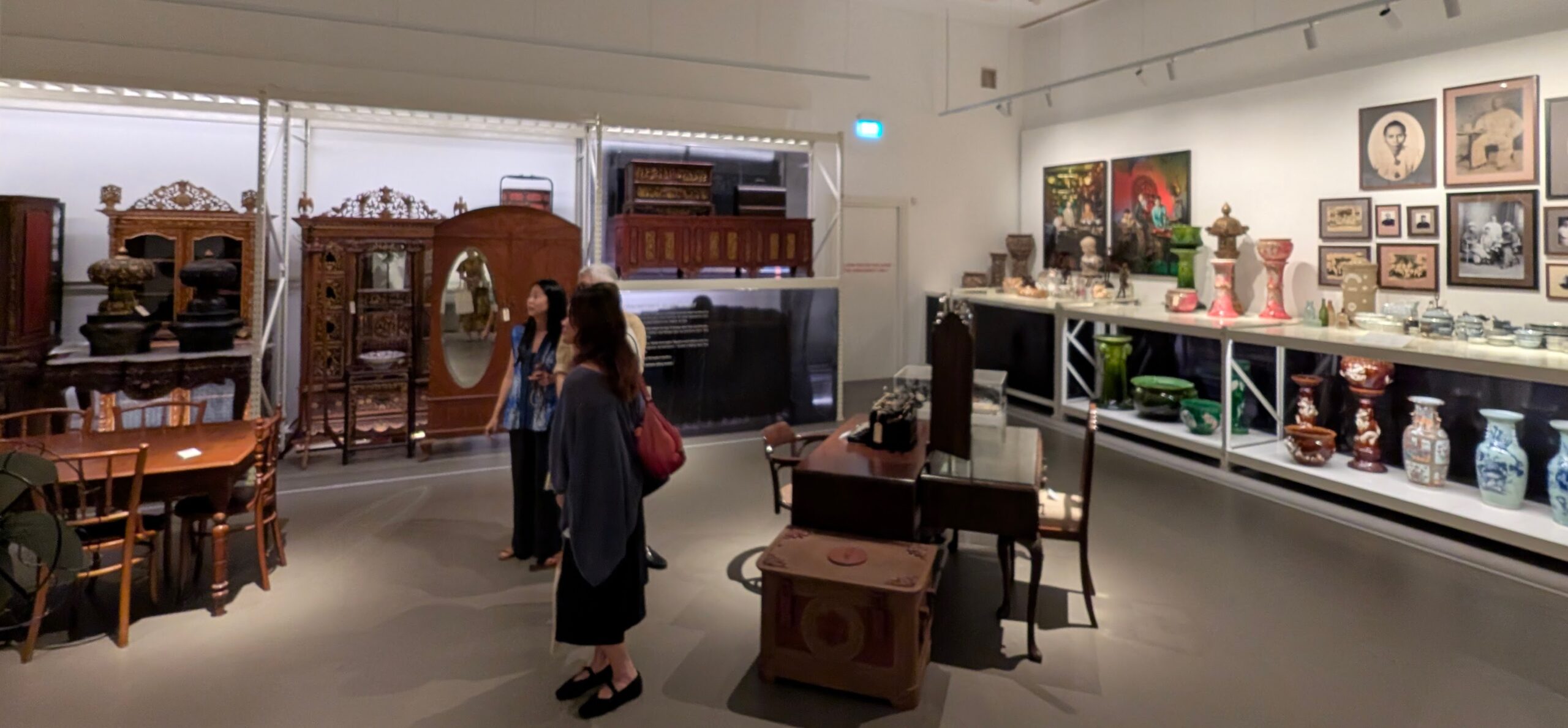
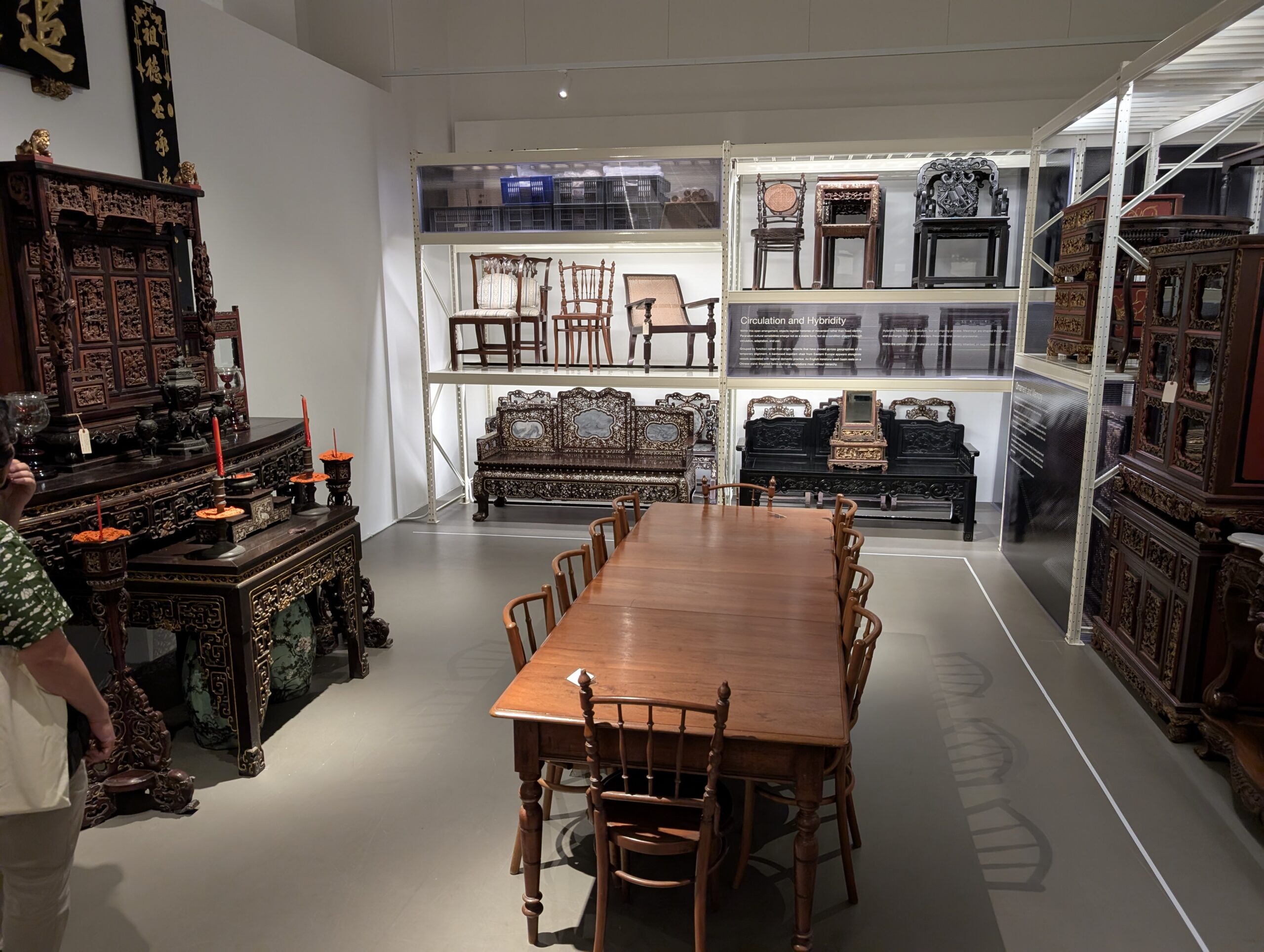
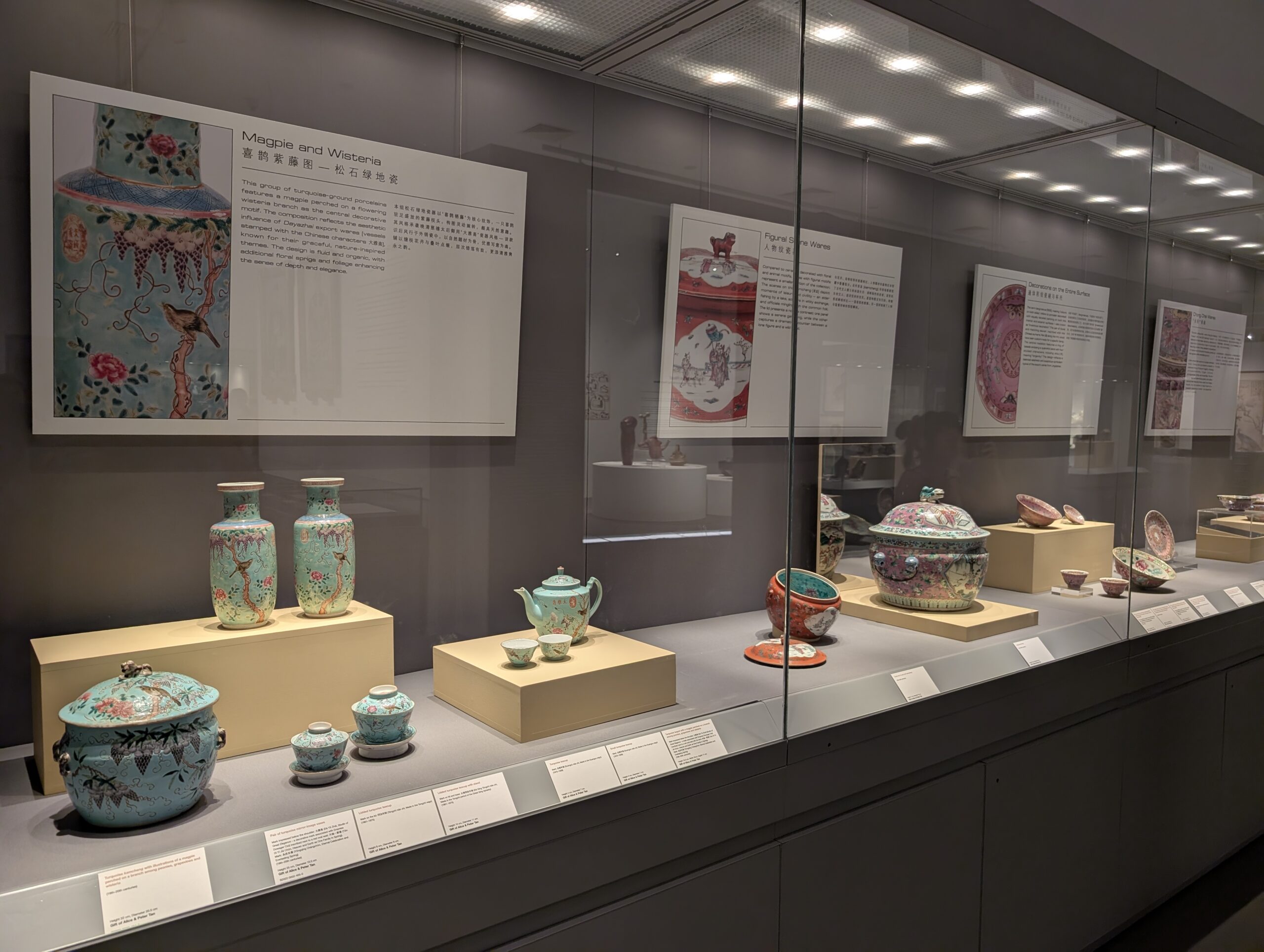
In Refrain, Reframe, the objects are taken out of that domestic setting and recategorised through material, function and relationships. Once removed from the house, objects begin to speak differently. This process of recategorisation encourages visitors to look again. We are invited to consider them differently — through the materials and motifs, or even as evidence of particular ports of origin.
Instead of being arranged in rooms, the exhibition reassembles the NUS Baba House’s extensive collections within the NUS Museum gallery space using open storage and racks. At the opening, Guest-of-Honour Mr Foo Cexiang shared that the arrangement reminded him of how such objects might have been stacked in shipping vessels when they first arrived in Singapore.
It is certainly a different way of seeing them. It also prompts a thought: if these objects could talk, perhaps this is how they came.
In this sense, displacement is not necessarily a loss. It can also be a form of looking again.
A house is more than its objects
The material culture associated with Peranakan life is rich and diverse: furniture, textiles, ceramics, jewellery, domestic utensils, architecture and decorative arts. Yet heritage is not simply a collection of things. A house brings these things into relationship with one another. It gives them a setting and, importantly, a sense of everyday life.
By separating objects from their familiar environment, the exhibition draws attention to the relationship between the material and the intangible — between things and the memories, practices, identities and stories that give them meaning.
The experience also raises a broader question: what happens to heritage when the conditions through which it has traditionally been experienced change?
The answer cannot simply be preservation in the sense of keeping everything exactly as it was. Heritage survives because it is continually interpreted, questioned and transmitted. Each generation encounters the past from a different position and brings its own questions to it.
Heritage as a practice of care
Visitors to the NUS Baba House may recall the emphasis on architectural conservation, an aspect of heritage that is sometimes less visible: care.
Museums and heritage institutions do not merely exhibit objects. They make decisions about what is collected, how it is classified, how it is explained and how it is conserved and restored. These decisions shape the ways in which future audiences will encounter the past.
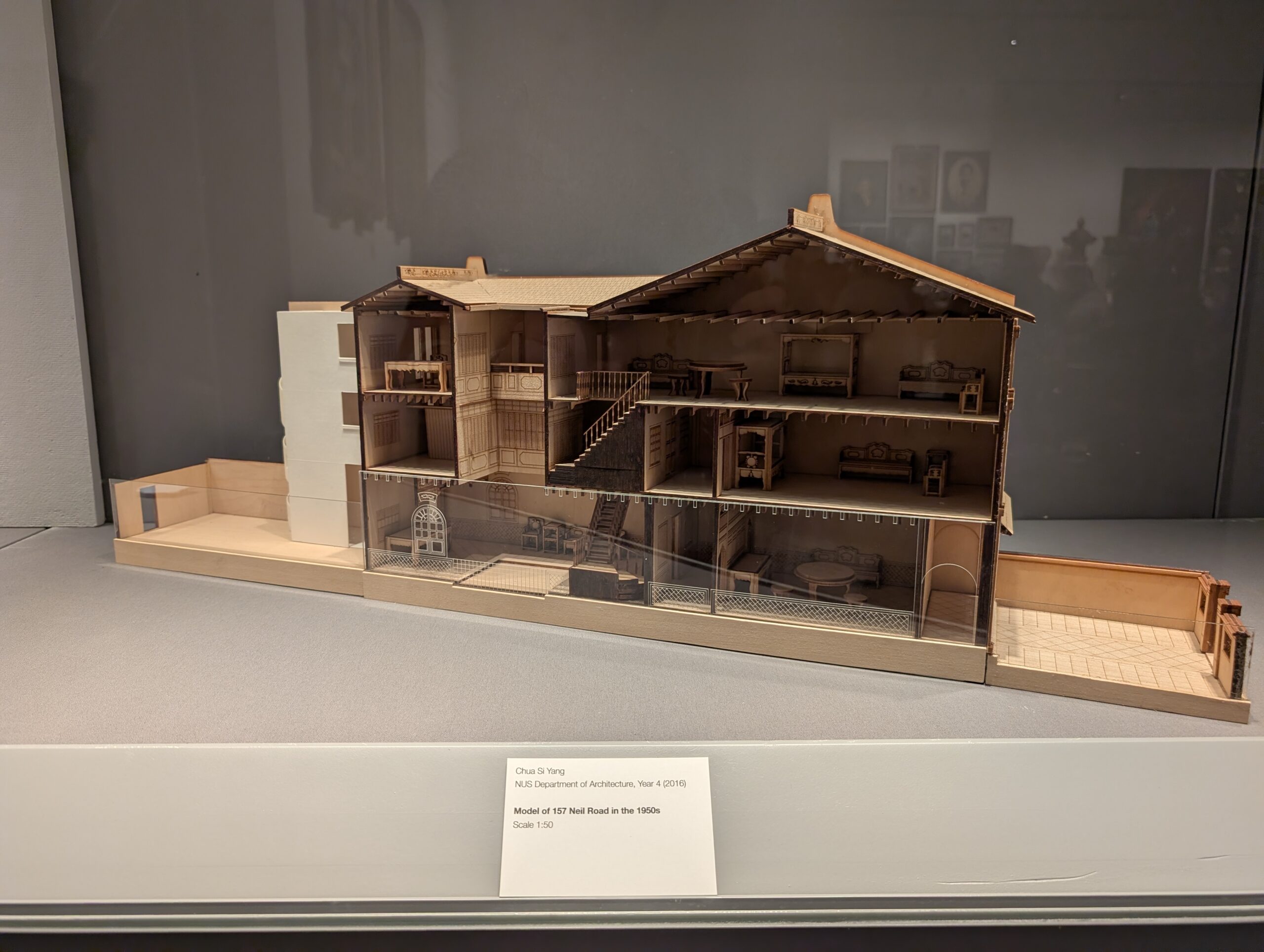
Beyond the reinterpretation of objects, the exhibition continues to offer the visitors a view into the intricate process of conserving a historic house museum. Through detailed material investigations into timber, plaster, paint and architectural fabric, Refrain, Reframe – Baba House Displaced demonstrates that conservation is not merely a return to an original state, but a continuing process of research, stewardship and informed decision-making.
The exhibition encourages us to think of heritage not as a fixed inheritance handed intact from one generation to another, but as an evolving practice of care, interpretation and attention. What we inherit is not only a collection of objects or a historic building, but also the responsibility to decide how those histories should continue to be understood.
“The temporary closure of the Baba House presents an unusual opportunity for a university museum. Rather than waiting for the house to reopen, this exhibition allows us to think differently about what a house museum can be. It reflects NUS Museum’s commitment to research-led curatorial practice, where conservation, collections and public engagement become part of the same conversation,” said Mr Ahmad Mashadi, University Curator of NUS Museum.
For the Peranakan community, this is an especially timely conversation. As Singapore continues to change, the spaces in which cultural traditions are experienced also change. Homes become museums. Domestic objects become heritage collections. Practices that were once part of everyday life may become subjects of documentation and interpretation.
Yet this transformation does not necessarily make heritage less meaningful. Instead, it asks us to consider how cultural memory can remain alive when its original contexts are no longer available in quite the same way.
Seeing NUS Baba House anew
Perhaps the most interesting invitation offered by Refrain, Reframe – Baba House Displaced is simply to slow down and look.
The exhibition begins with a pause — a temporary absence — but turns that absence into a different kind of presence. Freed, for a moment, from the architectural setting of Baba House, its objects can be considered anew.
Visitors who know NUS Baba House may find themselves recognising familiar forms while seeing them differently. Those encountering the collection for the first time may discover that the objects raise questions beyond their immediate aesthetic or historical appeal.
Where did this object belong?
What influences its design and aesthetics?
What was it used for? How did it function within a household?
What meanings did it carry for the people who lived with it?
And what meanings do we give it today?
These questions extend beyond NUS Baba House. They are questions about how we encounter heritage itself.
The temporary displacement of the house thus becomes more than a logistical circumstance. It becomes a curatorial proposition, one that creates distance so that we can look more closely.
In doing so, Refrain, Reframe reminds us that heritage does not remain meaningful simply because we preserve it. It remains meaningful because we continue to engage with it.
And sometimes, to see what we have inherited more clearly, we need to step away from it first.
Refrain, Reframe – Baba House Displaced
Venue: NUS Museum
Exhibition: Refrain, Reframe – Baba House Displaced
Dates: 13 August 2026 to 25 September 2027
The exhibition accompanies the temporary closure of NUS Baba House and invites visitors to reconsider the house and its collections through their material, functional and relational qualities.
The opening programme was attended by guests from the cultural, academic and community sectors, with an opening address by Mr Foo Cexiang, Adviser to Tanjong Pagar GRC Grassroots Organisations (Tanjong Pagar–Tiong Bahru). The evening also included a publication sale, exhibition viewing and guest reception.
***
ABOUT THE WRITER
Theresa Tan identifies as Peranakan and has a keen interest in Asian art histories, especially Southeast Asian art and cultural heritage. She is a member of the UK’s Association for Art History and a qualified appraiser with the International Society of Appraisers (ISA). She holds a Master of Arts (Distinction) in Asian Art Histories from Goldsmiths, University of London. Tan was the convenor of Reframing Narratives: Asian Art Histories Conference, held on 26 September 2026.