 THE PERANAKAN
Baba Emeric Lau ponders the future of Baba Malay upon the launch of Pantun Baba Chan
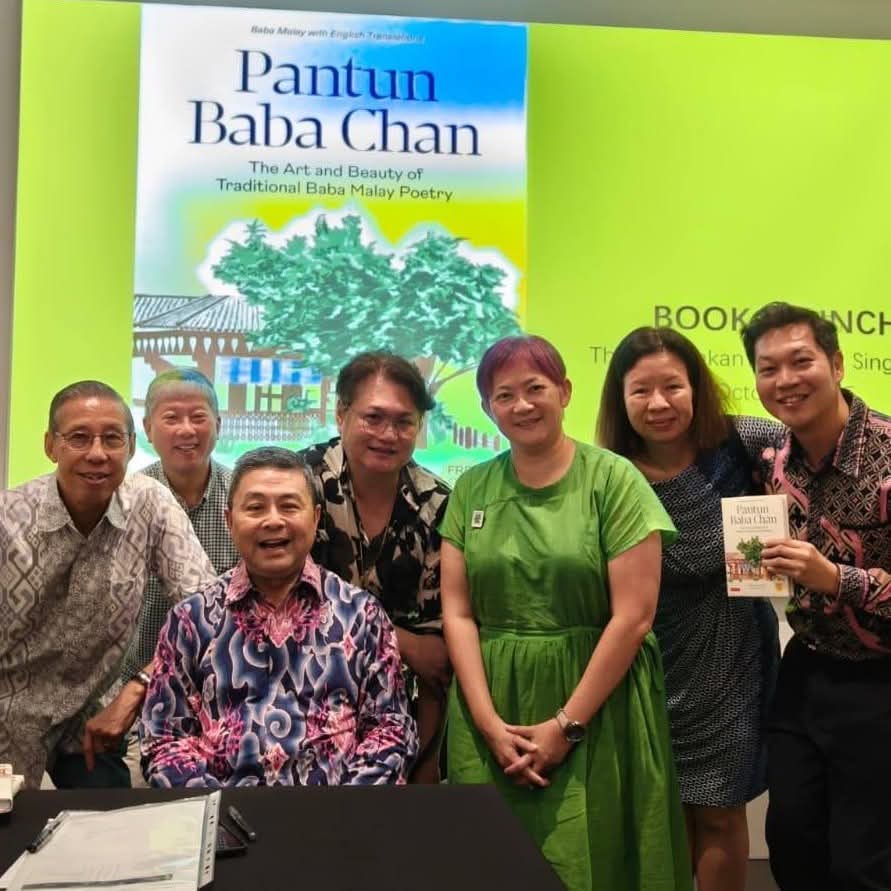
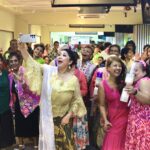
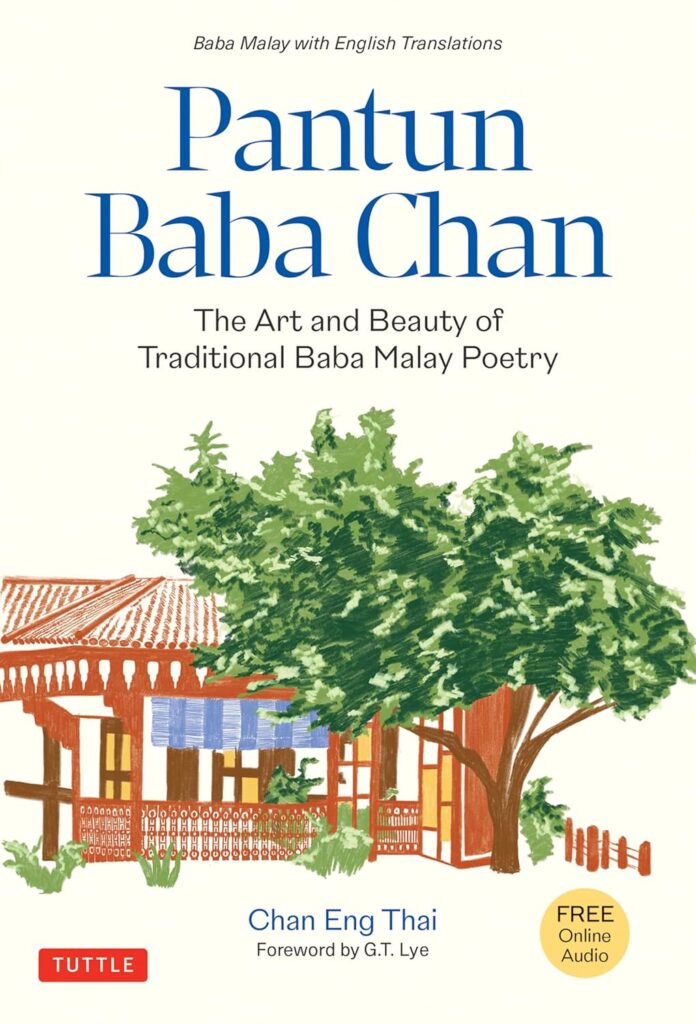
It would be a mistake to label the launch of Pantun Baba Chan by Baba Chan Eng Thai on the evening of Friday, 3 October at the Peranakan Museum as simply another Peranakan community event. Per the cover note: this book is the first collection of Baba Malay quatrains published in Singapore since the 1900s; it is certainly the first of its kind to be published with accompanying English translations.
This writer believes the book serves as a crucial documentation and tribute to the beauty of Baba Malay, of which there are a dwindling number of speakers, mostly elderly. The poems within are sectioned by themes – life, festivities, birth, death, the 12-year Chinese astrological cycle, and a last chapter featuring pantons exchanged over WhatsApp with Wayang Peranakan Doyen GT Lye.
In a presentation, Baba Eng Thai credited Koh Hoon Teck, who was “a fiercely traditionalist Baba who wrote many pantuns in Singapore during the 1940s-50s when the singing of Dondang Sayang was at its heyday”. Baba Koh passed away in 1956, and a Dondang Sayang troupe performed at his funeral.
Some 70 years later, our generation may be the last to experience Baba Malay as a living language, but it may not mean a total demise. Out of curiosity, I asked ChatGPT to write a Baba Malay panton that celebrates the beauty of language, and this is the result:

Keindahan Bahasa
Bunga melur di atas dulang,
Harum semerbak memenuhi ruang;
Bahasa indah penyambung sayang,
Budi tersirat dalam sembang.
Translation:
Jasmine blooms upon a tray,
Its scent drifts gently through the air;
Beautiful speech keeps hearts at play,
Grace and kindness hidden there.
Kamsiah – Thank you, Baba Chan Eng Thai, for shining a spotlight on the beauty of our linguistic heritage!
Hard copies of Pantun Baba Chan are now available on the Tuttle Publishing website here!