 THE PERANAKAN
Baba Ralph Gan welcomes the decision to allow members of the Peranakan community to amend official records to reflect Baba Nyonya ancestry.
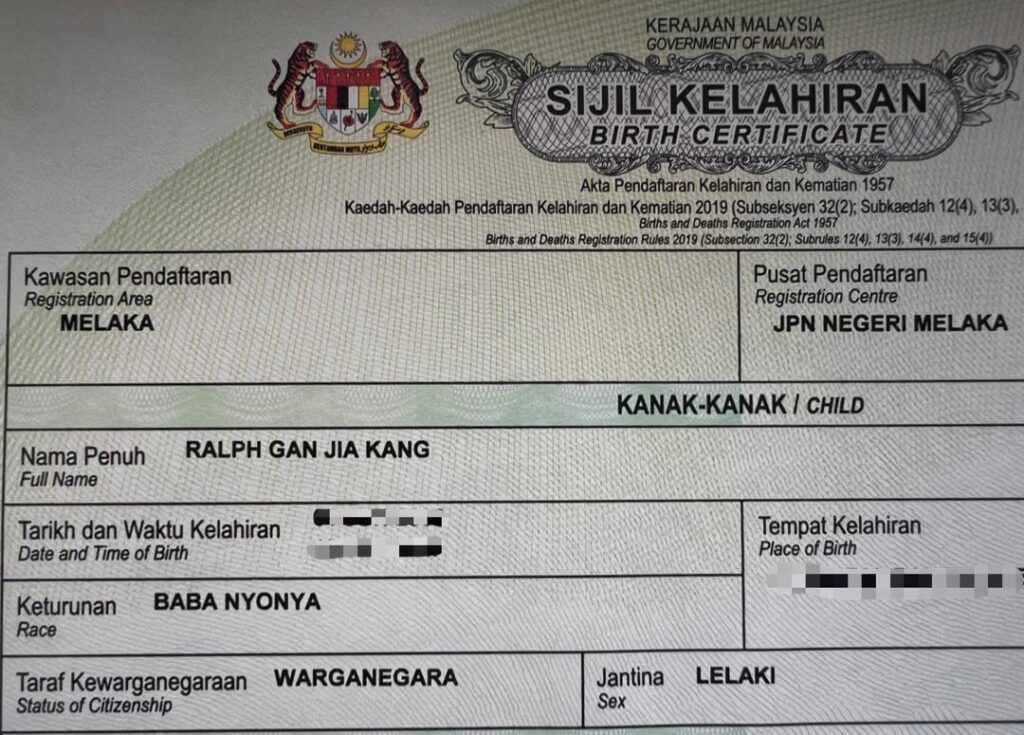
Malaysia’s decision to allow members of the Baba Nyonya community to amend official records so that birth certificates and identity documents reflect Baba Nyonya ancestry may appear, at first sight, to be a small administrative act. A form is corrected. A record is updated. A word is added where, for many years, a broader word had stood in its place. Yet for those of us who grew up knowing ourselves as Baba, the matter is not small.
I truly welcome it.
I welcome it not because it gives the community any special privilege, nor because it turns us into something we were not before. It does not. I welcome it because official recognition has finally begun to catch up with family memory. The National Registration Department or Jabatan Pendaftaran Negara (‘JPN’) began the process in Melaka on 1 October 2025, before the process was extended nationwide from January 2026. By 20 January 2026, the Melaka JPN had reportedly received 71 applications to amend ethnic status to Baba Nyonya in personal identification documents, with 22 approved and the rest still under evaluation. For a community whose history has often been visible in museums, restaurants, kebaya displays and tourism collateral, but less visible in formal state categories, that is a meaningful development.
I write as someone who grew up knowing from my father that our family is Baba, perhaps of the seventh generation, or more. That sort of identity is not always learnt from a certificate. Sometimes it is learned at the dining table. Sometimes from the way older relatives speak. Sometimes from old photographs, family stories, food, prayers, names, weddings, funerals, a few remembered words, and the quiet certainty that one belongs to a particular line of people. It may not always be dramatic. Most inherited things are not. They sit in the background until someone outside the family asks us to explain who we are.

For the longest time, we were categorised as Chinese, and, while not wrong, it felt incomplete. The better view, in my humble opinion, is that Baba Nyonya recognition is not a rejection of Chinese roots but a more precise recognition of a particular Chinese-descended Malaysian heritage. The phrase I keep returning to is this: that Baba Nyonya identity is not de-Sinicisation; it is localised Chineseness. One may be Chinese by ancestry, Baba by cultural inheritance, Malaysian by citizenship, and Malaccan, Penangite, Singapore-linked or otherwise Peranakan by family memory. These are not mutually exclusive categories. They are layers.
The historical literature supports such a reading. The Peranakan Chinese have been described as communities formed through the adaptation of Chinese cultural traditions to regional indigenous elements, with the Baba of Melaka speaking a Baba version of Malay as mother tongue and adopting certain Malay cultural features, while remaining a minority within the Chinese group. Another account of the Straits Chinese described them as ethnic Chinese who, through time and circumstance, became locally rooted and subject to Malay and British influences, while preserving many aspects of traditional Chinese culture. Put less academically, the Baba did not become Baba by ceasing to be Chinese. They became Baba because Chinese inheritance lived long enough in this region to take on local form.
That distinction matters because criticism of the policy sometimes begins from an anxiety. Some questions that if the document says Baba Nyonya rather than Chinese, does it mean we are discarding our roots? I do not think so. The root remains Chinese. The branch is Baba Nyonya.
A useful way to frame the point is to separate ancestry, culture, identity and administrative classification. Ancestry asks where one’s forebears came from. Culture asks how a community lived, adapted and transmitted meaning. Identity asks how people understand themselves. Administrative classification asks what the state records on paper. The present change concerns the fourth category. It does not erase the first three. A birth certificate that says “Baba Nyonya” does not erase genealogy, clan memory, ancestral worship, Chinese kinship values, Chinese New Year practices, Cheng Beng observances, food culture, or the inherited Chinese elements that remain embedded in Baba life. One study of Peranakan culture notes that although the Peranakan spoke Malay, ate a Malayanised cuisine, and adopted Malay elements in dress and kinship terminology, many customs were still heavily Chinese in form and substance, e.g. filial piety and ancestral worship.
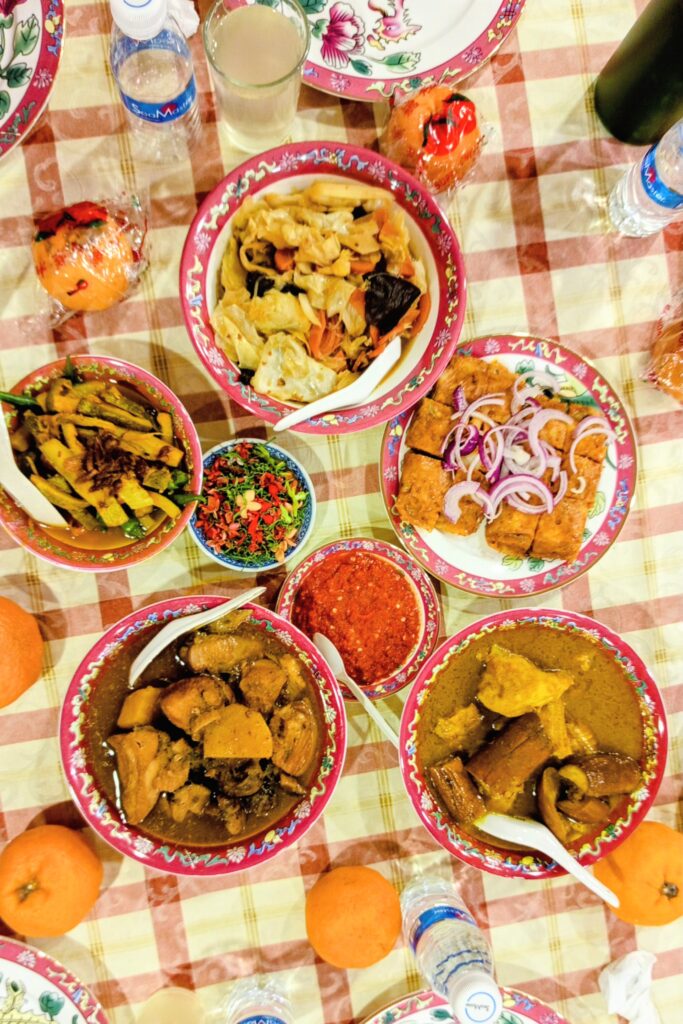
That is precisely the point. Baba identity is not purity. It is continuity through adaptation. The same truth appears in language. Baba Malay is not simply Malay with a few decorative words. It carries a Chinese outlook through a Malay medium. The literature describes Baba Malay as a Malay patois or creole, with many words borrowed from Hokkien and other languages, and as the mother tongue of many Babas and Nyonyas who did not speak a Chinese dialect. Another study explains that Baba Malay developed among Chinese immigrants and their locally born descendants who adopted Malay, but used it to express Chinese values and a Chinese worldview. A language can change its surface and still carry an older structure of feeling underneath.
Official recognition cannot preserve all of that by itself. No government department can keep a language alive merely by amending a record. No MyKad (identity card) can teach a child the tone in which an elder is addressed. No birth certificate can revive a forgotten prayer, restore a lost recipe, or make a family sit together long enough for stories to pass from one generation to the next. However, recognition can do something more modest, and still important. It can give a community permission, in the public sphere, to call itself by the name it has long used in private.
This is why I regard this as a positive development. It is also why credit must be given to the Association and its president, Dato’ Ronald Gan for bringing the matter this far. Community recognition of this kind rarely happens by accident. It usually comes after years of letters, meetings, explanations, doubts, persuasion, and patient insistence. The said association has historically played a role in protecting and articulating community interests. The older associations in Singapore, Malacca and Penang were formed between 1900 and 1920 and later became anchors for a Peranakan resurgence whose platform today is more cultural than political. More recent associations have also had to ask what it means to keep Peranakan culture alive without turning it into a fossil or a tourist offering. The present recognition belongs in that longer story of organised community work.
The process, from reported accounts, is not one of casual self-identification. Applicants are required to provide documents, obtain support from the relevant association, and undergo JPN review. Bernama reported that applications require important documents and a support letter from the Baba Nyonya Peranakan Association of Malaysia, followed by a rigorous interview before consideration by JPN’s Personal Information Amendment Panel Committee. The state cannot amend ancestry particulars merely because a person feels like adopting a fashionable identity. Such discipline is commendable.
Even so, care is needed. Culture does not always survive in neat files. Some families may have strong documentary proof. Others may have broken records because of informal registration practices, intermarriage, conversion, adoption, poverty, or simple neglect. Some will have family stories but little paper. Some will know the food but not the language. Some will still know the language but not the ritual. The danger is not recognition. The danger is bureaucratising authenticity too narrowly.
A person should not have to perform Baba-ness theatrically before the state. It should not become a costume test, nor should the imagined model of the “true Baba” become so narrow that genuine families are excluded because their inheritance has survived imperfectly. The better approach is cumulative, which are lineage, family memory, community recognition, photographs, association records, oral history, cultural practice, and historical continuity. A living culture should be verified, not embalmed.
There is also a larger Malaysian question here. Our national life has long been organised through broad racial categories, i.e. Malay, Chinese, Indian, Bumiputera, Orang Asli, Kadazan, Iban, Sikh, Siamese, Eurasian and others. These categories may have administrative uses, but they do not always describe how people live. Ethnicity is not a single thing. It may operate as identity, category, group, memory, political marker, cultural inheritance, or social expectation. One study of Malaysian Chinese ethnicity observes that different levels of Chinese identity may operate simultaneously, and that lower-level subethnic identities can remain meaningful even when broader Chineseness becomes politically more salient. That observation helps explain why the Baba Nyonya issue is not a contradiction. It is possible to be Baba and Chinese at the same time. One identity does not swallow the other.
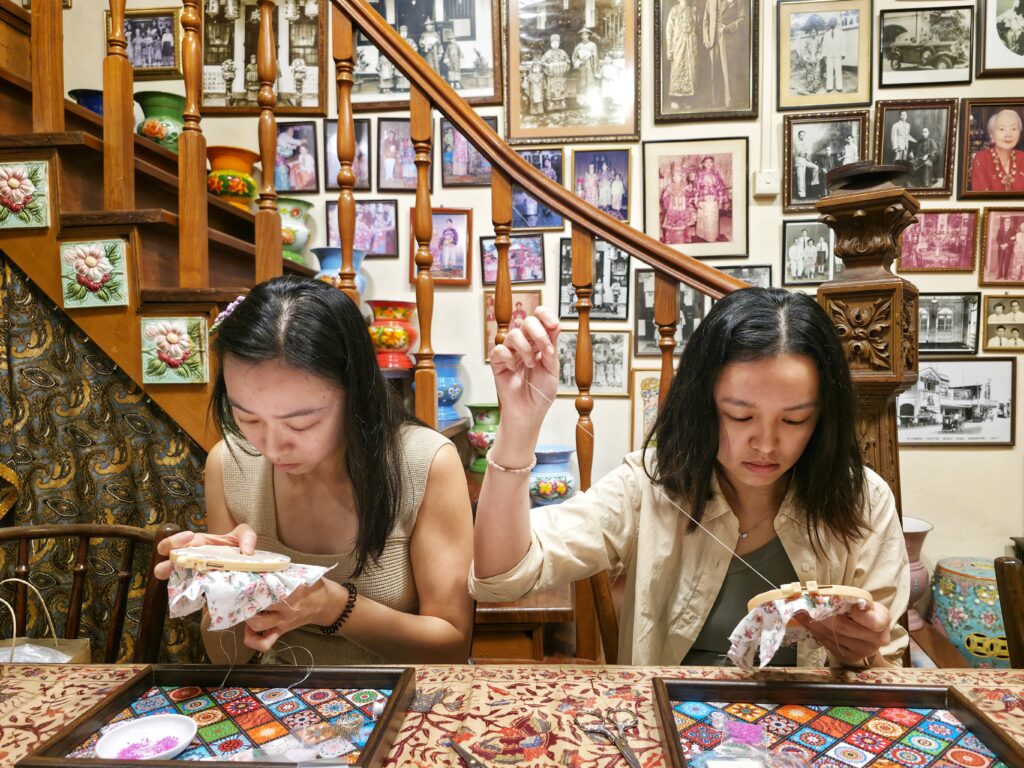
The constitutional sensitivity should not be ignored. Article 153 of the Federal Constitution (Art. 153 FC) remains part of the constitutional framework, and public discussion of race or ethnicity in Malaysia often becomes anxious very quickly. Art 153 FC safeguards the special position of Malays and natives of Sabah and Sarawak while also safeguarding the legitimate interests of other communities. Baba Nyonya recognition should not be misdescribed as a claim to Malayness, Bumiputera status, or a new constitutional race. It is better and more accurate to understand it as recognition of keturunan, sub-ethnic lineage, or cultural ancestry within the broader Malaysian Chinese and Peranakan historical experience. Malay Mail reported the recognition as allowing the Baba Nyonya community to be formally recognised as a sub-ethnic group within Malaysia’s Chinese population. This framing would then avoid unnecessary political fear while preserving historical truth.
The positive value of the policy is therefore not material. It is not about financial incentives or legal advantage. Options The Edge reported a similar point from within the community: “Baba Nyonya status is not about material benefits or privilege, but about continuity of identity and recognition of ethnic lineage”. That is exactly how I understand it. Recognition matters because it tells a small community that its memory is not merely decorative. It has public standing.
There is something moving about that. Perhaps it is difficult to explain to those who have never had to fit themselves into a broad category that was accurate but not precise. To be recorded simply as Chinese while knowing oneself as Baba is not an injury in the dramatic sense. It is subtler. Over time, such disappearances accumulate. A name drops out of official use. A language weakens. A child no longer asks. A grandparent dies. Suddenly what was once ordinary becomes “heritage”.
That is why the recognition should not end at documentation. It should lead to preservation. Baba Malay should be documented seriously. Oral histories should be recorded while elders are still here. Family genealogies should be preserved. Community archives should be supported. Schools and museums should tell the story not only through kebaya, kasut manek, porcelain and cuisine, but also through kinship, language, ritual, migration, marriage, humour, class, gender, memory and whatever else that makes us, us. The literature already warns that Peranakan culture is vulnerable and that Baba Malay is already described as fast dying, and many traditional customs have diminished under modern pressures. A state record will not save these things. But it may help create the conditions in which people think they are worth saving.
I am also aware that the community itself must do the work. It is too easy to ask the government to recognise us while we fail to recognise ourselves in daily life. We cannot expect a line on a document to carry what families no longer teach. If we want Baba Nyonya identity to remain alive, it must be lived beyond festivals and photographs. It must be spoken about at home. It must be passed down without embarrassment. It must be allowed to evolve without being diluted into nothing. As a young Baba and part of the next generation, I believe that parents play the biggest role in shaping their children. There should be no embarrassment in speaking even a little Baba Malay at home, or in practising some of our simple adat, so that children can see, hear and experience the culture for themselves. Culture shapes our identity, and only when people understand themselves more deeply can they understand where they come from and why it matters.
There is no need to freeze the Baba Nyonya community in the past. Cultures do not survive by becoming museum exhibits. They survive by changing without losing their thread. Peranakan associations themselves have recognised this tension, that the culture must not become over-commodified as tourist attraction, nor fossilised as museum display, but must remain a living, breathing culture. That is the challenge now.
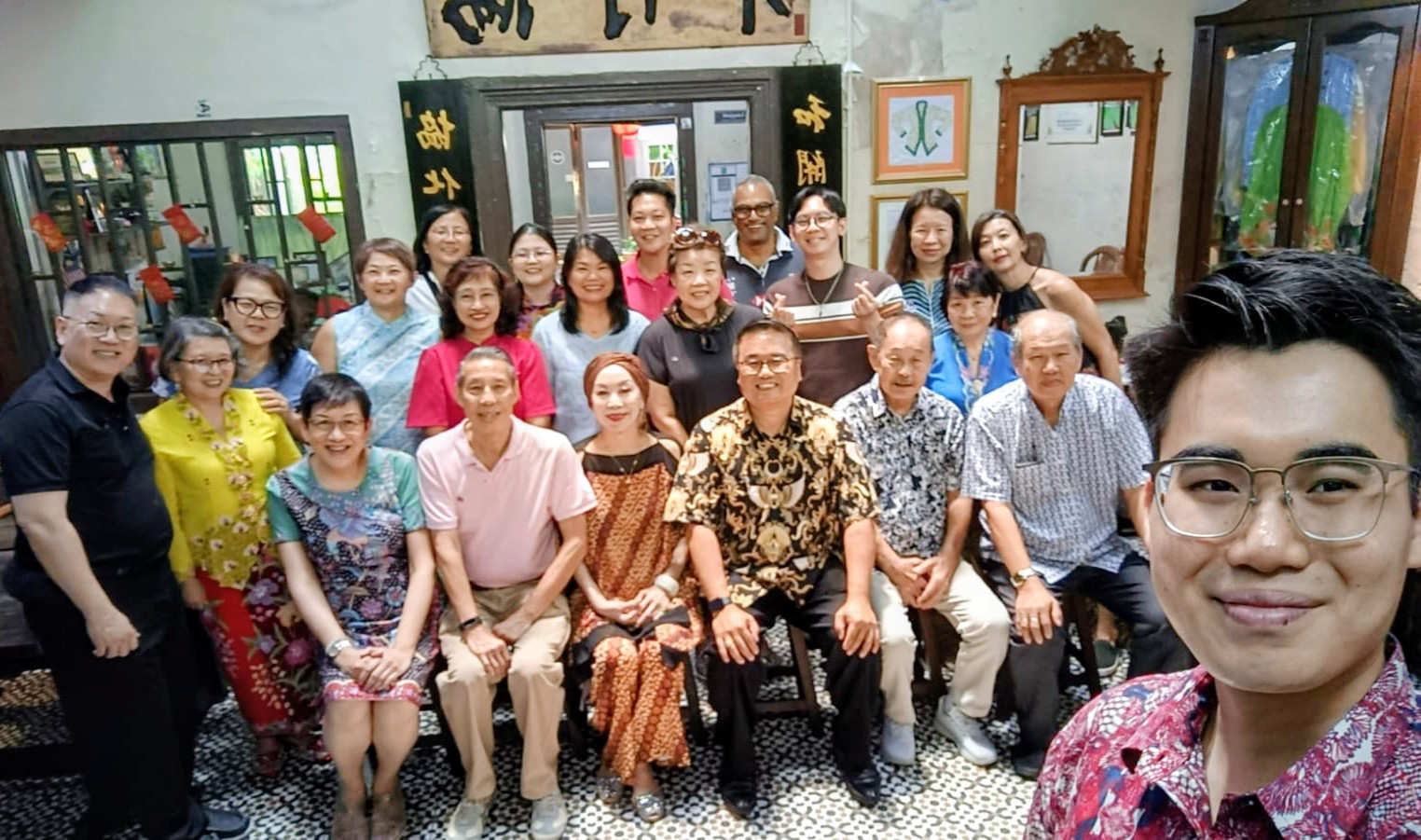
The recognition of Baba Nyonya ancestry in civil documents is therefore, in my view, a welcome correction. It does not solve everything. It does not preserve language by itself. It does not answer every question of proof. It may create hard cases at the margins. But its direction is right. It allows a historically rooted Malaysian community to be named more accurately. It tells younger Babas and Nyonyas that what they inherited is not merely nostalgia. It tells us all that we belong. To those who worry that Baba Nyonya recognition discards Chinese roots, I would answer plainly that it does not. For me, this is not a rejection. It is a return. Not a return to China, nor to some pure past that never existed, but a return to accuracy and a return to memory.
***
Written by Baba Ralph Gan, 29th April 2026, in celebration of the Persatuan Peranakan Baba Nyonya Malaysia’s 40th Anniversary.