 THE PERANAKAN
Peranakan beading may look like a delicate pastime, but for many families, it carries deep meaning. More than decoration, it reflects identity, memory, and connection — quietly passed down through generations. Nyonya Angeline Kong reports.
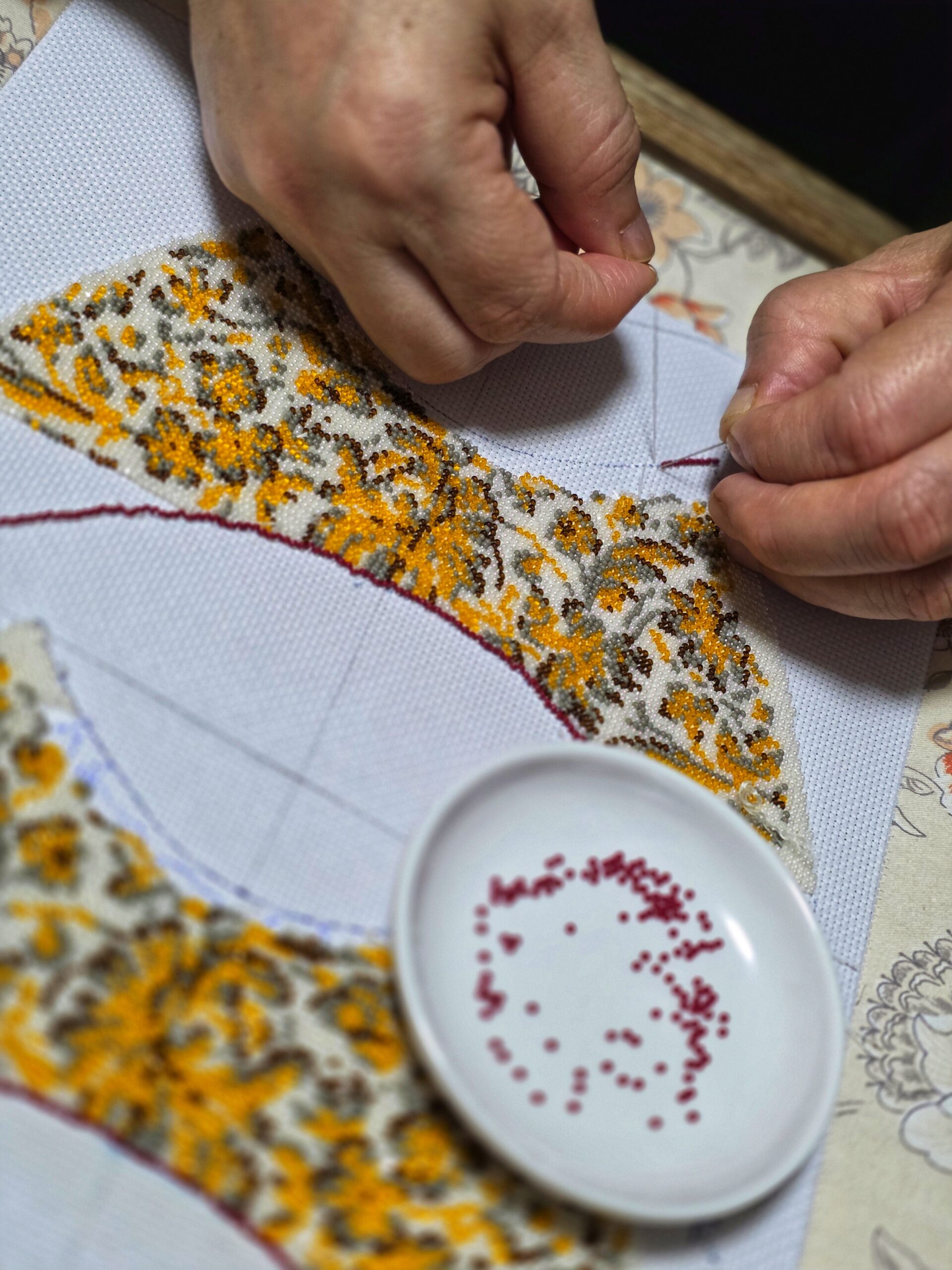
In earlier days, beading was part of everyday life in Peranakan households. Young girls learned from their mothers and grandmothers, often sitting together in the afternoons to practice simple stitches before moving on to more complex patterns. A completed pair of kasut manek could take months to finish and was worn for weddings and festive occasions, often treasured as family heirlooms and passed down through generations.
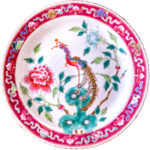
Motifs were carefully chosen and reflected a rich blend of European and Chinese influences, mirroring the Peranakan community’s mixed heritage. Floral garlands, symmetrical layouts, and decorative borders echoed European aesthetics, while phoenixes, peonies, and butterflies carried Chinese symbolism. The phoenix represented virtue and grace, peonies symbolised prosperity and honour, and butterflies were often linked to love and happiness.
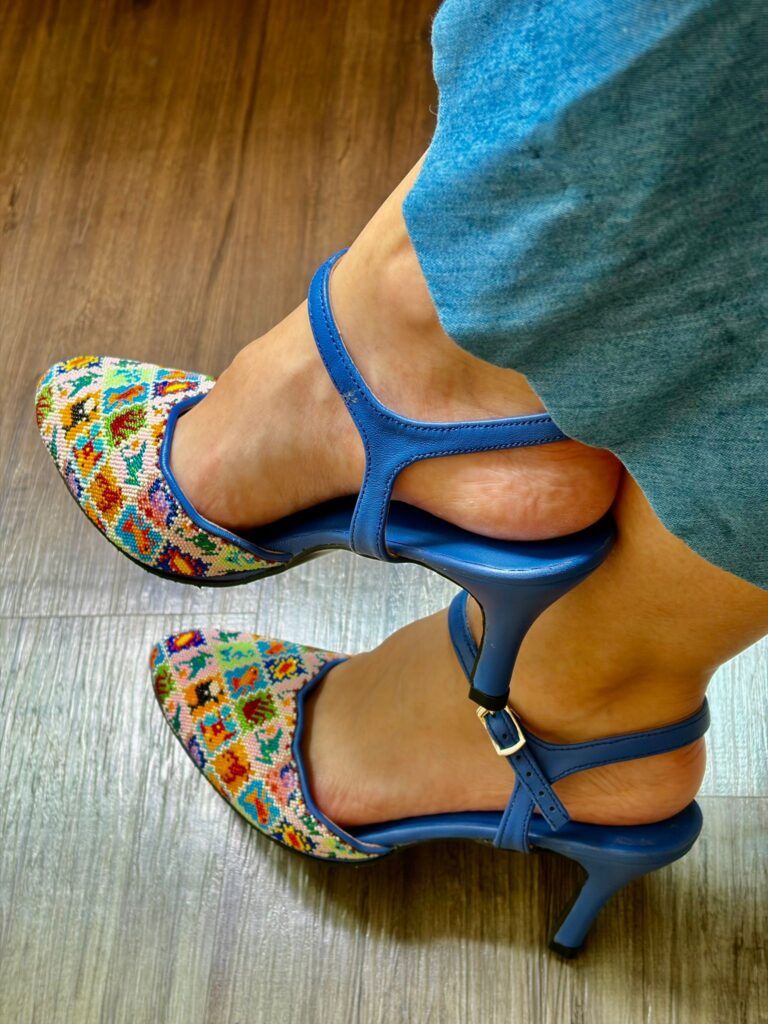
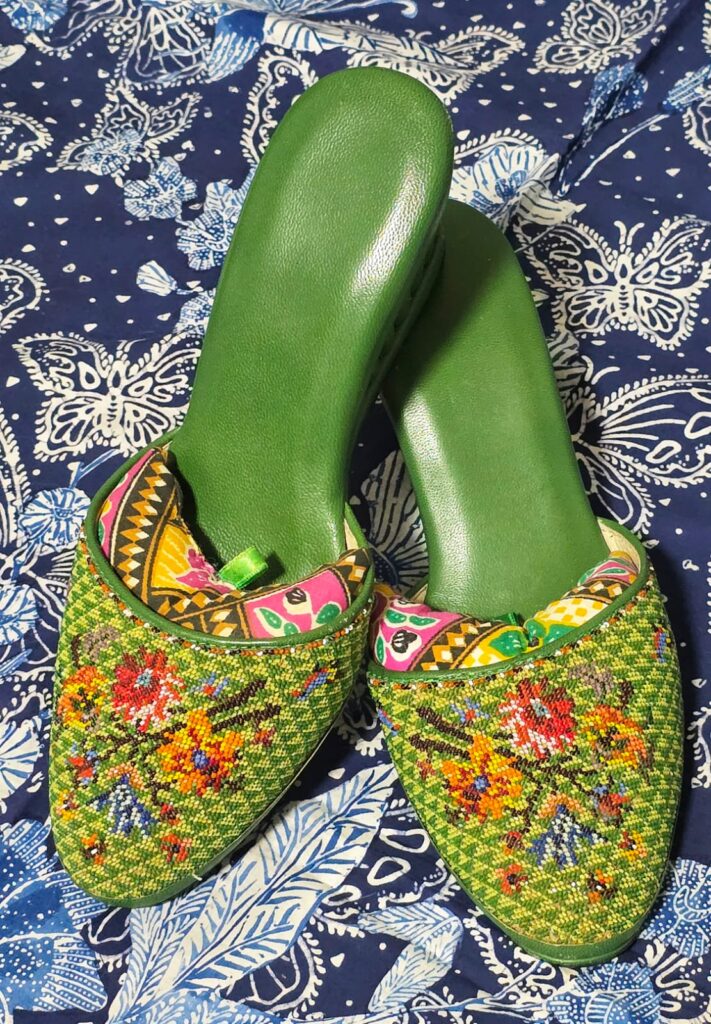
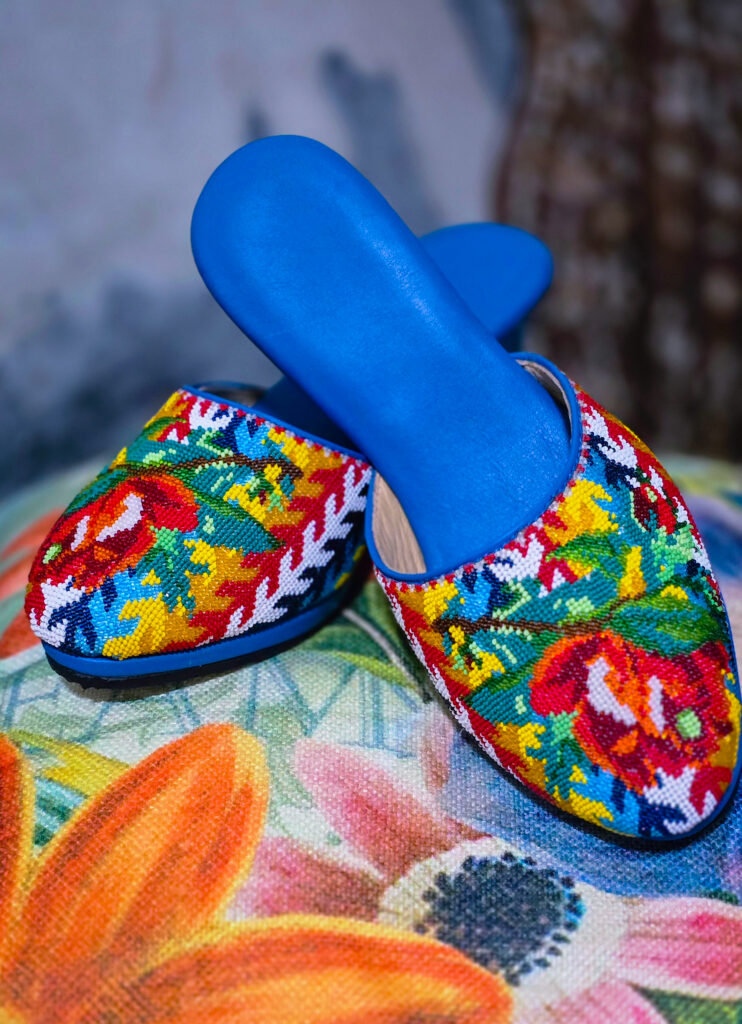
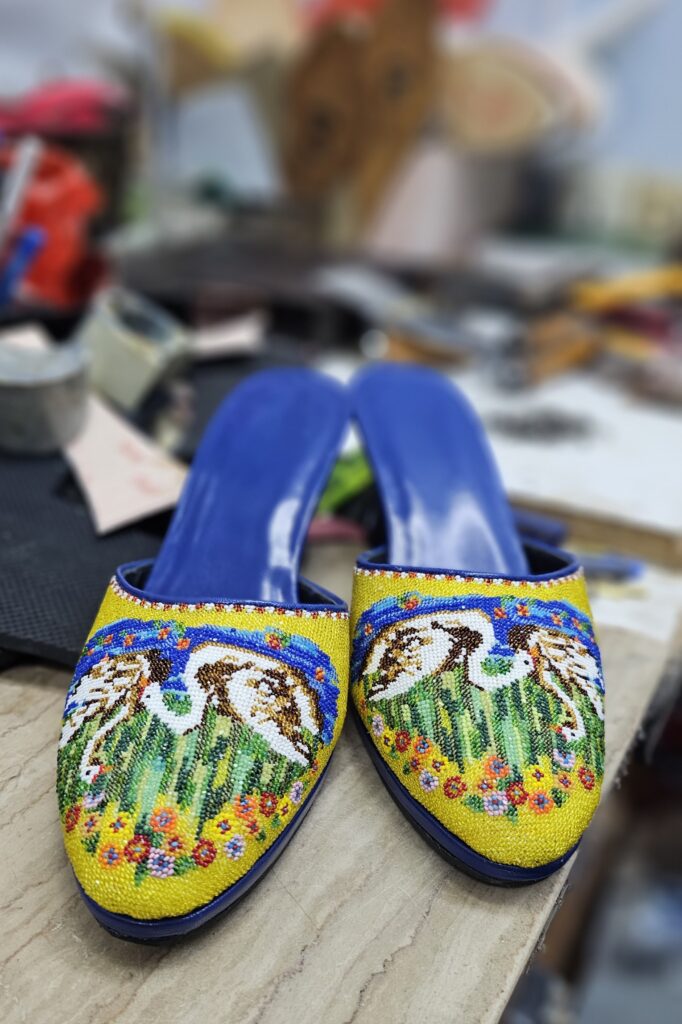
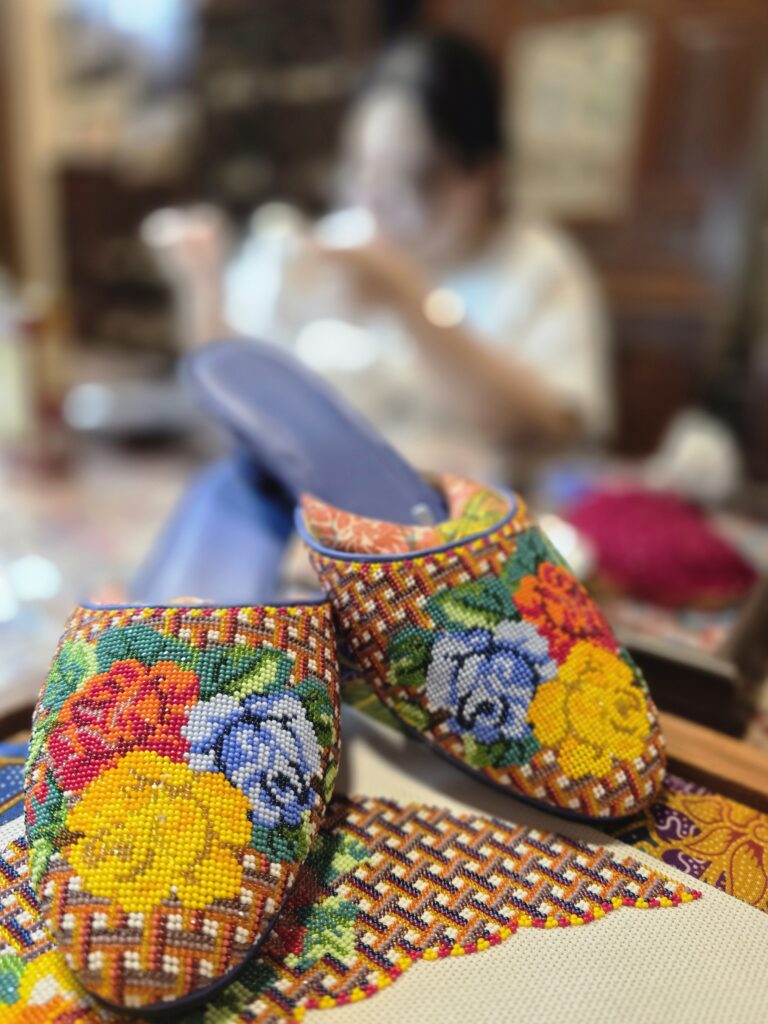
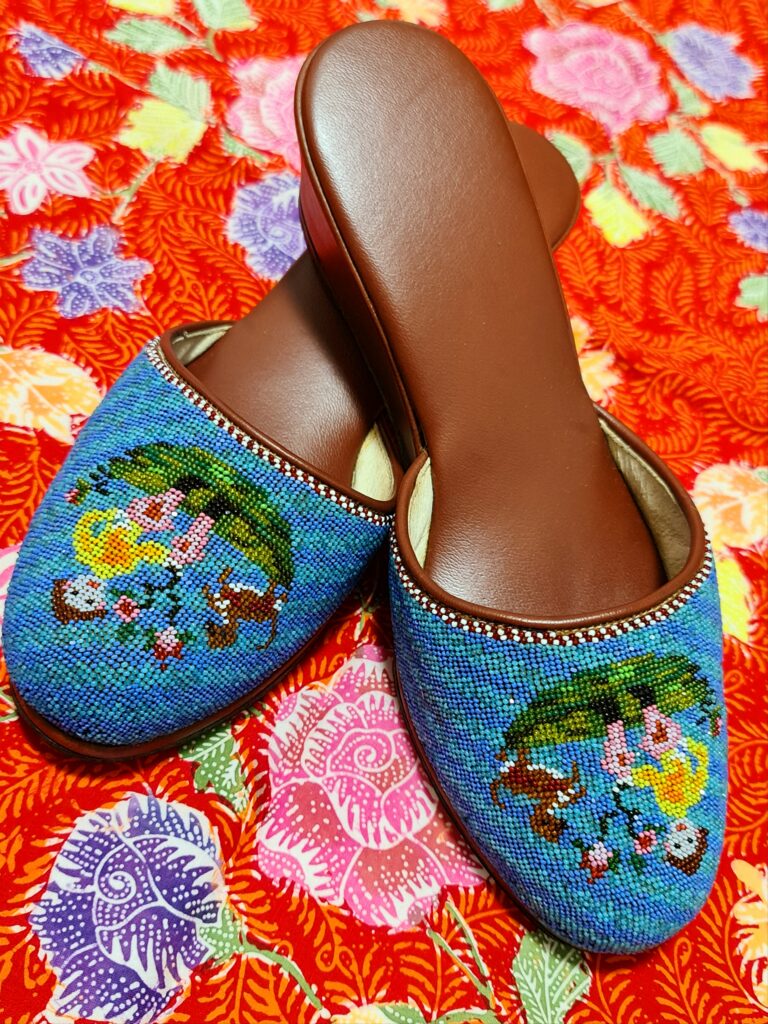
Many of the early faceted glass beads used in Peranakan beadwork were imported from Europe. Valued for their clarity, sharp facets, and brilliance, these beads were precious and often reused or kept within families.
The craft faced disruption in the 1940s during World War II, when glass bead production slowed and imports became scarce. Without materials, many families stopped beading altogether. In the decades that followed, as modern lifestyles changed and factory-made shoes became widely available, fewer women had the time to continue such labour-intensive handwork. Gradually, Peranakan beading faded from everyday life.

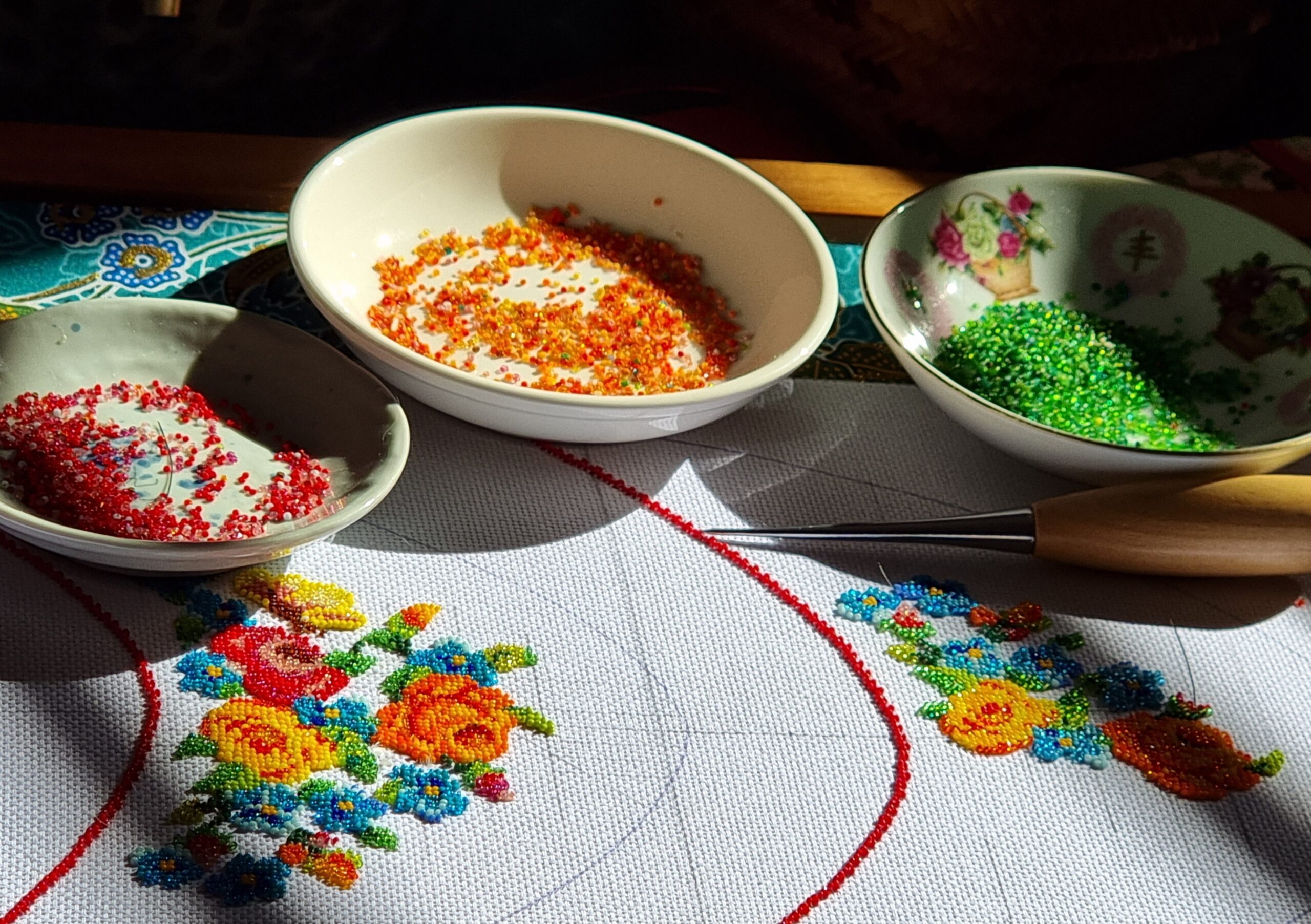
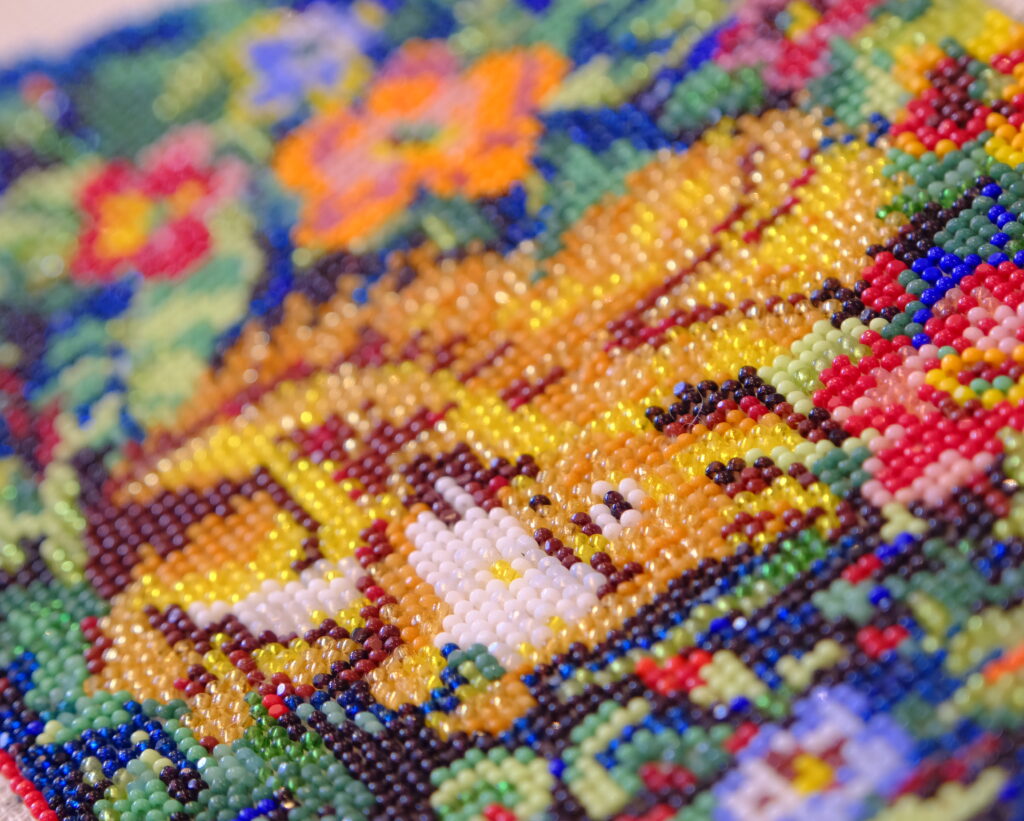
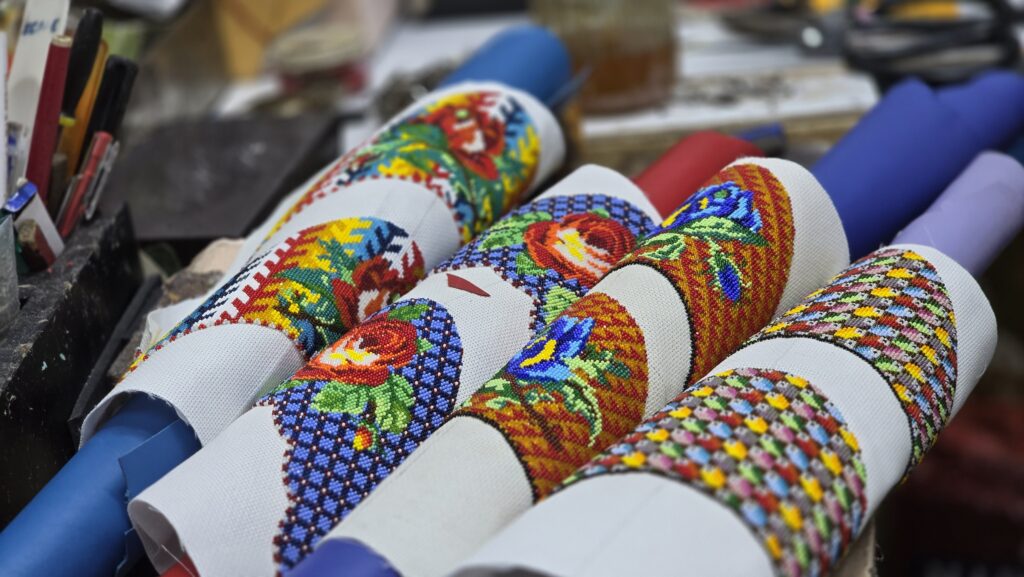
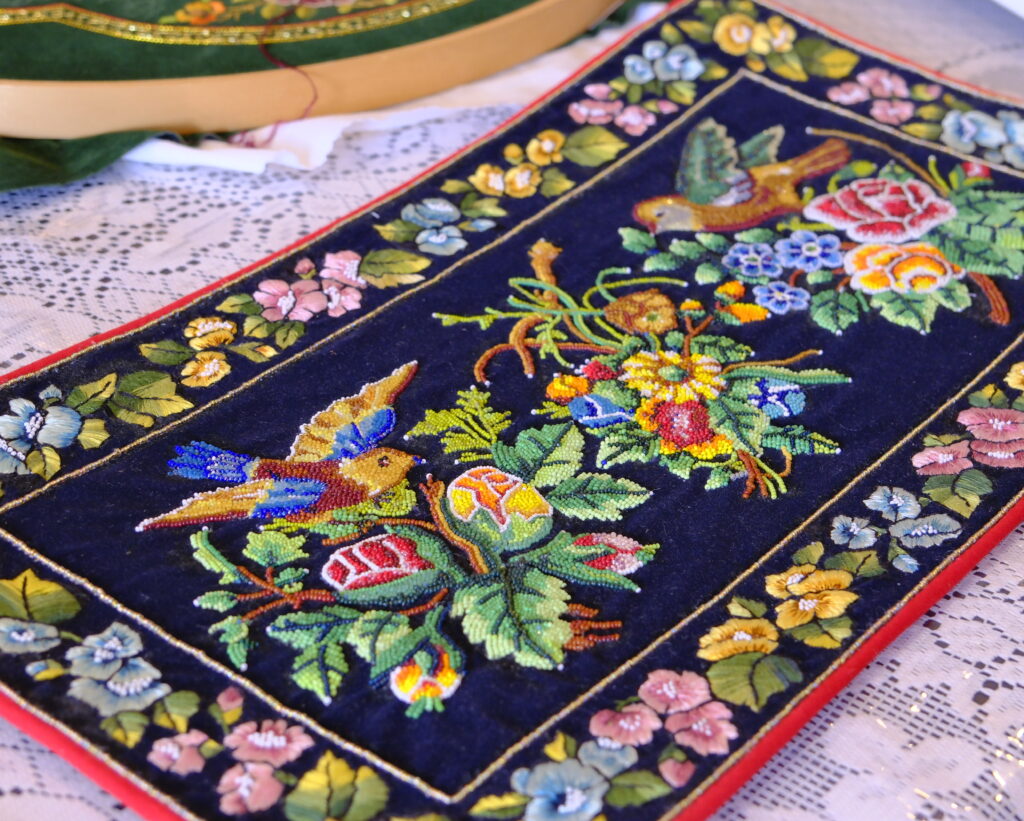
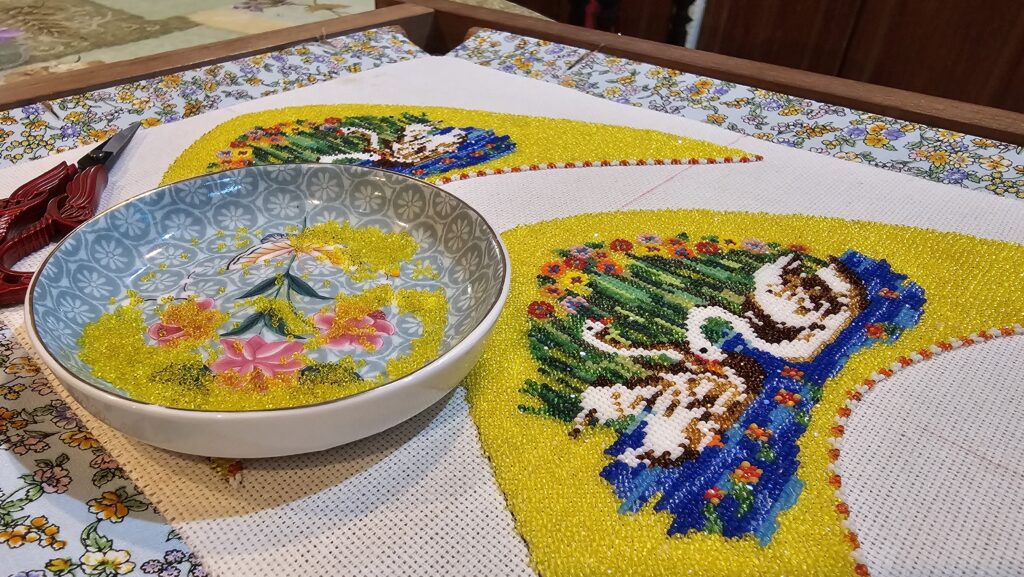
Its revival in Singapore began in the mid-1990s, led by Bebe Seet, founder of Rumah Bebe. Widely recognised as one of the key figures in preserving Peranakan heritage, Bebe Seet dedicated herself to researching and documenting traditional kasut manek at a time when the craft was at risk of disappearing. She collected antique beaded slippers, studied original motifs, sourced vintage beads, and interviewed older Nyonyas to understand traditional stitching techniques and design meanings. Through her shop, exhibitions, books, and workshops, she reintroduced Peranakan beading to a new generation and helped transform it from a fading domestic craft into a recognised cultural art form. Her work laid an important foundation for many artisans and learners who came after.
Across the border in George Town, Penang, museums and cultural centres continue organising beading programmes for youths and families. Elders share stories while younger participants learn to stitch, keeping the craft alive through everyday interaction and family bonding.
In Malacca, the Peranakan Chinese Association of Melaka and Peranakan Chinese Association of Malaysia, actively promote beading through community activities. Members gather regularly to bead together, preserving not only the craft but also the social connections that come with it. Working alongside these efforts is artisan Leena Khoo, who teaches beading methods and reminds beginners that patience is one of the most important lessons in beadwork.
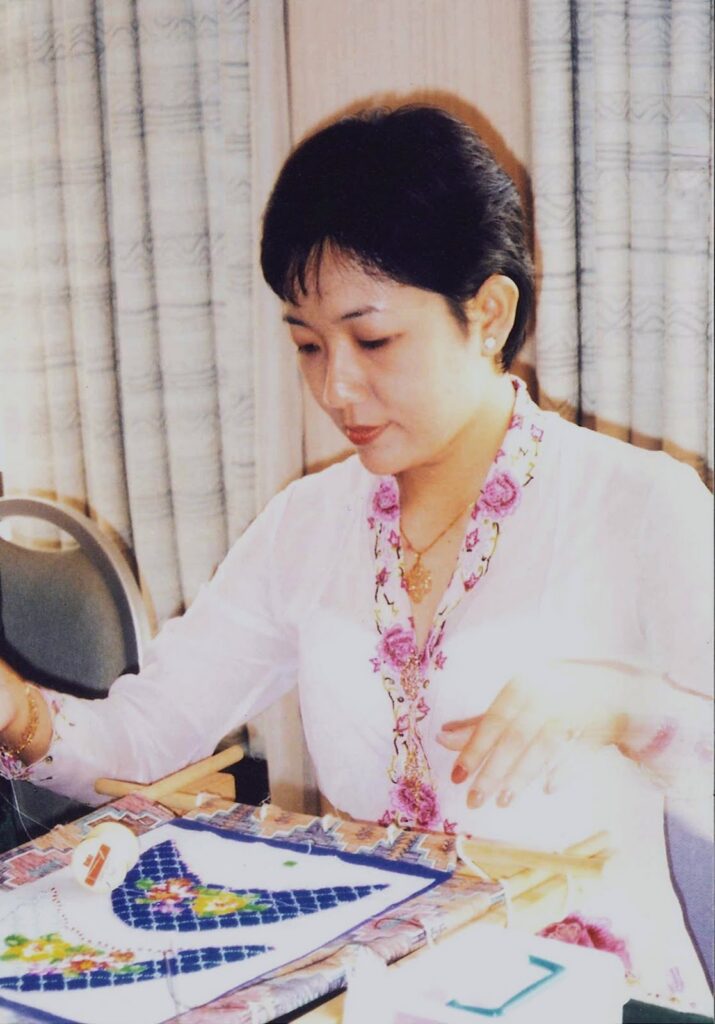
In Singapore, I began learning Peranakan beading in 1997 while preparing for my wedding. What started as a personal interest soon became a lifelong dedication to preserving the craft. Over nearly three decades, I have built a collection of Czech beads and vintage faceted beads, drawn to their workmanship, history, and timeless shine. Today, I conduct workshops, while also offering private beading sessions for individuals and small groups. Beyond formal workshops, I have been organising hobby groups for about 19 years among students and friends, creating a space for regular practice, shared learning, and friendship. Through these gatherings, the craft continues to be nurtured in a warm and personal way — much like how it was once passed down within families.
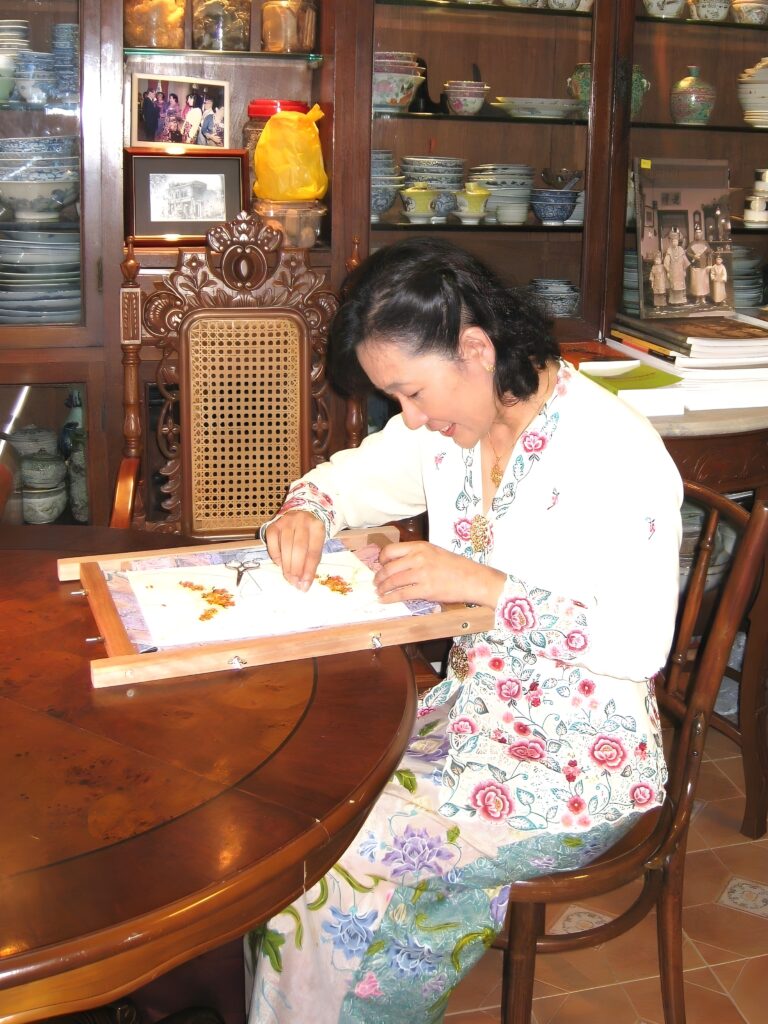
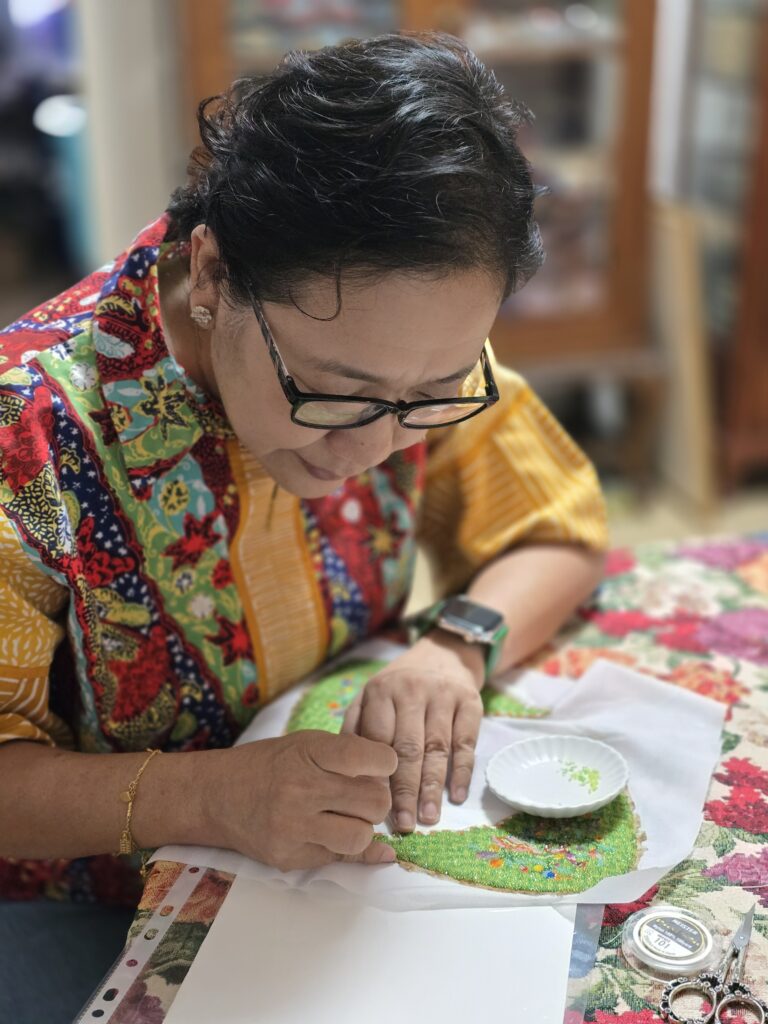
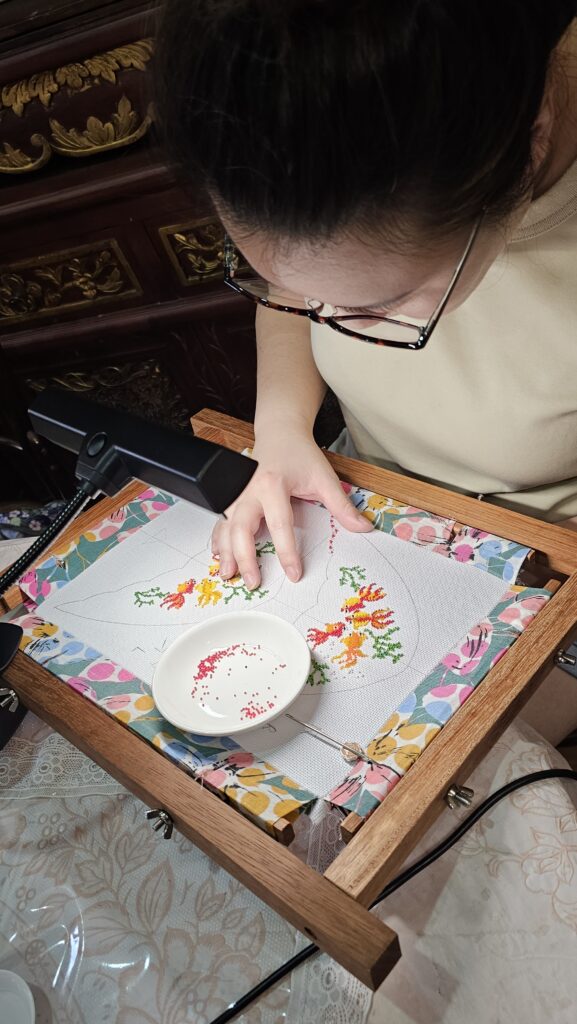
While creativity is welcomed, many practitioners stress the importance of keeping to traditional styles and techniques. Preserving original motifs, stitch methods, and layouts helps ensure the craft remains rooted in heritage, even as it continues to evolve. At the same time, old and new motifs now exist side by side. While traditional phoenixes and peonies remain favourites, some artisans gently introduce contemporary inspirations into their work. These modern interpretations often remain grounded in traditional structures, allowing the craft to grow without losing its identity.
Jackie Sam is also recognised within craft circles for detailed beadwork and thoughtful colour compositions. Through her own practice and quiet engagement with fellow enthusiasts, she contributes to the continued appreciation and preservation of Peranakan beadwork.
Young people are discovering the craft too. 23-year-old Rachel Tan says she now beads with her younger cousins on weekends. “I didn’t grow up with these traditions, but learning them makes me feel more connected,” she shares.
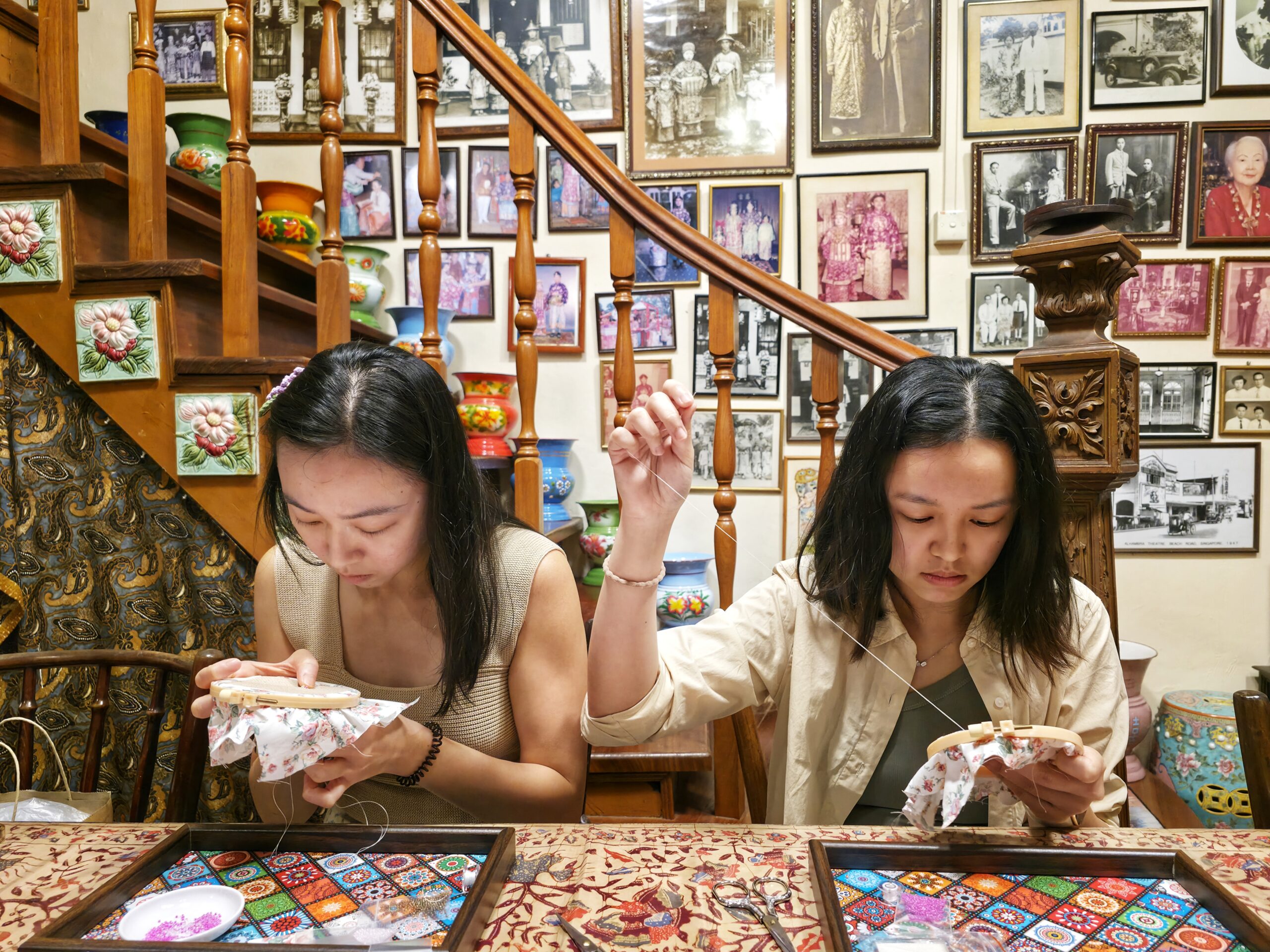
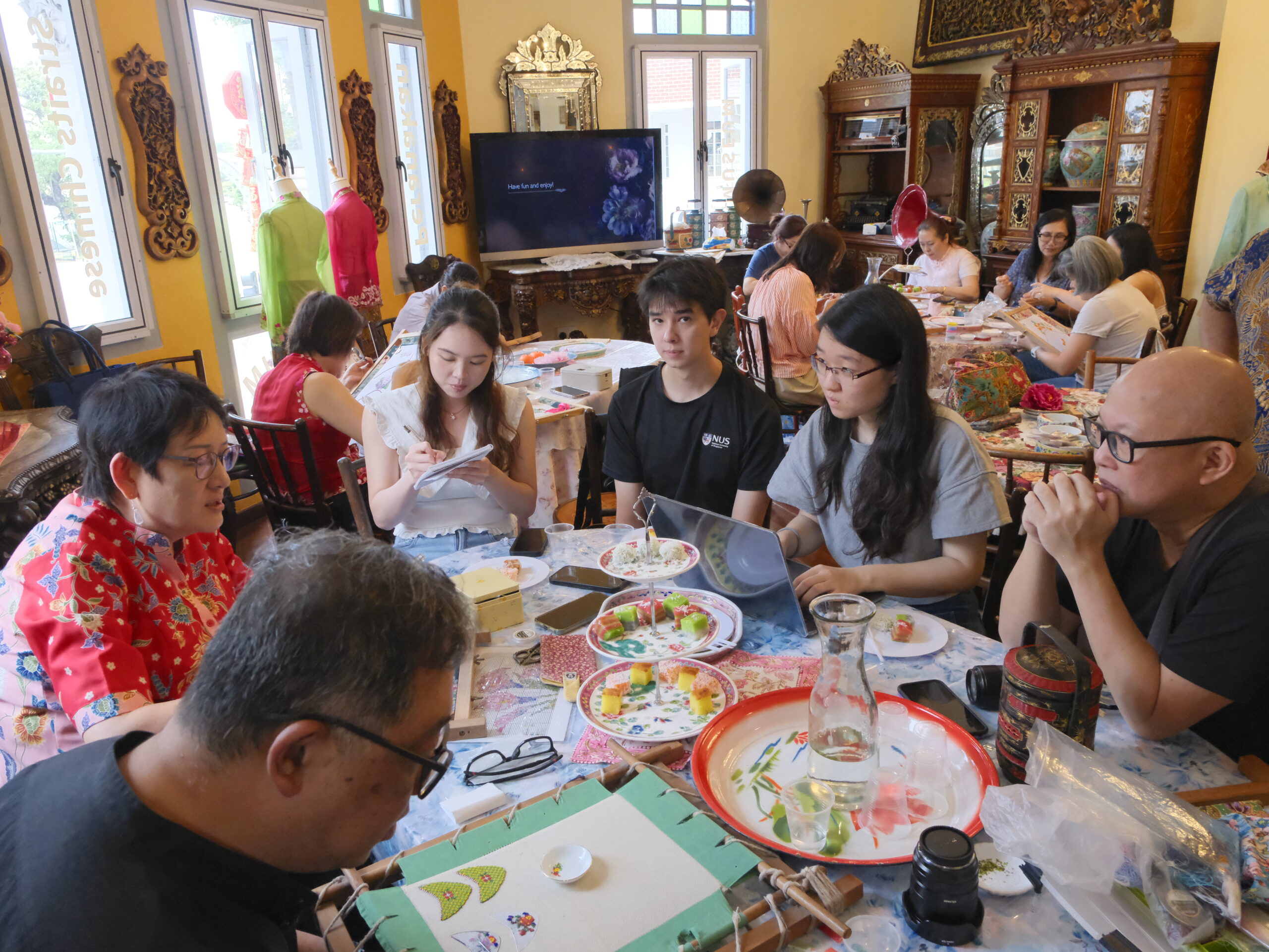
19-year-old Daniel Goh adds, “I used to think heritage belonged in museums. Now I realise it lives in what we do with our hands.”
Today, Peranakan beading extends beyond slippers to brooches, bookmarks, handbags, and decorative pieces. These adaptations help keep the craft relevant in modern life while still respecting its roots.
Peranakan beading is more than a craft — it is culture, memory, and connection. Every bead carries a story, linking us to our ancestors, our families, and our shared heritage. Through the slow rhythm of stitching, generations come together, passing down not just skills, but values, memories, and identity.
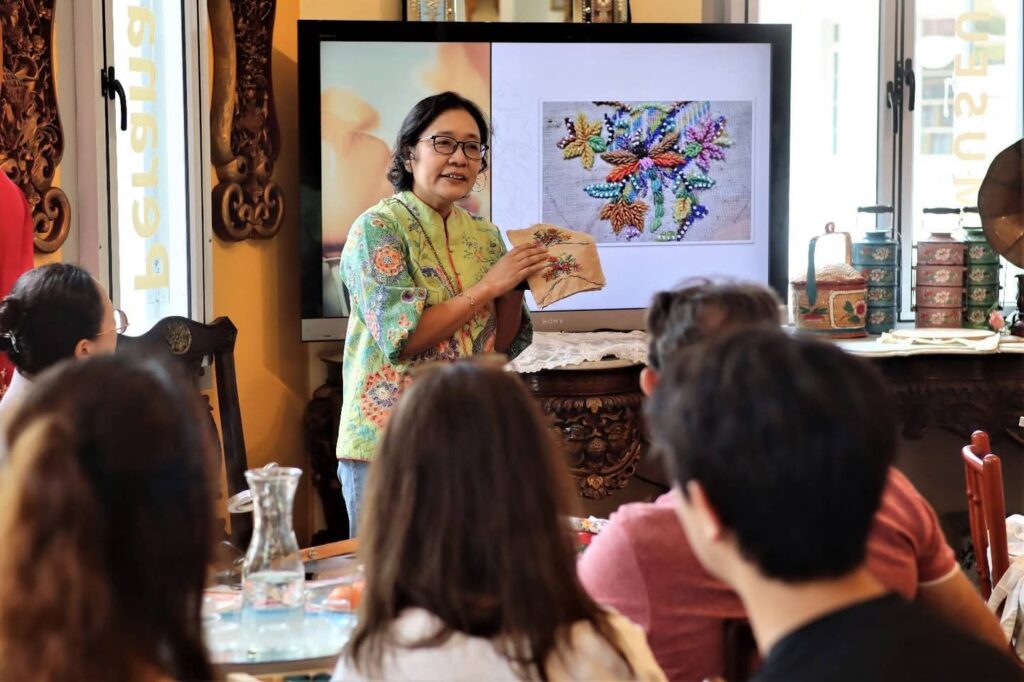
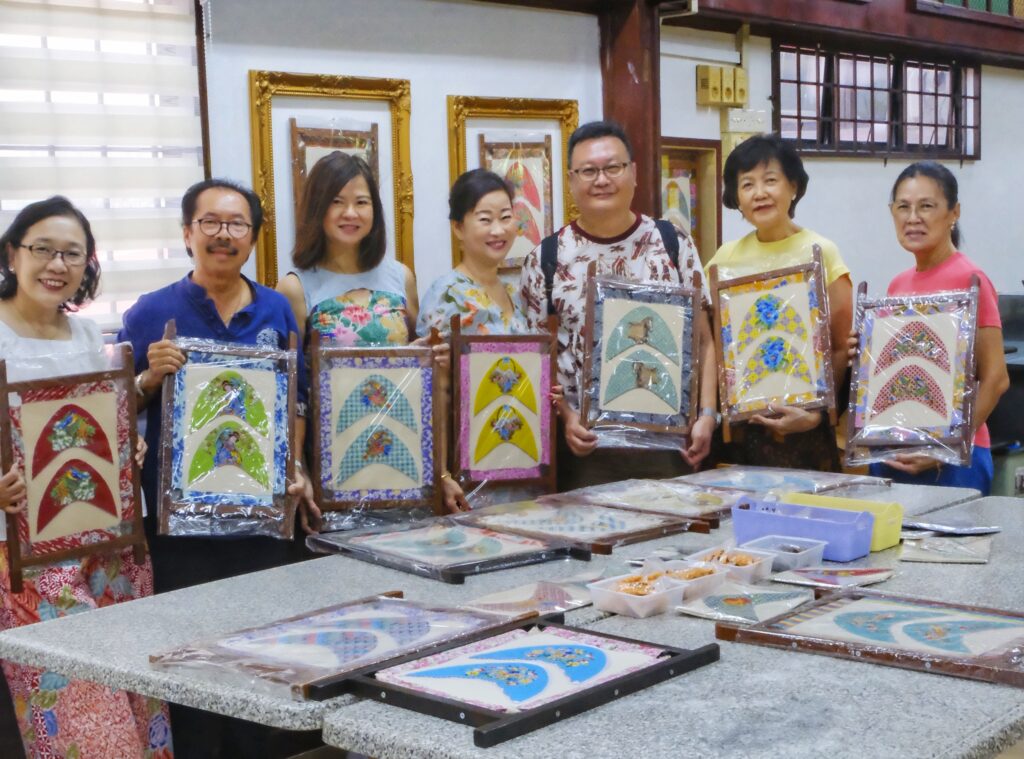
In this way, beading becomes a quiet bridge — connecting past and present, elders and youth, Singapore and Malaysia — reminding us who we are and where we come from.
In a fast-moving world, its gentle pace reminds us that some things are worth taking time for — one bead at a time.
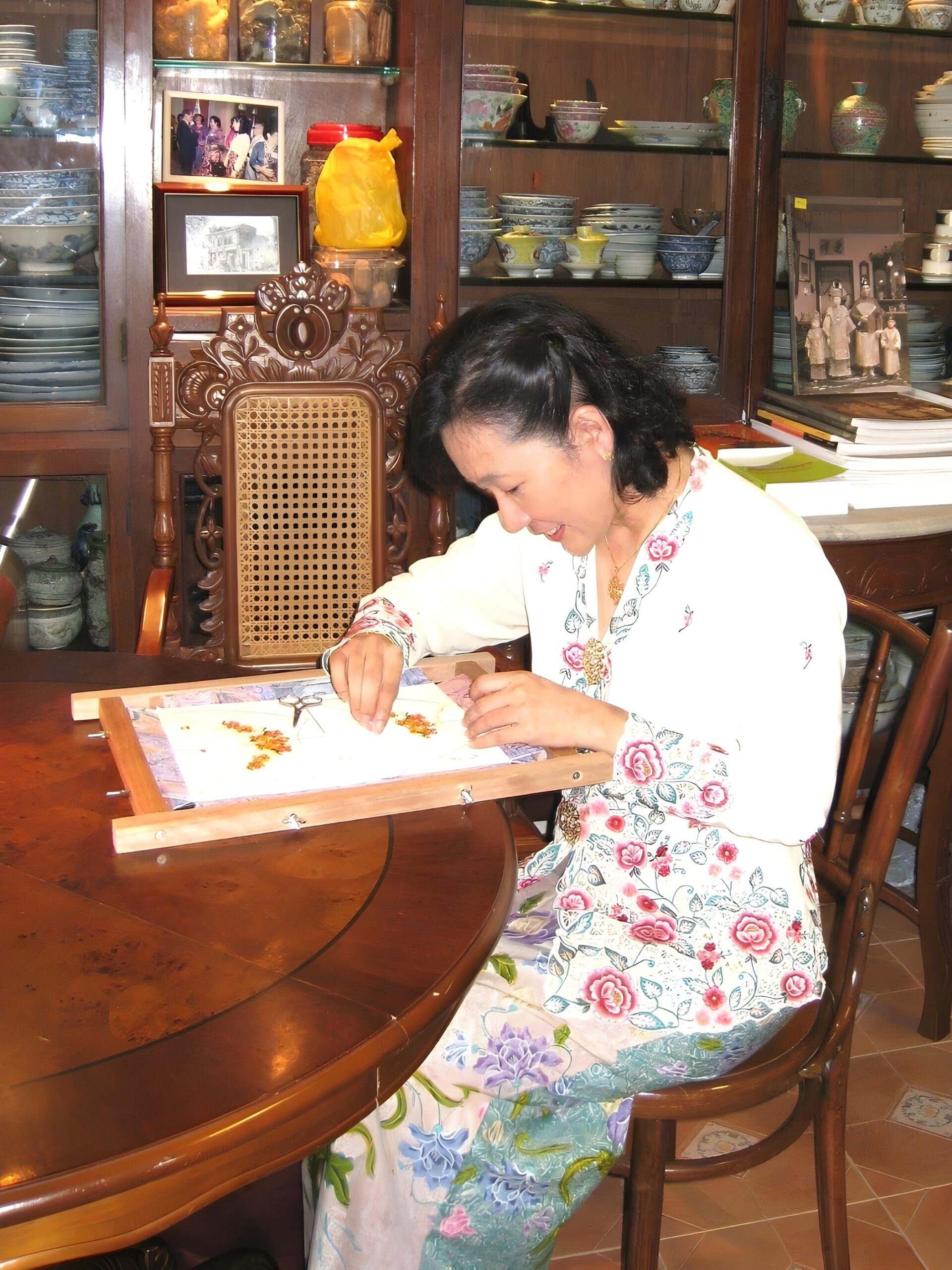
Nyonya Angeline Kong’s journey with Peranakan beading began long before she ever picked up a needle. As a young girl, she would quietly admire her grandmother’s eldest sister’s beaded shoes — mesmerised by their colours, and detail. Those early memories stayed with her, quietly waiting to bloom. It wasn’t until the age of 29 that Angeline found a teacher who could guide her hands through the meticulous world of beading. That first step marked the beginning of a lifelong passion — one that would eventually span decades.
All photos courtesy of Angeline Kong.