 THE PERANAKAN
Baba Christopher Khoo recounts the amazing Peranakan tales and folklore that his maternal grandmother told him as he was growing up, as well as her intriguing cultural practices.
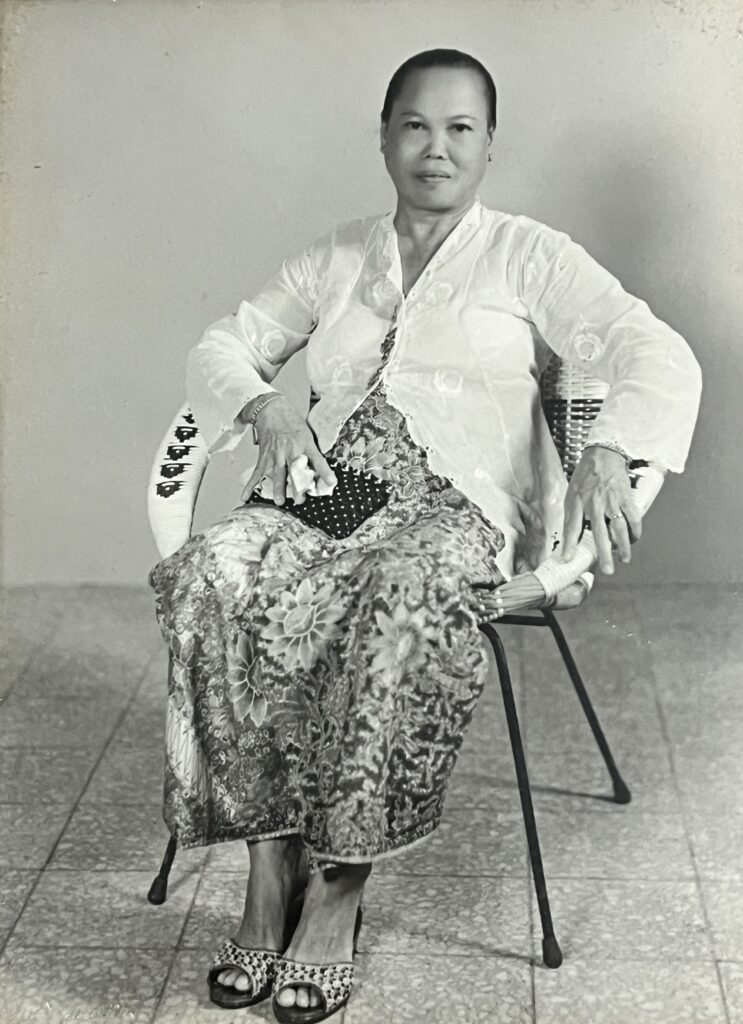
One of the most influential people in my life was my late maternal Peranakan grandmother, Madam Anna Chan Nya Nya. I was her first grandson (and first grandchild), and it was through her stories, songs, practices and sayings that I was introduced to the richness of the Peranakan heritage.
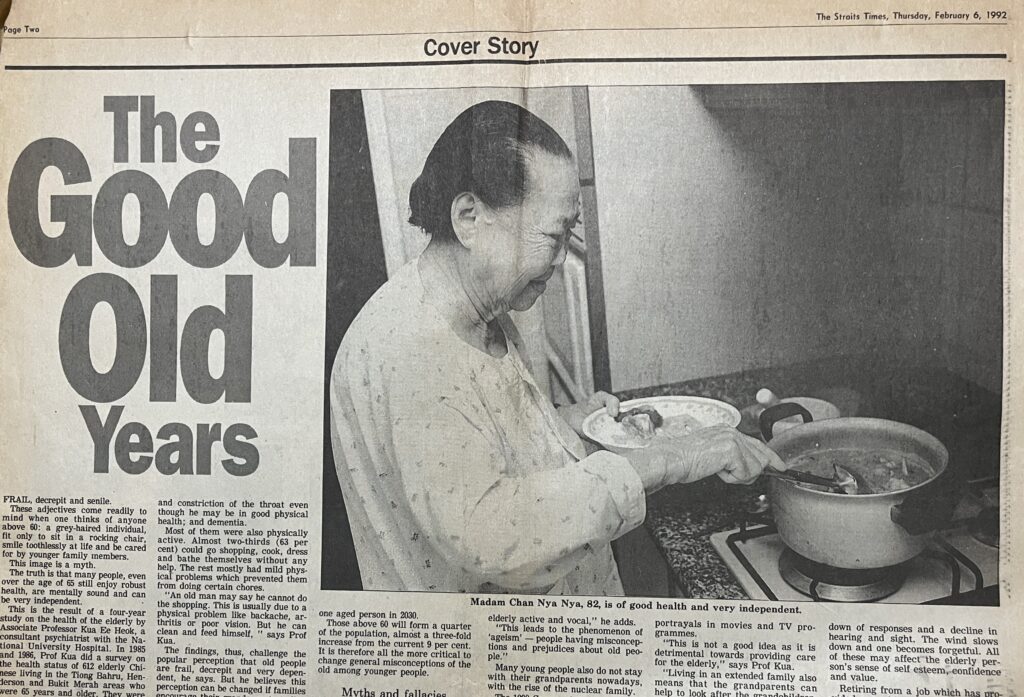
For me, she represented the best in Peranakan culture. She had this great zest for life, a wonderful sense of humour and was incredibly sociable. She also greatly valued her relationships with family, relatives and friends; loved sightseeing and appreciated good food (she was a legendary cook).
Years after she passed away at the age of 85 in 1994, I told myself that I had to compile as many of the stories she told me as possible as they are part of the rich Peranakan heritage. These are some of the very interesting stories she told me, as well as some of her practices that intrigued me.
Tales

Head-hunters on the prowl: When I was very young, she used to warn me that each time a bridge was going to be built over water, head-hunters (the violent kind) would be on the prowl to cut off people’s heads to use these to build the bridges. It was believed that human heads would strengthen these bridges. And these head-hunters would sing very sweetly to lure people to their doom. She warned me not to follow any sweet-sounding singing should I hear any.

Why banana tree leaves are tattered: My grandmother converted to Catholicism after my mother (her only child) became a Catholic having studied in Katong Convent. I remember my grandma telling me this tale of how the leaves of the banana tree came to be tattered: When the Holy Family (the baby Jesus, Mary and Joseph) were fleeing Herod’s soldiers who were out to kill boys two years old and younger, the Holy Family decided to hide in a banana tree. The baby Jesus warned the tree not to reveal their location, but the tree unfortunately gave away their hiding place to the soldiers. The baby Jesus then cursed the banana tree and from then on, all its leaves became tattered.
Superstitions / Folk Beliefs
These are some of the traditional beliefs that she carried with her, and which she shared with me:
Do not open an umbrella indoors, otherwise a tiger might appear.
Standing in the doorway when there is a thunderstorm could get you hit by lightning. This is because the lightning could mistake you for a ghost.
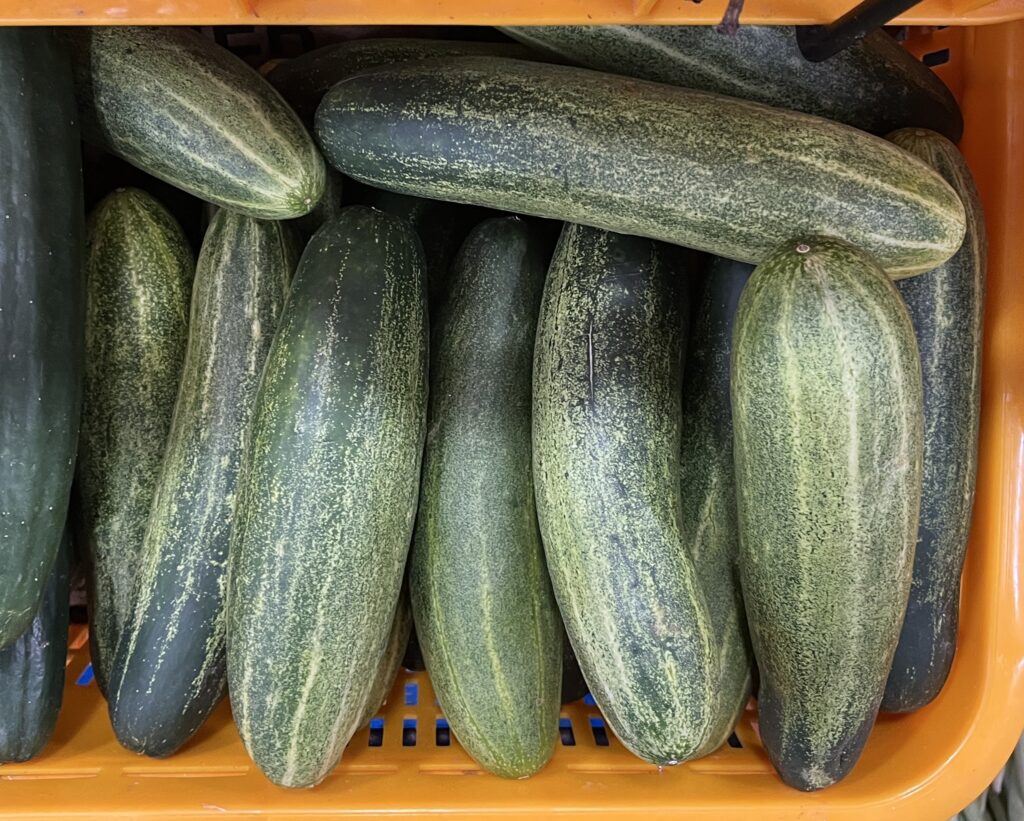
If a cucumber tastes bitter, that is because a snake had collided with it when it was still in the ground.
If you choke on your food or drink, that is because someone is talking about you. I remember once when she choked on her drink, she spluttered, “Tak tahu siapa sebuk gua” (“I don’t know who mentioned my name”). I remember asking her, “Betul ka?” (“Is it true?”), and she answered confidently, “Betul!” (“True!”).
You can tell if a pregnant woman will give birth to a baby boy or girl by looking at the shape of her stomach. If it is tajam (sharp), it will be a boy, if it is bulat (round), it will be a girl.
When the baby is born and you want to know the gender of the next child, look at the newborn’s ankles. If there is satu gelang, a single skinfold line encircling the ankles, the next baby will be a boy. If there are dua gelang (two folds), the next baby will be a girl.
Traditional Practices
I am not sure how widespread some of her practices were among the Peranakan community of her time, but here are a few:
She believed that washing her eyes with little boys’ urine would keep her eyes healthy. When I was a little boy, I would urinate into a little metal cup for convenience. Sometimes she would wash her eyes in the urine. Her eyes remained healthy and strong right up to old age, and she only needed to wear glasses for needlework.
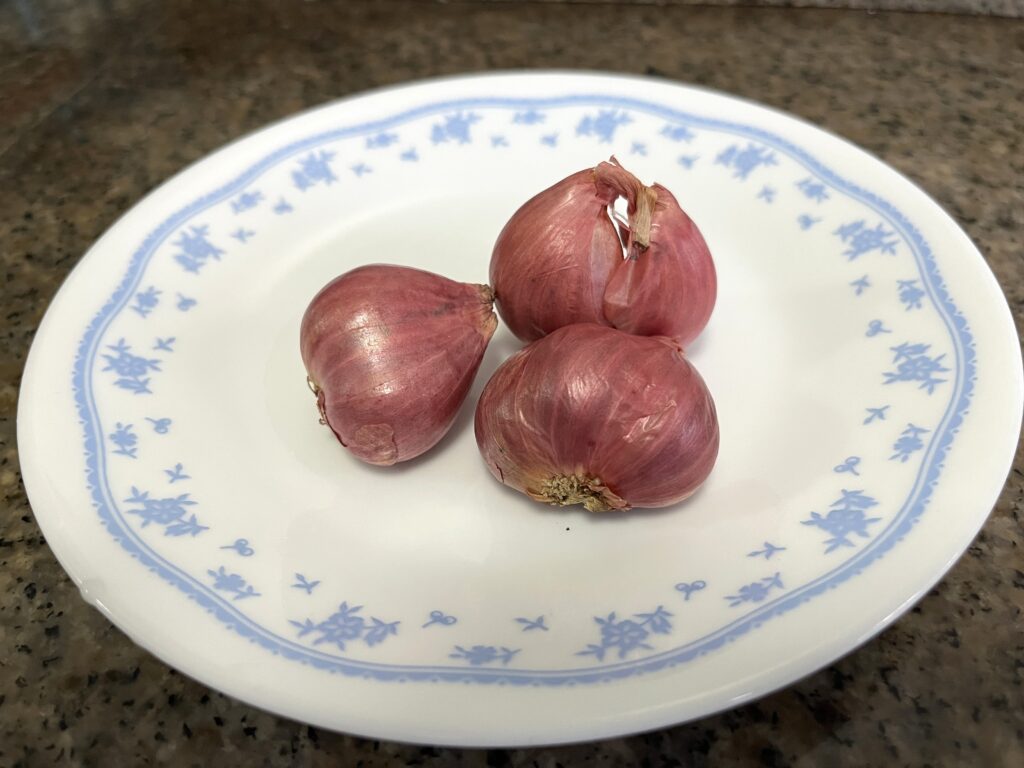
When my younger sister and I were small, my grandma would rub onions onto our skins after our baths. She believed this would remove angin (wind) from our bodies.
She loved a good massage and sometimes would have a Malay masseuse come to our home and get her to scrape her back with a plastic spoon, using a special oil which my grandma herself prepared, called minyak unchang. When I was little, sometimes she would ask me to step on her back as a form of massage.
Songs and Rhymes
And oh, the songs she sang when putting me to sleep!
I will always remember her singing “Oh bangoh, oh bangoh” (“Oh egret, oh egret”), as she patted me gently on the back to help me fall asleep. In the song, the singer questions various animals and natural elements on why a certain situation was happening with each of them. Each character then points to another as the cause of the situation.
Another song was the popular “Lenggang kangkong” (“Sway like kangkong”) as she tepuk tepuk (patted) me to sleep, sometimes apparently improvising the lyrics.
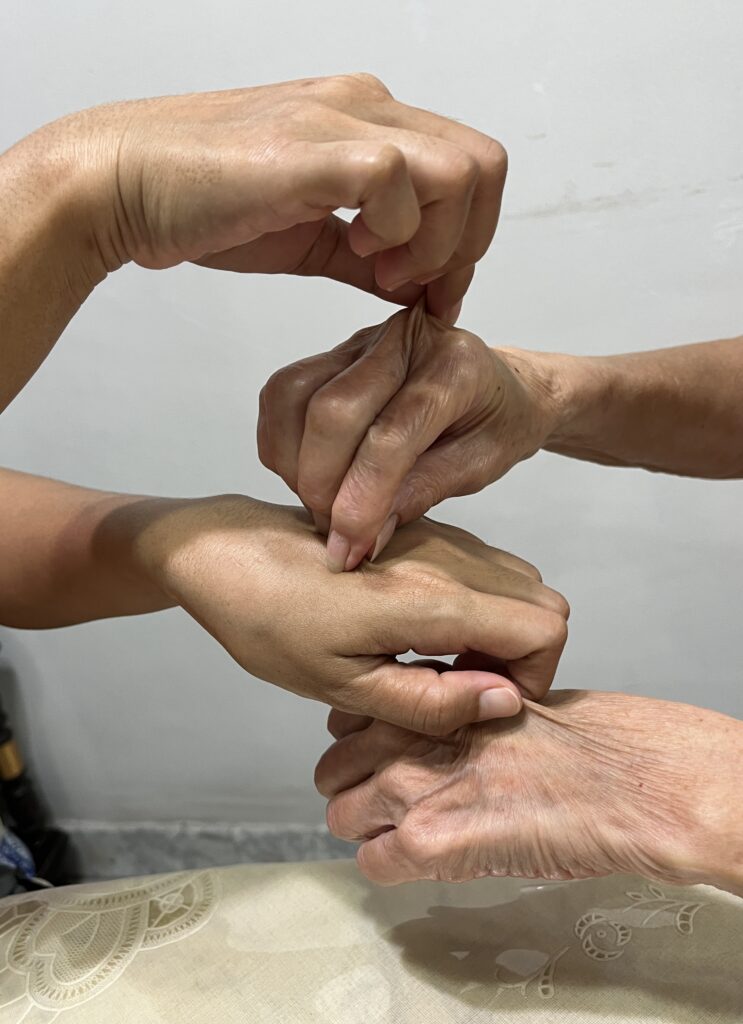
She also taught me how to play “Chubit chubit semut” (“Pinch like an ant”) in which one player would pinch the upper part of the other player’s hand as the two sing the song together. And if the pinching gets too painful, the other player then lifts his hand and pinches the top of his opponent’s hand, and so it goes on.
There were also some cute rhymes which she taught me, such as: Mbok mbok kena tumbok (older Peranakan women getting punched), and baba baba tangkap laba laba (male Peranakans catch spiders).
Skills
My grandma told me she used to be quite a tomboy in her younger days (“macam mak jantan,” she would say). She played marbles, flew kites and spun tops with the boys to the extent that “tak orang mahu kawain gua” (“no one wanted to marry me”). Nevertheless, she still got married.
I remember that she taught me how to spin a top when I was in primary school, and she was probably in her 60s at that time.
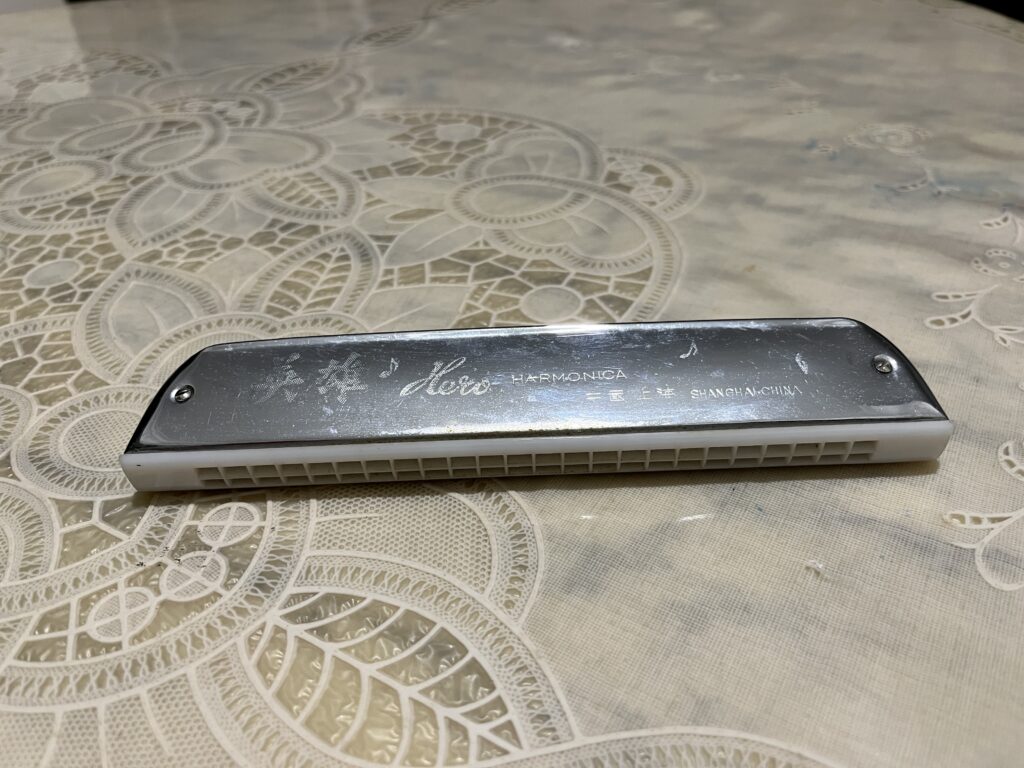
She was also incredibly musically talented, and could play the piano, harmonica and accordion – all self-taught. When I got my first piano at the age of five, she figured out how to play it herself within a few months and would often sing one of her favourite songs, Ramona, as she tinkled on the ivory keys.
Left: The author’s grandmother’s harmonica. She was musically talented and could play the harmonica, accordion and piano – all self-taught.
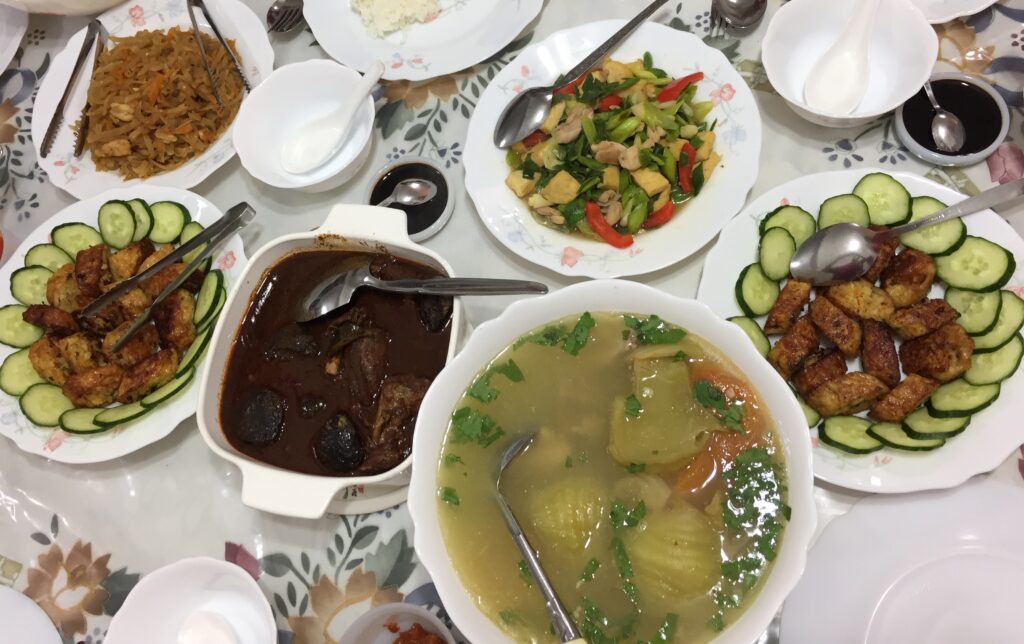
Cooking and Food
One of my earliest memories of my grandmother is of her cooking sireh kaya (traditional Peranakan coconut egg jam) in a huge double boiler, steaming the ingredients for hours. What resulted was a wonderfully delicious golden-green jam which was good enough to eat on its own.
Her babi sioh (classic Peranakan stew of pork belly or ribs, braised in a rich, tangy, and slightly sweet gravy) was legendary. The gravy was spongy, not watery, with a layer of oil floating on it. Her nasi goreng (fried rice) was also unique, incorporating salted fish, cucumber and chilli.
Another memory is of her making bottles of cincalok (a pungent condiment made of fermented tiny shrimps) to give to friends and relatives, as well as apom balik (Peranakan pancake), sometimes cooked with durian paste, which made them all the more mouth-watering.
A Critic of Peranakan Culture
Although my grandmother was well-steeped in her culture, she was nevertheless able to criticise some aspects of it, such as the practice of not giving girls high education because if they became too smart, “wait they run away with the man”, she recalled.
“Tak baca surat, tak tahu lari?” she told me in derision, pooh-poohing the belief that educated girls were more inclined to elope.
She insisted on giving my Mum a good education despite relatives telling her there was no need for that. “Gua penya anak, gua penya suka” (“my child, my decision”), she said. “Lain hari dia boleh piara gua” (“in the future, she can look after me”).
She also noted how the Peranakan custom of giving people nicknames sometimes led to some people being referred to rather derogatorily. For example, a female relative was given the nickname tokpoh (rag) because she was dirty when she was a child. “Ada ka nama kan orang tokpoh?” (“how could you call someone a rag?”) my grandmother once said disapprovingly.
Lu happy, happy tahu?
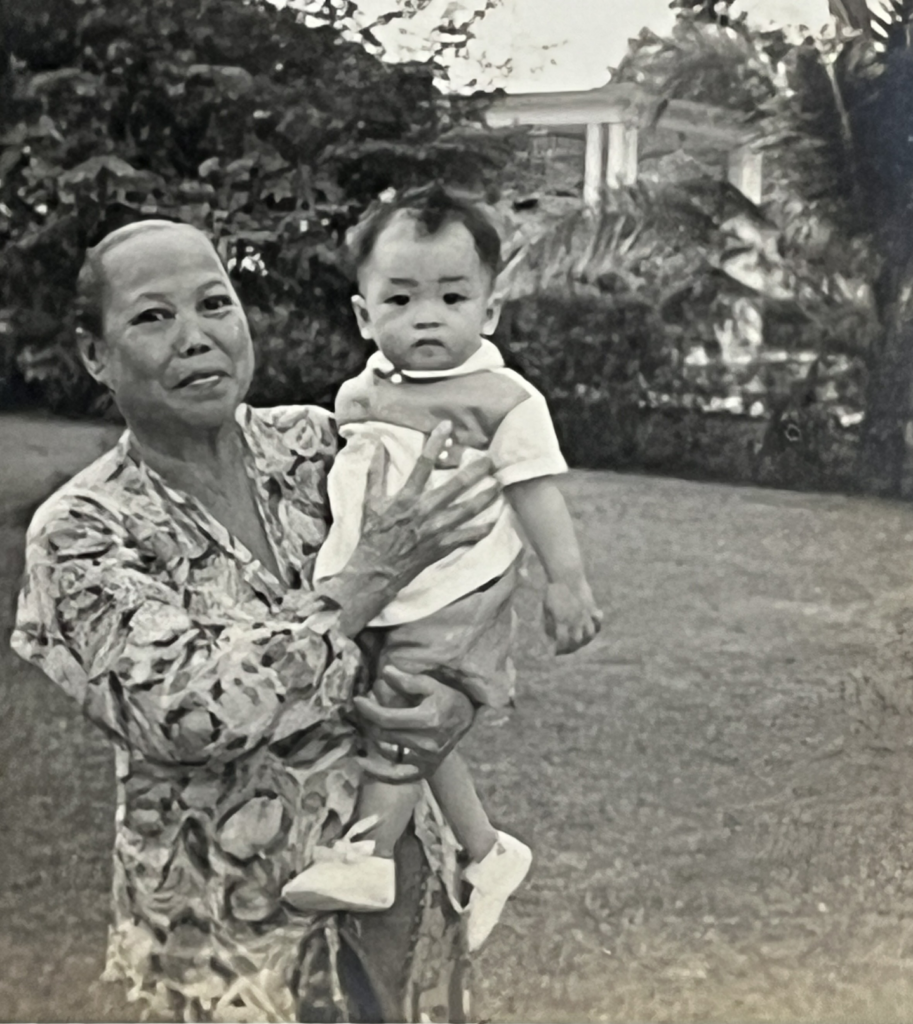
As mentioned earlier, I have always believed that my grandmother represented the best in the Peranakan culture. Her personality was always sunny and cheerful, and even in her 80s, she would call up friends and relatives to ask them how they were doing and to cheer them up. “Lu happy, happy tahu?” (“Be happy, yes?”), I have heard her saying many a time on the phone.
Left: The author’s grandmother and him when he was a toddler. (Photo: circa mid-1960s)
When she passed away at the age of 85, somehow, I did not feel a sense of sadness but a sense of joy knowing that she had lived her life to the fullest. At her funeral Mass at the old Church of the Holy Family, the entire central portion of the church was packed with the many people she had touched with her joie de vivre, her compassion and kindness.
Right: Studio photo of the author’s grandmother in her younger days.
So here’s my tribute to you, Mama. May what you have shared with me enrich the lives of others, just as it has so deeply enriched mine.
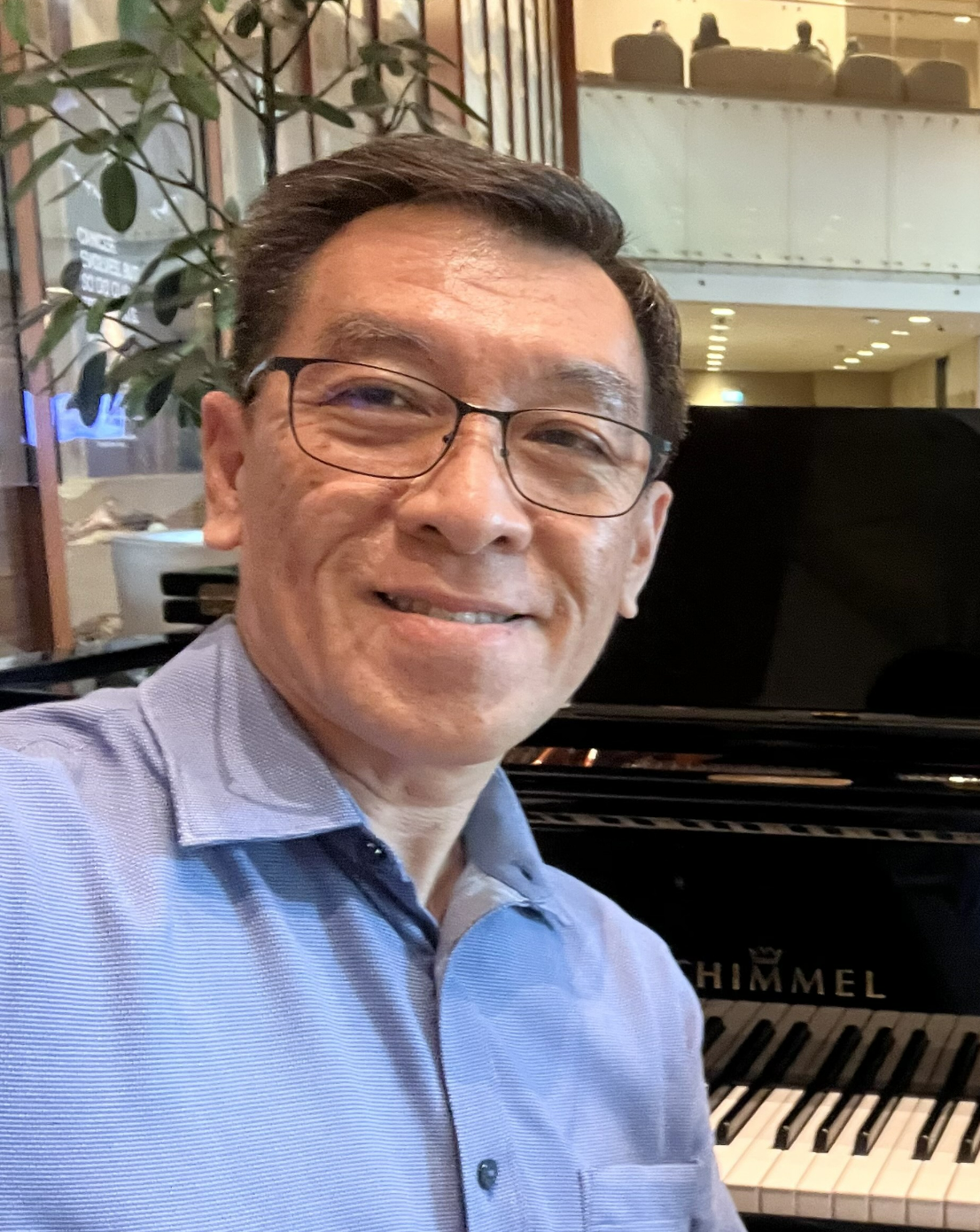
Christopher Khoo is a freelance musician, educator and journalist.
All photos courtesy Christopher Khoo.