 THE PERANAKAN
Baba Raymond Wong sojourns to Beijing for a showcase of Straits Chinese culture
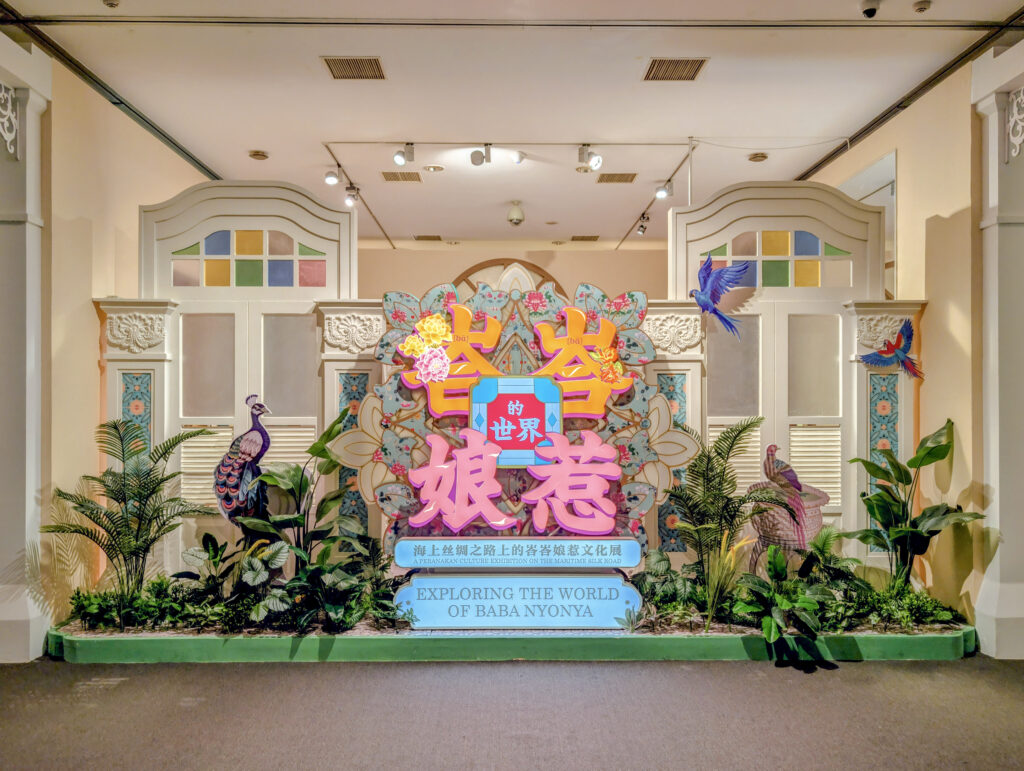
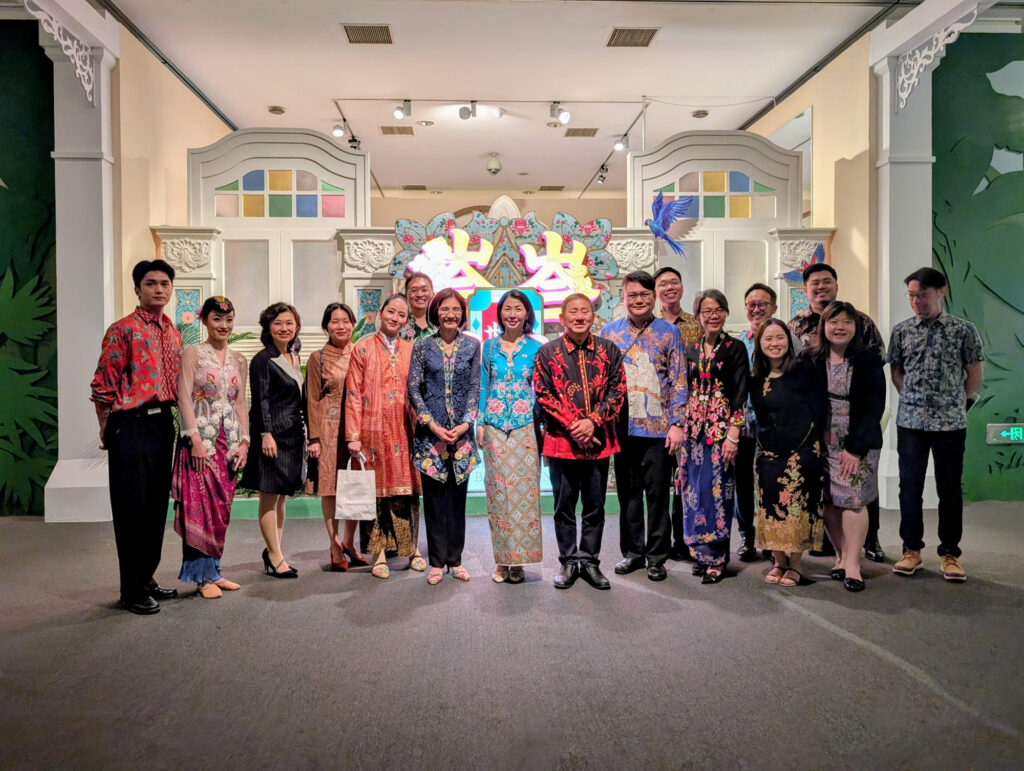
Held at Beijing’s Capital Museum, Exploring the World of Baba Nyonya: A Peranakan Culture Exhibition on the Maritime Silk Road opened on 29 May 2025. Marking 35 years of China-Singapore relations, this showcase features 132 exquisite artifacts from Singapore’s Asian Civilisations Museum and Peranakan Museum, including beaded slippers and embroidered kebayas that tell stories of cultural exchange along the Maritime Silk Road.
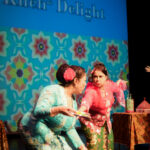
I was invited to the Museum to give a kebaya talk on 5 June. To make the event interesting, we began with the staging of a modern Peranakan-inspired fusion dance, where I performed as one of the dancers! The dance was presented by Dance Ensemble School and is an extract from their Intersections performance from a month earlier at the Singapore Chinese Cultural Centre (SCCC). The performance also features other intangible cultural heritage practitioners. It was commissioned by SCCC for the Singapore Heritage Festival 2025.
I started the talk proper by inviting the two female dancers to the stage and telling the audience about the kebayas on them – the baju panjang and the daily wear kebaya biku. I delved into the history of the baju panjang and its evolution: how it was imported from the Islamic world, and likely brought to Southeast Asia by Muslim traders. Then I shared about the Indonesian and Dutch style kebayas and how these influenced Peranakan Chinese fashion tastes. I shared pieces from my vintage kebaya collection:
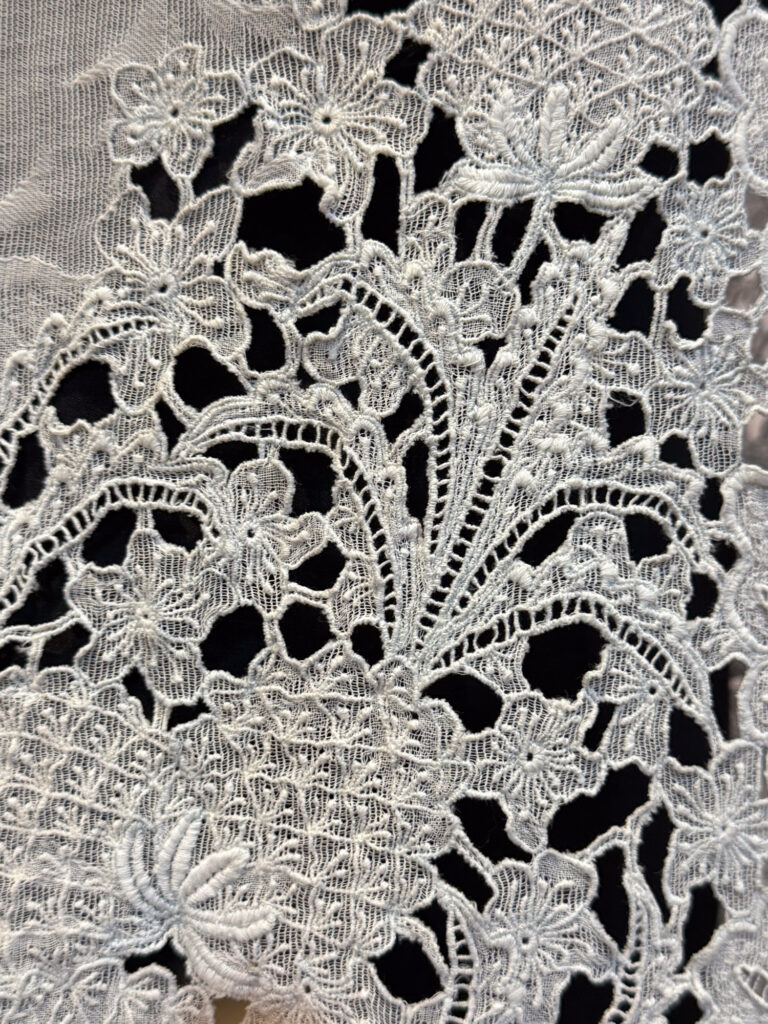
A 1930s white muslin kebaya with white embroidery and cutwork of pineapples and plum blossoms
The Pineapple is a symbol of wealth for the Chinese. Hence, this piece was likely worn for Chinese New Year despite being all white. In the west, pineapples symbolise hospitality. I shared that this kebaya was loaned to Jeanette Aw and she wore it in the early episodes of the TV drama Emerald Hill.
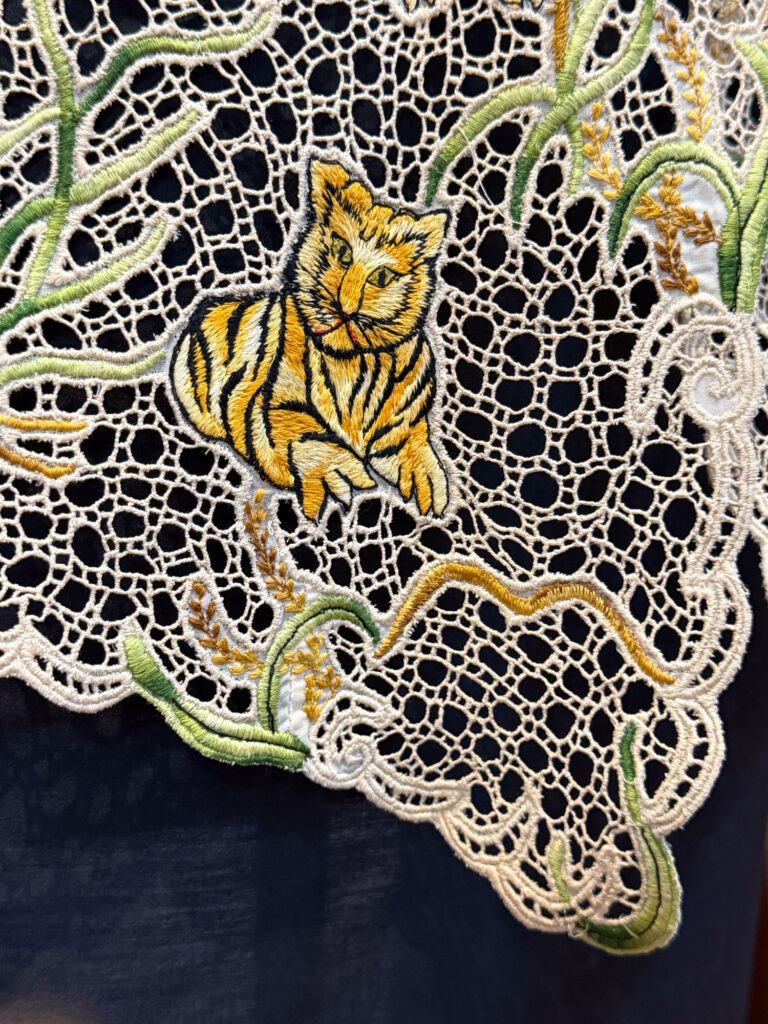
A kebaya from 2010 with tigers gifted from and made by the late Lim Swee Kim
While the client’s husband paid for this kebaya, he refused to let her take possession of it! His wife was born in the year of the Tiger, and she had intended to wear it for Chinese New Year, which happened to be in the year of the Tiger. The husband reportedly exclaimed, “Lu bikin ini baju ada harimo , lu hari hari mau apa? Money?” (Tigers are always hungry for something – is my wife hungry for money?) So he saw much negativity in the chosen motifs!
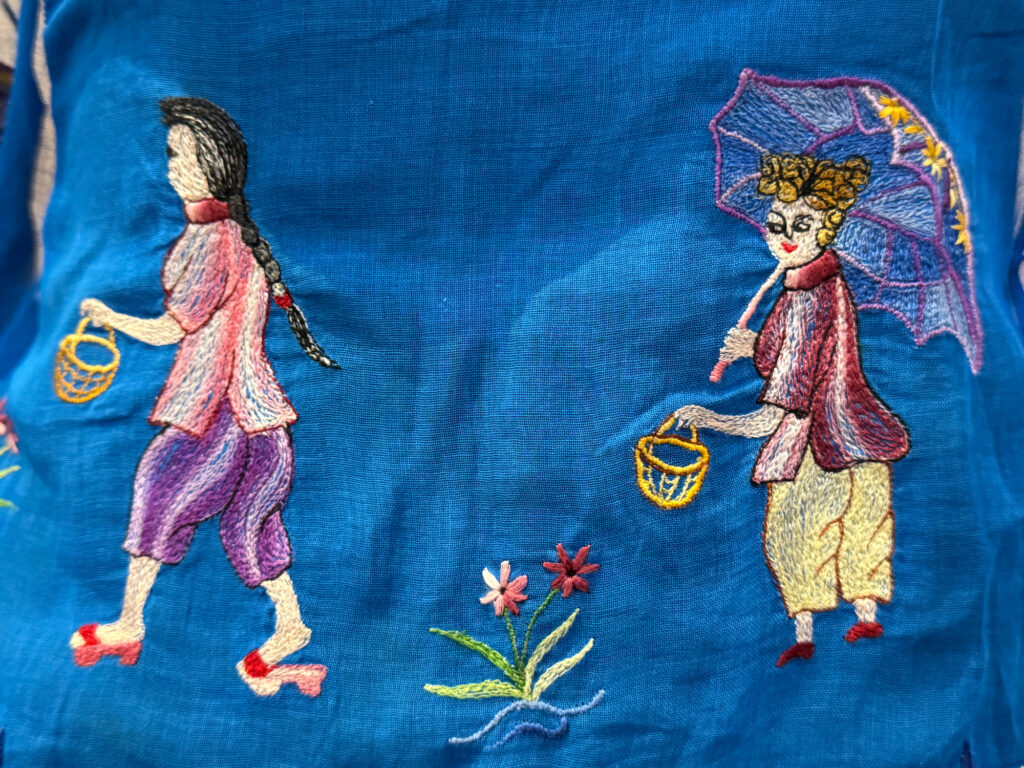
A 1950s kebaya with an image of a Eurasian girl and a Ma Jie chaperone
This garment was owned by a petite lady known as Mrs Sarkies. It was her first kebaya made in Penang, and she wanted to immortalise her happy memories of her childhood with her Ma Jie.
A 1940s kebaya with roses and a matching beaded bag
Roses are symbols of love. I often muse that this set can be further complemented by a pair of matching beaded shoes!
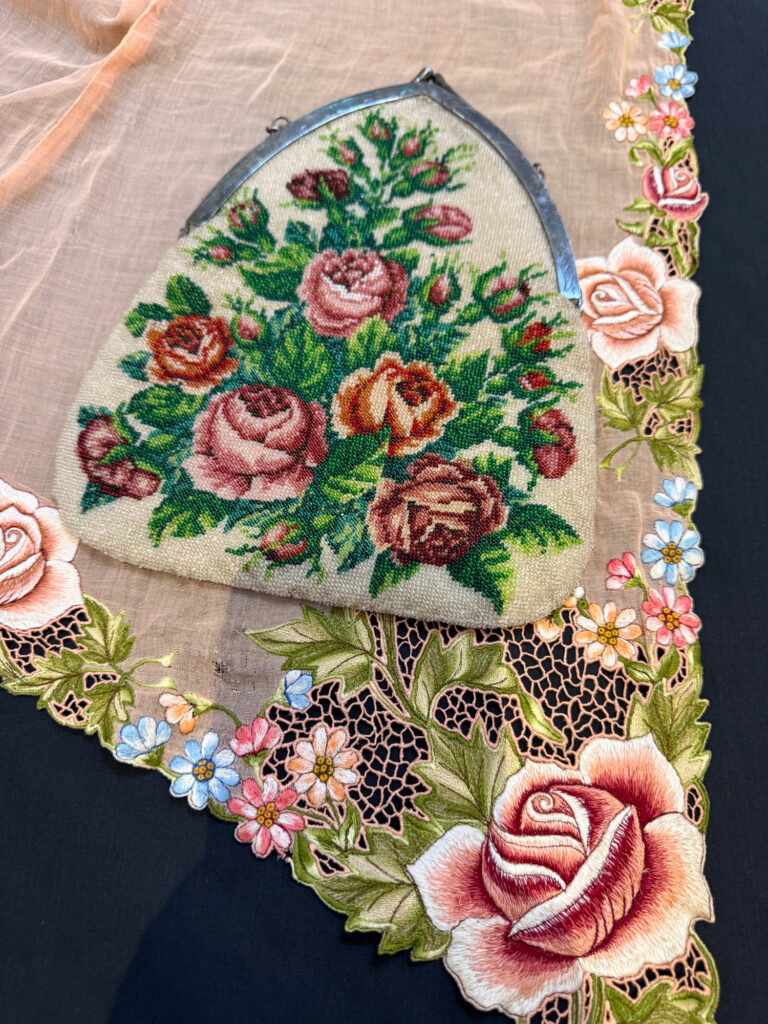
These kebayas show how fashion tastes evolved, yet in spite of that, their wearers always add personal meaning into the design with Chinese or Western themes.
We ended the event with another Peranakan-inspired duet dance, with Ambassador Peter Tan pronouncing it a “marvellous performance”. He had not expected to see peranakan culture communicated through dance.
The Chinese audience engaged me with many questions in relation to the kebayas and Singapore. They had always thought of Singapore as a modern country, and were delighted to learn more about our heritage.