 Noreen Chan
Nyonya Noreen Chan shares how some of us had a flutter before the era of integrated resorts.
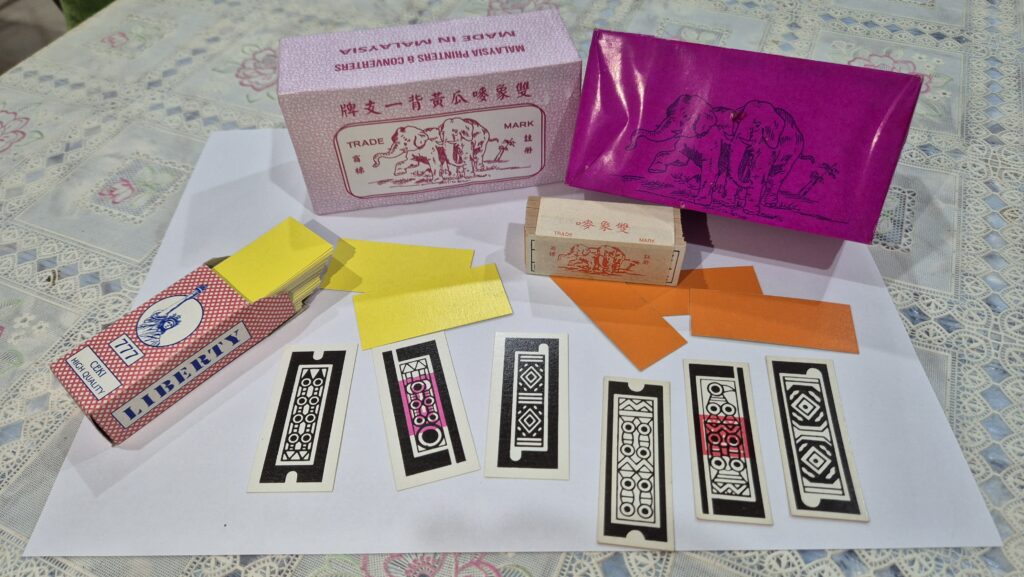
The card game Cherki is associated with Peranakans of old, but it is not exclusive to our community. Known variously as Ceki, Chi Kee, or Koa (pronounced “Kowah”) this card game is played in Singapore, Malaysia, Indonesia, and Thailand.
The origin of the name “Cherki” is uncertain. Some believe it comes from Amoy (Hokkien) Chinese chít ki (一枝) or“one card”, perhaps referring to the pick-one/play-one nature of the most common games. Others have suggested it is related to jī ki ‘two cards’ (二枝), as 枝 means branch/twig
In the past the game was played by all levels of society; records of the palace expenditure of the Sultan Abdul Hamid Halim of Kedah (1864–1943) from 1896–99 indicate that he enjoyed gambling with Ceki. In parts of Indonesia like Bali, the game is popular among men. Among Peranakan communities of Singapore and Malaysia, it was played largely by women – who often gambled and even got into debt or in trouble with the law – but the pastime has waned in popularity.
It is believed that card games originated in China – there are Tang records from the 9th century describing a “leaf game” – and eventually made their way via trading routes, to Europe by the 14th century. The images on Cherki cards are thought to derive from Chinese three-suited cards (particularly the “Water Margin” type), but over time the designs became simpler and more abstract.

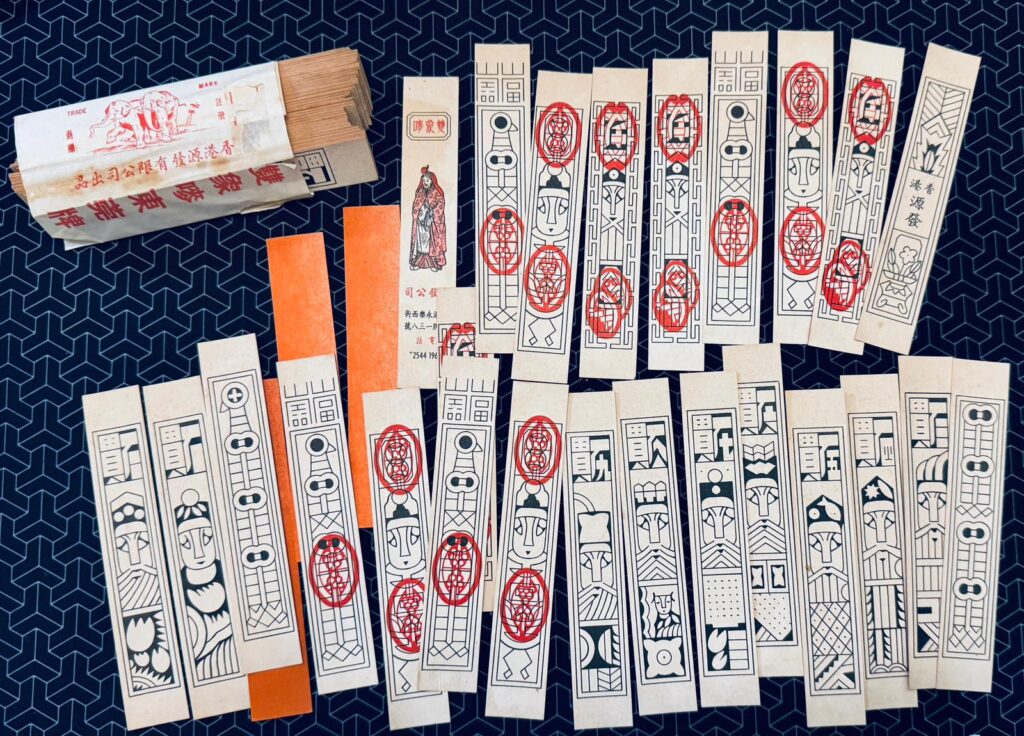
The designs of the Cherki cards used in different countries varies slightly, for example the ones used in Indonesia commonly have yellow backing, whereas in Singapore and Malaysia, the “double elephant” brand with orange backing, manufactured by Gwan Hua Heng, is used.
Cards were referred to in Malay as daun ceki (daun means “leaf”); this term was adopted by the Peranakans.
Amongst Kristang communities in Malacca, the cards were known as chaqui or chiqui. In Thailand these cards are known as ไพ่แปดเก้า pronounced “phai paet kao” or “8-9 cards”.
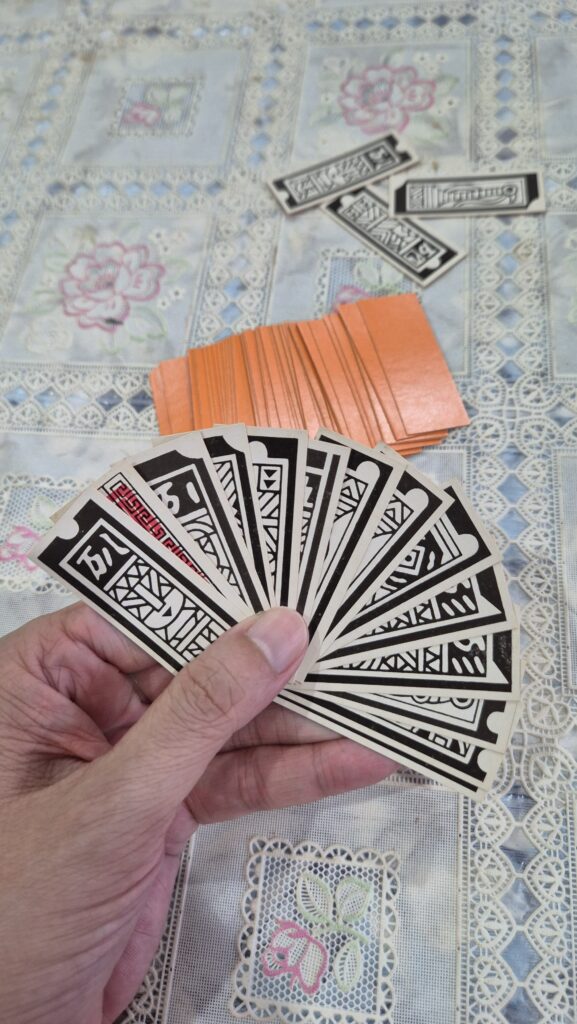
Cherki is played with 14 cards in hand
The Cherki Card Deck
A basic set consists of 30 cards, made up of 3 suits of 9 cards (numbered one to nine) plus 3 additional “honour” cards.
The suits are:
“Coins” – nicknamed as batik, piah, tong
“Strings” – manek, sok
“Myriads” – ban (Hokkien for 10,000), cina
Card decks are sold in sets of two, called a kepala (60 cards), either packed in individual boxes or wrapped with a piece of paper. The minimum required to play a Cherki game is 2 kepala. Unlike with mahjong, Cherki is not confined to 4 players; with more players, additional sets of cards are added.
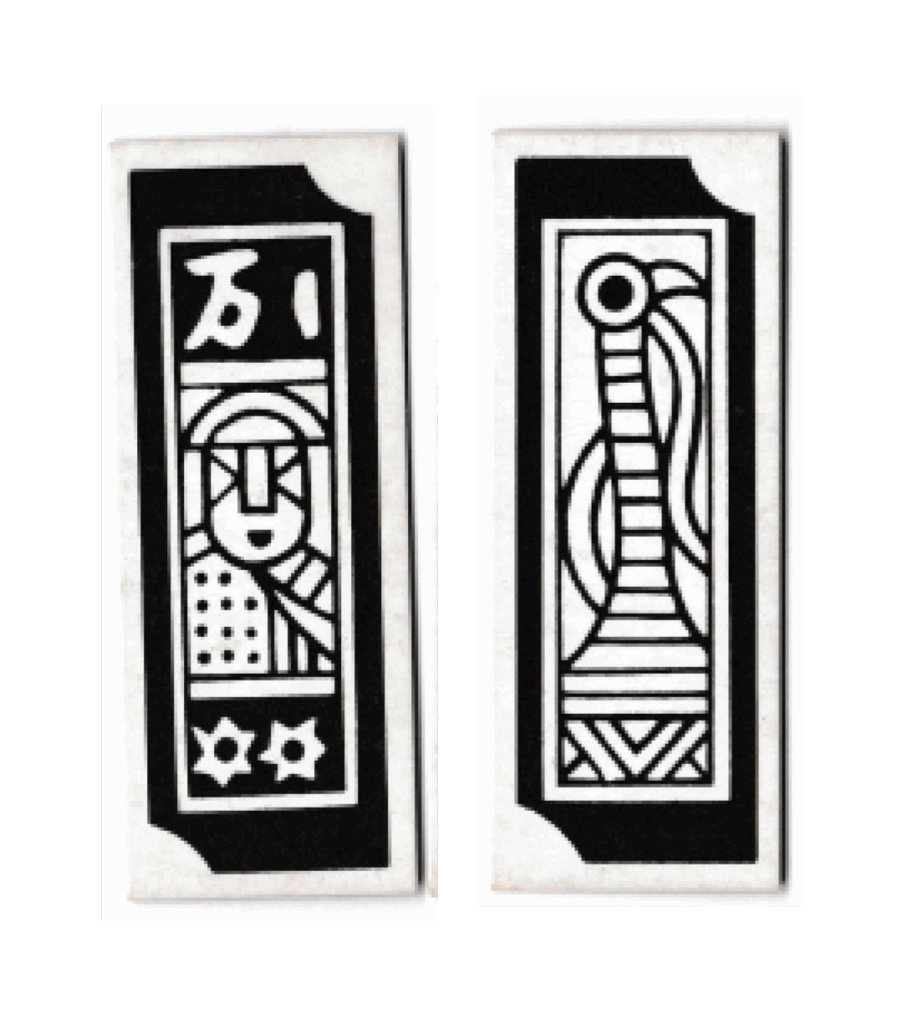
Yeo Ban (left) and Yeo Panjang (Burong) (right)
The Peranakans who could not read Chinese often gave nicknames to the cards to identify them e.g., the card “yeo ban” (one- ten- thousand in Hokkien) was also called “huey sio” (monk), or the “yeo manek” was called “yeo panjang or burong” (one long or bird) because it looked like a long-necked bird.
TPAS will be organising a workshop on 4 October 2025 to introduce this historical card game to a new generation of players. There will be hands-on practice and lots of fun, but no gambling, lest we be hauled off in the “Black Maria”!
References:
“The Babas” by Felix Chia (1980)
Introduction to Cherki cards (from Ways to Play – Ceki) https://games.porg.es/articles/cards/ceki/
“Balik Satu” and different ways of playing Cherki https://games.porg.es/games/balik-satu/
Ceki (or Kowah) http://a_pollett.tripod.com/chekigam.html
The World of Playing Cards – Ceki https://www.wopc.co.uk/explore/suit/ceki/