 THE PERANAKAN
Nyonya Noreen Chan describes the Semayang Tikong ritual of the Hokkien Peranakan community.
Semayang Tikong is a core traditional practice of Hokkien Peranakans during the Lunar New Year. In Hokkien dialect, it is known as Pai Ti Kong (or Thien Kong); the Peranakans often choose to use the Malay word semayang which means to pray or worship.
The festival, which falls on the 9th day of the first month of the Lunar calendar, celebrates the birthday of the Jade Emperor of Heaven. Legend has it that in ancient China, the Hokkiens were saved from an invading army by hiding in sugarcane fields. As the date coincided with the birthday of Ti Kong, Hokkien communities in China and abroad, offer thanksgiving prayers and decorate the altars with sugarcane stems to commemorate the occasion.
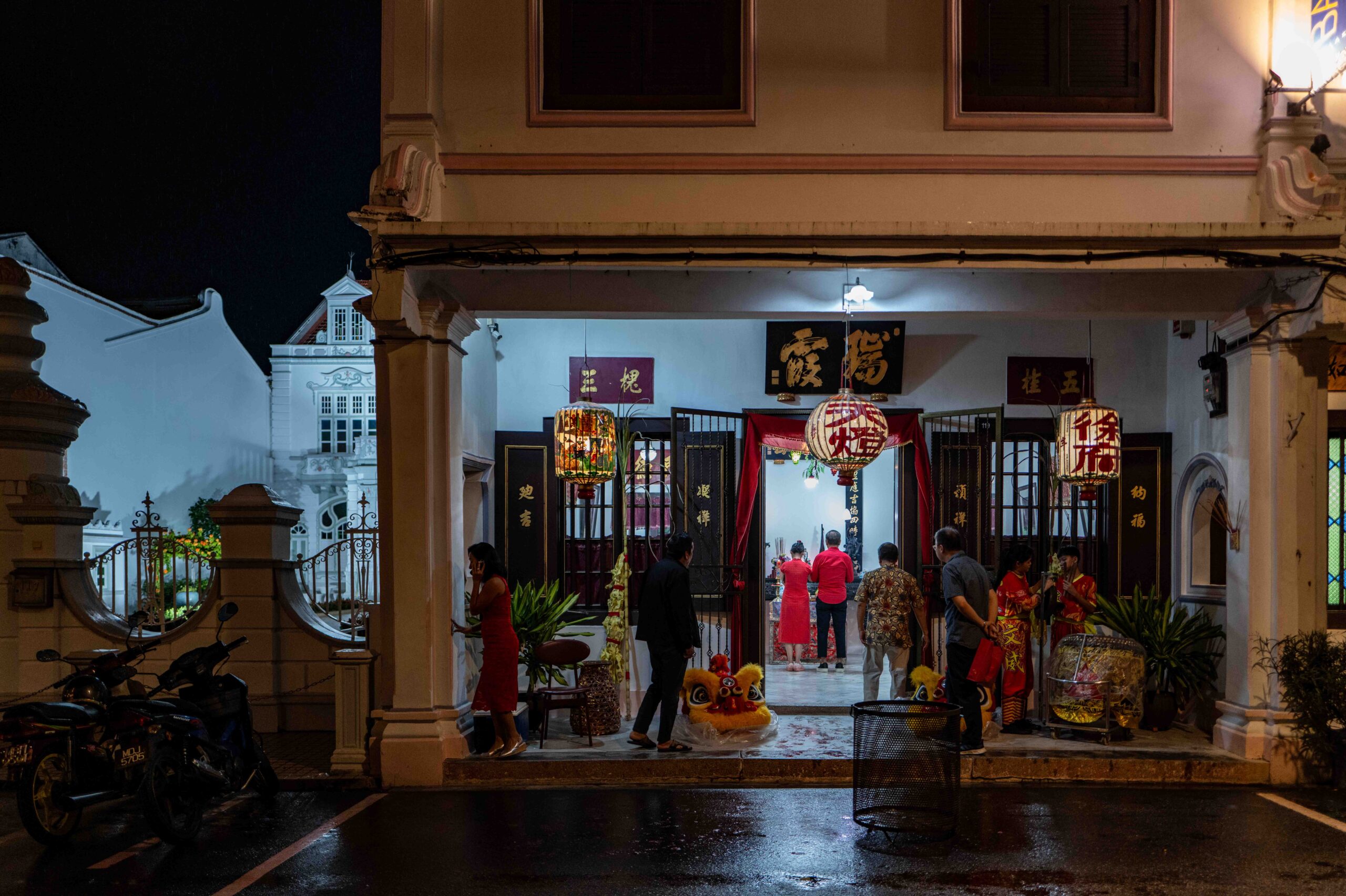
With time, the grand festivities of yesteryear have been scaled back, but a few families in Melaka and Penang have continued the tradition. On the 8th day of the new year, the tok sam kai (sam kai altar) would be set up. The tok sam kai (literally ‘three worlds or realms’) is a temporary altar dedicated to Ti Kong, that would be erected on special occasions like a wedding or the Jade Emperor’s birthday. It is considered the most sacred of the household altars – the others being dedicated to the household deity, ancestors, and the Kitchen God – and during Semayang TiKong, the altar should be raised as high as possible, using stools or tables.
Celebrations typically start around 9pm with prayers to TiKong at the sam kai altar, for both thanksgiving and entreating that the year ahead bring prosperity. The ceremonies end at midnight with burning of the joss paper, and the time between is spent catching up with family and friends, visiting neighbours, playing cards, and even setting off fireworks! It is customary to serve snacks, especially a sweet soup or tong shui to start the new year on a sweet note.

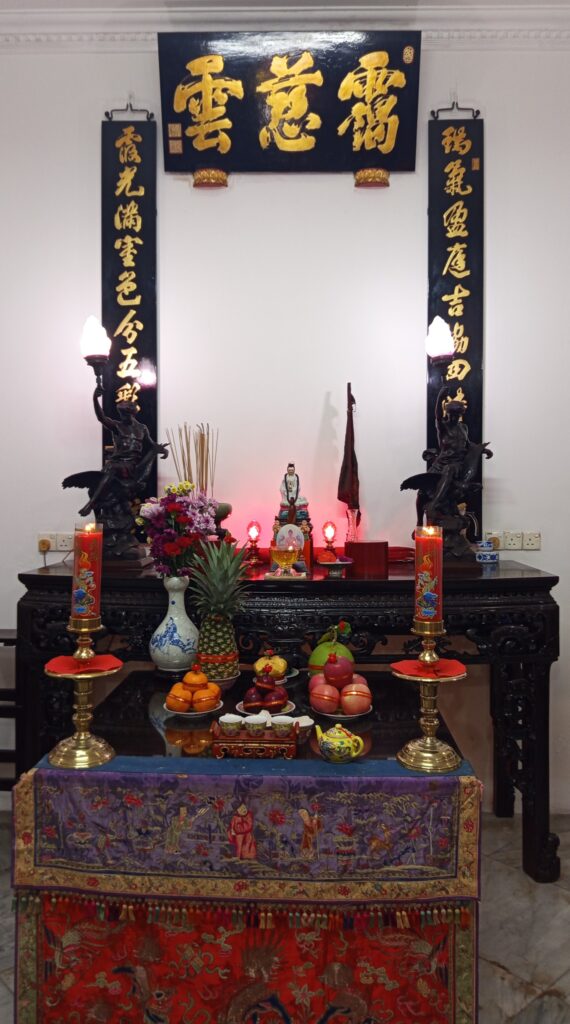
Altar dedicated to the household deity, normally placed in the front hall. The rumah abu or ancestral hall is usually placed in the next hall (if in the same house) or in some cases, in a separate house altogether.
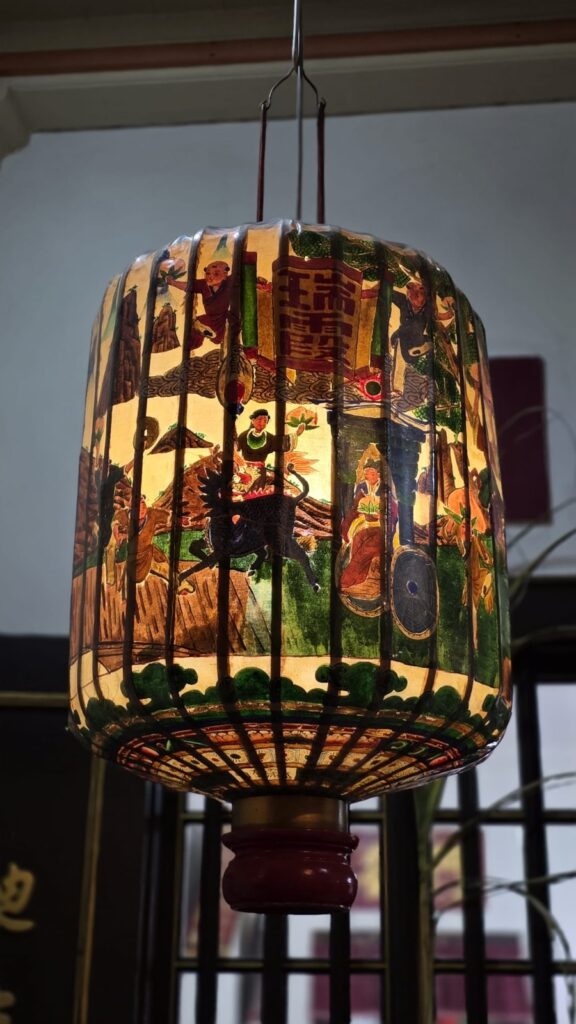
One of the household lanterns. Traditional Chinese Peranakan families would hang three lanterns outside the house, two cylindrical teng jiseh or surname lanterns with the family name and decorated with scenes from Chinese mythology. Between them, in front of the main door, would hang a globular thien teng or Heavenly lantern, dedicated to Ti Kong. These lanterns are now a rarity as the traditional craftsmen have passed on, thus Semayang TiKong is the best time to see these beautiful, handcrafted pieces.
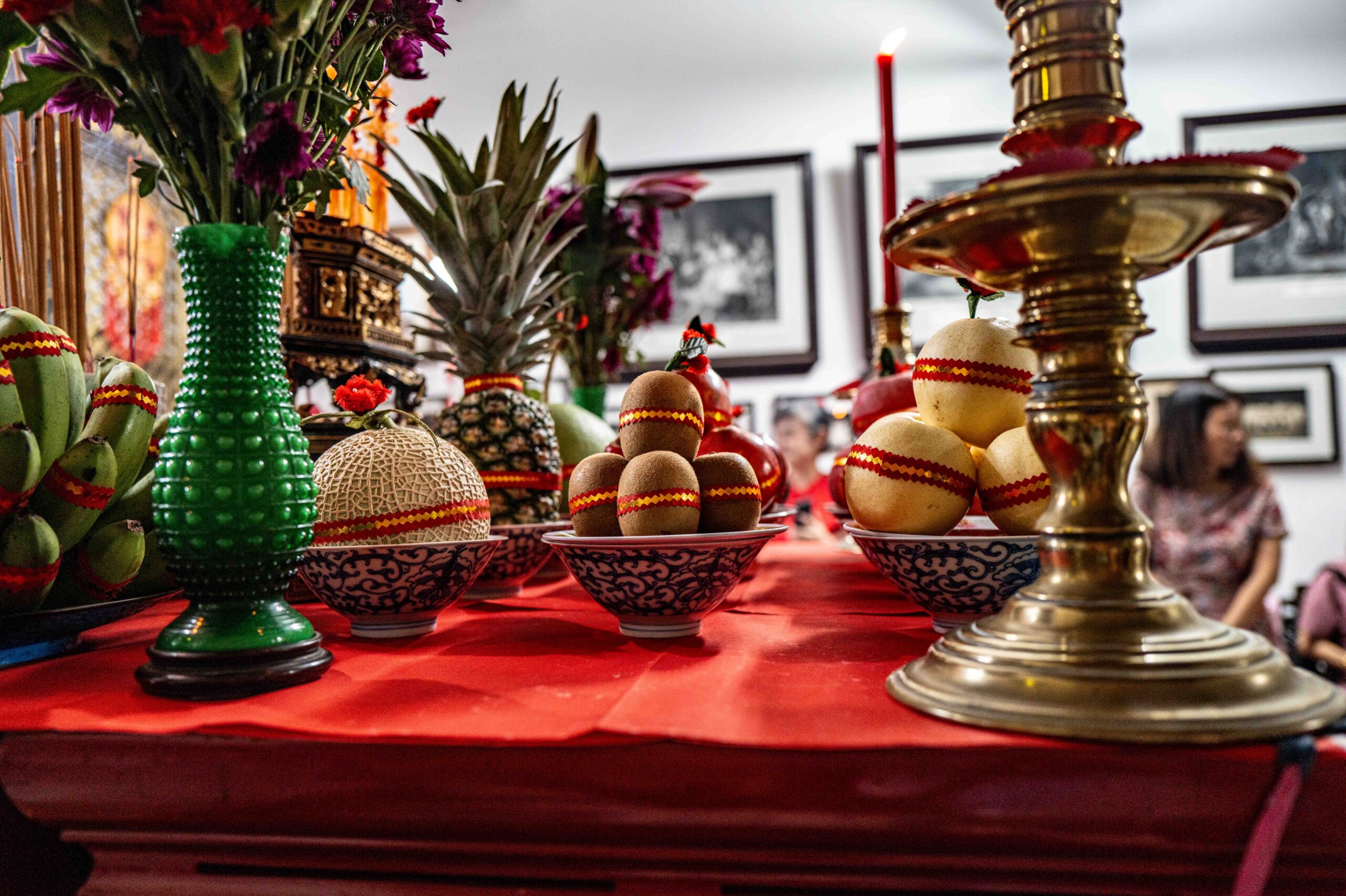
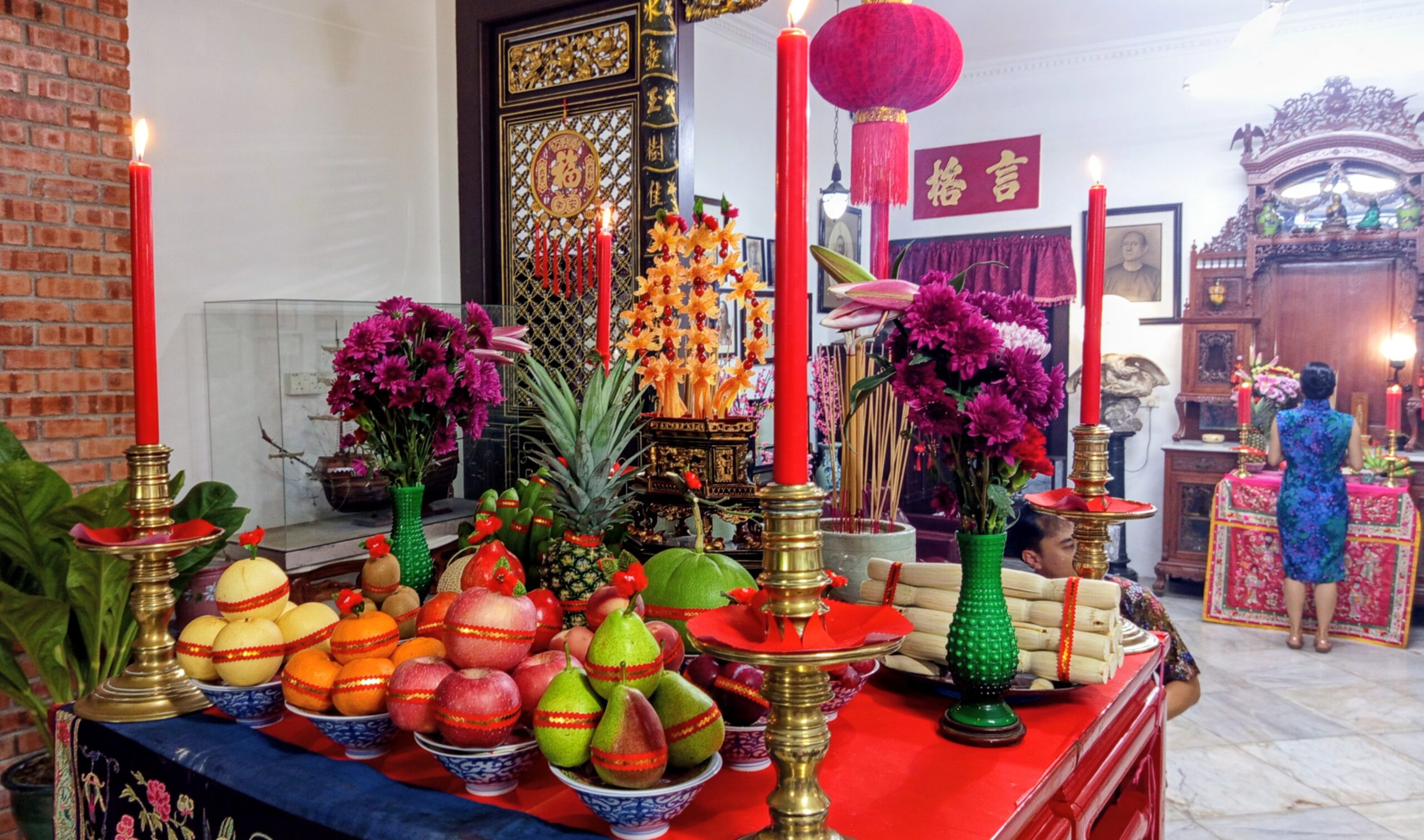
The sam kai altar decorated with beautifully embroidered tok wee (table valances) and covered with red paper. Offerings vary from family to family, but always include bouquets of fresh flowers and an array of fruits, carefully decorated with strips of red paper wrapped around the fruit. Peeled sugarcane stems, traditional Chinese cakes – like huat kueh, kueh koo merah (red tortoise shell cakes), red coloured steamed buns – or dried ingredients for chap chye in individual small bowls, can be offered. But usually no meat, following vegetarian tradition.
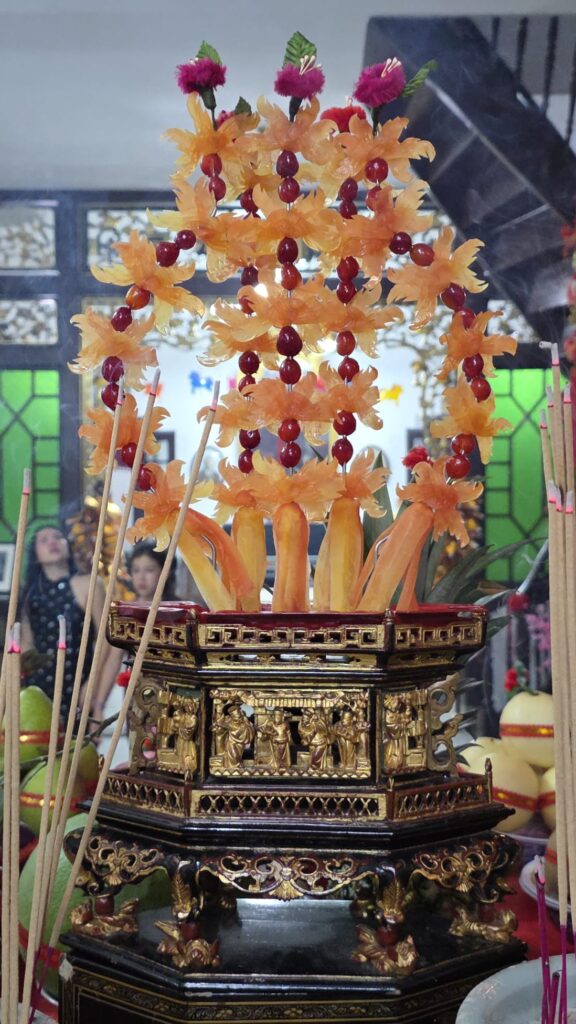
A unique feature of the Peranakan sam kai altar is the chanap or chien hup. This refers to the intricate display of preserved fruit, as well as to the gilded lacquered box.
Only a handful of people know how to prepare the chanap these days. Semi-ripe papaya slices are dehydrated by soaking in salt water, then carved and woven into crab shapes. The crab symbolises harmony, bounty and fertility.
The prepared papaya shapes are placed in kapor or slaked lime to harden, before a final soaking in syrup. They can last for months with care.
Carefully threaded onto skewers interleaved with candied preserved Chinese dates, the chanap is an expression of faith and artistry.
Joss paper offerings of gold, known as kim chua (Hokkien) or kretair kim (Baba Malay), are folded into the shape of ingots and threaded to form large garlands. Many people have childhood memories of being pressed into service, folding the many stacks of gold joss paper! At least one of the garlands will be attached to a sugarcane stem – usually at or near the altar – and the rest hung throughout the house. It is important that none be allowed to touch the floor
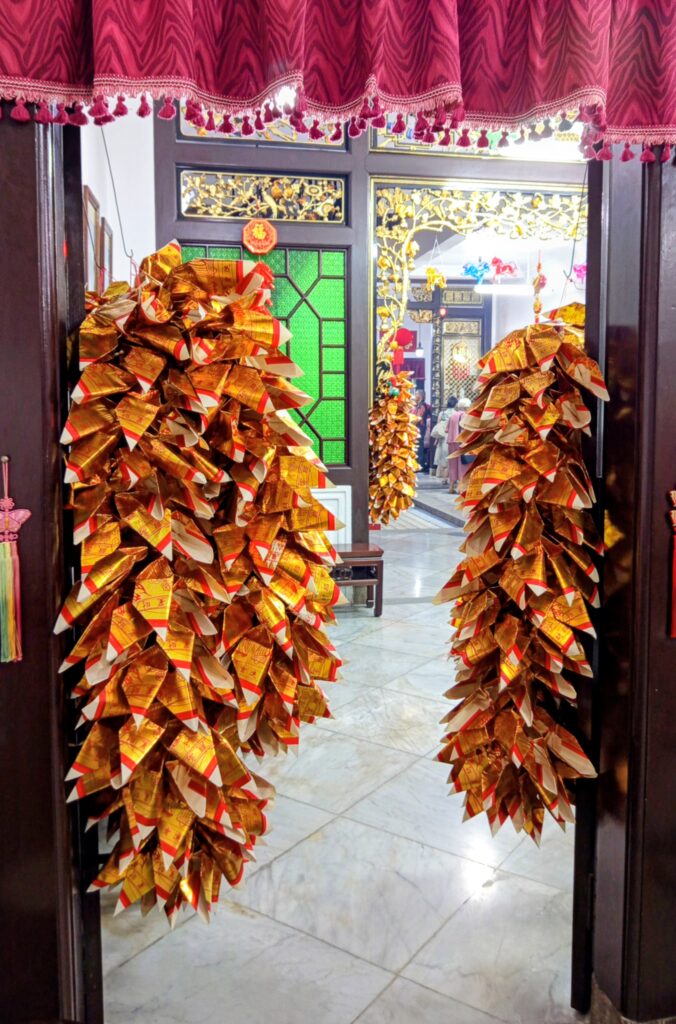
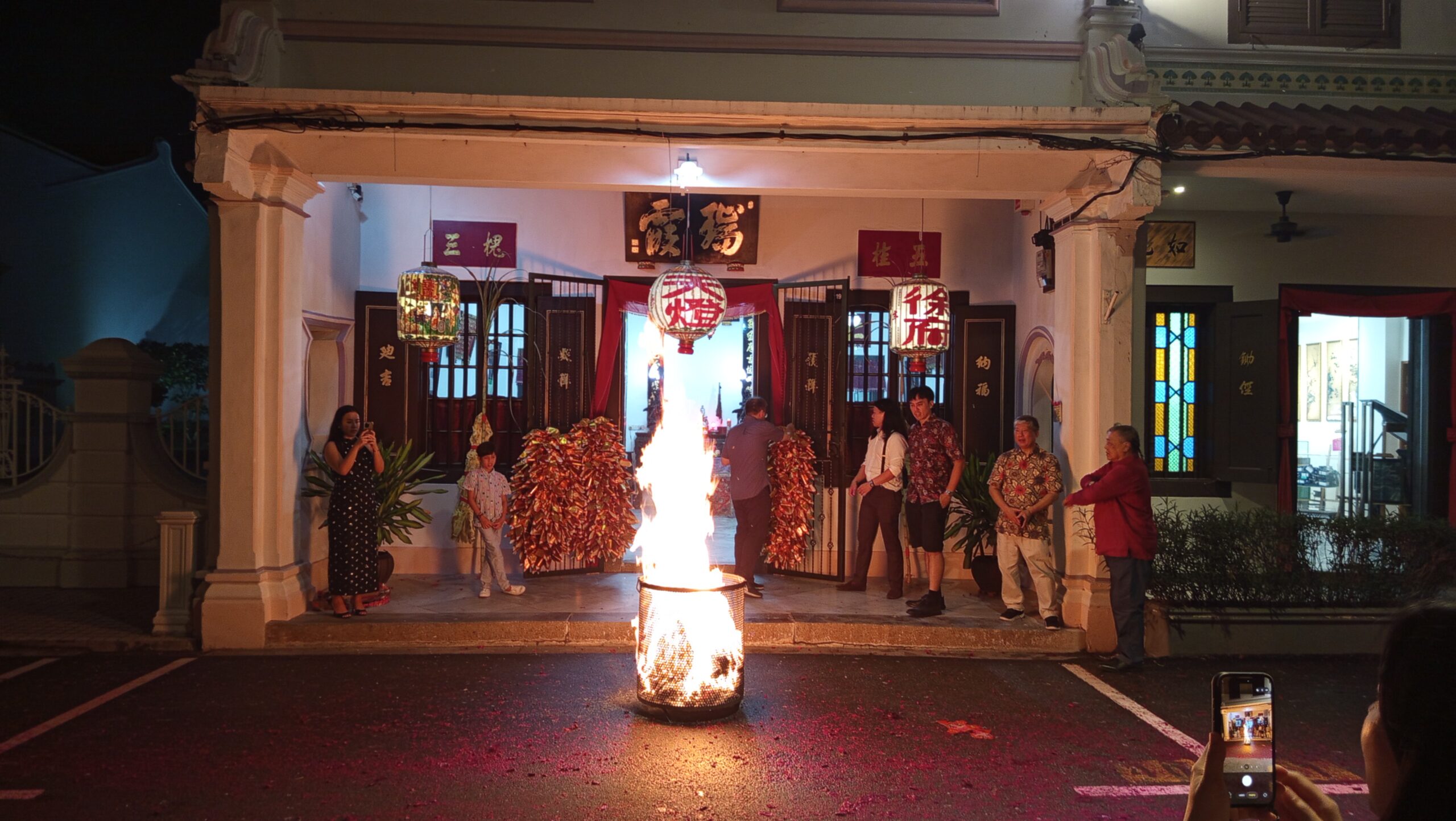
At midnight, the gold joss paper garlands will be burnt. Last of all will be the garlands attached to the sugarcane stems, and once they are burnt, the sugarcane is snapped and thrown into the fire.
Please see our Features section here to read Baba Emeric Lau’s article on Semayang Tikong in Melaka.
Photo credits: Colin Chee, Linda Chee, Emeric Lau, Noreen Chan, and other members of the TPAS delegation that visited Melaka in February 2026.
More information on Semayang Tikong can be found in these articles across pages 8 – 11 of Issue 1, 2002, written by Babas Ee Sin Soo, Tan Geok Koon, and Tan Ban Huat: https://www.peranakan.org.sg/magazine/2002/2002_Issue_1.pdf and in this 2024 article by Baba Lee Yuen Thien: https://www.peranakan.org.sg/theperanakanmagazine/food-for-the-gods/