 Yuen Thien Lee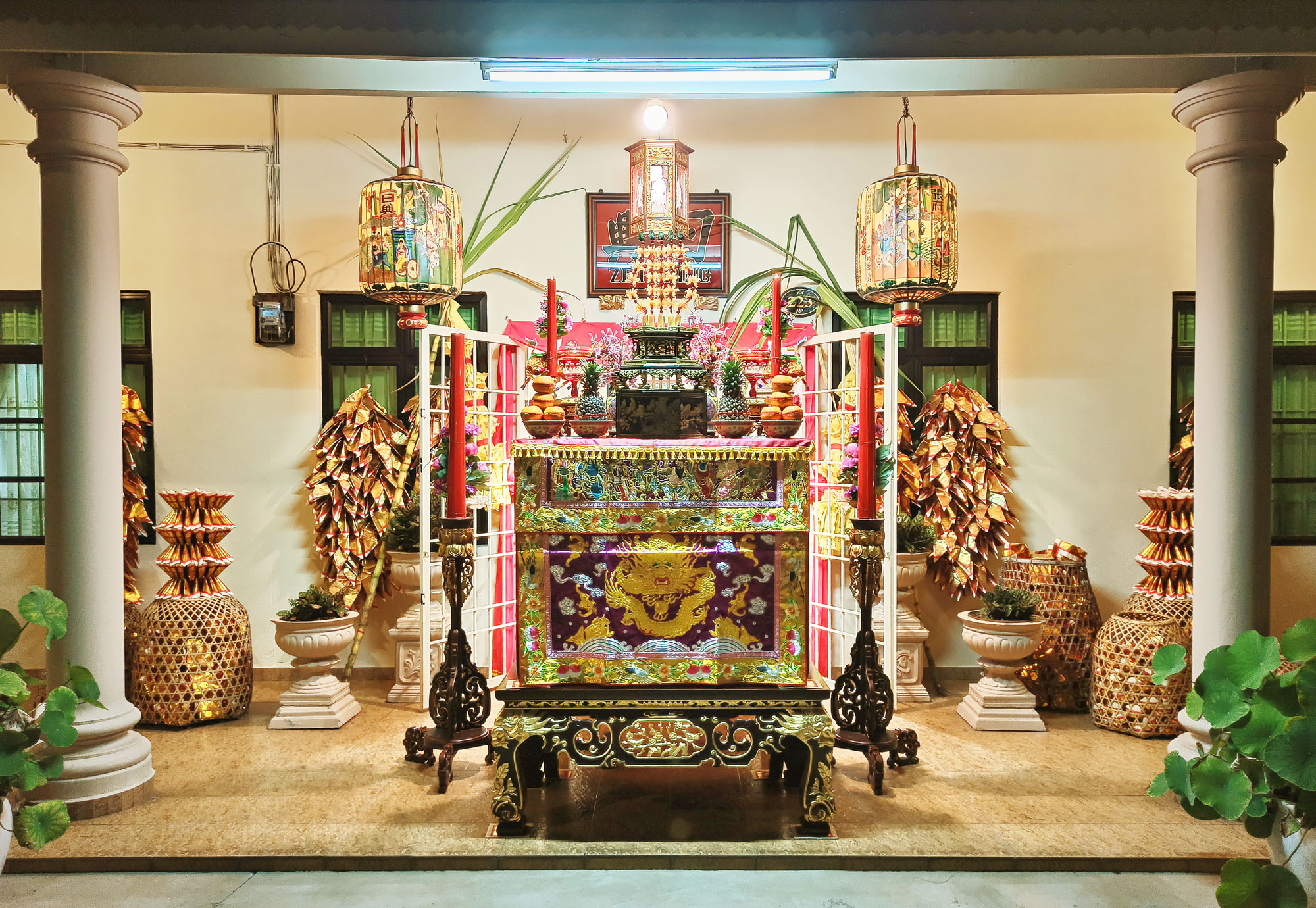
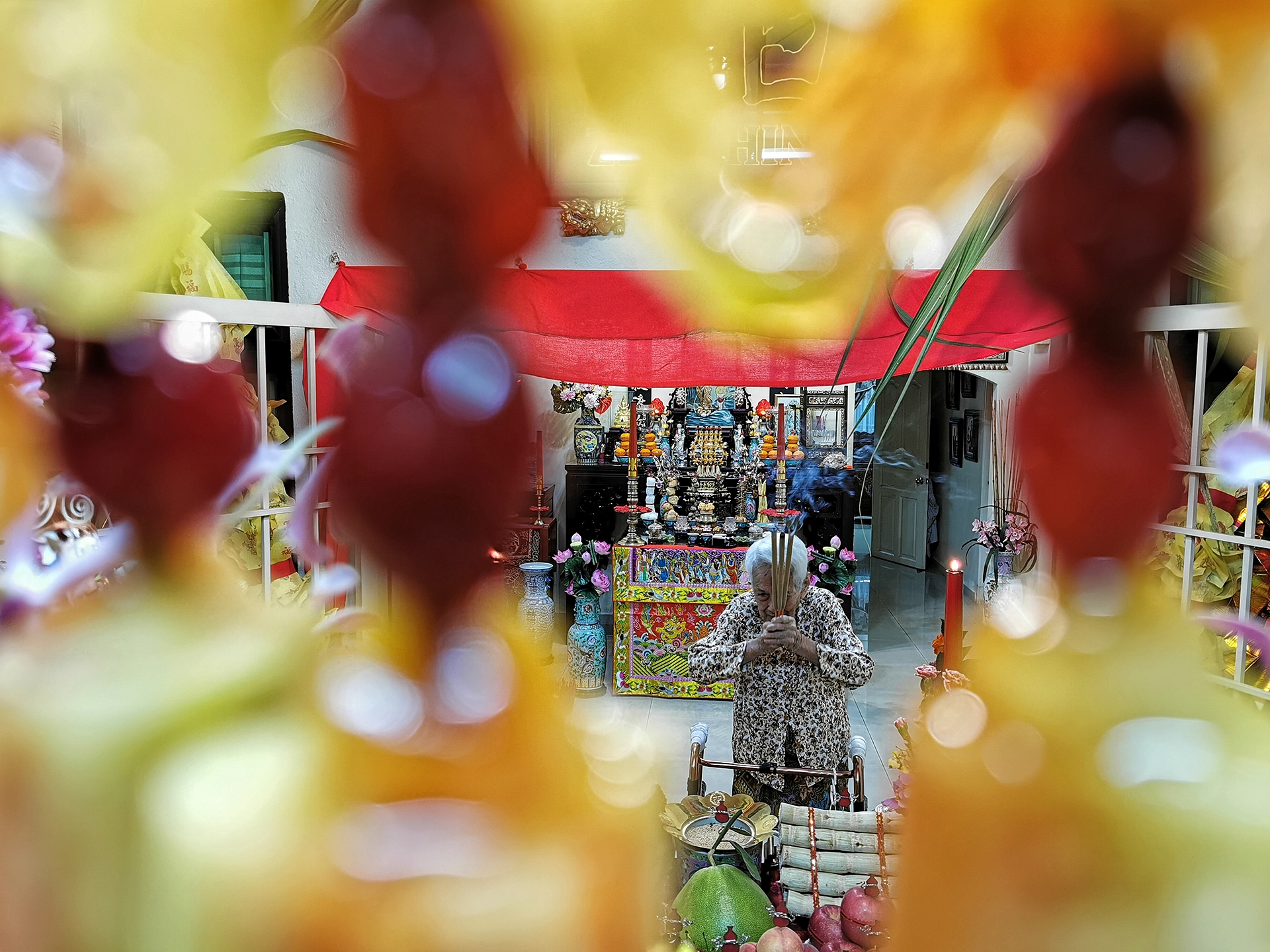
The Smayang or prayers to Tikong is a Hokkien tradition upheld by the Baba and Nyonya community, which is mostly of Hokkien descent. Having said that, my family is not Hokkien but of Hakka origin. We offer prayers to Tikong, perhaps influenced by the common practices of our community at large. Both my paternal and maternal grandmothers say their families have been observing Smayang Tikong since the generation before them. My maternal grandmother, nicknamed Mama Batu Berendam for where she is living, used to “tumpang smayang” or join the prayers at my Kimpohcho or great grand aunt’s house every year, mainly to fulfill a vow she had made.

Eventually, Mama’s husband convinced her to hold their own prayers at home as the prayers usually go on into the early hours of the morning. It was rather troublesome in those days to make their way home in the dark. We have kept the tradition till today.
Since a child, I have been tasked to assist Mama in the preparations. She often described to me how it was done at Kimpohcho’s house and that for many years, they did not put up the elevated tok samkai altar as the chanap offerings of elaborately-carved candied papaya were not available. They depended on one elderly nyonya to supply the chanap to all the baba and nyonya families in the neighbourhood. Upon her death, the supply stopped as the chanap-carving skill died with her.
I began to develop an interest in the chanap. Eventually, I learned the skill from my Chimpohor (grandaunt) who is one of the very few in Melaka skilled in the art. Chimpoh had not done it for so many years. Thankfully, she remembered after some months and taught me all. Since then, our family has put up the tok samkai again every year.
What is the Chanap?
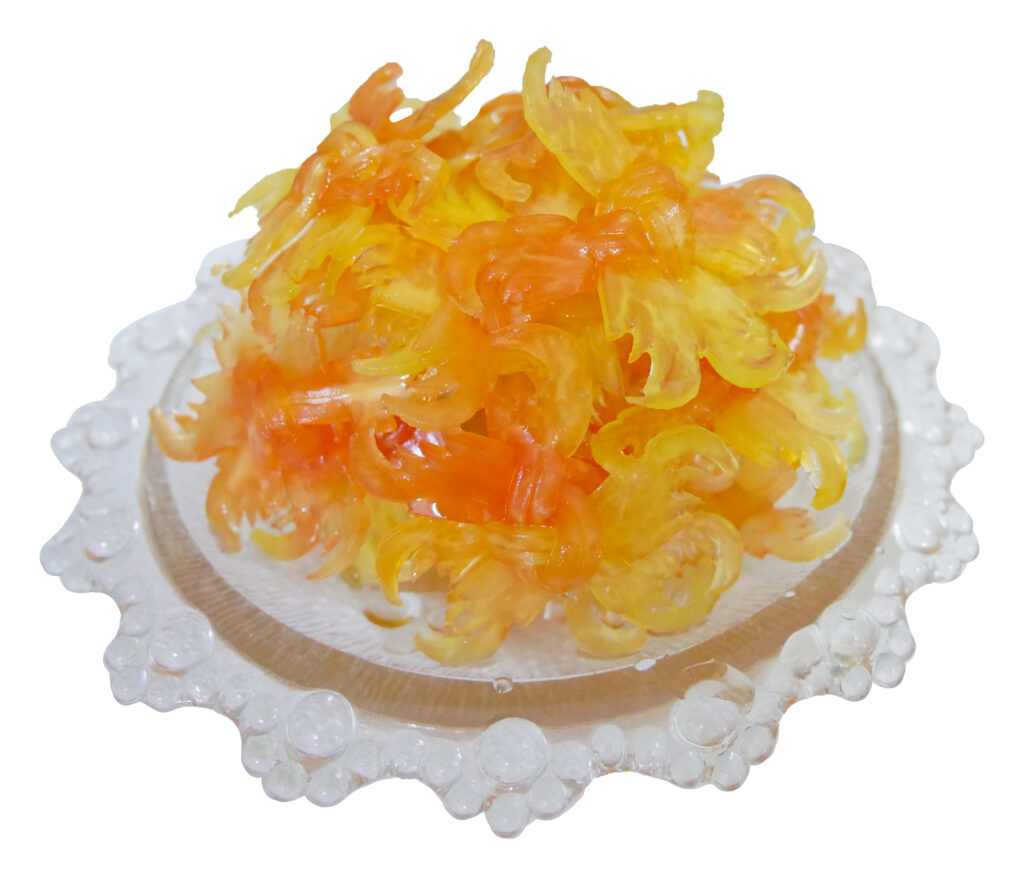
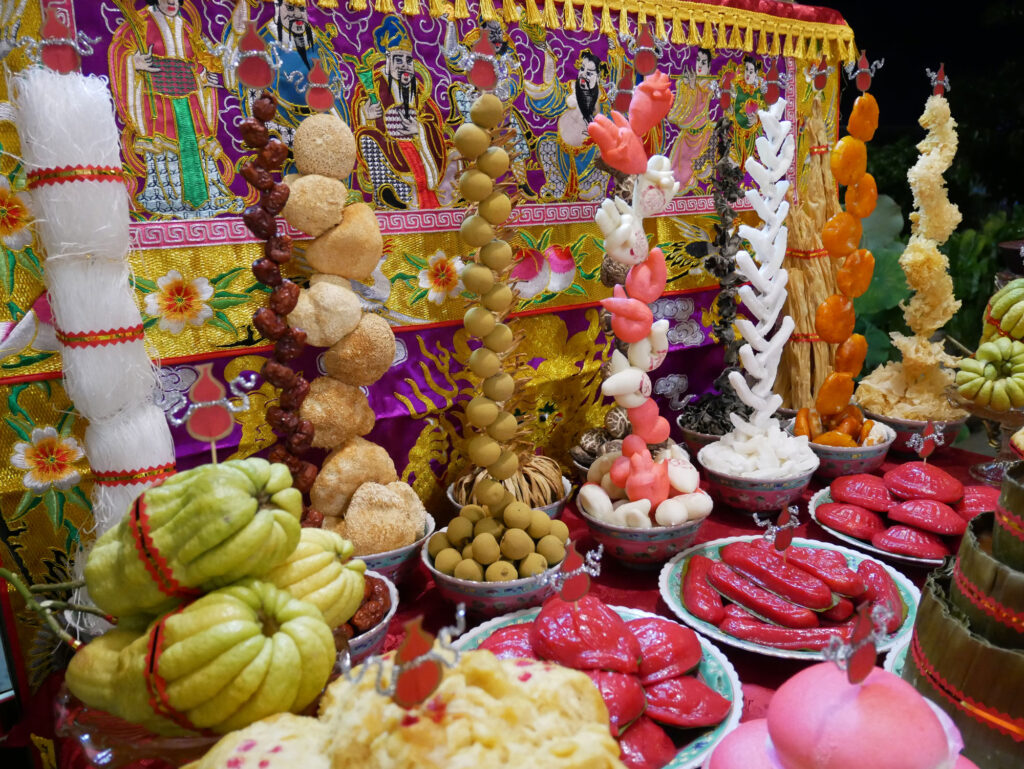
THE CHANAP is an iconic offering that used to be commonly seen in households of Malacca and Singapore baba and nyonya families. It is rich in symbolism besides having a mesmerisingly beautiful appearance. Sweet preserved pineapple or other preserved fruits can be offered in place of the candied papaya.
After the prayers, the chanap is soaked in the syrup again and can be preserved for years if kept well. It is normally used at the household altar in the following year. Or, if a family member dies that year, the chanap would be used as part of the prayer offerings to the deceased on the funeral day.
To make the chanap, half-ripe papaya is thinly sliced and soaked in salt water to dehydrate it, then woven and carved into crab shapes. The papaya is then soaked in kapor or lime water to harden the carvings before soaking it again in syrup for preservation.

In Chinese culture, crabs represent scholarly accomplishment particularly for excellent examination outcomes (“甲” or jia which means first, derived from the crab’s protective shell, and “蟹” and “协”, both pronounced xie which mean harmony, bountiful and additional yield.

Watching my grandmother and other elders growing older year by year, I realise that in order to sustain this tradition, we must involve everyone in the preparation, especially the young. Many are not willing to sacrifice their time and are preoccupied with work and other commitments. It is not easy.
But we must try. It can be as simple as buying the fruits or other items, cutting the red paper, folding the joss paper or even helping to erect and arrange the tables, and lay out the spread. A little ‘help’ can spark awareness and interest, eventually generate a sense of commitment and obligation to continue this important family tradition.
The elaborate preparations
for the Smayang Tikong ceremony
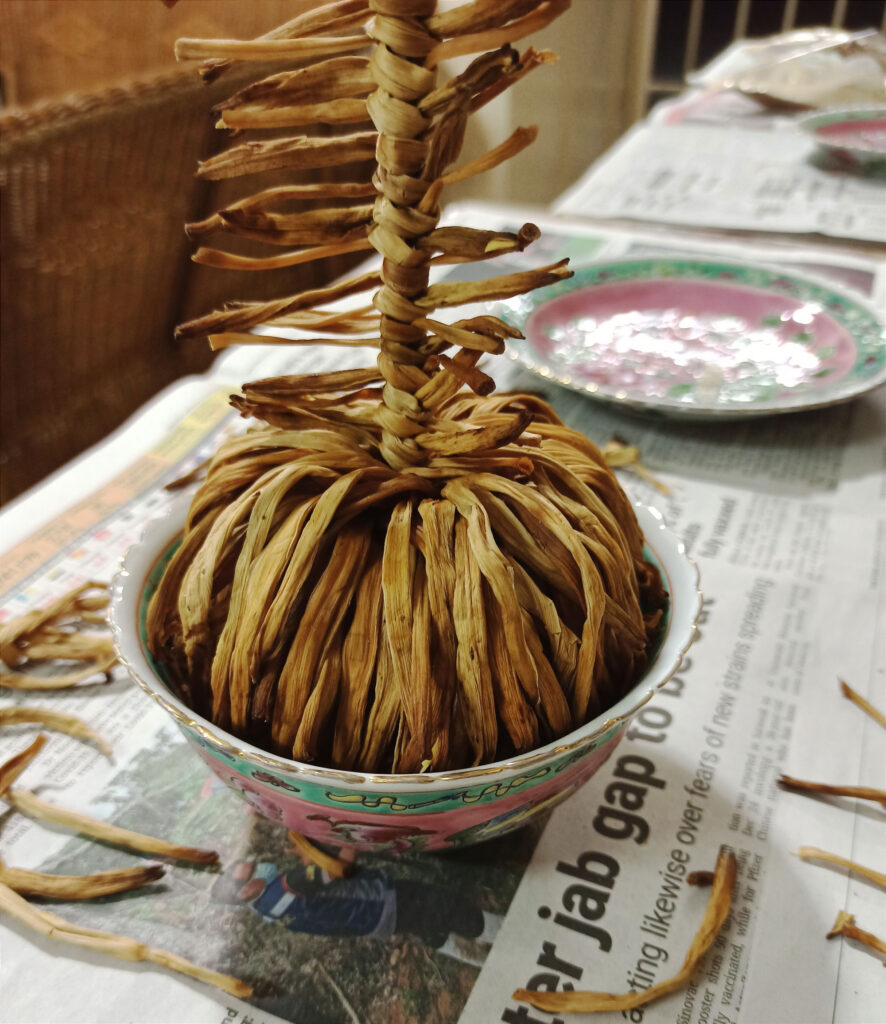
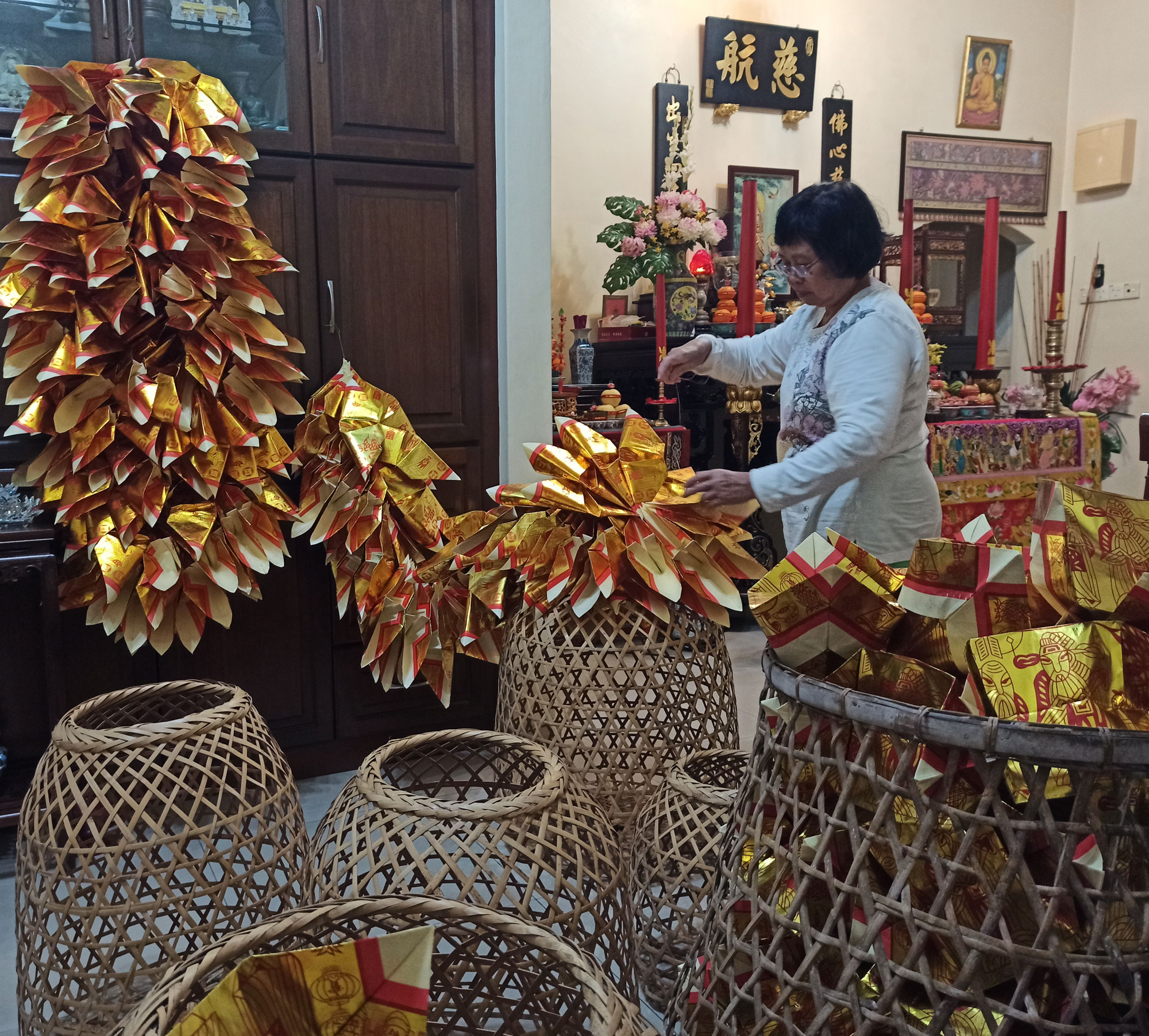
Meticulous preparations begin months ahead of the smayang, starting with the chanap. Other things done weeks ahead include folding the joss paper and cutting the red and gold paper to decorate fruits and other offerings. It is inexplicable to most people to fathom why we put so much time and effort into creating such an extravagant display of offerings for something that lasts only a few hours. Undoubtedly, it is an enduring effort driven by faith.
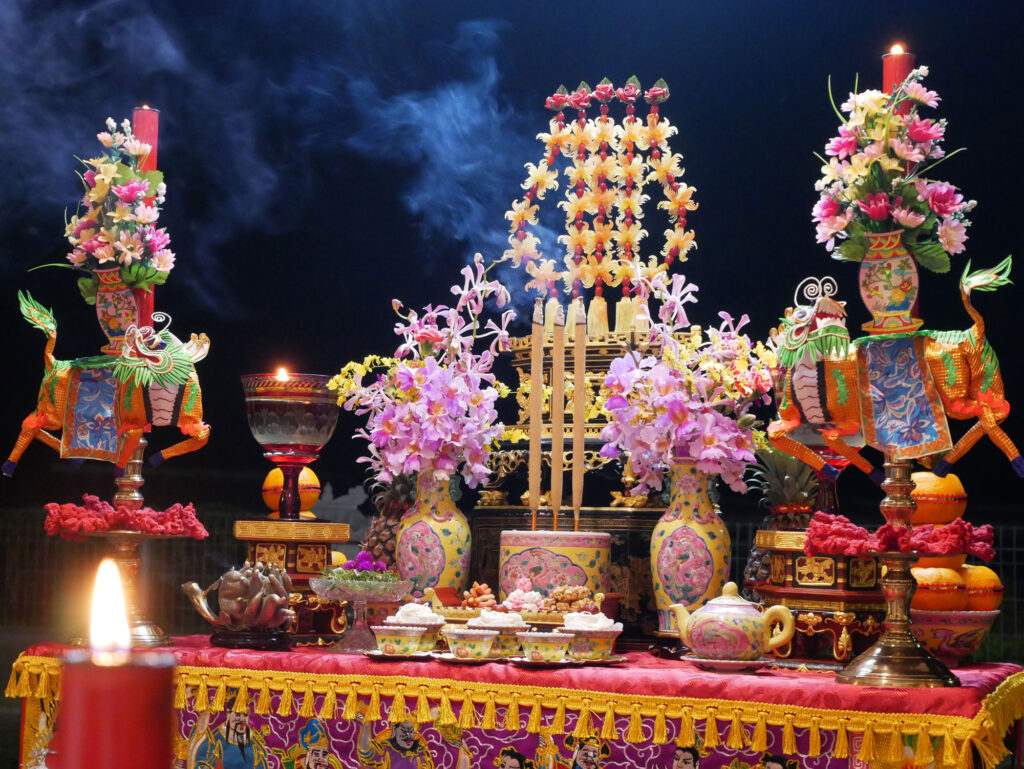
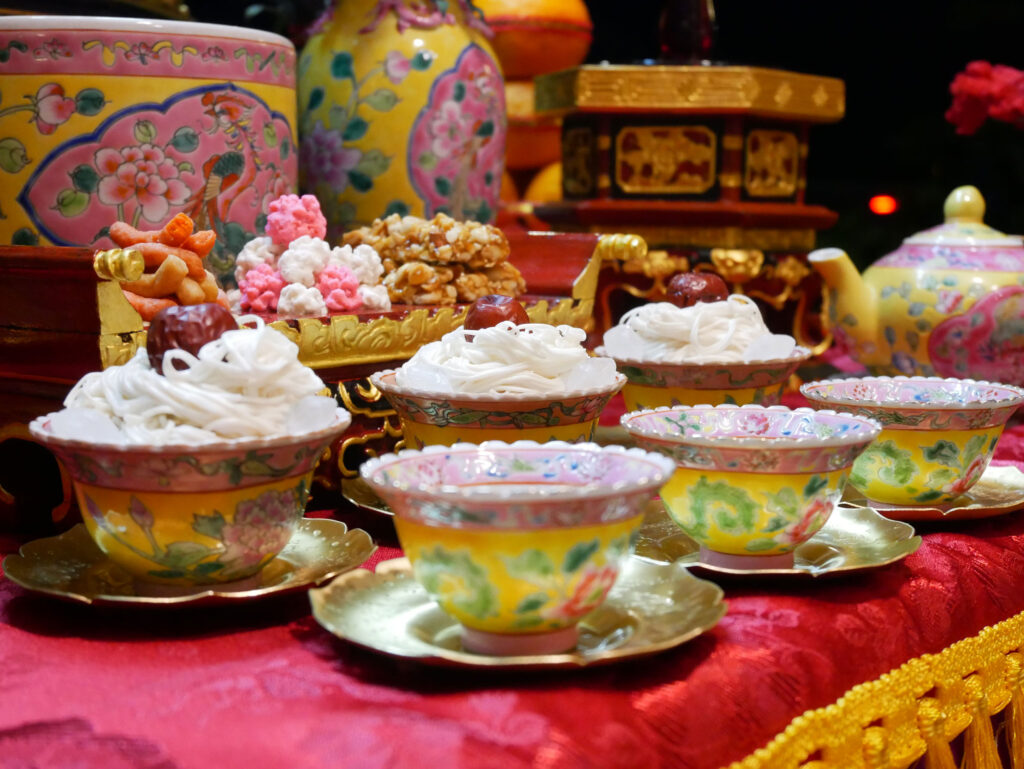
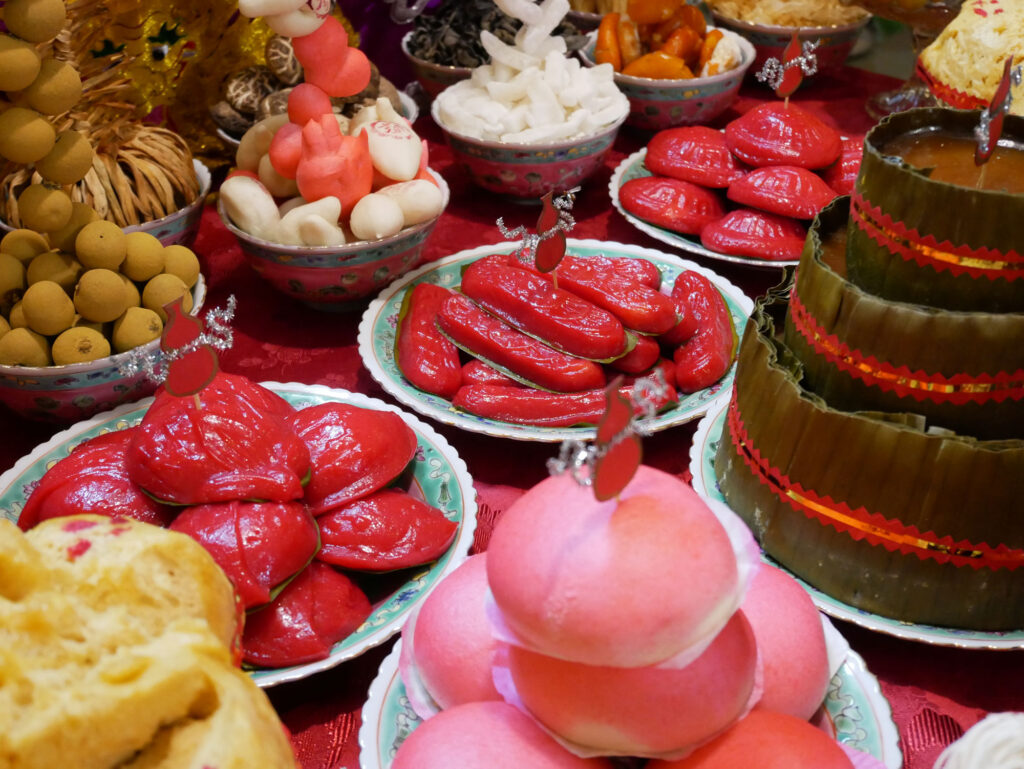
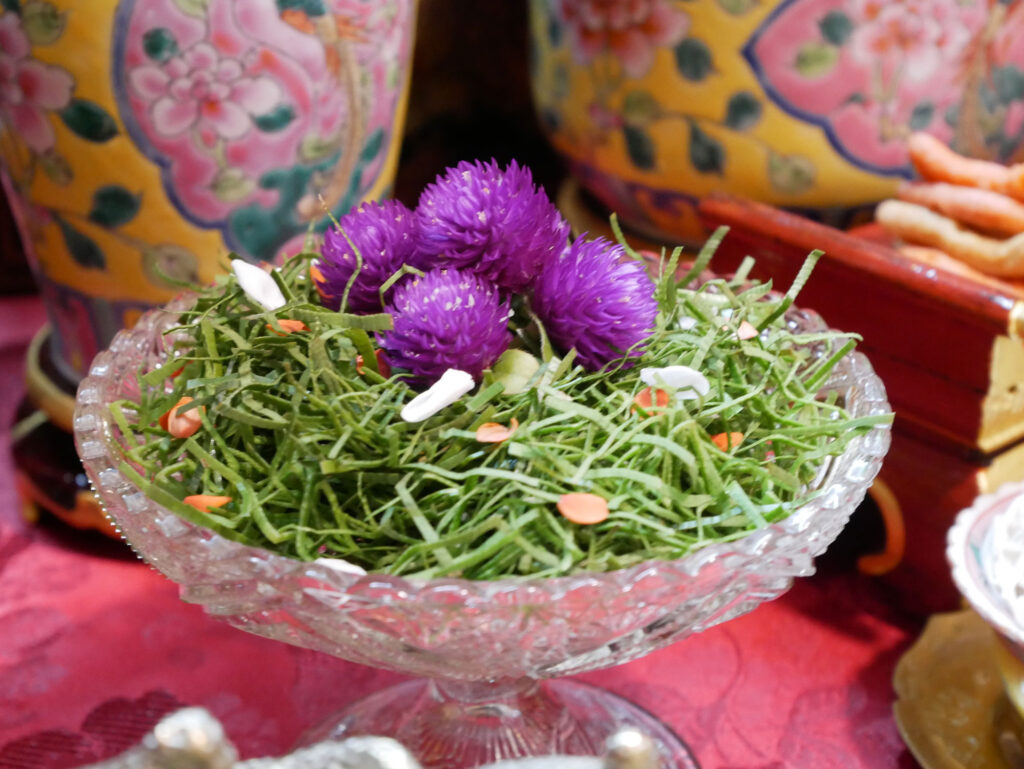
The main offering is known as the chanap, candied papaya that is hand-carved and skewered, to be placed atop the black lacquered chanap container which takes prime position on the elevated tok samkai altar – considered the grandest and most sacred altar dedicated to Tikong, the supreme Taoist deity. Bouquets of fresh flowers, pairs of red candles lit throughout and fragrant sandalwood joss sticks are placed alongside rows of carefully arranged fruit and cake offerings.
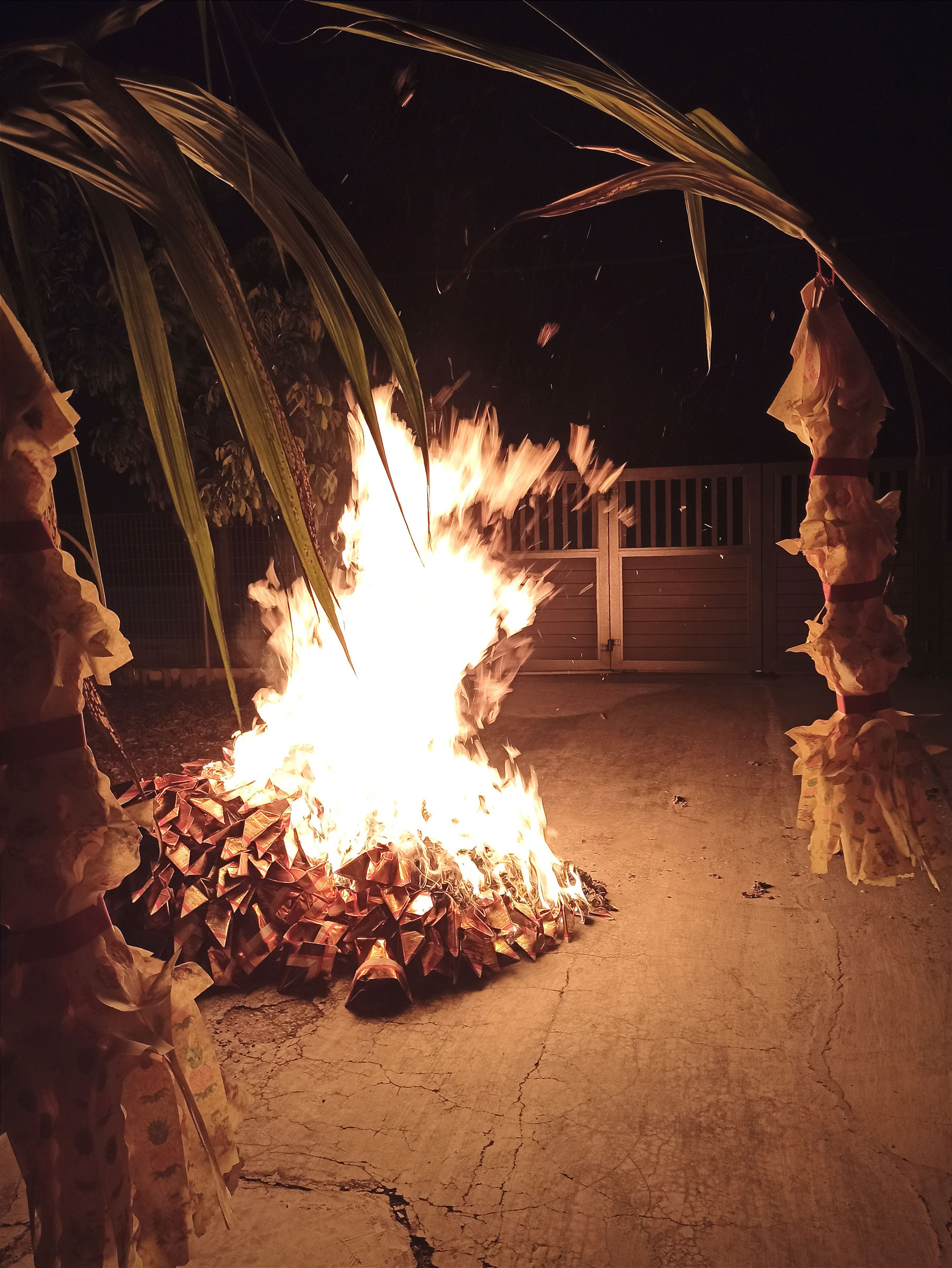
On the actual day of prayers, a pair of fresh sugarcane stems complete with leaves and roots flank the main door. The tradition was started by Hokkiens who were attacked by foreign invaders and sought refuge by hiding in the sugarcane fields. After the battle ended on the ninth day of the Lunar New Year, the grateful survivors offered a pair of sugarcanes and a variety of fruits to Tikong.
The prayers usually last till the early hours of the morning when strings of gold paper ‘ingots’ are set on fire to convey them to the celestial world. After this, all the offerings are removed from the altar. It is important that the offerings be distributed to everyone in the family to be consumed as the belief is that they will be receiving the blessings of Tikong.