 THE PERANAKAN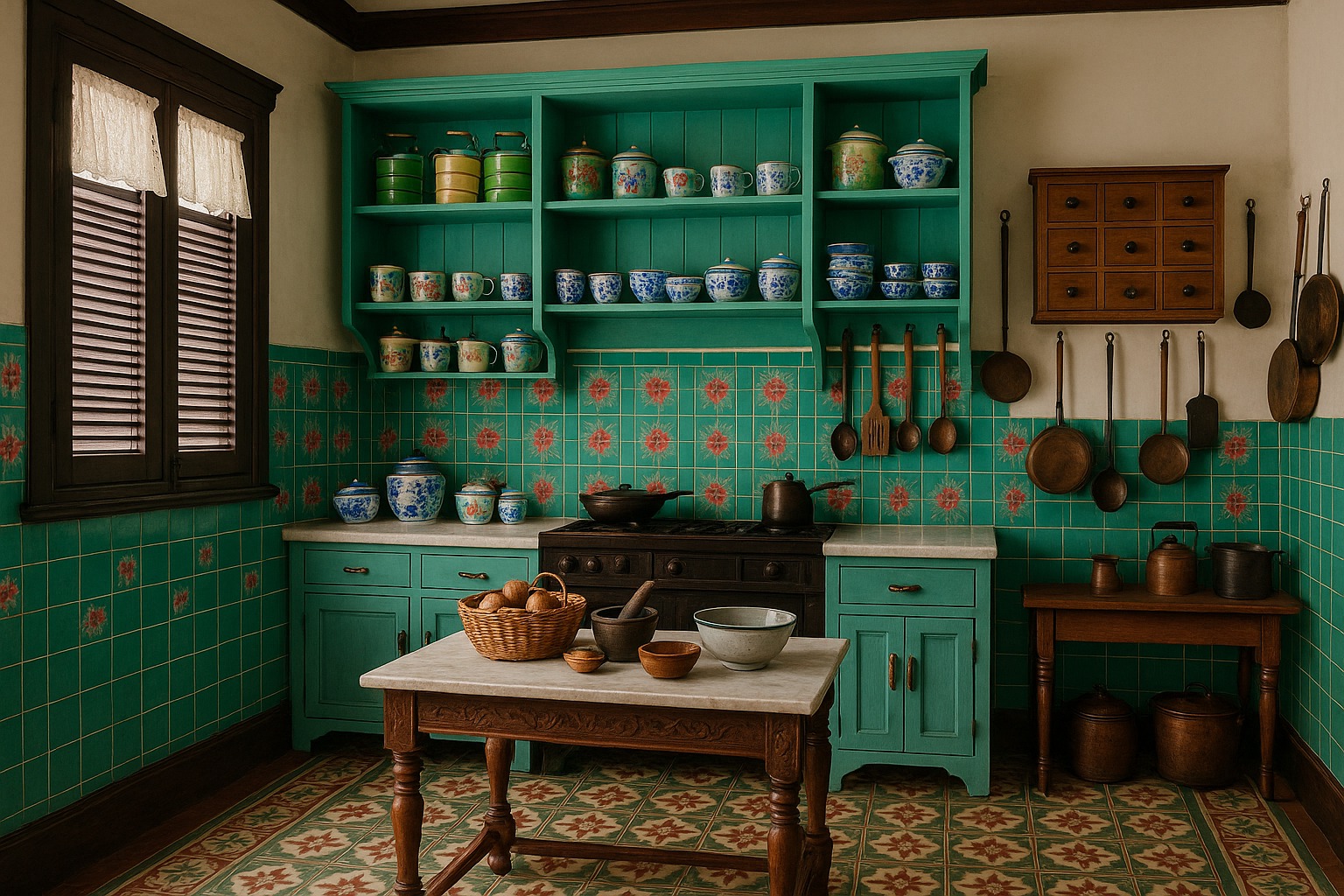
Today, a light touch of a finger sparks an invisible flame. But the dapur of yesteryear was almost a living thing — it needed to be fed, coaxed, and carefully tended.
Did Peranakan families have the kind of “clean, functional kitchens” promoted by Helen Campbell, the social reformer and home economics lecturer of the late 19th century? That’s what Ronald Knapp claims in his book The Peranakan Chinese Home. According to Knapp, Anglophile Peranakans who built their own homes adopted Western ideas of bright, airy kitchens — a stark contrast to the “cluttered, dark and smoky” kitchens still common in ancestral homes in southern China.
My own memories of the kitchen in our shophouse on Marshall Road — where I grew up — confirm this. It was as bright and airy as any kitchen could be. In fact, it was literally open-air: more than half of it was exposed to the skies, with only the outhouse, bathroom, and area above the dapur (kitchen hearth) sheltered.
Knapp, being Western, likely saw the kitchen as a room with walls and doors. But the word dapur is much more fluid. It could refer to the plinth on which the charcoal (or later, gas) stove stood, or even just the stove itself. Over time, it came to mean the entire kitchen area.
Today, a light touch of a finger sparks an invisible flame. But the dapur of yesteryear was almost a living thing — it needed to be fed, coaxed, and carefully tended.
Yet Peranakan women managed to prepare elaborate, multi-course feasts on the humblest of stoves. Some dishes were cooked beside the air well (open shaft for light and ventilation); others, especially large pots of food for gatherings, were made using charcoal stoves borrowed from cooperative neighbours and placed just outside our back door.
When my grandmother was around, all soups had to be brewed over the charcoal stove. It stood no taller than two feet — red, cylindrical, with tiny sliding doors just big enough for a pair of tongs to rearrange the glowing charcoal or push out ash. Its thick, ridged top held a well-seasoned wok or enamel pot perfectly in place — with just enough wiggle room for the occasional swirl of the pan.
I vividly remember the visits from our charcoal delivery man — lean and muscular, a 20-pound sack slung across his back, his shoulders dusted in soot like black snow. His singlet, once white, had long since surrendered to grime and fire.
My grandmother would lash out at whoever forgot to order the charcoal in time, but once he arrived, everything was forgiven in the rush to re-ignite the stove with leftover firestarters and charcoal logs.
If we kids were within earshot and not too slow to respond, a kipas lidi (palm frond fan) would be thrust into our hands with a firm instruction: Fan until the flames roar! And so we’d squat — precariously balanced on wooden terompah (clogs), hunched over the ground-level stove — swinging the fan with all our might until the fire blazed back to life.
Looking back, I feel a nostalgic twinge of regret that I never passed these tasks on to my children — and I certainly won’t try them on my granddaughter. Not only would they scoff at the idea that charcoal adds any taste or nutritional value, but they’d also send me Google search results declaring that orh kim (black gold, charcoal) couldn’t possibly affect food sealed behind thick stainless steel.
Still, I believe ours was the best of both worlds. We tasted the most flavourful food, with just a fraction of the labour of the generations before us. And now, our dapur lights with the mere touch of a button — but the memory of that living flame lingers on.