 THE PERANAKAN
Nyonya Cynthia Wee-Hoefer immerses in the esprit de corps of the Arabs of Singapore.
At the book launch of the “Arabs of Singapore 200 Years On” Book Launch at the Asian Civilisations Museum Auditorium on 29 November, many in the audience learned about the proud historical and economic contribution of this community originally from Yemen’s Hadhramaut Valley.
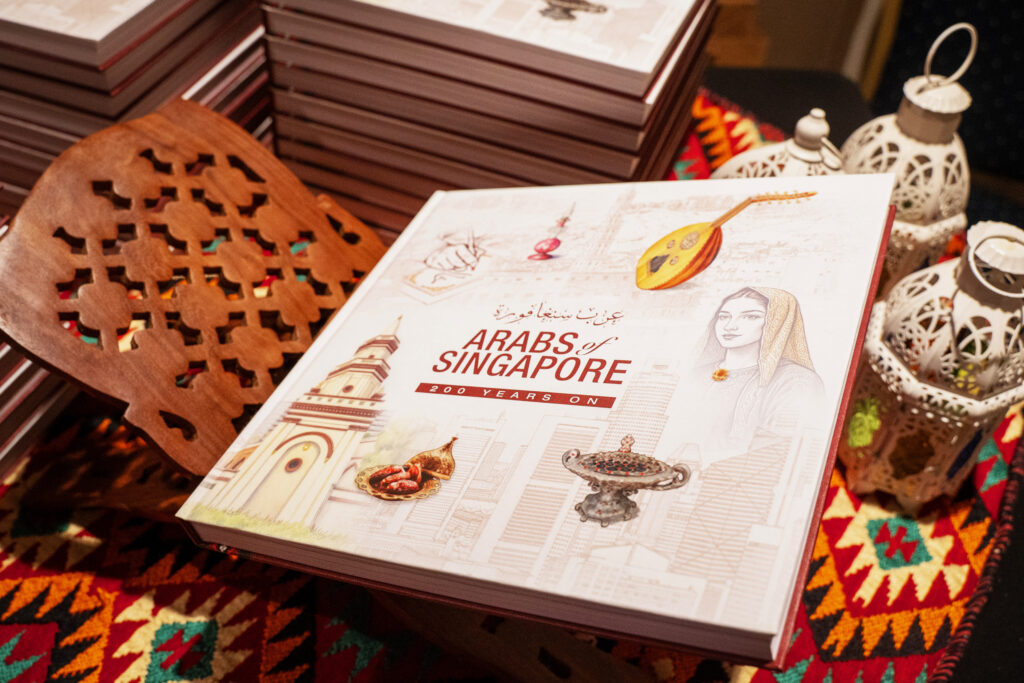
Yet even as Singaporeans know about Arab Street and family names of Aljunied, Alkaff and Alsagoff, many more could not distinguish Malay and Arab though the young and old alike accept themselves as a unique Singaporean Arab identity.
“I don’t feel necessarily connected to the general Arab world, because we’re not born there. I feel very Singaporean,” says the 20-something in Chapter Twelve, ‘Youth.’
The 282-page book is beautifully designed. It includes photos, maps, illustrations and chapters ranging from Genealogy, Religion, Trade, Land to Feast, Festivals, Women and Personalities.

The more I read the hefty tome, the more I appreciate this group numbering 10,000 (2020 census) and the candour and intimacy in the family stories and anecdotes, most notably their strong sense of lineage.
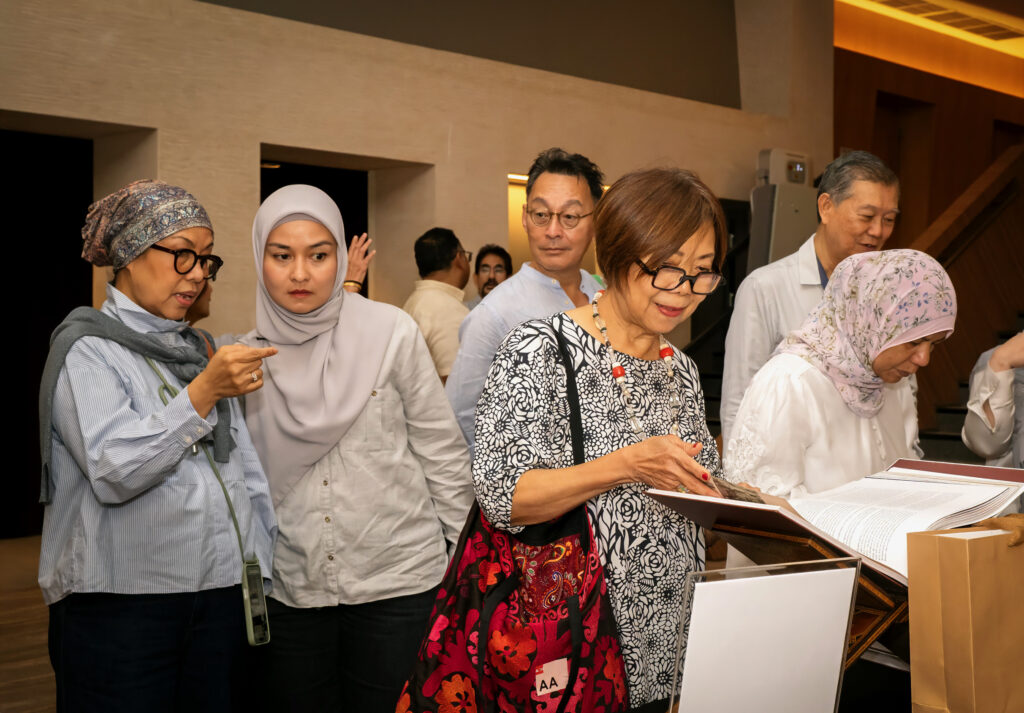
Did we know that Sir Stamford Raffles invited the Hadramani businessmen based in the Dutch East Indies colony of today’s Indonesia to shore up the economy? That the Arabs, along with the Jews, owned large swaths of land in prime areas of the island and have contributed to the oldest recorded mosque Masjid Omar Kampong Melaka; land for St. Andrew’s Cathedral and Tan Tock Seng Hospital?
At the auditorium, these nuggets of information were dispatched about the philanthropy and religious engagement of the Arabs in Singapore. The Arab Peranakan Association was established in 1932 seven years after an older Arabic Social and Literary Club was formed. After WWII the Arab Union of Singapore and Malay Archipelago became an exclusive club for the Hadrami Arabs.
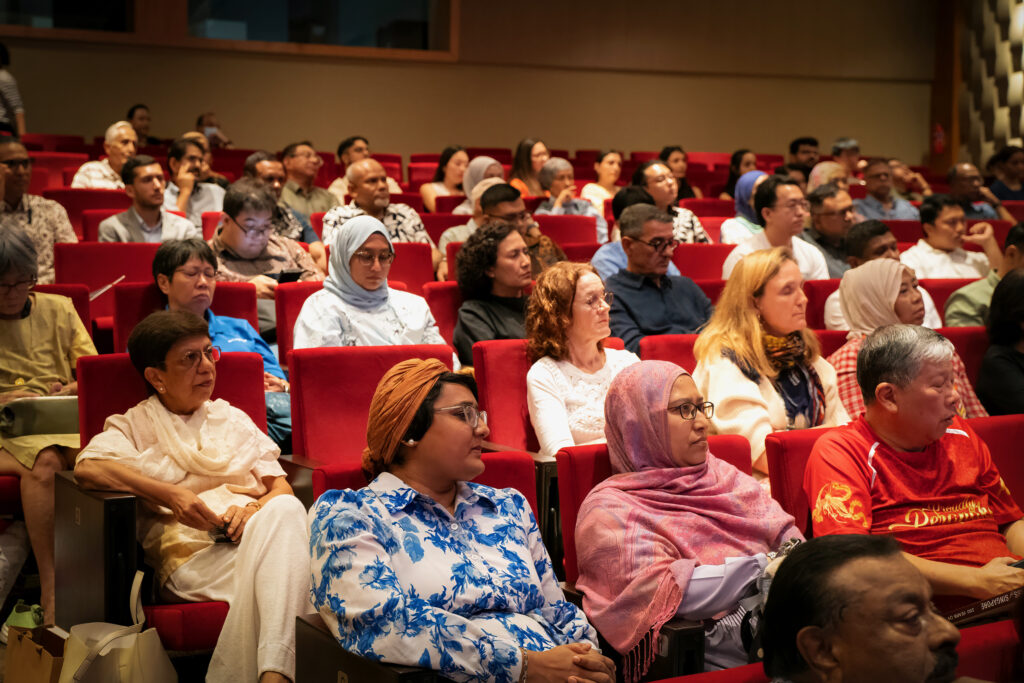
The current Arab Network@Singapore (AN@S) is the forerunner organisation that initiated this seminal book to raise awareness of the goals and continuity of its members spanning up to five generations from the arrival of their ancestors.
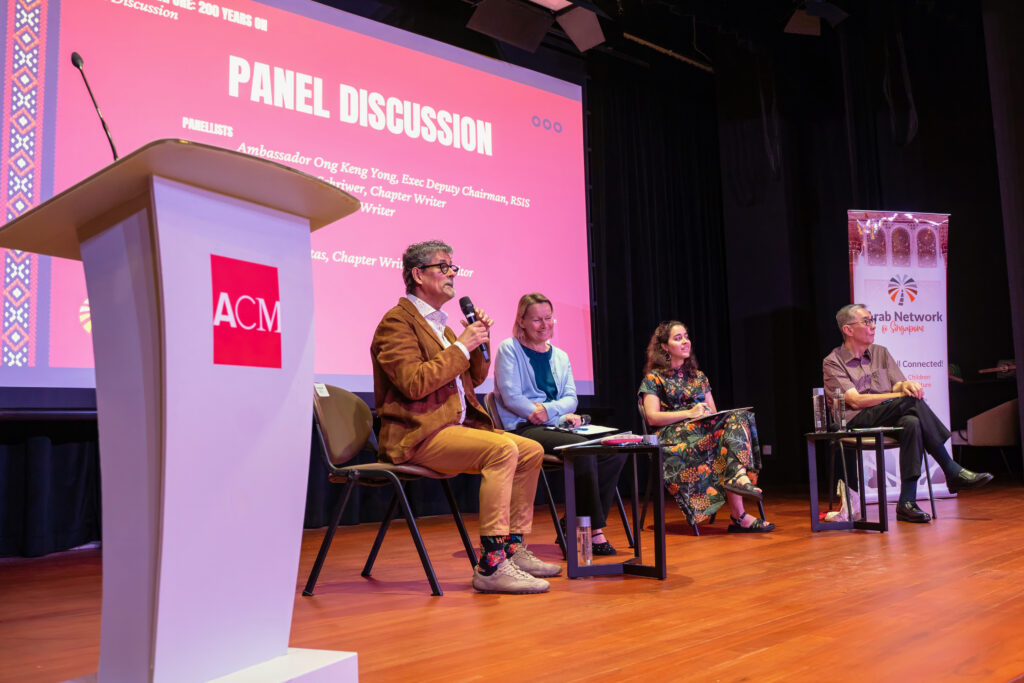
The welcome address by Prof. Farid Alatas, Chairman and Co-Editor of the book, three panelists – Ambassador Ong Keng Yong, Executive Deputy Chairman of RSIS; Charlotte Schriwer, Chapter Writer; Afra Alatas, Chapter Writer – and Moderator and Co-Editor Omar Alattas; covered “Arabness” in the wider world and declaring oneself as Arab no matter of the roots.
In the discussion, Afra Alatas declared herself as “half Arab and half Persian” enjoying perhaps the two aspects of inherited cultures while viewed from the government as “Other” in her own country. She readily agrees that as a Peranakan she has adopted the rich influences of other cultures at the same time the Arabs have contributed to Singapore’s success. The history pages go into engaging detail.
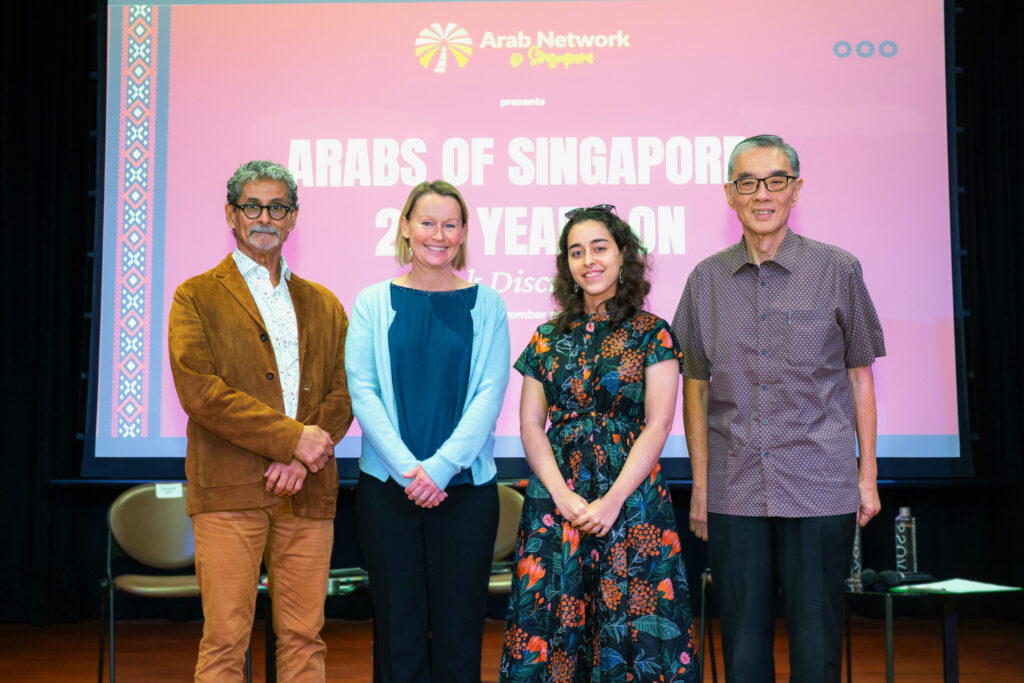
Professor Ong dwelled at various times on his knowledge of Arabic and his duties in the Middle East countries and summed up words of encouragement to the Arab Singaporean.
He reiterated that they need not be negative about the erosion of their culture from their origins (in Yemen) but can make efforts to represent Hadramani Arabness through music, dance, fashion and education as powerful tools as a sub-group in any country.
One point about the community is the loss of the Yemeni Arab language that seemed inevitable with the mixed marriages and the adoption of Malay and English at home.
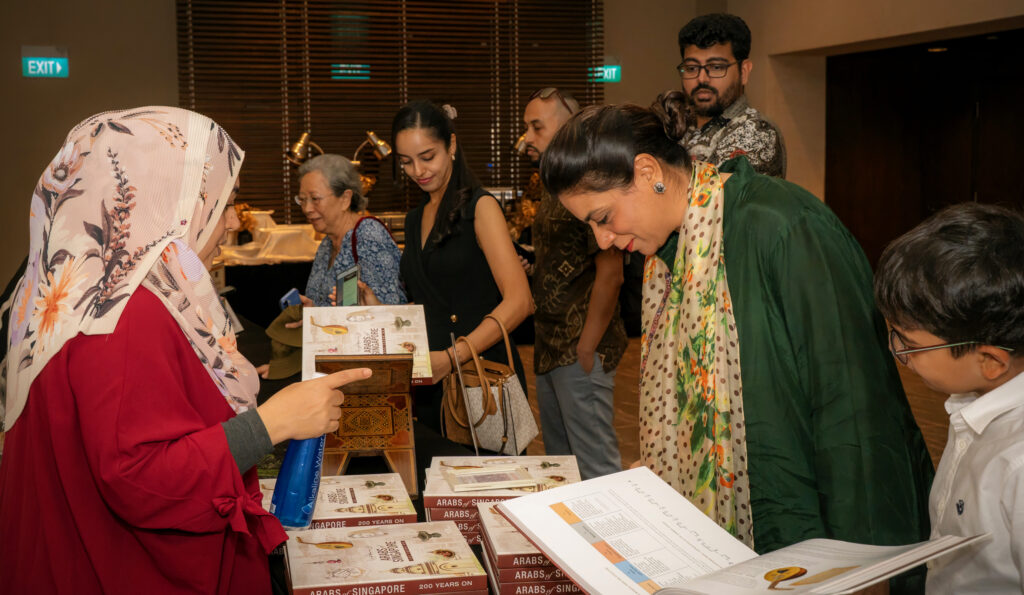
At the tea reception, copies of the book (currently priced $85) were speedily sold. There was even a calligrapher to pen one’s name in elegant Arabic script. Now that’s culture.
Photos of the event and book are courtesy of Arab Network@Singapore (ANAS.)