 THE PERANAKAN
The Peranakan communities of Singapore and Melaka are famously known to be related in a labyrinth of connections through blood and marriage ties, as seen from the families here. Genealogy buffs Babas Ronney Tan and Benedict Khoo string together familial linkages with Ronney’s sister, Nyonya Linda Chee (nee Tan) and her husband, Baba Colin Chee, the previous president of The Peranakan Association Singapore. Benedict is a paternal relative of the Tan siblings through seven generations of the lineage of Seet Hoot Kee. Colin is related to Linda through a Melaka relative.
The bachang, or horse mango, is a globular fruit with a seductive aroma similar to the chempedak. As the saying goes, bau bau bachang dari jaoh jaoh pun boleh chium. It means one can smell the bachang from very far away – an apt description of the connections within the Peranakan community.
All photographs, except for the Laws of Sarawak, were restored on soft copy by Benedict Khoo.
In Melaka – Across Three Generations, the Chuas of Heeren Street
Heeren Street is now known as Jalan Tun Tan Cheng Lock.
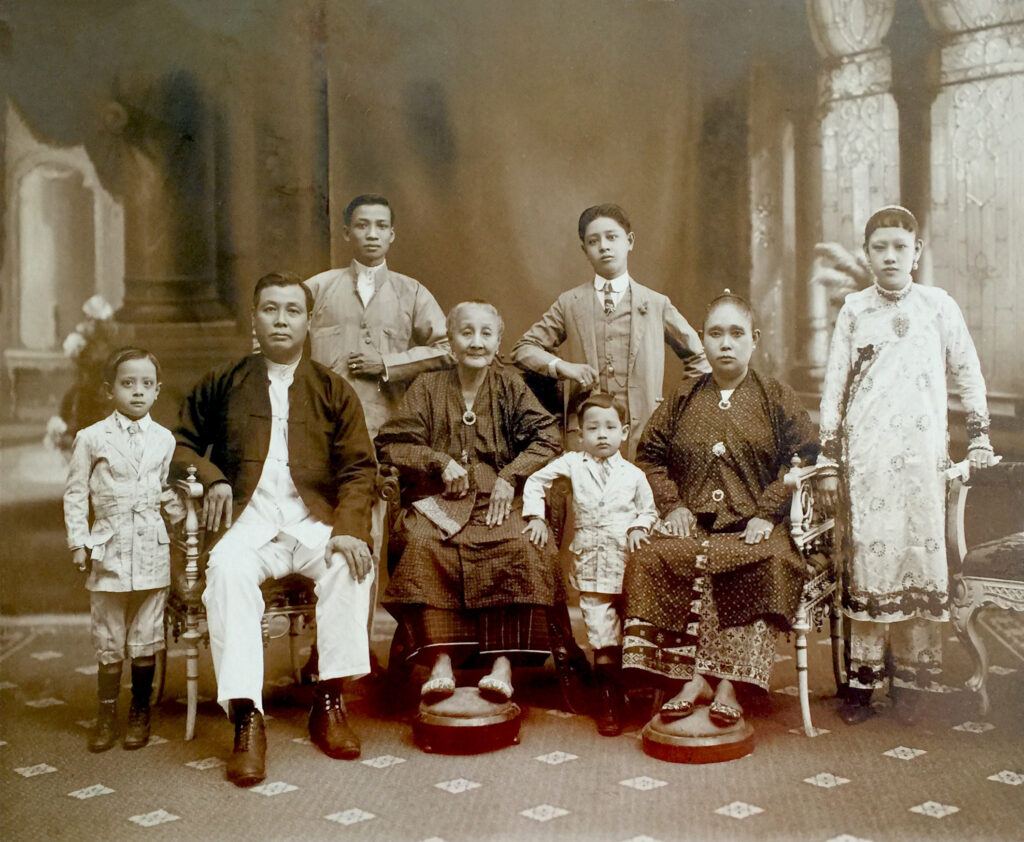
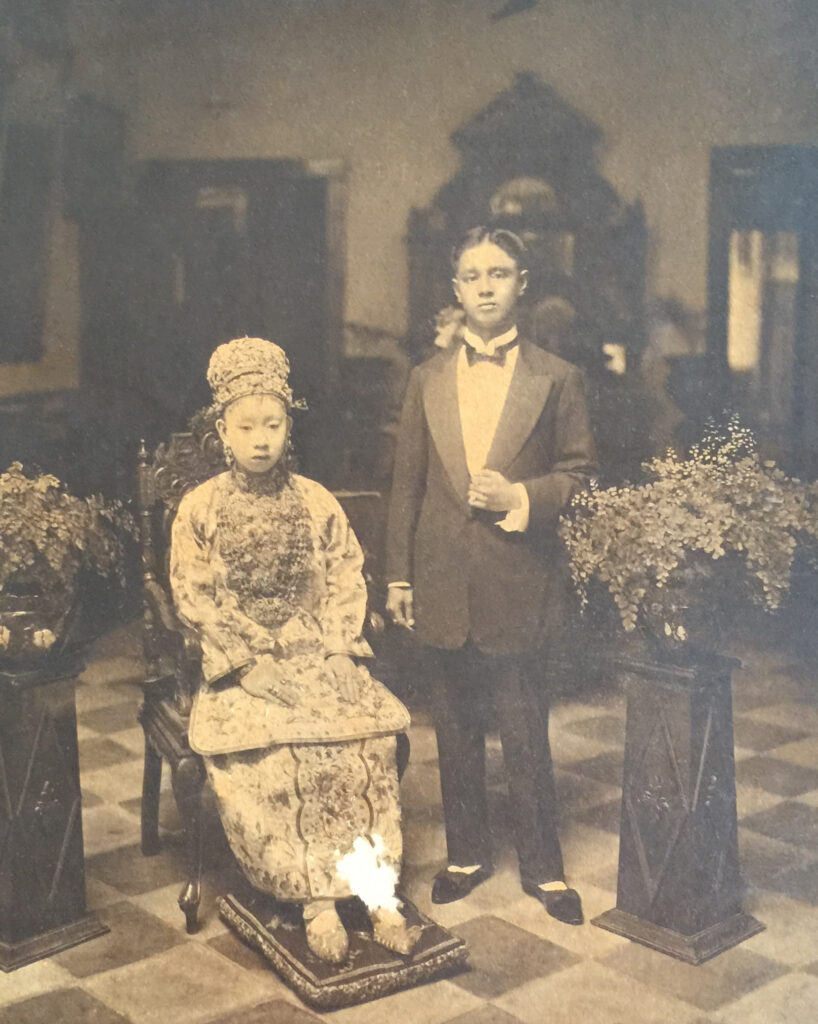
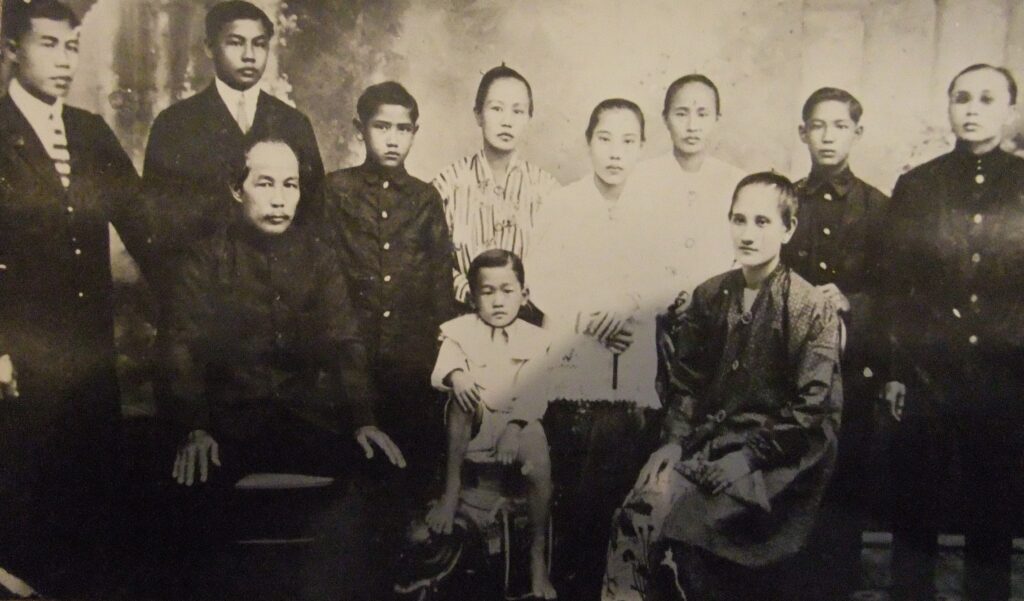
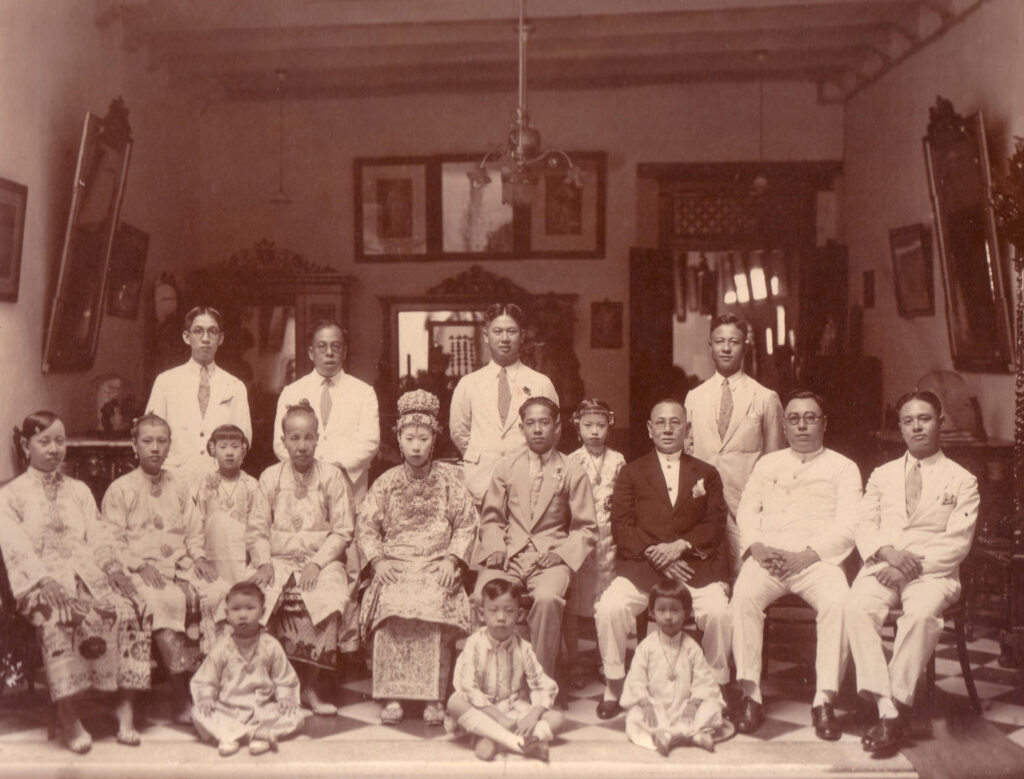
In 1920, Chua Lip Sian’s eldest son Poh Boon, 21, married his first cousin, Tan Yang Neo, 19, daughter of Lip Sian’s sister, Chua Siew Lang Neo and her husband Tan Jin Ann (see page 16, “We are Chinese”), who was Ronney and Linda’s paternal grandfather. Their first-born son did not survive infancy and a second son was a deaf mute. This condition was thought to be attributed to too-close blood ties. They lived with an extended family at 22 Shanghai Road, Singapore. Poh Boon died in 1944 during the Japanese Occupation. It was said the stress of supporting a household of 10 people finally took a toll on Poh Boon. Circa 1920. Photograph courtesy of Charles Seet.
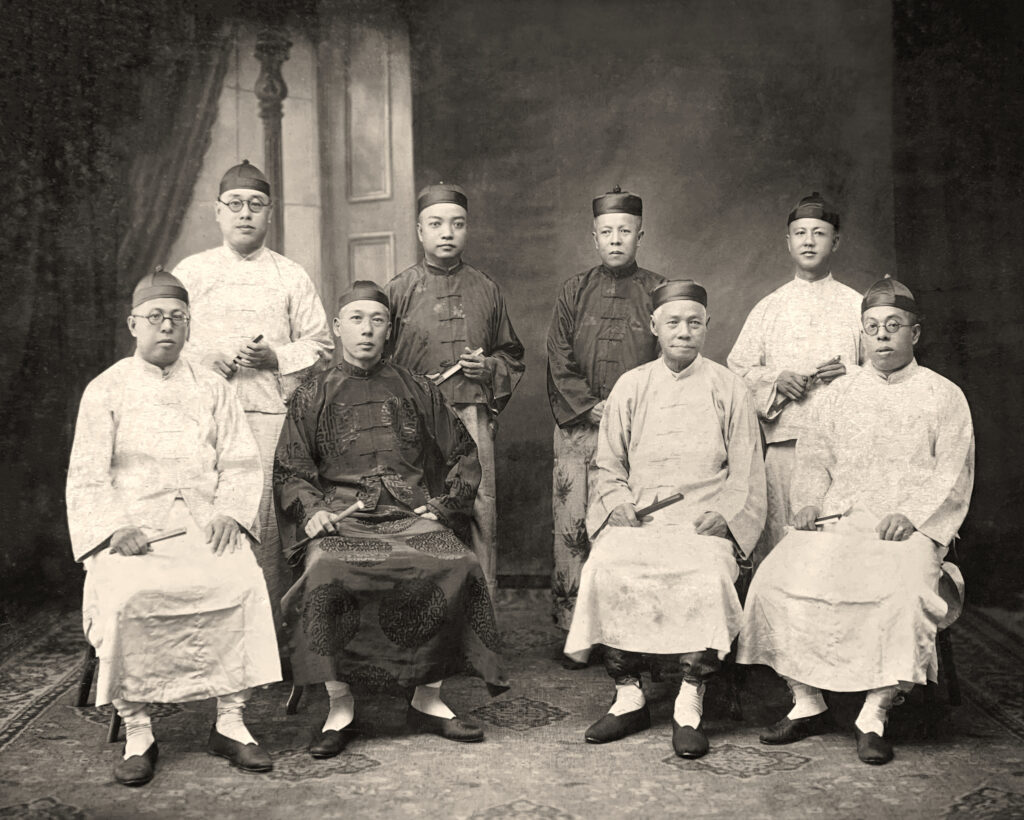
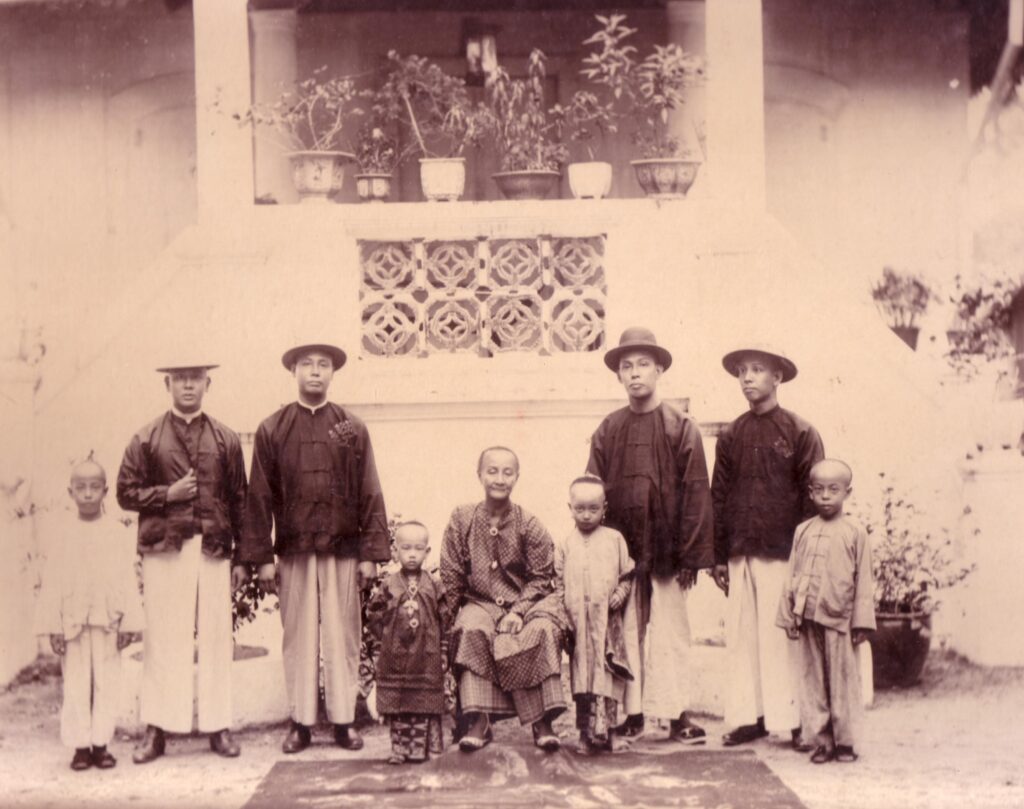
Standing from left: Seow Eng Chye, Lee Ewe Aik and his father-in-law Chee Hong Chiang, and Chee’s nephew Tan Eng Chye who is Ronney and Linda’s paternal grandfather. More than 40 years back, the siblings’ father Louis Tan nearly threw away the photo as it was in bad condition. But Ronney realised the historical value when told who were in the picture. Eng Chye married Chee Kim Puay, the niece of Hong Chiang. The Chees were part of the family that owned the Chee temple.
Seated from left: Chua Poh Cheng, Ho Eng Wah, Ong Kim Kiat (Eng Chye’s uncle by marriage to Tan Luan Inn Neo), Chua Poh Siang (Poh Cheng’s brother. The brothers were second cousins to Eng Chye. Poh Cheng married Eng Chye’s sister, Tan Choo Kim Neo). Circa 1933. Photograph courtesy of Ronney Tan.
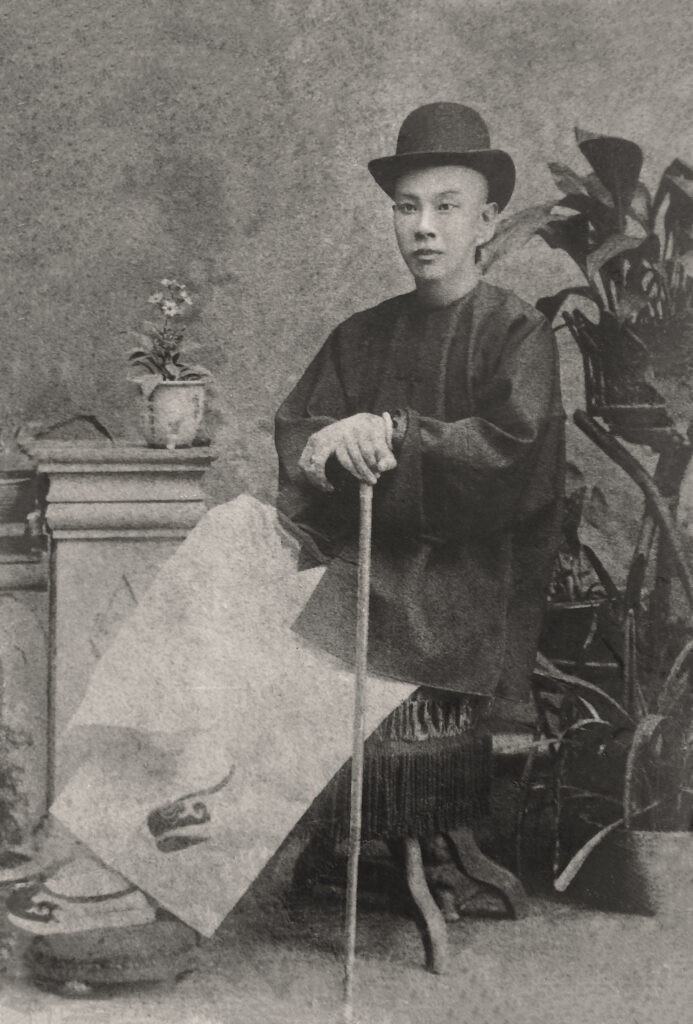
A gentlemanly relative of Chua Lip Sian, name unknown. He has deliberately defied convention and crossed his legs. It was seen as uncouth by elders in that era. Contrary to Western poses, the crossing of legs was considered uncivilized and disrespectful in Chinese custom, which the Babas strongly adhered to. To sit with legs apart in a formal manner also reflected high social status. Children were trained from very young that it was rude to cross your legs in the presence of adults.
It was the period when many babas started to attend English-language schools like Raffles Institution, St Joseph’s Institution or Anglo-Chinese School. At that time, they were trying to copy the clothes and manners of their English colonial masters. The cane and hat are just two examples of cultural appropriation even if he was still dressed in the Chinese baju lokchuan. Circa 1895.
In Singapore – the Khoos
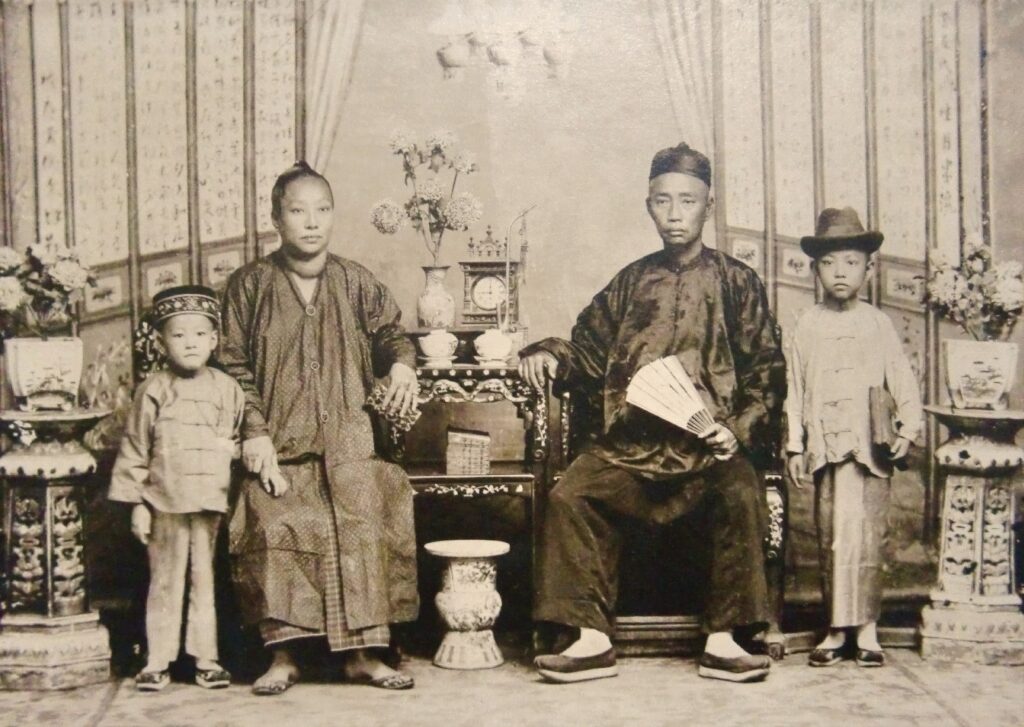
The boy’s fedora hat indicated the Babas’ Anglophile lifestyle at the turn of the 20th century. The clock confirms the evolution of a “look to the West” trend that was starting to take hold as more babas starting going to learn English at schools like Raffles Institution, St Joseph’s Institution and Anglo-Chinese School (ACS). The trend accelerated in the 1860s.
Patriarch Swee Yeow spoke English and enrolled his sons at ACS to be proficient in English and Hokkien. Circa 1899. Photograph courtesy of Benedict Khoo.
In Sarawak – the Laws