 THE PERANAKAN
Nyonya Cynthia Wee-Hoefer makes a week-long trip to Terengganu and Kelantan to meet a unique divergent offshoot of Peranakan Chinese, unveiling an intriguing history of migration, integration, and a waning hybrid culture.
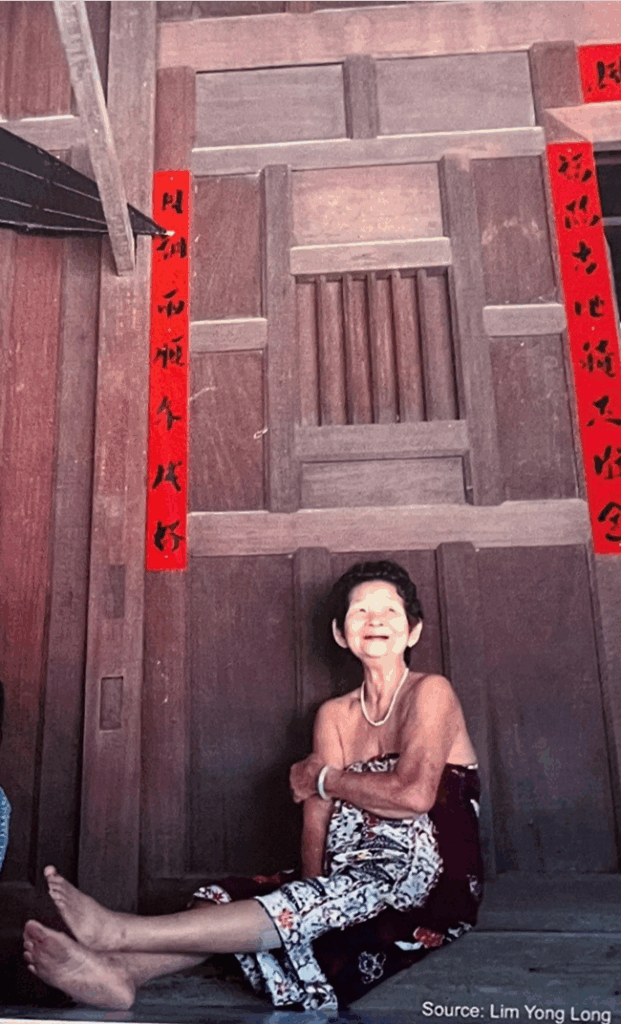
(photos by Lim Yong Long)
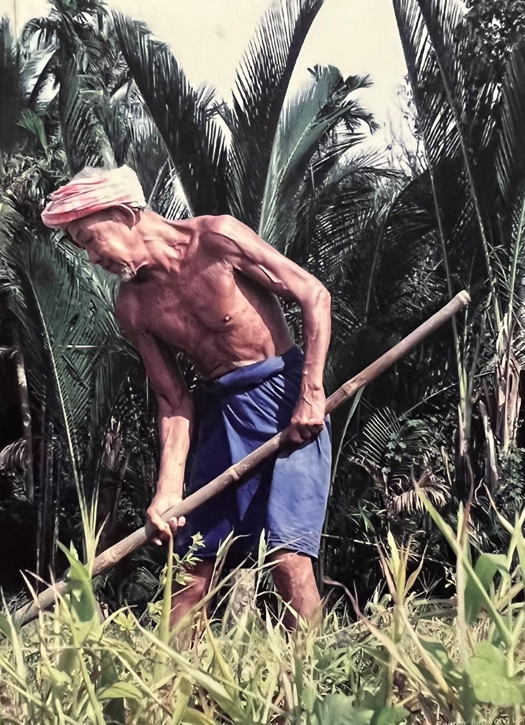
Meet Mek and Awang of Terengganu and Kelantan
Let me introduce you to Mek and Awang of Kelantan and Terengganu. In the ordinary Baba Malay patois you would address them as nyonya and baba, or encik. Not in this north-eastern state of peninsular Malaysia.
Not only are the women referred to as Mek, and the men as Awang, some of the Kelantan Chinese have taken up Malay names unabashedly. Awang Hasan lives happily with the title, with family members and neighbours referring to him as such. On my recent trip to Terengganu and Kelantan, I met up with the leaders of the Peranakan Cina associations to forge a better understanding of this distant community.
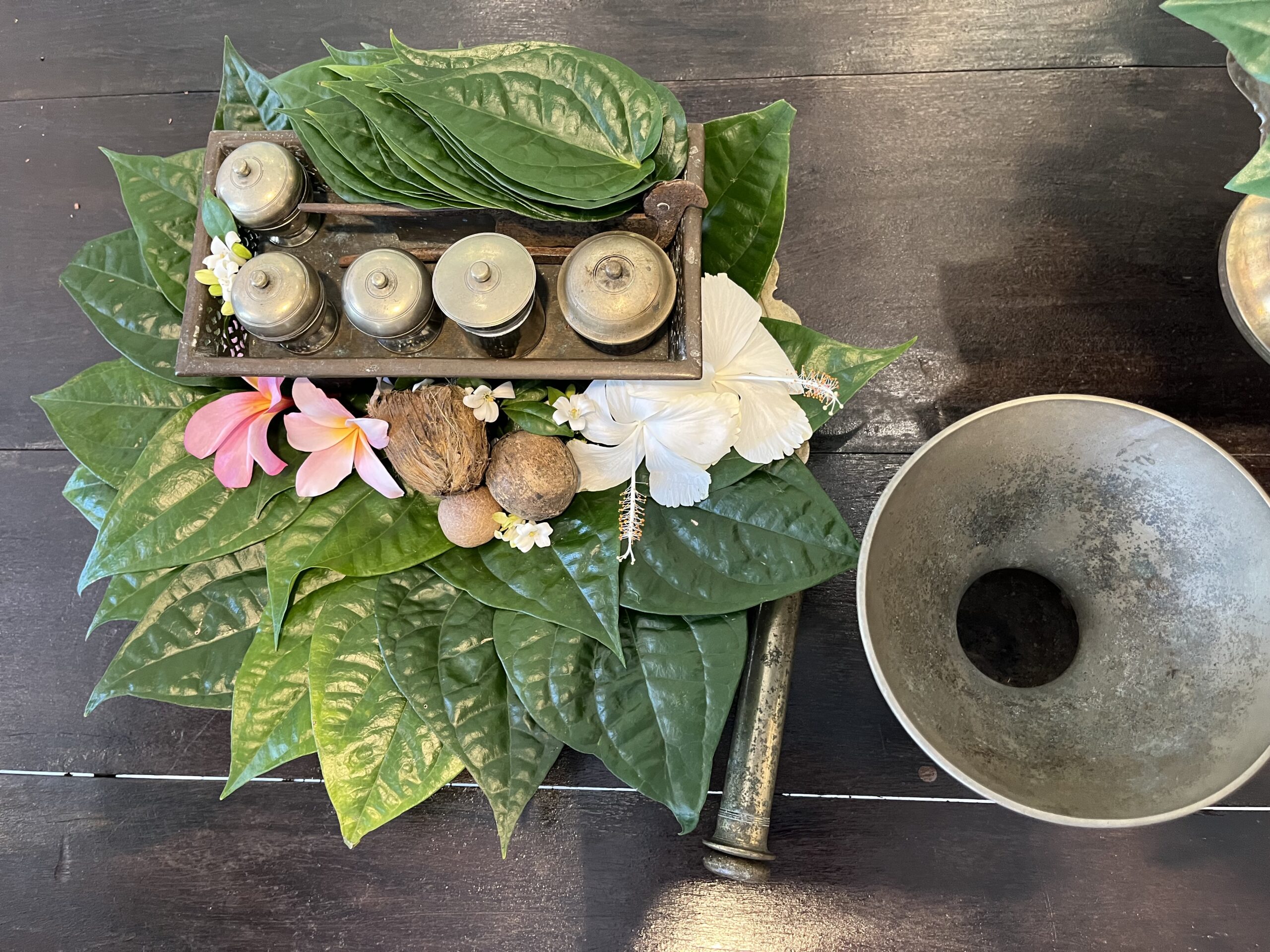
Within the Peranakan Chinese, there are distinct features that separate them from the rest of the former Straits Settlement Baba strongholds in Penang, Melaka and Singapore. My first encounter with the locals was in Kota Terengganu at gallery Terradela, run by the owner Alex Lee, himself a Peranakan Chinese. My travel companion and I put up at the beautiful Terrapuri Heritage Resort of wooden royal houses refurbished by Alex. Among other displays in Alex’s gallery was a tall floral arrangement of stacked and overlapping leaves of the Kadok, or Piper Sarmentosum, on a table. This charming array is presented by a groom to his chosen bride’s family as a symbol of courting (adat meminang).

Alex explained that the higher the arrangement of Kadok leaves, the more prosperous the match will appear. In other Baba households throughout Southeast Asia, the tapak sirih (betel leaf container) is offered. This is a Malay tradition adopted by the Straits Chinese.
Dr Wee Tiong Wah, president of the Persatuan Peranakan Cina Terengganu, was quick to point out that he grew up in Singapore studying at Raffles College before returning to Kuala Lumpur to take up a degree in dentistry. Dr Wee’s late wife also hailed from Singapore. He leads the fledgling seven-year-old association of less than a hundred members.
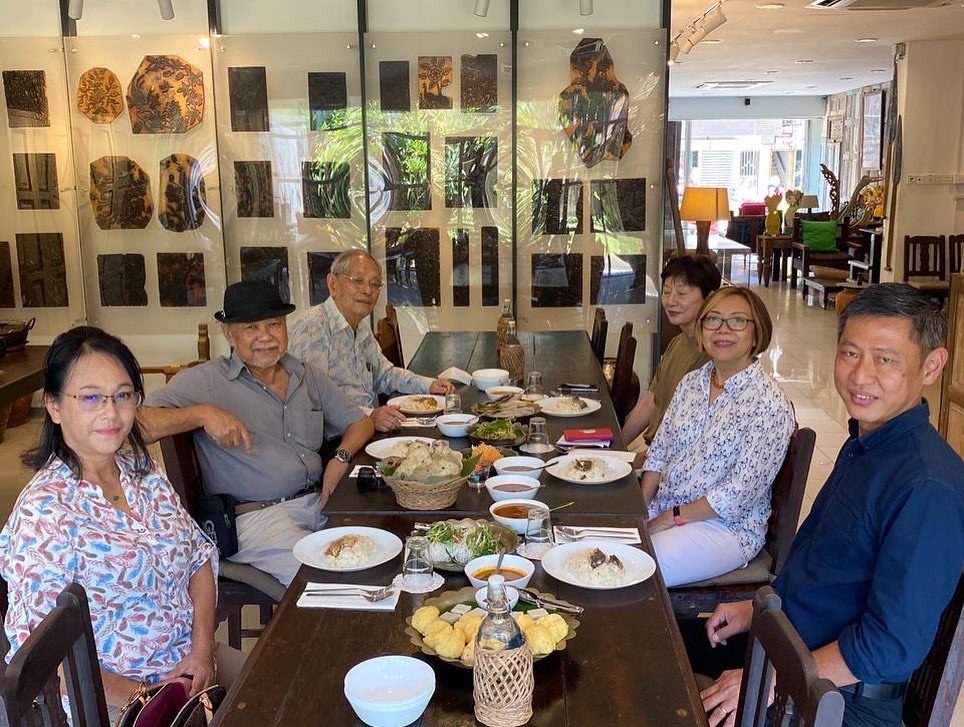

After preliminary introductions, we sat down to a lunch of delicious Kelantan laksa, nasi dagang (curried fish and flavoured rice), several appetisers of young papaya, a jicama (turnips) and bangkwang (yam bean stewed in garlic and fermented soya bean paste) dish, a dish of cucumber and carrot shreds eaten with fried fish keropok (fish crackers) and sauces, served alongside the cigar-shaped fish paste lekor and sambal belacan dip.
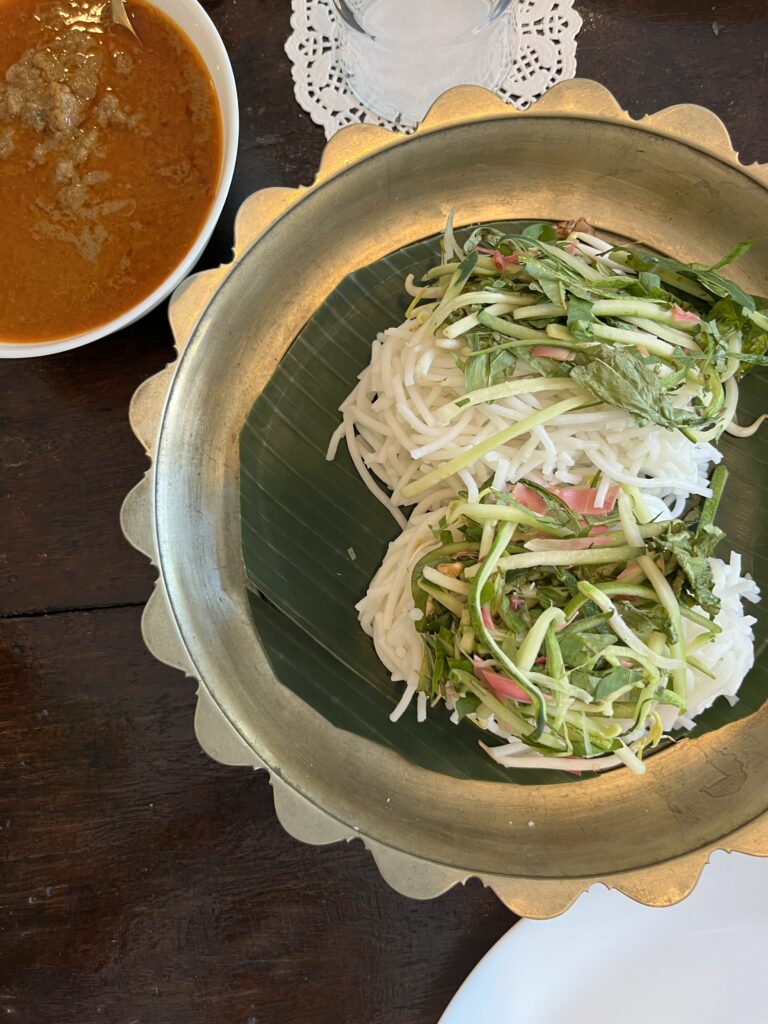
A rice wafer toasted over a flame and filled with sweetened grated coconut was a most interesting dessert. “It was only in about the last 10 years that we dug up the past about ourselves and our history. We never thought of ourselves as Peranakan Chinese,” said Yap Chuan Bin, deputy president of the Association.
Yap places himself as the 11th generation of the Chinese seafarers who landed on the northeast Malayan coast and established settlements more than 250 years ago. Some accounts state their arrival earlier in the sixth century, but this cannot be verified.
Presently, Yap counts about 2,000 Peranakan Chinese still residing in the Terengganu state.
The diminishing number of the community can be attributed to the exodus of the younger, educated generations to the big cities and abroad setting up their own families away from home.
Cultural Hybridity in Kelantan
Nyonya Cynthia Wee-Hoefer makes a week-long trip to Terengganu and Kelantan to meet a unique divergent offshoot of Peranakan Chinese, unveiling an intriguing history of migration, integration, and a waning hybrid culture. This is part two of a three-part story, focusing on Kelantan.
The sentiment of seeing children and grandchildren leaving their family homes is expressed by both Mr. Owi Boon Teck and Mr. Look Thien Jee of the Persatuan Peranakan Cina Kelantan. The group has over 2,000 members, but most are passive and do not partake in activities, says Owi.
In 2015 the Kelantan Chinese group was fortunate to inherit a gallery in a traditional Peranakan house donated by a patron, the late Yeap Boon Yang. If anything, the house will remain as a poignant reminder of a culture that combines Chinese, Malay and Siamese ancestry.
Indeed, the most distinguishing feature of the early Chinese settlers is the partnering of the males with the local Malay and Siamese women. Because of religious restrictions, most of the men married Siamese women who were Buddhist.
Several Peranakan Chinese are also able to trace their Siamese genealogy to the Pattani or Songkla near the border of Thailand.
Today, there are several Theravada Buddhist wats or temples scattered around the Peranakan Chinese kampungs or villages. At the same time, Taoist rites and rituals are practised at home and in the temple grounds, which attest to their strong roots in Chinese culture.
Ancestral worship is very much alive in this community. The oldest Taoist temple, built earlier than 1871, is dedicated to Mazu, Goddess of the Sea while each village enshrines its own patron gods and holds annual festivals to honour their respective deities.
Apart from the Lunar New Year, the Winter Solstice (Thung Chek), Mid-Autumn Festival, Hungry Ghost month, death anniversaries and weddings are observed in the Chinese custom.
The group also celebrates Siamese Loy Krathong, the light and lantern festival, and the Songkla water festival as well as Wesak and Buddhist holy days.
The influence from the north permeates in the fashion that women wear the baju siam, pairing a floral-printed blouse with collar over batik sarong. For formal occasions, the women wear the sarong kebaya, beaded slippers and kerosang: the three-pins that are the common accoutrements of the other Peranakan Chinese in Southeast Asia.
In Pasir Parit village in Kelantan, Siamese-related dishes prepared are jam or yam such as tom yam (asam pedas soup), yam mamuang (kerabu mangga), khao yam (nasi kerabu with a hundred and one different varieties of herbs found in the garden) and yam bak (kerabu daging).
When I stepped into the Peranakan Chinese gallery in Tanah Merah village, Kelantan, there were displays heralding the arrival of the Chinese attributed to legendary Chinese Admiral Cheng Ho, who was said to have stopped in Kelantan to take water. A temple in a nearby village is dedicated to the fabled admiral.
However, it is of interest to note that the village’s community is segmented in two, with the Peranakan Chinese living alongside the cina bandar, or town’s folk, who keep mostly within the city confines. This community speaks Chinese and upholds their own dialects, and are considered the predominant Chinese who arrived during British rule in 1909.
Further Afield Across Kelantan
Nyonya Cynthia Wee-Hoefer makes a week-long trip to Terengganu and Kelantan to meet a unique divergent offshoot of Peranakan Chinese, unveiling an intriguing history of migration, integration, and a waning hybrid culture. This is part three of a three-part story, focusing on rural Kelantan.
The cina kampong or rural group is a Peranakan Chinese group of interest. A map traces the 60-plus villages of Peranakan Chinese families along the various main rivers and around the Kota Bharu capital. The term cina kampong has the connotation of backwardness and they seldom ascribe it to themselves, though it can be gleaned through the unique acculturation of this group to their environment.
One smaller community is the cina pulai from the Hakka group that upholds their dialect, cooking and religion without taking on the native cultures.
The rural Chinese speak the Kelantan Malay dialect fluently and take names like Hassan or nicknames like Su for Bongsoo or youngest. Although they cannot speak Hakka, Cantonese or Mandarin, they speak Hokkien Siam among themselves at home. Most of these rural folk were schooled in English and Bahasa Melayu, though lately their children are sent to schools with Mandarin as the primary medium of instruction.
These are the Mek and Awang who originally set out as impoverished farmers and fishermen, though few of them acquired success as traders along the coast and beyond to Annam (Vietnam) and China. Living side by side with the Malays, they assimilated the customs and values of their neighbours so much so that these Peranakan Chinese were accepted heartily as community.
“Our lifestyle is essentially Malay in culture. We follow certain beliefs like pantang larang (translated as taboos or prohibitions), celebrating childbirth after 40 days instead of the Chinese 30 days,” said Yap of Terengganu.
“As thanksgiving for childbirth, the nasi kunyit (yellow glutinous rice) with red eggs, and sweet coconut gravy is given to the daughter. For the male-born, chicken curry, salted fish slices, salted egg, cooked prawns and julienned fried egg are added,” he said.
One other custom embraced by the Peranakan Chinese is the “pupuk semangat” ceremony in which friends and neighbours are invited to partake in a tray of yellow rice with trimmings as spiritual bonding and encouragement for a new venture, a trip abroad, or an important examination and the like.
Peranakan Chinese males are known to follow the circumcision rituals of the Malay tradition. The kampong folks also believe in the native’s supernatural agents such as the “penunngu” (guardians of the forest, mountains and fields), jinns and a variety of ghosts.
There are bomohs or shamanic healers within these Peranakan Chinese communities that conduct Malay séances to heal sicknesses or release those entrapped by malicious spirits. Worshipping at keramats (graves of holy persons) is also an important ritual tradition of these communities.
What distinguishes the Peranakan Chinese homes from the traditional Malay ones are the larger houses with their upswing swallow tail roofs. The roof tiles are clay singgora or atap singgora that resemble a dragon’s scales, and are still handmade to this day.
The layout of the Tanah Merah gallery house is based on the ancestral houses in Min Nan, Fujian China. It consists of the prayer room with ancestral altars; the living area and the bedrooms in one side, the kitchen and toilets are housed on the other.
“You don’t see the opulent furniture and rich decorations here as you would in Melaka, Penang or Singapore,” said Alex. He explains that the people came from China as settlers around 1409 and were known to be one of the first to arrive on the Malay peninsula.
They lived off the land as farmers and fishermen and are proud to own the tracts of land with rich agricultural produce.
“The Musang King durians are from here originally,” said Mr. Owi Boon Teck of the Kelantan Chinese Association. “We used to call them Raja Kunyit and we grow them quite profitably.”
The association of Kelantan had just wrapped up a festival called Warisan Seni Budaya (Cultural Heritage Festival). Among the attractions are the Peranakan kebaya paraded by the ladies, traditional food, poetry-reading, Wau (kite) workshops, Wayang Kulit and traditional music sessions. There was also a record-breaking wrapping of 10,000 pieces tau bau or cakes.
It is noteworthy that the Wayang Kulit puppets and musical instruments are performed by Peranakan Chinese veterans; the craft of the Wau kite-making is also expertly conducted by a Peranakan gentleman.
As we drove around the village, we spotted several Peranakan Chinese houses with the red scalloped roof tiles, red lanterns and paper couplets pasted by the doorway. Some modern two-storey brick structures belonging to the members of the community were built to replace the old houses.
We drove in for a closer look at one regal but fading traditional house. There were a couple of elderly ladies sitting on the verandah (serambi) passing time. The large, unattended compound with a well contained old furniture that was left neglected, somewhat like its inhabitants.
Nonetheless, events such as the Peranakan Chinese Heritage Trail and cultural festivals enable the Association’s leaders to drive awareness and a greater appreciation of their culture. More than 2,000 people turned up for the three-day event in August to the delight of the organisers.