 THE PERANAKAN
Baba Ronney Tan Koon Siang rejoices over the publication of Pantun Baba Chan: The Art and Beauty of Traditional Baba Malay Poetry, a book of delightful pantons (Baba Malay poems) written by Babas Chan Eng Thai and GT Lye.
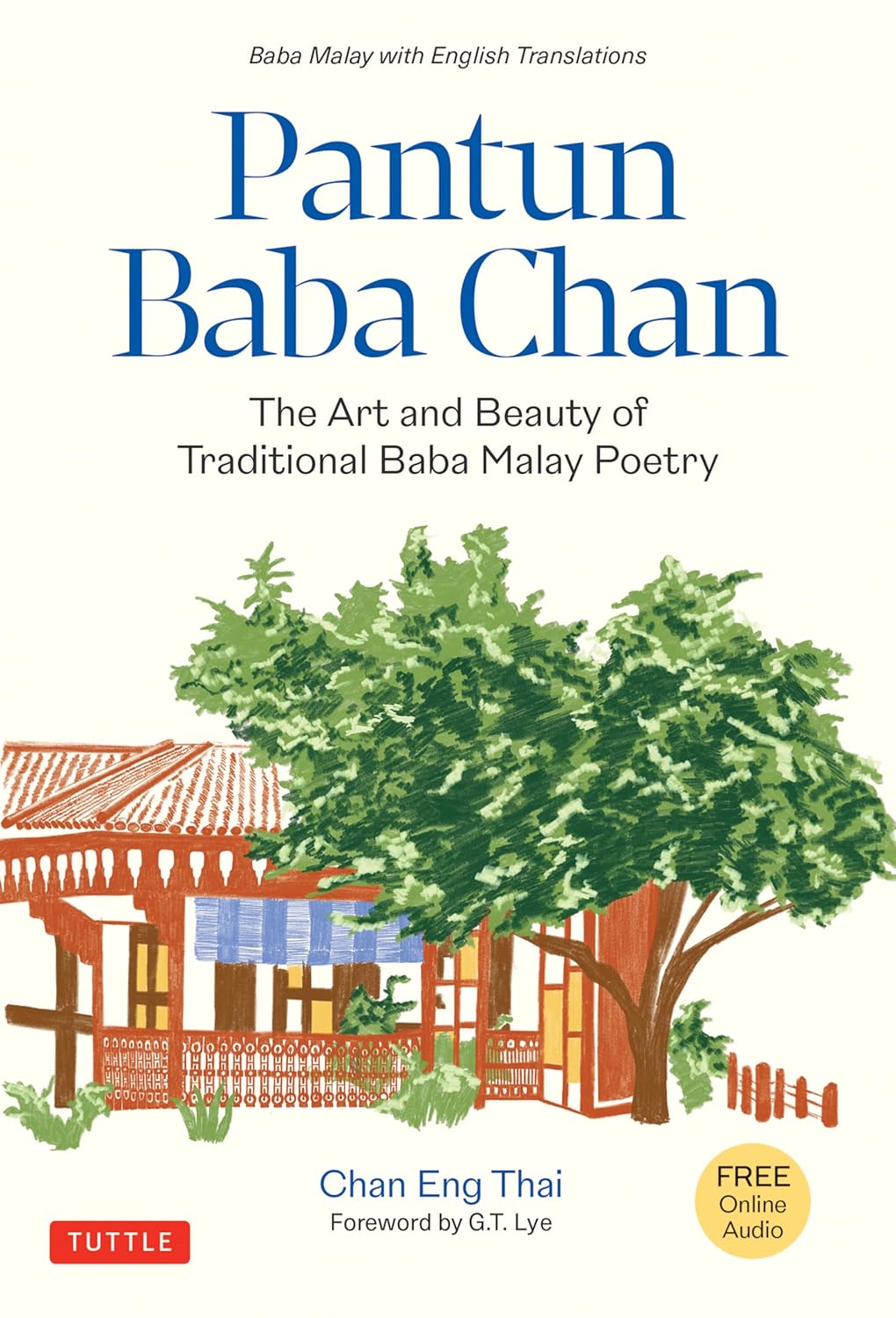
As an eighth-generation baba and a panton buff, I found this book of original Baba Malay pantons (poems) an important yet timely effort with Peranakan culture enjoying a revival of sorts. These two gentlemen poets are no strangers to the Straits-born community.
For the nyonyas and bibiks of an era when Baba Malay was their only vent of expression, this collection of 100 original pantons is a walk down memory lane. My mother and grandmother never could muster even a verse because they only had limited English language education, and a Baba Malay mother-tongue inherited as an oral tradition. Baba Malay was never taught as a school subject. We grew up speaking the unique lingua franca of the Malay Archipelago. I only realised that Baba Malay was a distinct language different in large measure from what we learned in school as Bahasa Melayu.
I only tried my hand at panton writing because of my past schooling. We had Literature lessons where writing English poems was not exactly an easy exercise to master. So, I used those lessons to teach myself to write pantons. These quaint quatrains are simple devices also incorporated by bantering actors on the Wayang Peranakan stage as well as the Bangsawan theatre.
Both Babas Chan Eng Thai and GT Lye have had onstage acting experience. GT has an enormous following in the baba-nyonya community. He also won a national accolade not too long ago as a Steward of Culture. GT was the one who carried many theatre productions of baba plays staged since 1984 by the Gunong Sayang Association. His every twist and turn tickled our ribs no end. He once told me that when on stage, he was completely in his element. That is the pure genius of the stage artiste. His larger-than-life performances are talked about even today by audiences of a certain age.
Eng Thai too is no stranger. He is a practicing advocate and solicitor of the Singapore Courts, not the lawyer burok often dismissed in baba family circles as a windbag! He also performs with the Peranakan Voices (the Association’s choir), is a sought-after emcee and sometime thespian on the Wayang Peranakan stage.
This collection of pantons is classified by occasion. A closer examination reveals that GT and Eng Thai both have their unique panton styles. My only critique is their need (at times) for some use of formal Malay which would give the pantons a more elegant ring. This is unavoidable as pantons were often spoken by free-spirited bibiks as spontaneous expressions for bantering. Occasionally, these folksy pantons used colloquial Baba Malay which today would attract a PG (for parental guidance) rating!
My own panton writing uses purely everyday Baba Malay to humour friends who speak the patois. As an example:
Buah mangga tak bleh lawan buah minjeh
Dua dua mia panton ada penoh chukop bahu
GT sama Eng Thai belom lagi menyeh-nyeh
Masing masing mia chut-mia suma orang tahu
Many babas and nyonyas today lack the vocabulary and linguistic fluency to write pantons which take us back to the era of William Shellabear and thus lost an avenue of fun in expressing themselves. Bantering is a lost art which if regained will give us back the laughter and wit of Baba Malay.
Panton practitioners, get your pens cracking…perhaps the Association can organise a panton-writing competition?
*
Editor’s note on spelling: Baba Chan Eng Thai’s publication uses the conventional Malay spelling for “pantun”. Baba Ronney Tan’s review employs “panton” as spelled in A Baba Malay Dictionary by William Gwee.