 THE PERANAKAN
Nyonya Cynthia Wee-Hoefer partakes in a Chakap Masak session at Allspice Institution.
Get to know your daun, puchok and akar (leaf, shoot and roots)
if you love your home-cooked food!
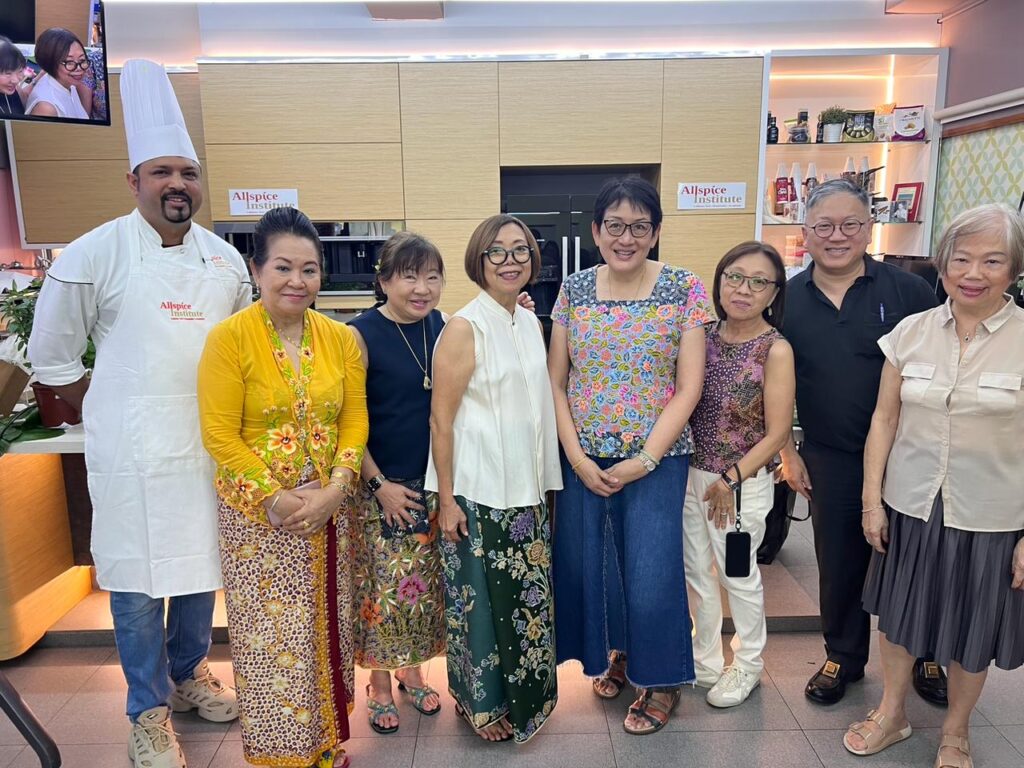
At our successful Chakap Masak session held at Allspice Institution, the audience of 60 gleefully absorbed, filmed and took notes of the details in preparing Nasi Ulam and Urap Kachang Botor.
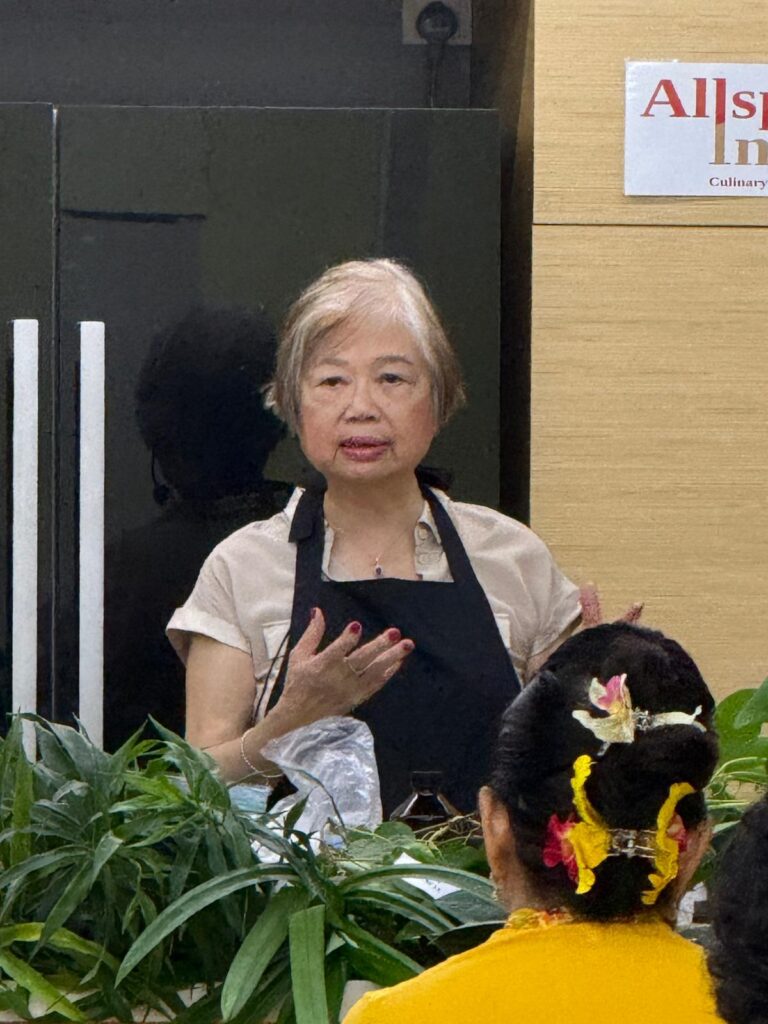
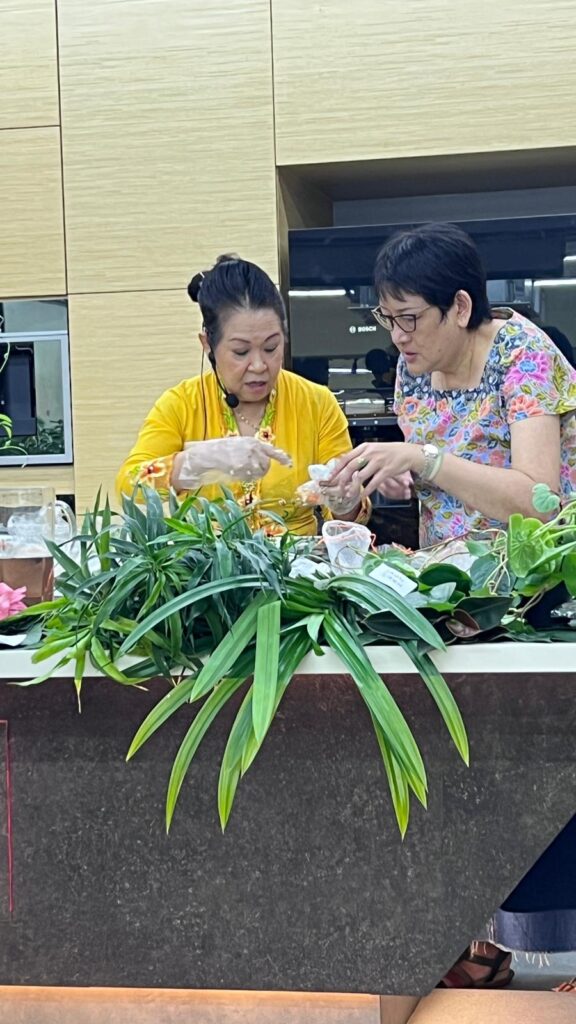
Guest chef Sylvia Tan (left), a former journalist and cookbook writer, laid out her “short cuts” to cooking for busy office workers, mums with children, and those residing overseas.
Her Nasi Ulam ingredients comprised belachan (toasted in oil in a microwave oven), blended in a food processor with daun kunyit (turmeric leaf), daun limo purut (kefir lime leaf), daun kenchor (resurrection lily leaf), daun selaseh (Thai basil leaf), and daun kesom (laksa leaf).

In a way, a herbal pesto was created to mix into the cooked rice.
Other ingredients included boiled fish flakes, cooked prawns, browned coconut, fried shallots and browned dried shrimp.
“No messing with boiling and draining water,” Sylvia said, and put the thinly sliced long beans in a bowl with little water that went into a microwave oven. In minutes, she had the right crunch for the condiment together with diced raw cucumber.
She then spread cooled rice onto a flat bowl and began to mix all ingredients with two large spoons. Voila, her Nasi Ulam looked inviting with a bottle of sambal belachan on the side.
Next up was guest chef Lilian Chua (on the left), who took the traditional path to making this dish. She contended that each household has its interpretation of nyonya dishes and hers was from her mother’s teaching.
The pain, as some would call it, is the cutting of the herbs razor thin or “iris alus alus”. The chekek tulang or labour-intensive work is plied into each ingredient. There is the plucking, peeling, washing, drying, cutting one leaf or stem at a time and building up to the grand finale.
Nya Lilian proceeded to pile the cooked rice with grising (toasted grated coconut), fish, prawn, cooked belachan, finely-sliced mixed herbs, fried ikan bilis(anchovies), fried ikan asin (salted kurau from Penang), silver fish, and few more items until we lost count!
With gloved hands, she tossed the rice and everything it contained into a heap speckled with bright green and deliciousness – but the sampling of her Nasi Ulam had to wait.
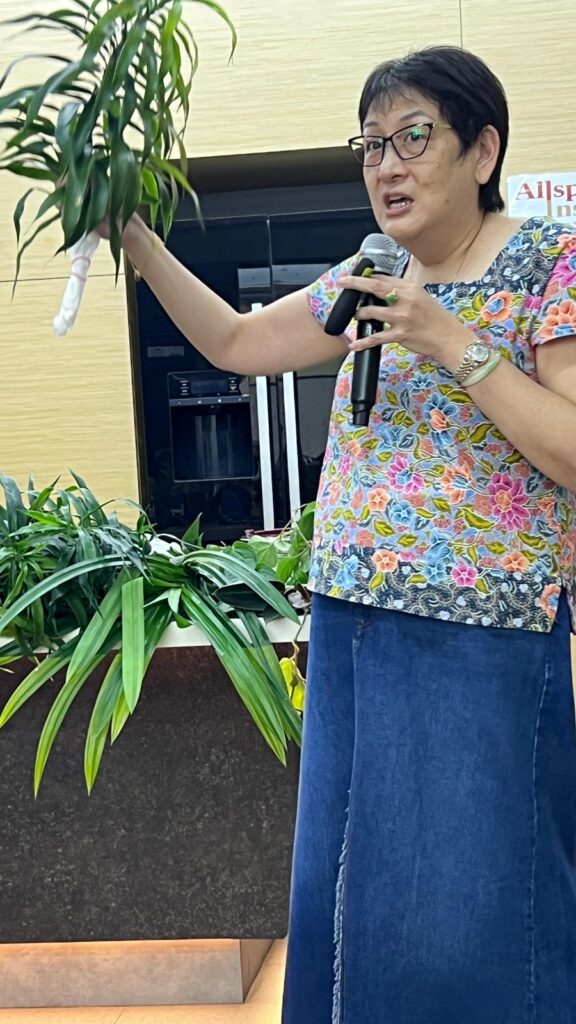
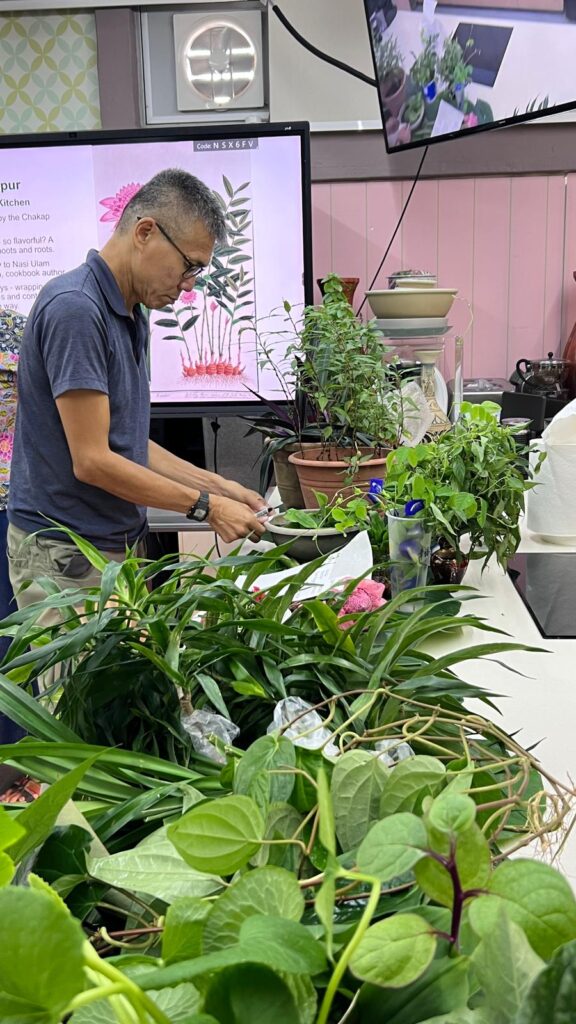
Next, a sideshow of various leaves n roots – pegaga or pennywort, daun ramayfor colouring, the kueh ku black, lengkuas (galangal), ang teck hiok (Moses in the cradle), pandan serani(as green colouring) – was narrated by Noreen Chan (left). She shared her knowledge of edible plants, their nutritional and healing properties, and use as flourishes for stir-fries, kuah assam or sambal.
The lovely bunga kantan or torch ginger inflorescence adds a citrusy, aromatic magic to a rojak dressing or assam laksa. It is also captivating as an ornamental flower, the audience learned.
There was still more to digest! Gardener Andrew Tay gave tips on growing a herb garden in high rise conditions. The key lies in the North-South orientation of his front corridor in choosing his HDB flat to take advantage of copious sunlight for plants.
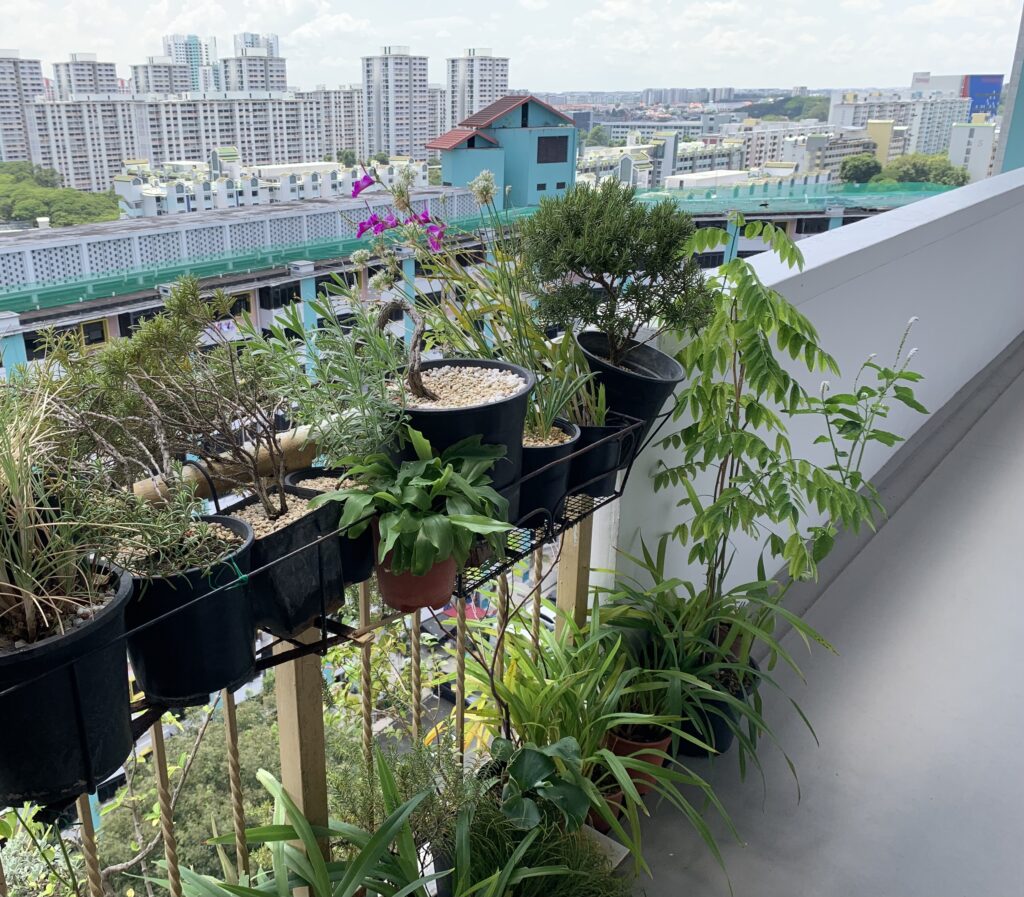
A compact herb garden serves high-rise dwellers (right)
To cap the session, Nya Lilian went back to the counter to demonstrate the making of Urap Kachang Botor. Everything was a breeze – diagonally-cut slivers of the winged bean mixed with dried shrimp, sambal belachan, sliced shallot, and pati or the first squeeze of grated coconut to bind the salad.
The ultimate imbibing of fresh herbs for energy and youthfulness must be the jamu. This Indonesian herbal tonic is taken by Nya Lilian for her firm skin and wellbeing. She whipped out two bottles of instant jamu (powder mixed with water) for tasting. Her homemade blend consists of cinnamon, fresh turmeric and tamarind water that is boiled into a vibrant yellow concoction. Some people add gula Melaka (palm sugar) or honey.
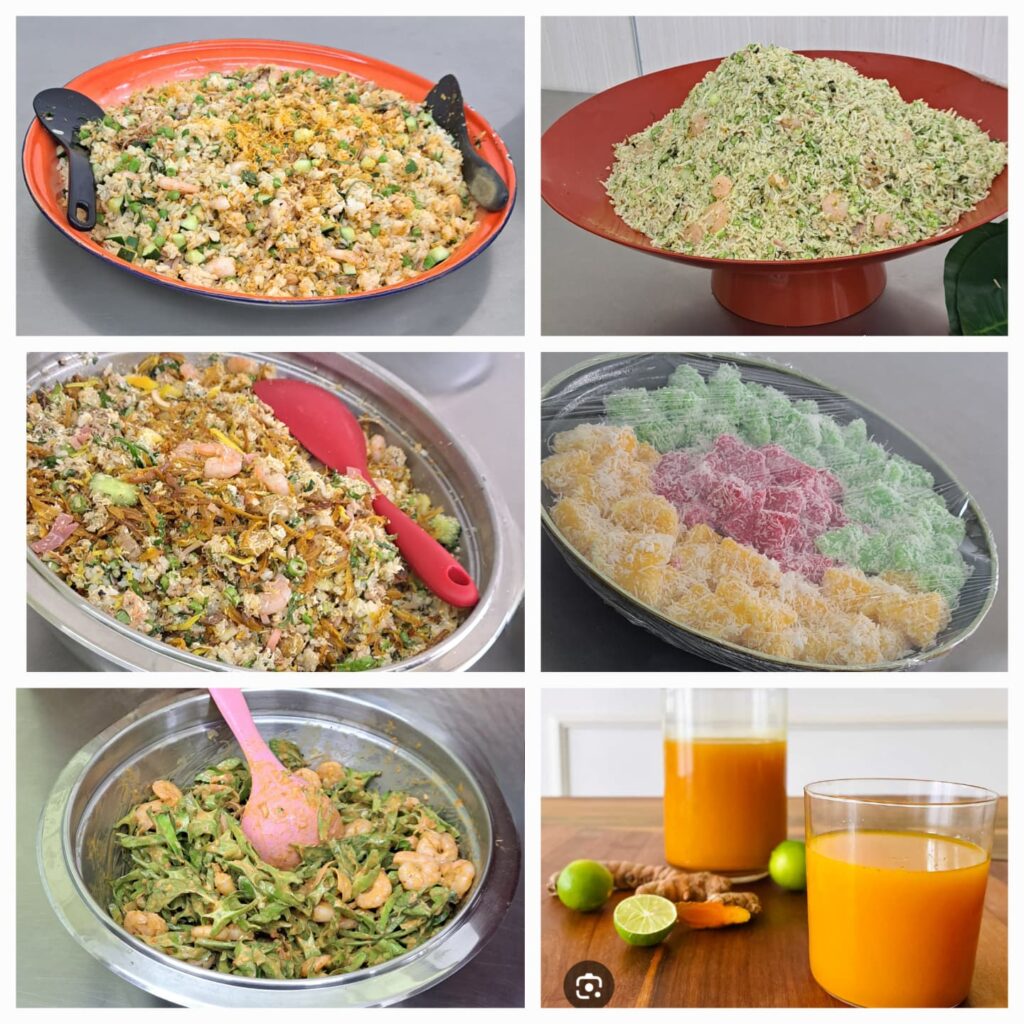
The session ended with a makan kechil – scoops of nasi ulam onto thedaun simpoh leaf cup, a dip into the urap salad and for dessert, steamed kueh ubi or tapioca cake with fresh grated coconut. Sedap sekali!