 THE PERANAKAN
Nyonya Ngiam May Ling, Chairman of the Organising Committee of the biennial Festival, offers a behind-the-scenes look at the past three editions and shares enticing details of the upcoming edition, to be held on 25 and 26 July 2026.
Genesis of the Baba Nyonya Literary Festival
The Peranakan Association Singapore (TPAS) has been organising the biennial Baba Nyonya Literary Festival since 2019. Born from a desire to preserve Peranakan heritage through the written word, the Festival has grown steadily. Its primary aim is to propagate Peranakan culture via literature, showcasing Peranakan-themed works by both Peranakans and non-Peranakans. Central themes across all editions have been cultural identity and what defines the Peranakan voice.
Peranakan culture varies from household to household, individual to individual, and in intensity. Yet, literature remains one of the few ways to preserve it, which inspired the Festival’s tagline: “Preserving Heritage Through Literature”. Many Peranakans excel in the arts, both performing and literary, making the written word a natural avenue to engage the community and highlight literature as an integral part of their intangible heritage.
In 2018, I realised there was a substantial body of Peranakan literature that had gone largely unnoticed, deserving a wider audience. Bringing authors together to share their works seemed the best way to showcase these voices. Serendipitously, restauranteur Baba Raymond Khoo invited me to organise an event in The Peranakan Gallery, annexed to his then Peranakan restaurant at Claymore Connect. The venue could not have been more fitting: its walls adorned in rich red and green, antique-framed portraits of prominent Peranakans, and a ceiling swathed in diaphanous red cloth was redolent of an era when Peranakan culture was exalted.
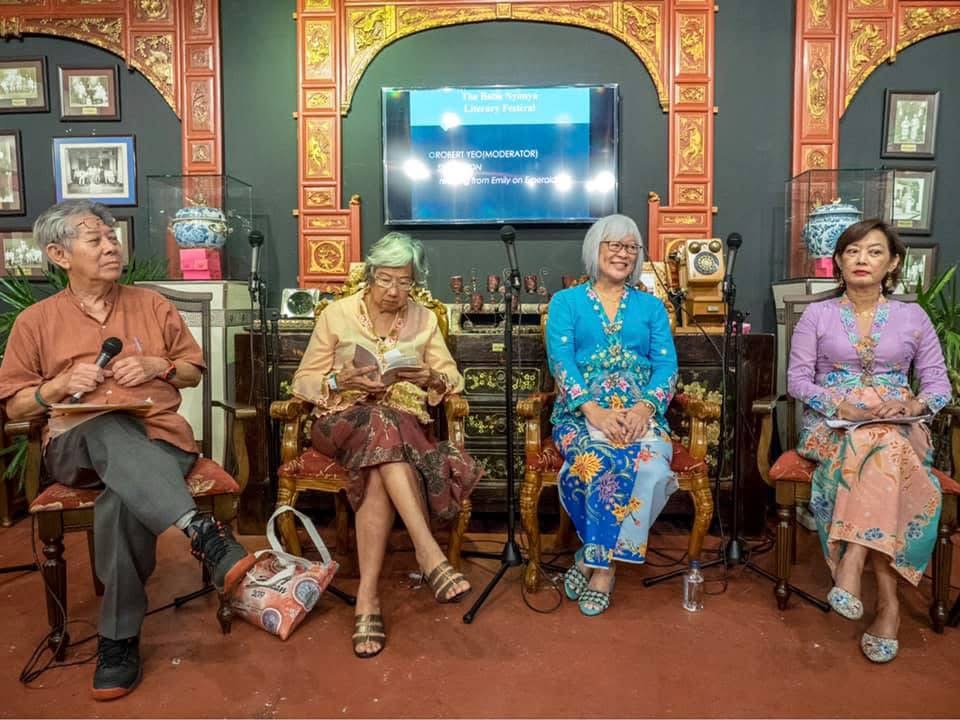
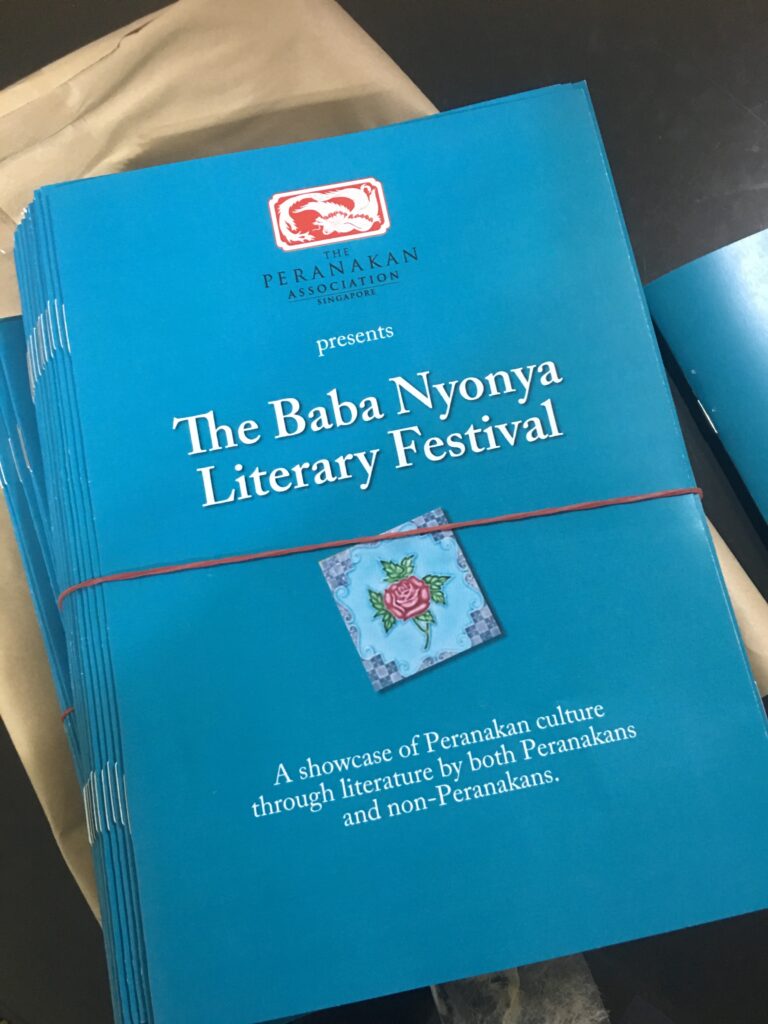
With the venue secured, the first Festival was born. To be inclusive, I decided on a two-day format to accommodate as many authors as possible – a bold step for an inaugural event. I vividly recall huddling with Baba Colin Chee, then TPAS President, and his wife, Nyonya Linda, stuffing goody bags on the eve of the Festival, undeterred by the nagging thought of “what if no one turned up”. My chum Ivan Lim, designed the programme booklet (left) which became a much-treasured keepsake.
Past Festivals
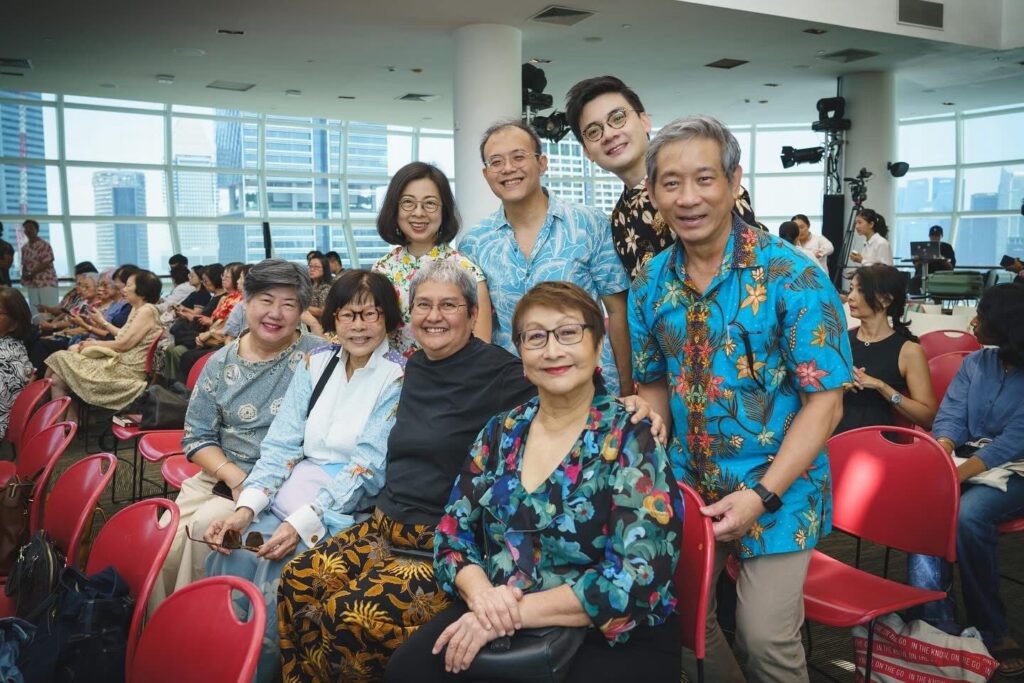
The gamble paid off; the 2019 Festival sold out within days. With just 70 attendees each day, the Festival was intimate, fostering camaraderie and connection. After the inaugural Festival, Baba Colin Chee, ever the visionary, suggested taking the Festival to our brothers and sisters in Kuala Lumpur, Penang, Melaka, and even Sarawak. While this has yet to materialise, our brothers and sisters from Malaysia have been coming to us, whether as participants or members of the audience, except during the second Festival held amid the Covid-19 pandemic.
The second edition, in 2022, was held at The Pod in the National Library Building under Covid restrictions. Attendance was limited to 50 per day, but the event was livestreamed to reach a wider, international audience. Despite the challenges, authors participated enthusiastically, demonstrating solidarity and commitment to the Festival’s mission.
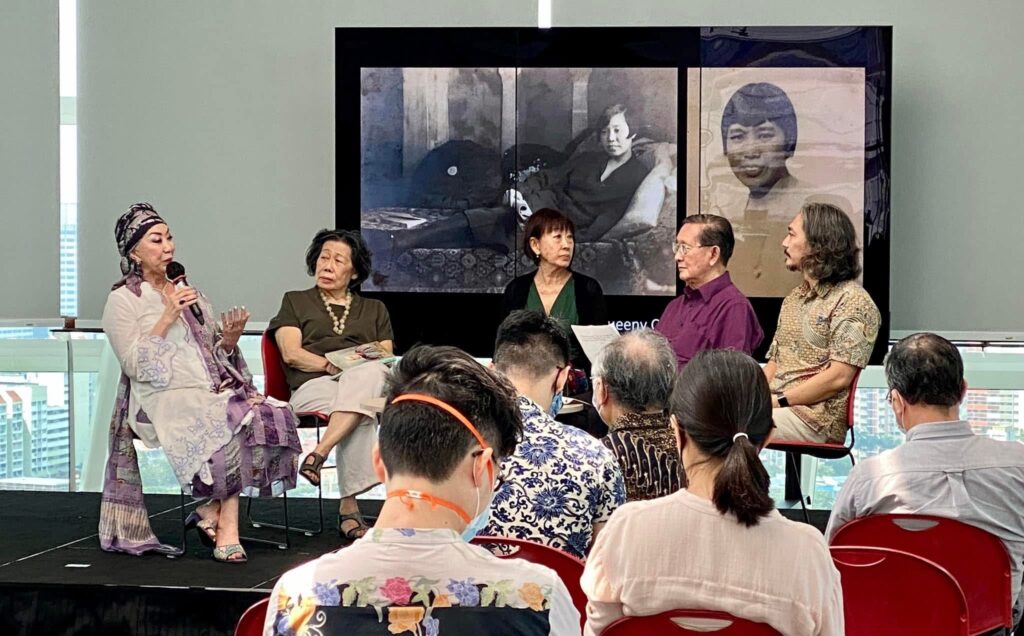
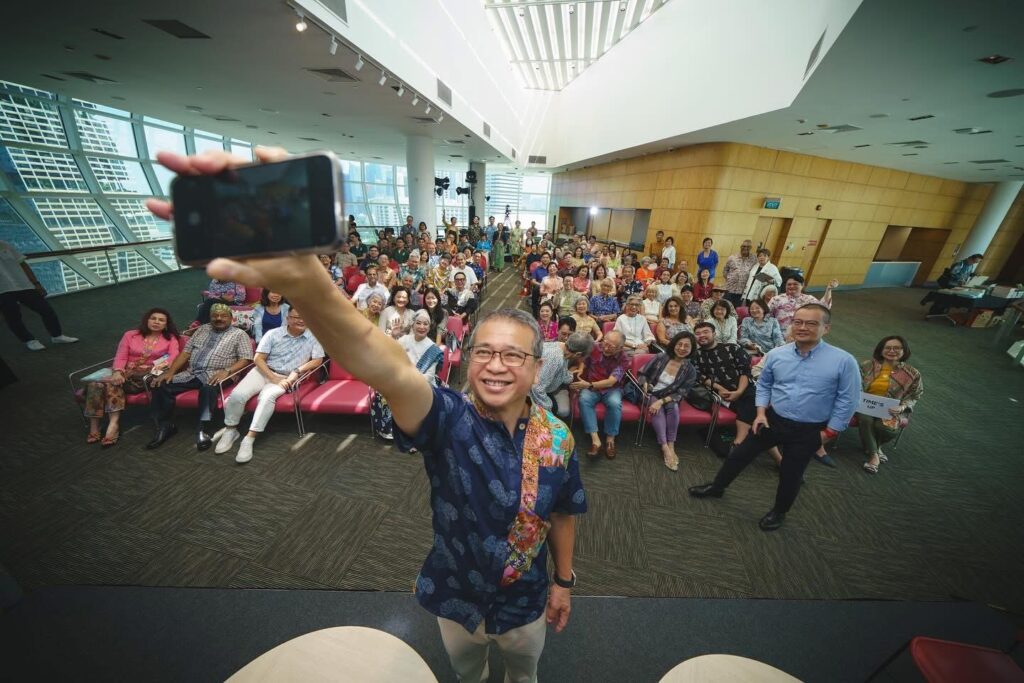
The third Festival marked our largest edition to date, with seating for nearly 150 attendees each day. Student participation was introduced for the first time, with performances from St. Joseph’s Institution and Singapore Chinese Girls’ School exceeding expectations. Additionally, the inaugural writing competition showcased exceptional talent and creativity, highlighting a growing literary engagement with Peranakan heritage both within and beyond the community.
For a detailed write-up on the 2024 Festival, please refer to this link.
2026 Festival
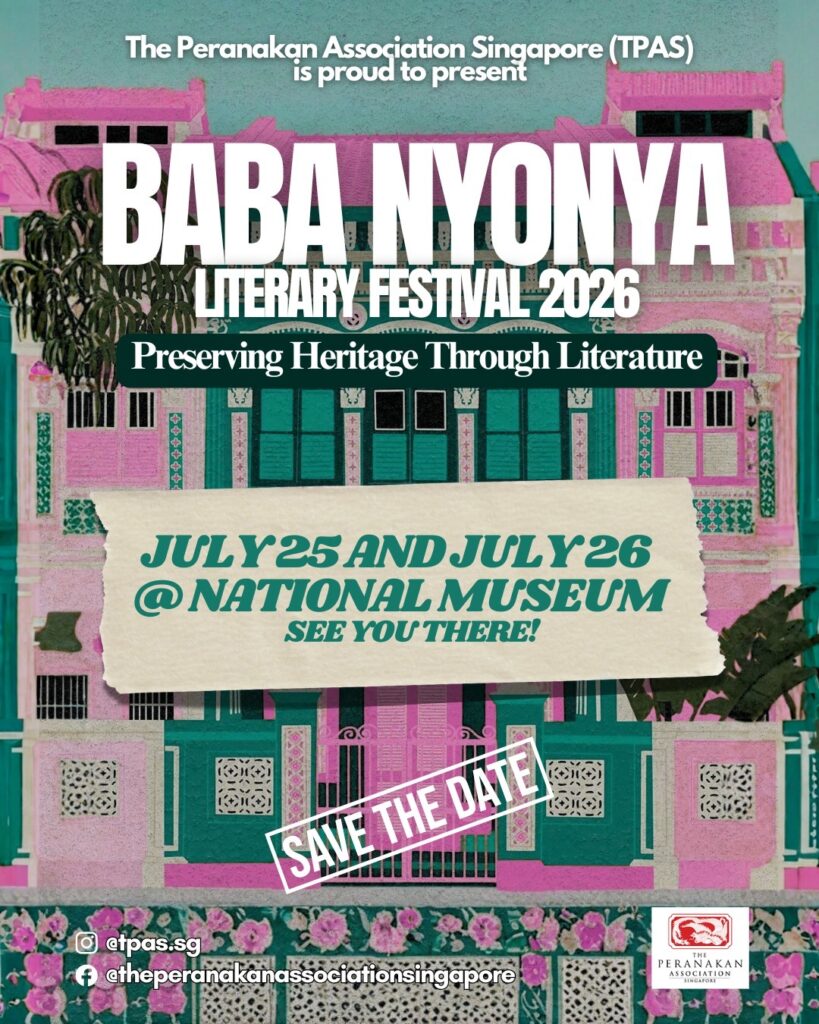
Left: Save the date! 25-26 July 2026
In recent years, Peranakan culture has seen a renaissance. The kebaya, a garment commonly associated with Peranakans, was inscribed on UNESCO’s Representative List of the Intangible Cultural Heritage of Humanity. The exhibition Batik Nyonyas: Three Generations of Art and Entrepreneurship at the Peranakan Museum displayed around 200 heirloom batik textiles, another hallmark of Peranakan culture. MediaCorp’s popular Chinese drama Emerald Hill: The Little Nyonya Story further revived interest in Peranakan narratives.
As such, for the upcoming 2026 Festival, we aim to delve deeply into Peranakan identity and culture. Panels will explore illustrious Peranakans, the Peranakan Chinese home as a space where art and culture converge, material culture, memoirs, and cuisine. We will also host book launches for the first time in the Festival’s history, giving authors a platform to debut their works. We have reached out to authors across Malaysia to participate, promising a broad and enriching perspective.
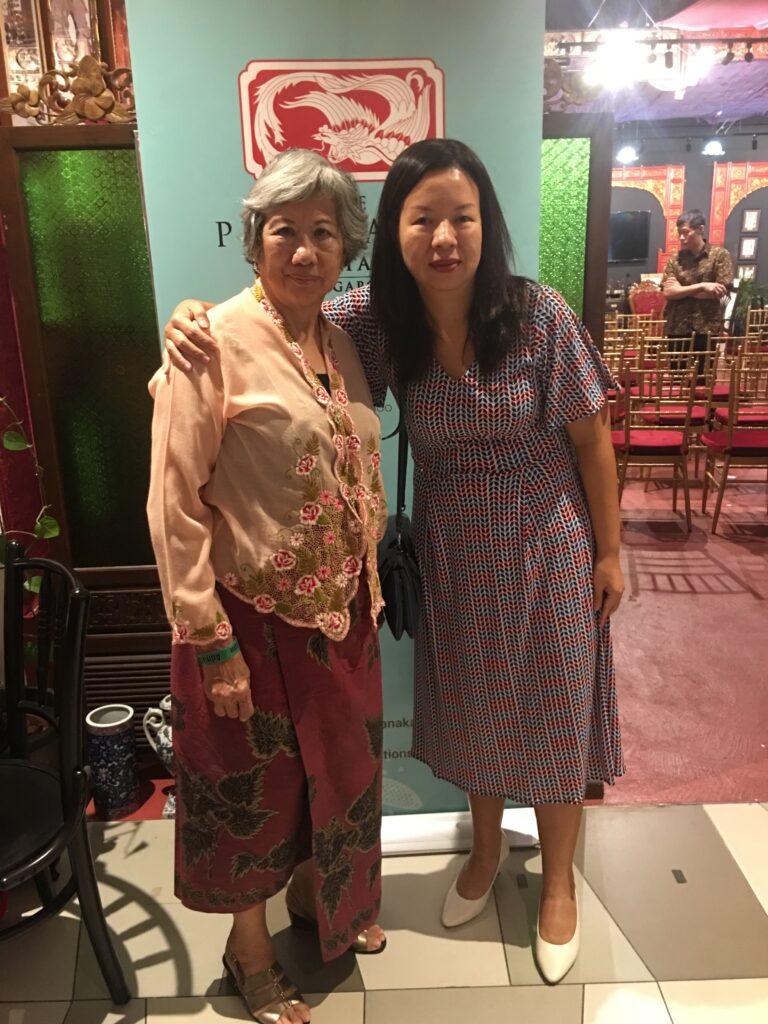
Left: With the iKONic Stella Kon at the 2019 Festival
Stella Kon’s Emily of Emerald Hill remains one of the most-performed plays in Singapore and Malaysia and has been staged globally in cities such as Hong Kong, Sydney, Melbourne, Adelaide, Perth, Auckland, New York, Hamburg, Berlin, and Munich. We believe there are many hidden gems in Peranakan literature with the potential to achieve similar recognition. By showcasing both established and emerging authors, and now through book launches, the Festival seeks to ensure that the Peranakan voice continues to thrive and resonate for generations to come.