 Gaik Lean Teh
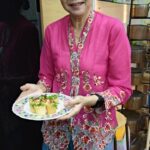
Nyonya Teh Gaik Lean shares her experience – and a recipe – conducting a cooking class for the Tzu Chi Active Ageing Centre’s “Heritage on a Healthy Plate” programme.
Peranakan cuisine is known for its rich and diverse flavours, with a variety of ingredients that include meat, seafood, vegetables and spices. However, it is not surprising that some people are not acquainted with Nyonya food.
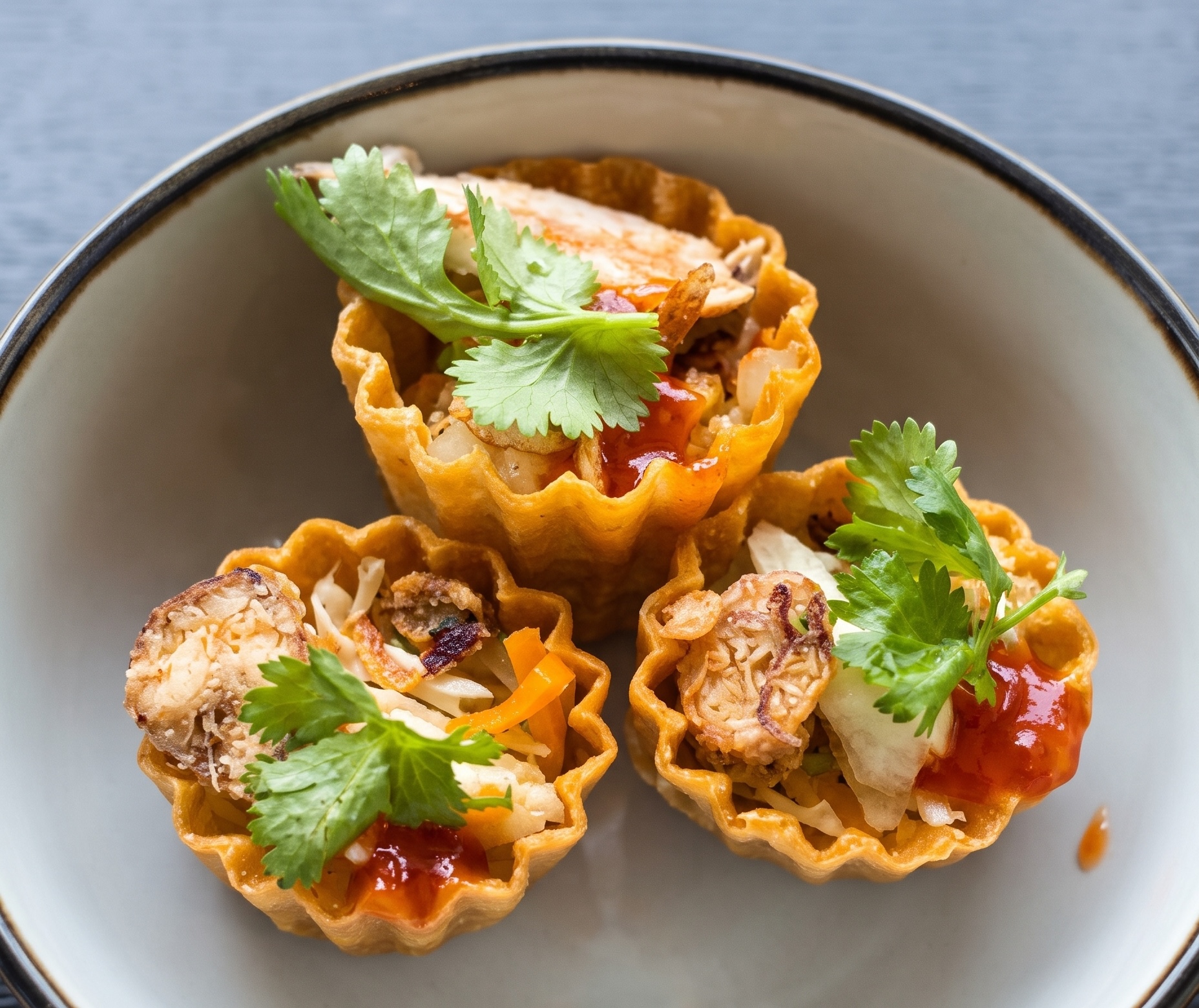
Recently, I had the opportunity to volunteer to conduct vegetarian Peranakan cooking demonstrations as part of Tzu Chi Active Ageing Centre’s “Heritage on a Healthy Plate” programme. I hold a vegetarian Peranakan cooking demonstrations once a month at three Tzu Chi centres — two in Bukit Batok and one in Jurong West. This is proving to be a great way for seniors in these communities to gain a better understanding and appreciation of Peranakan heritage.
I conducted my first vegetarian Peranakan cooking demonstration at the Tzu Chi Seniors Active Ageing Centre in Bukit Batok on 24 September 2026. The dish featured was Vegetarian Kueh Pie Tee.
When I asked the seniors if they had tasted Peranakan food before, some were unsure about what differentiated Peranakan cuisine from Malay, Indian or Chinese food. Hence, I shared more about the history of the Peranakan people, as well as their food and culture. The seniors were very participative and attentive. There were participants from different ethnic groups, including men who took part enthusiastically. Being able to share stories about my family’s Baba-Nyonya heritage using a mix of English, Hokkien and Malay words was a gratifying experience for me.

When I asked the participants, which ingredient brought umami to the kueh pie tee filling, an Indian lady was quick to respond, “Taucheo!” Her answer brought smiles to everyone’s faces. I shared tips and techniques on cutting and stir-frying before the cooking demonstration began. The session proceeded with the seniors assembling their own kueh pie tee shells, tasting the kerabu ong-lai, and discussing the food among themselves.
A quiz was conducted after the cooking demonstration, and prizes were given out. All the seniors received a little gift to bring home. Based on their feedback, they thoroughly enjoyed the session!
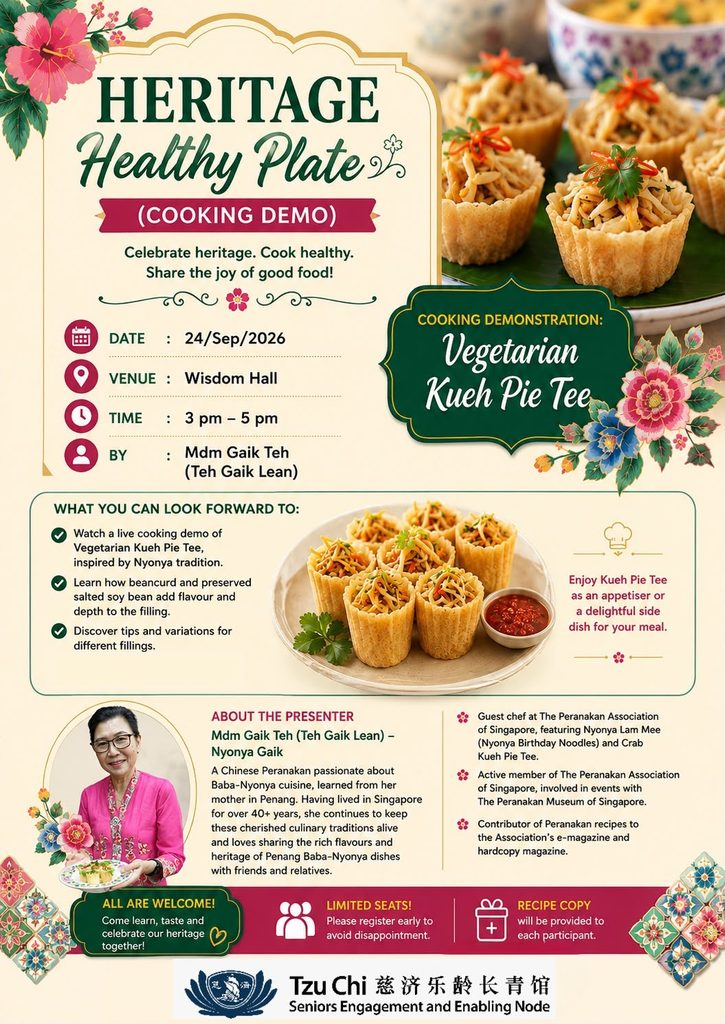
Tzu Chi Active Ageing Centre’s “Heritage on a Healthy Plate” Programme
The “Heritage on a Healthy Plate” initiative started in July 2026 and runs until June 2027. It aims to conduct 48 hands-on workshops across four Tzu Chi community locations. Tzu Chi believes that “nutrition is the foundation of healthy ageing”. The initiative brings together seniors, volunteers and community partners through multicultural food heritage cooking sessions. Everyone can share and learn about one another’s ethnic cultures, discover healthier versions of heritage recipes, make new friends, reminisce about their own family recipes, and recall happy memories associated with food. The programme is open to all seniors.
Vegetarian Kueh Pie Tee
My family recipe normally uses crab for our kueh pie tee filling, as demonstrated during an earlier demonstration for TPAS on 16 May 2026. For this event, however, I substituted firm bean curd for the crab.
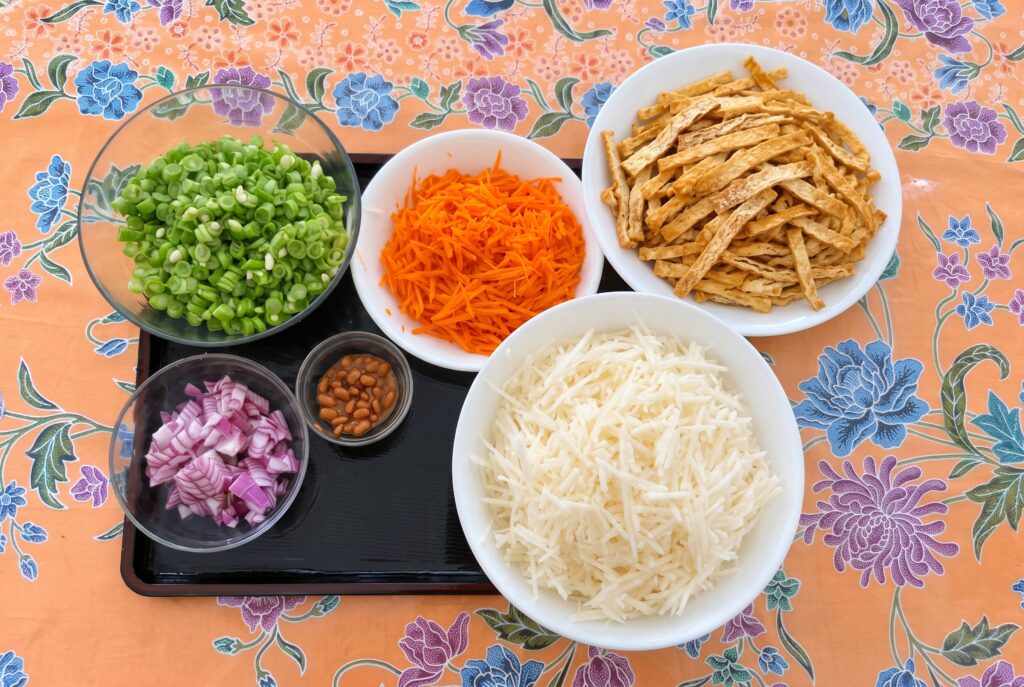
Ingredients
- 2 pieces of firm beancurd (taukwa), sliced thinly & pan fry
- 800g yam bean (bangkwang/jicama/Chinese turnip/Mexican turnip, shredded)
- 300g french beans (sliced thinly)
- 150g carrot (shredded)
- 1.5 tablespoon preserved soya bean whole/preserved soybean paste (taucheo) mashed if whole pieces
- 1 – 1.5 cups of water
- 1 large onion (chopped small)
- 3 tbsp oil
- pinch of salt to taste
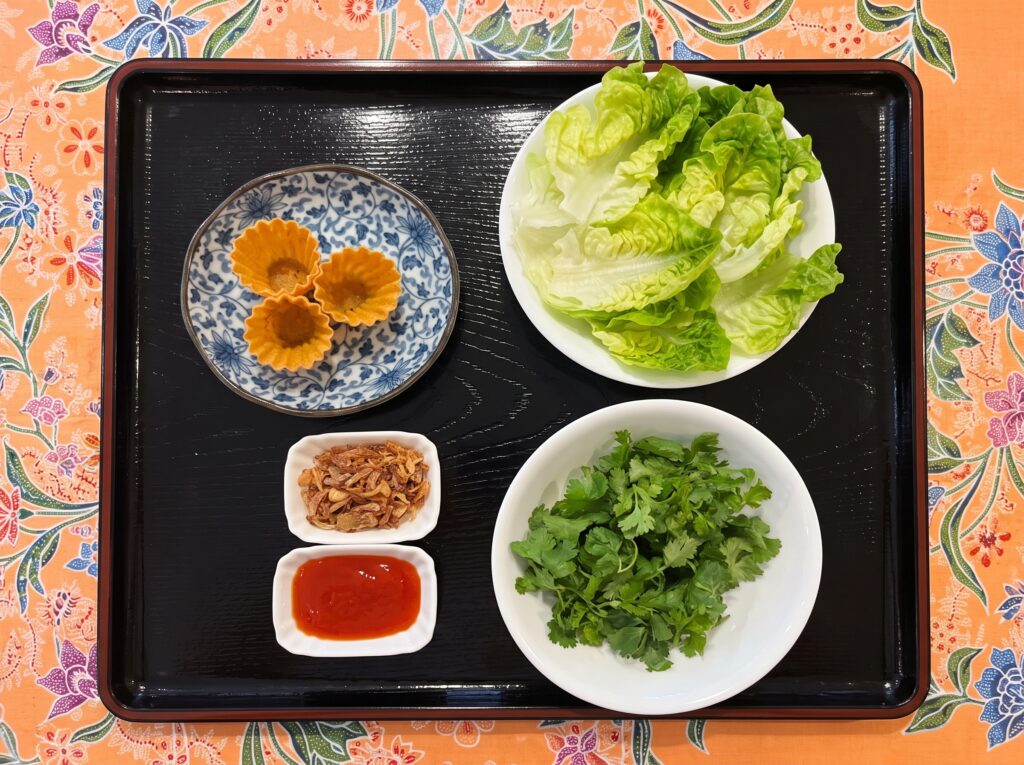
Condiments for garnishing
- 1 tub of pie tee shells (50 pieces)
- coriander leaves
- fried shallots (eu-chang)
- chilli sauce
- extra fried bean curd pieces (optional)
Instructions
- Slice bean curd into thin pieces, about 1 cm by 2 cm. Pan fry them until they are cooked and browned.
- Shred the bangkwang and carrots into medium-sized sticks about 2 cm long using a mandoline. Use the medium thickness of the shredder.
- Heat a stew pot with oil and sauté the onion until fragrant. Then add the mashed preserved soybean and stir fry it for a minute.
- Add the bangkwang, carrots, french beans and water and stir it well and let it simmer for 20 minutes using medium heat. The last 5 minutes, add the fried bean curd in and mix it well.
- Let the fillings cool for about 10 minutes before using it, i.e., lukewarm.
- Take a pie tee shell, add the fillings, top it with coriander leaf, chilli sauce and fried shallots. Optionally, you can top it with fried bean curd.
Notes
- Stir fry and simmer the vegetables till they are just cooked so that they remain crunchy and not mushy (like those in rolled popiah). This helps when you put the fillings into the pie tee shells, so that the pie tee shells will stay crispy.
- Other ways to eat the fillings will be using fresh lettuce, popiah skin, or on its own as a side dish with homemade chilli sauce.
- To save time, just buy the ready-made off-the-shelf pie tee shells, such as Glory brand, Mr Popiah (shell is thicker), or even those supplied by popiah caterers like Fortune Food or Chilli Padi/Api.
- Use a medium-sized shredder to shred the bangkwang and carrots. You don’t want it too fine as it will become slimy during cooking.
Other variations of fillings to use in pie tee shells
- Bake mushrooms (mixture of portobello, brown, king oyster) with shredded fresh lettuce and mayonnaise.
- Vegetable pie (pot pie) ingredients: potatoes, carrots, peas, button mushrooms
- scrambled eggs with shredded fresh cucumber
- stir fry cubed yam, abalone mushroom and 5-spice powder
About the author
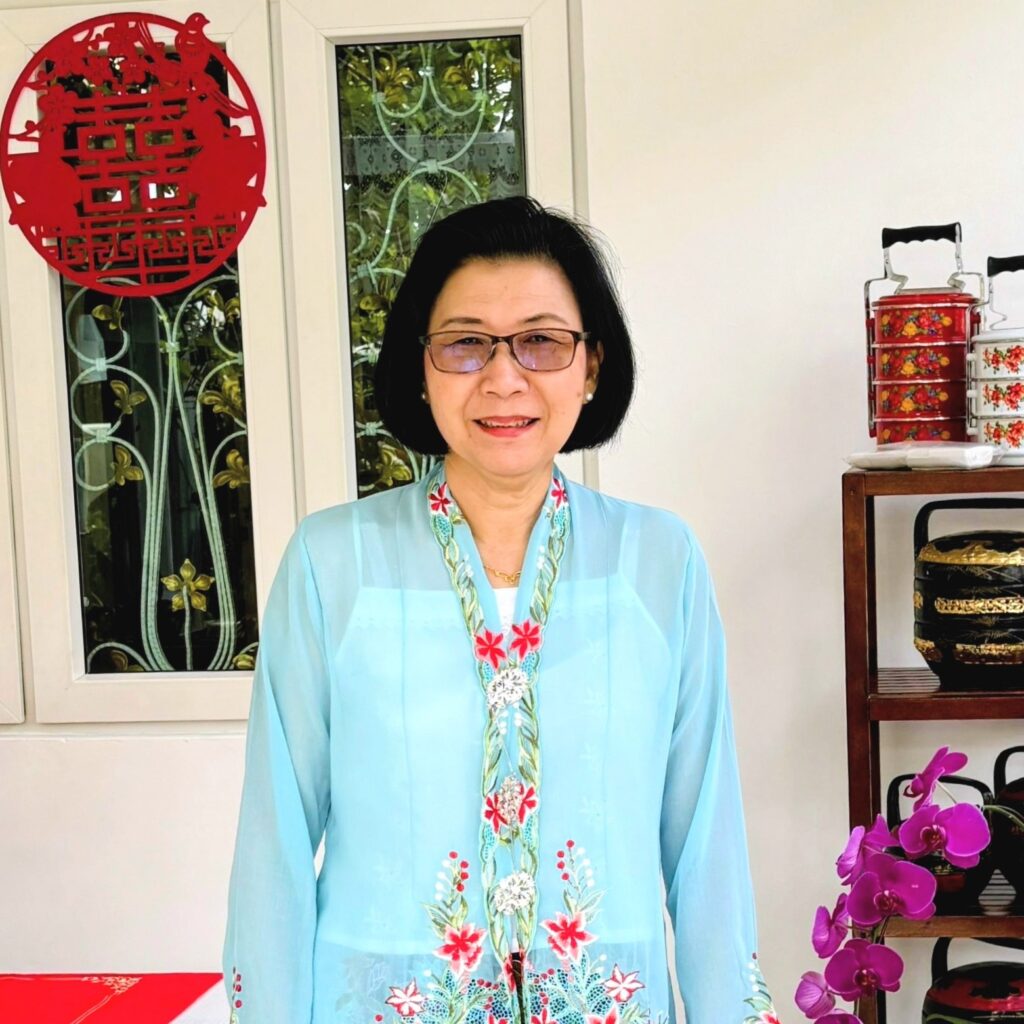
Nyonya Teh Gaik Lean, or simply Gaik, is a Peranakan Chinese who is passionate about cooking the Baba-Nyonya dishes she grew up with in Penang, as learned from her mother. She continues to keep these cherished culinary traditions alive and frequently hosts friends for meals, sharing the rich flavours and heritage of Peranakan cuisine, specifically the Penang Baba-Nyonya dishes.