 THE PERANAKAN
Baba Christopher Khoo reviews the much-acclaimed Singapore animated feature film, “The Violinist”, which features a Peranakan heroine.
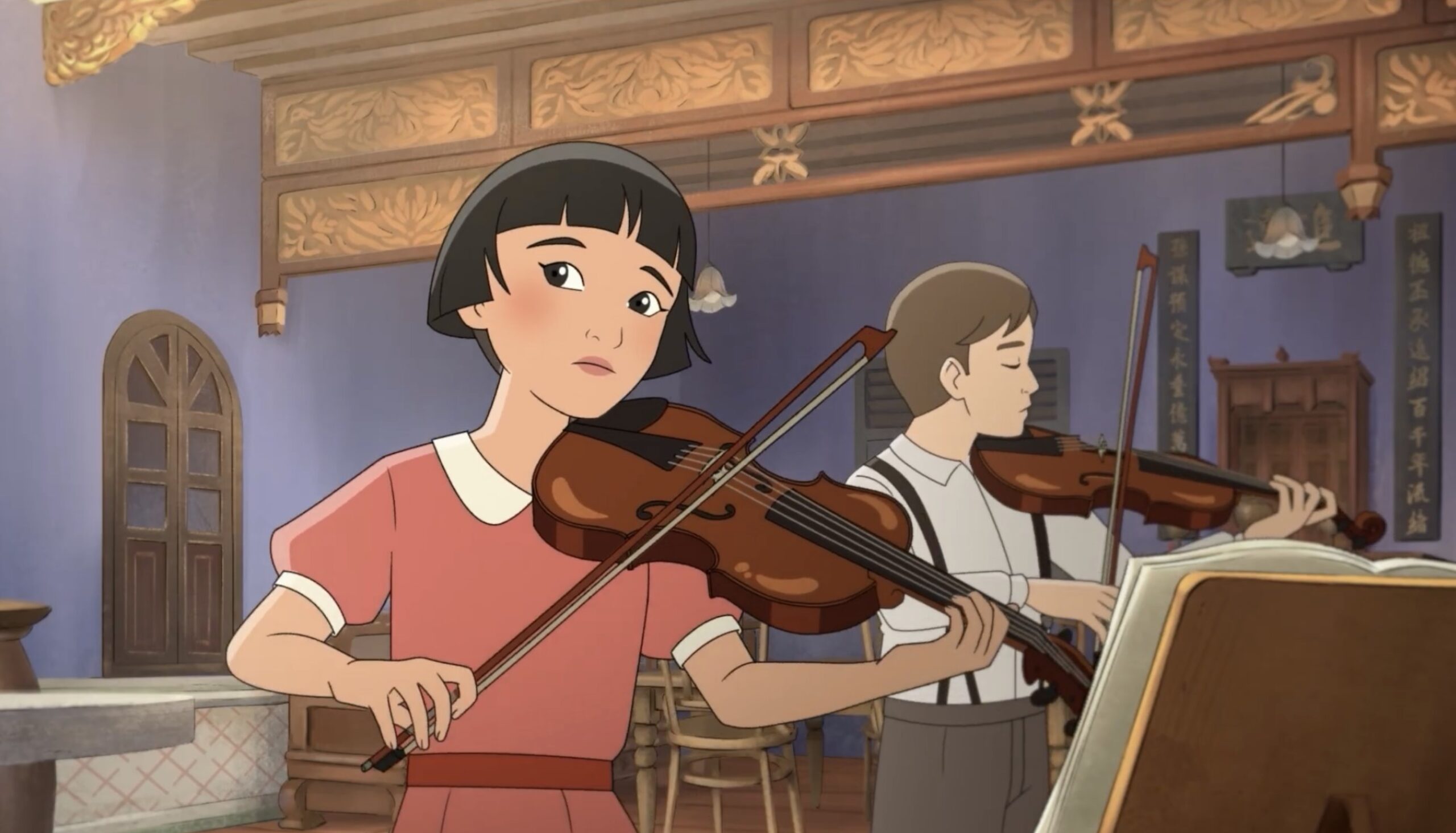
Enduring bonds of friendship forged through music and a hauntingly aching musical score. These are the powerful emotive elements running through “The Violinist”, the Singapore animated film which won the Cristal Award at the Annecy International Animation Film Festival in France this June.
The award, for Singaporean director Ervin Han and Spanish co-director, animation veteran Raul Garcia, is the highest honour in one of the world’s most prestigious animation festivals. The movie also received the SACEM Award for Best Original Soundtrack in a Feature Film.
It spans decades of Singapore and Malaya’s history, covering the years of colonial rule, the Japanese Occupation and the troubled post-war years, and follows the life of an affluent Singaporean Peranakan girl, Fei, and her friendship with an orphan boy, Kai, who is taken in by the family maid.
The movie starts in the present with a Spanish reporter interviewing a once famed violinist, Madam Lee, on why she has used the same violin for her performances over the years. Her story is then told in flashbacks.

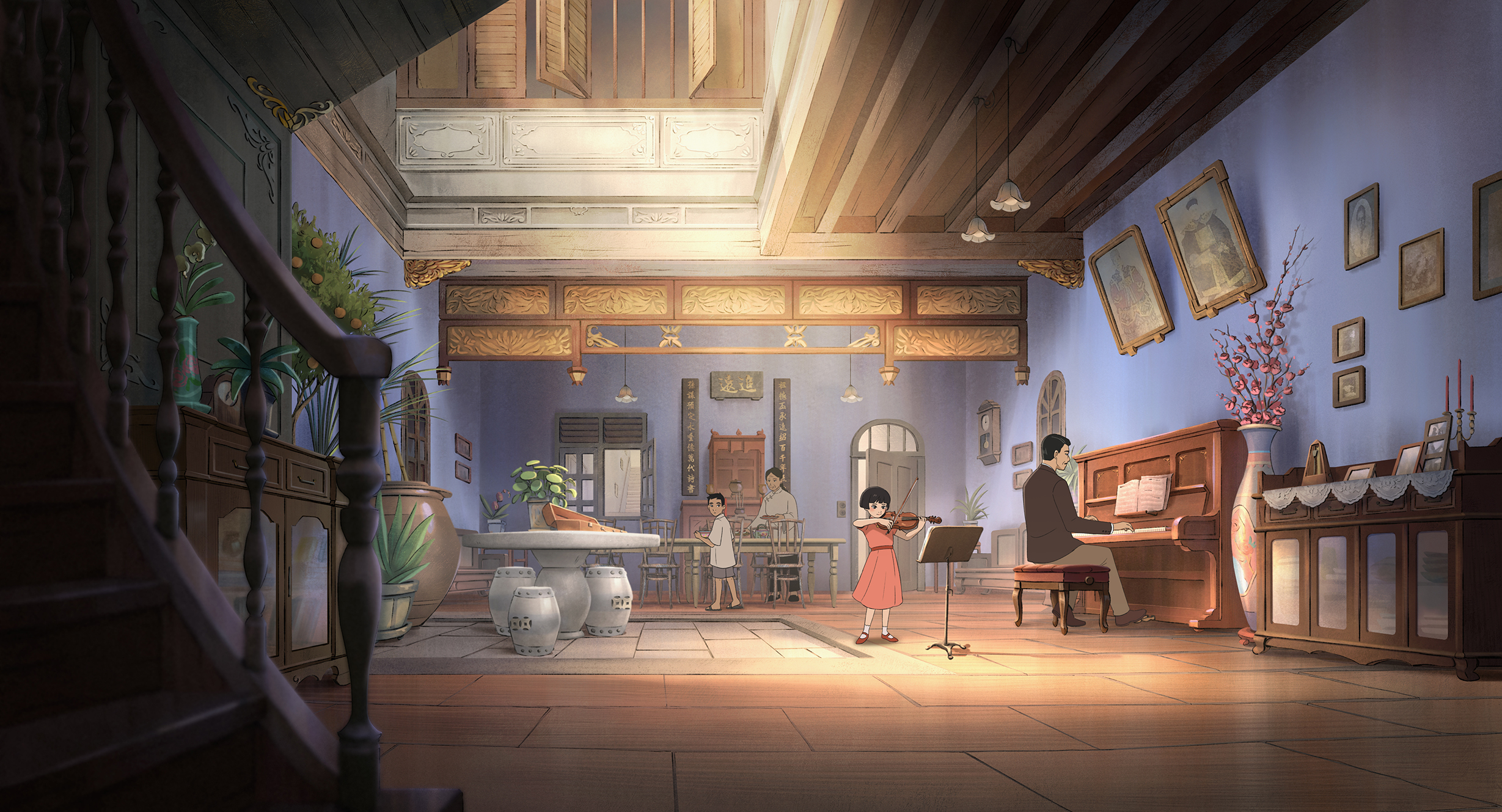
We then see Madam Lee as the young Fei, a promising violinist, practising her musical pieces in her home. Her father is a pianist who nurtures her love for Western classical music, prevalent among elite Peranakan families of that time.
According to an article published in The Peranakan Magazine last year on the movie, the production team worked closely with the NUS Baba House, using it as a visual and cultural reference for Fei’s childhood Straits Chinese home. Traditional design elements – from tiles and furniture to kebayas and culinary motifs – were faithfully incorporated into the world of the film for authenticity.
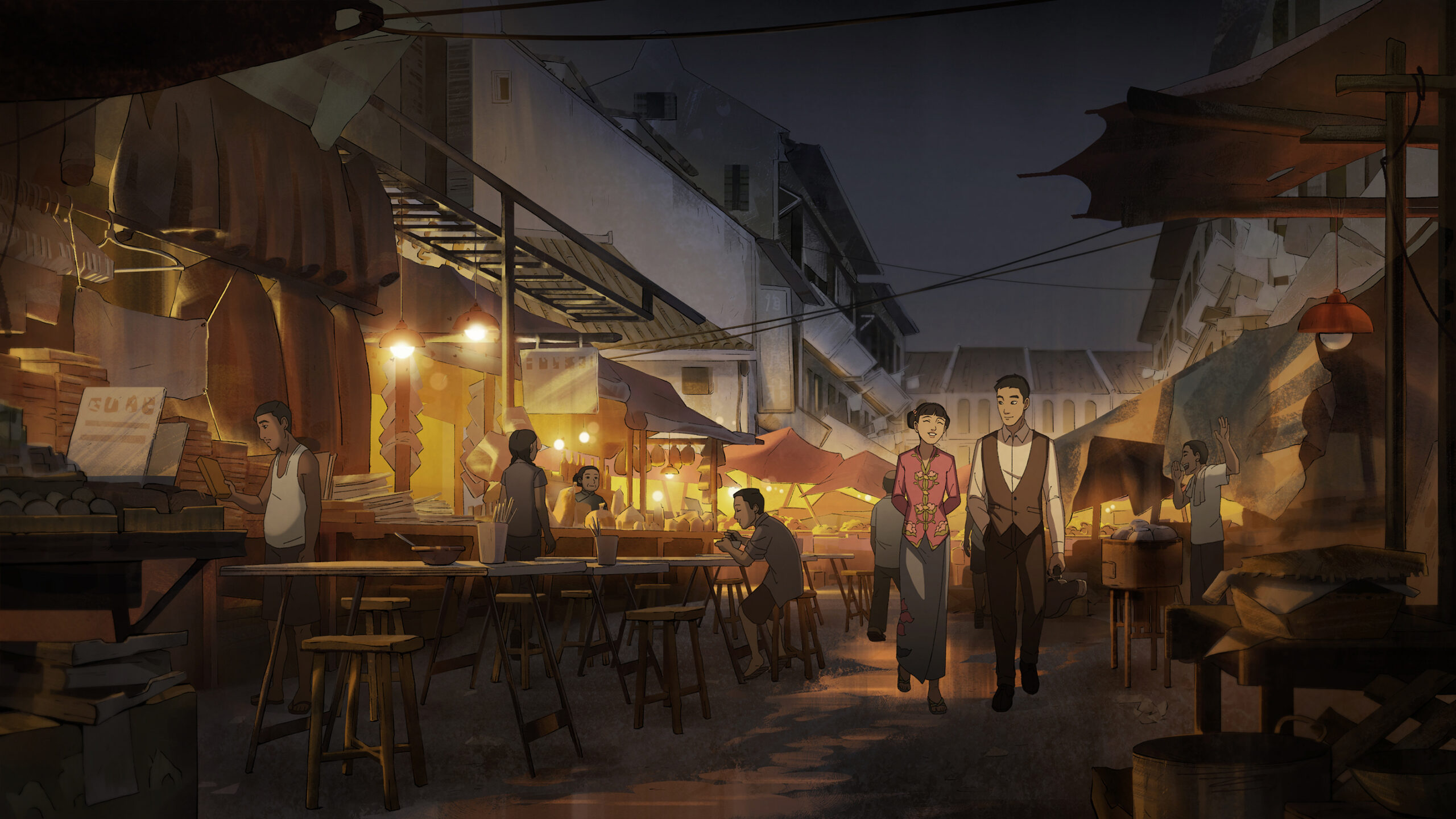
As Fei grows up in the movie, the audience follows her sarong-kebaya-clad figure as it moves with a steady grace through various scenes, symbolising how the Peranakan hybrid culture in a way represents multicultural Singapore’s resilience in the face of adversity.
In the opening scenes, Fei is seen preparing for her much-anticipated first performance at the British Governor’s house. However, her violinist partner is suddenly taken ill and she is faced with the prospect of missing this momentous occasion.
This is when Kai, who has been secretly receiving lessons from Fei’s violin teacher, offers to step in as her violinist partner. His unexpectedly stellar performance is received with much appreciation, especially when it is revealed that he is extremely musically gifted and can play by ear.
What follows is a strong and enduring musical partnership between Fei and Kai as they perform at various events in Singapore including in posh concert halls and for sweaty coolies along the Singapore River.
However, their friendship is severely tested when war breaks out in Malaya and Singapore, and Kai decides to follow resistance fighter Lim Bo Seng in his anti-Japanese movement. Kai leaves Singapore, but not before composing a section of his Sunset Sonata, the hauntingly beautiful violin piece which is woven into the movie. He hands his violin and composition to Fei for her safekeeping before he leaves.
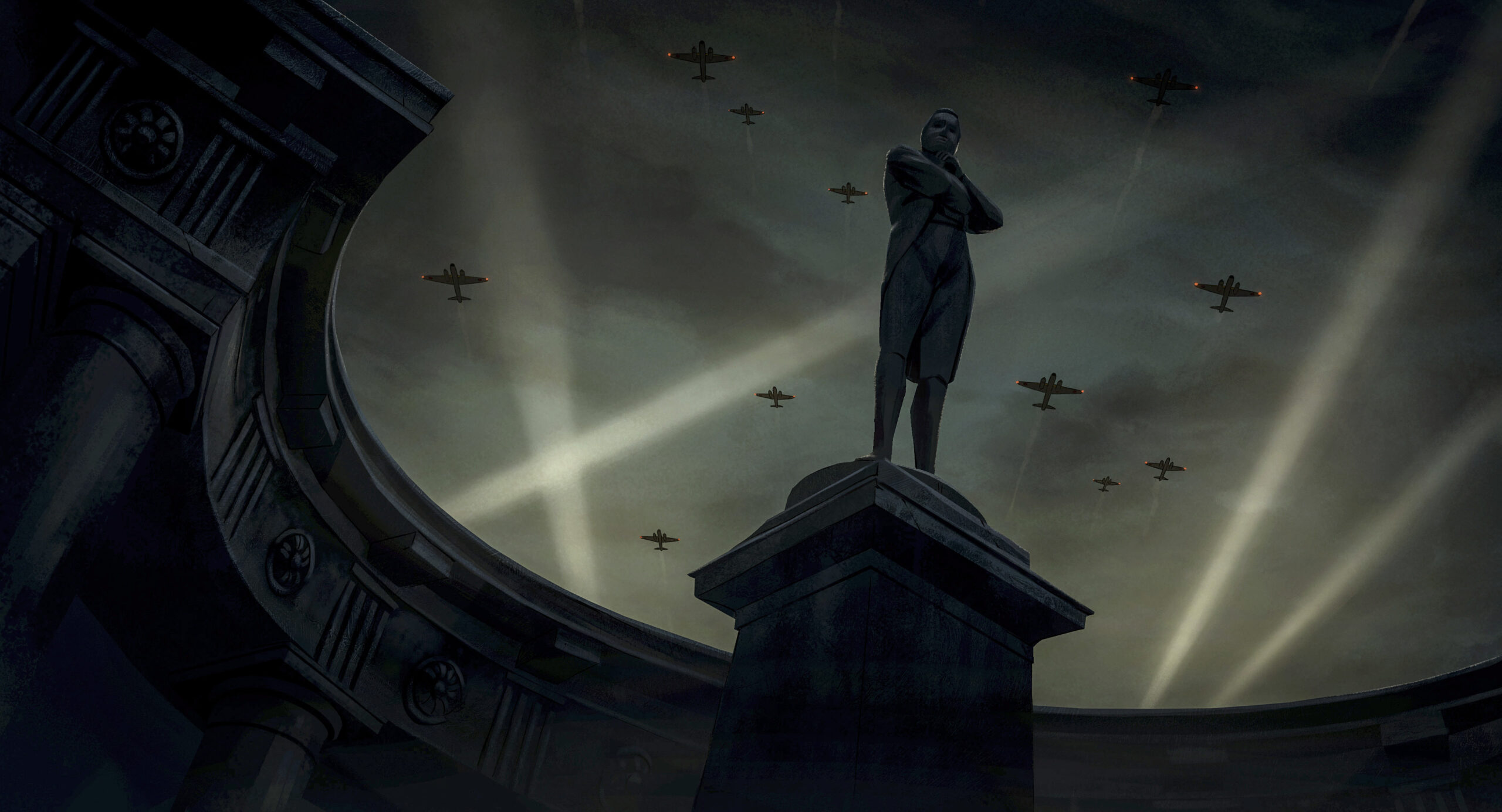
The movie then follows Fei as she lives through the war years, clinging on to the hope that one day Kai will return to complete his composition and that they could perform it together.
After the war ends and when she still does not hear of Kai, Fei decides to perform around the region, hoping to meet Kai again. Each time she thinks she hears a strain of music from his unfinished sonata, such as at a children’s home in Indonesia, or sees the shadowy figure of an audience member watching her being photographed by the media, she believes he is near.
The movie is a strong testament to the enduring bonds of friendship despite hardship, the power of music to forge such bonds, and the role of storytelling as a nation rises from the ashes of war. Right at the start, as the Spanish reporter asks Madam Lee about why she still uses the same violin (Kai’s violin) over the years, their exchange is telling.
Madam Lee: “This is a hobby of yours, Mr Fernandez? Writing stories about old instruments?”
Mr Fernandez: “Stories and music are all we have, Madam Lee.”
Do Fei and Kai eventually meet in the end? Does Kai eventually complete the Sunset Sonata that he started composing before the war, and will the two eventually perform the completed work together? Watch the movie to find out.
“The Violinist” opened in Singapore cinemas on Sept 17.
Christopher Khoo is a freelance musician, educator and journalist.
References: “Elevating Heritage Through Animation: The Violinist.” The Peranakan (July 24, 2025).
Note from the Editor: While the writer has framed the relationship between Fei and Kai as a friendship, we do acknowledge that many audience members perceive the characters’ closeness as a romance.