 THE PERANAKAN
Lifelong arts advocate Nyonya Juliana Lim is thoroughly enamoured by Annecy Cristal award-winning animated feature film, The Violinist. Please be warned – this review contains potential spoilers.
Potential spoiler alert!
I’ll say it upfront: The Violinist is a MUST-WATCH!
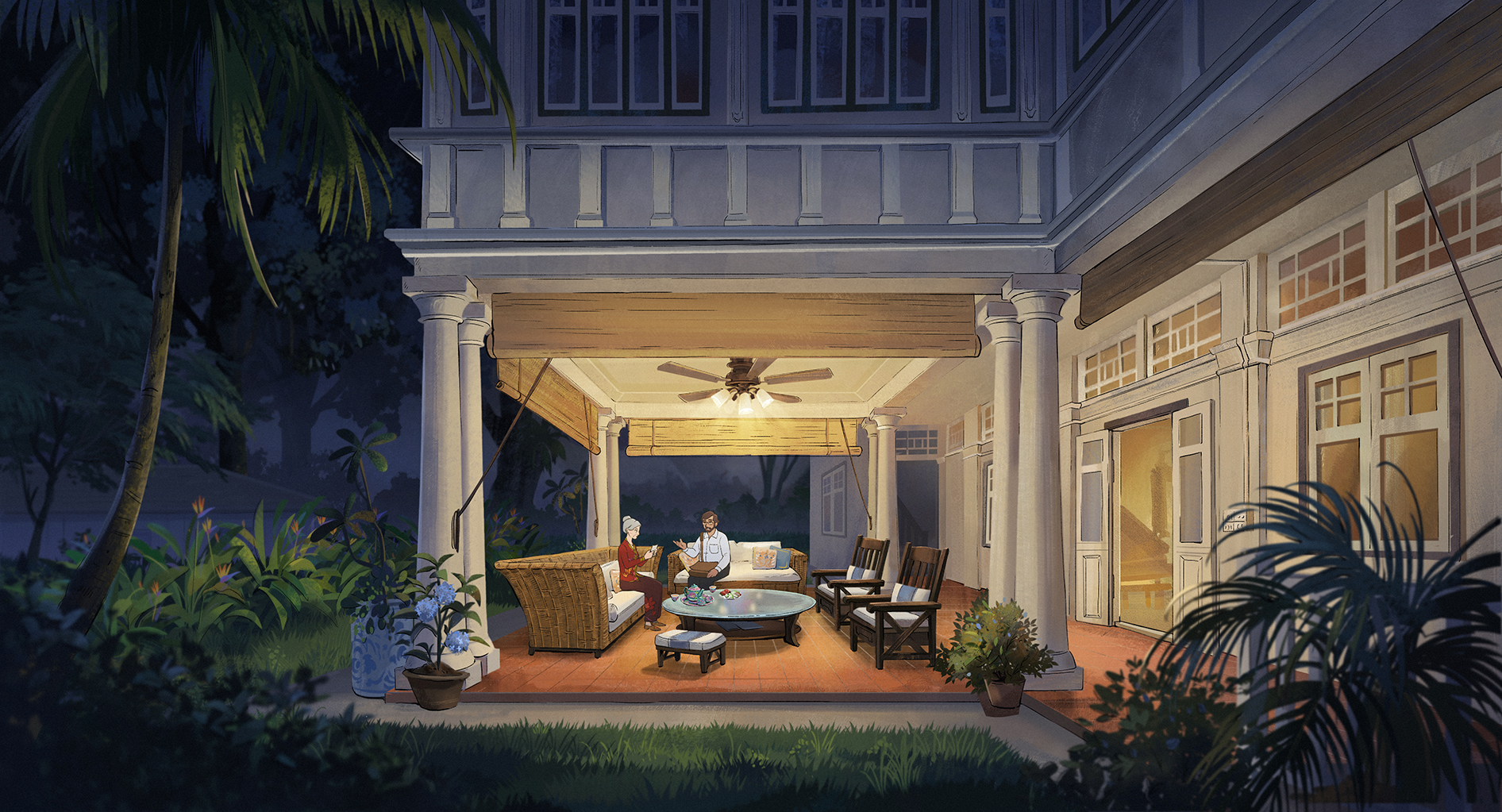
First of all, it was a thrill to see Singapore depicted so realistically, from the Esplanade Concert Hall complete with pipe organ and reverberation chamber doors to the Victoria Concert Hall with its clock tower and our colonial buildings, Chinatown and Fujian-style shophouses. Drawn with great precision and attention to the smallest details, these places are not only recognisable, but evoked memories from real-life experiences, from something as mundane as racing up the narrow carpark ramp of the Esplanade to encountering the wondrous view of Marina Bay surrounded by MBS, the Singapore Flyer and the two bubble-like conservatories of the Gardens by the Bay, to sitting in the concert hall anticipating the great music to come, and the experience of speaking into the microphone of a security system urgently, desperate to gain access. Nor did the production team flinch from illustrating the darker scenes of WW2, including torture and the Sook Ching massacre, but these were done masterfully so that one only needed to hear the screams to feel the pain.
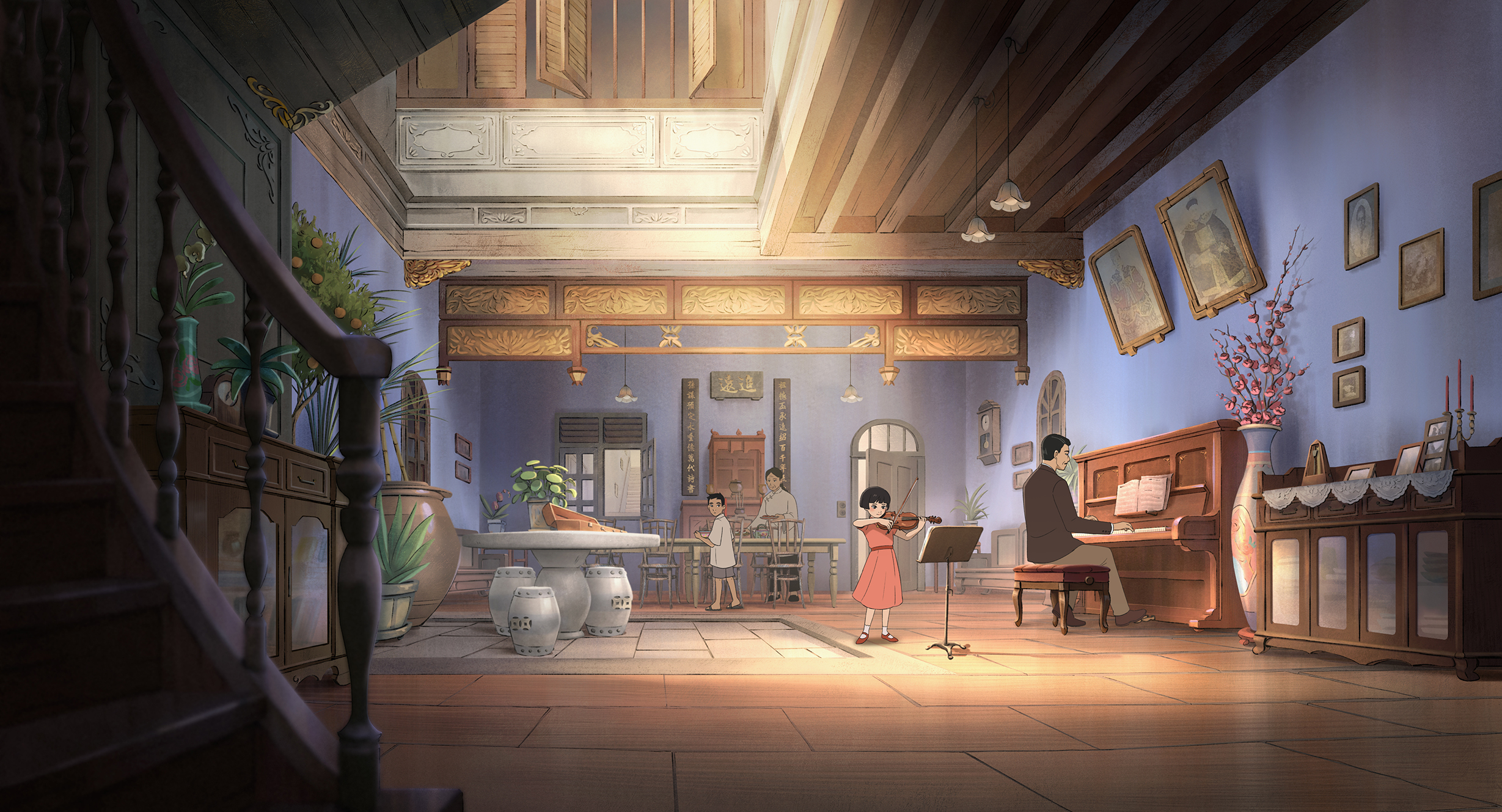
Secondly, Singapore’s history is succinctly told through the recollections of the violinist Lee Fei. Part one of the story starts happily. Growing up in a three-storey shophouse in central Singapore that was modelled on the NUS Baba House at 157 Neil Road, she pauses during violin practice to witness her maid’s son Kai protect a younger boy against bullies in the back lane, only to be mercilessly assaulted by them. This is the first fortuitous turn in Kai’s life. Grounded, he’s tasked to clean the house and hears the regular strains of the violin and piano. Fei is practising for a concert at the Governor’s home. He can’t resist peeping at her, his feather-duster swaying rhythmically to the music as if he was conducting. She’s so irritated she tries to chase him out at which point the second fortuitous turn occurs. He blurts out that her violin has been out of tune for several days. She’s irate but her Japanese music teacher lights up to Kai’s unexpected musicality. With only a few secret lessons from her, Kai rises to the occasion to accompany Fei at the Governor’s concert. From that instant, they become music buddies and eventually, sweethearts. These are the best of times for Kai and Fei!

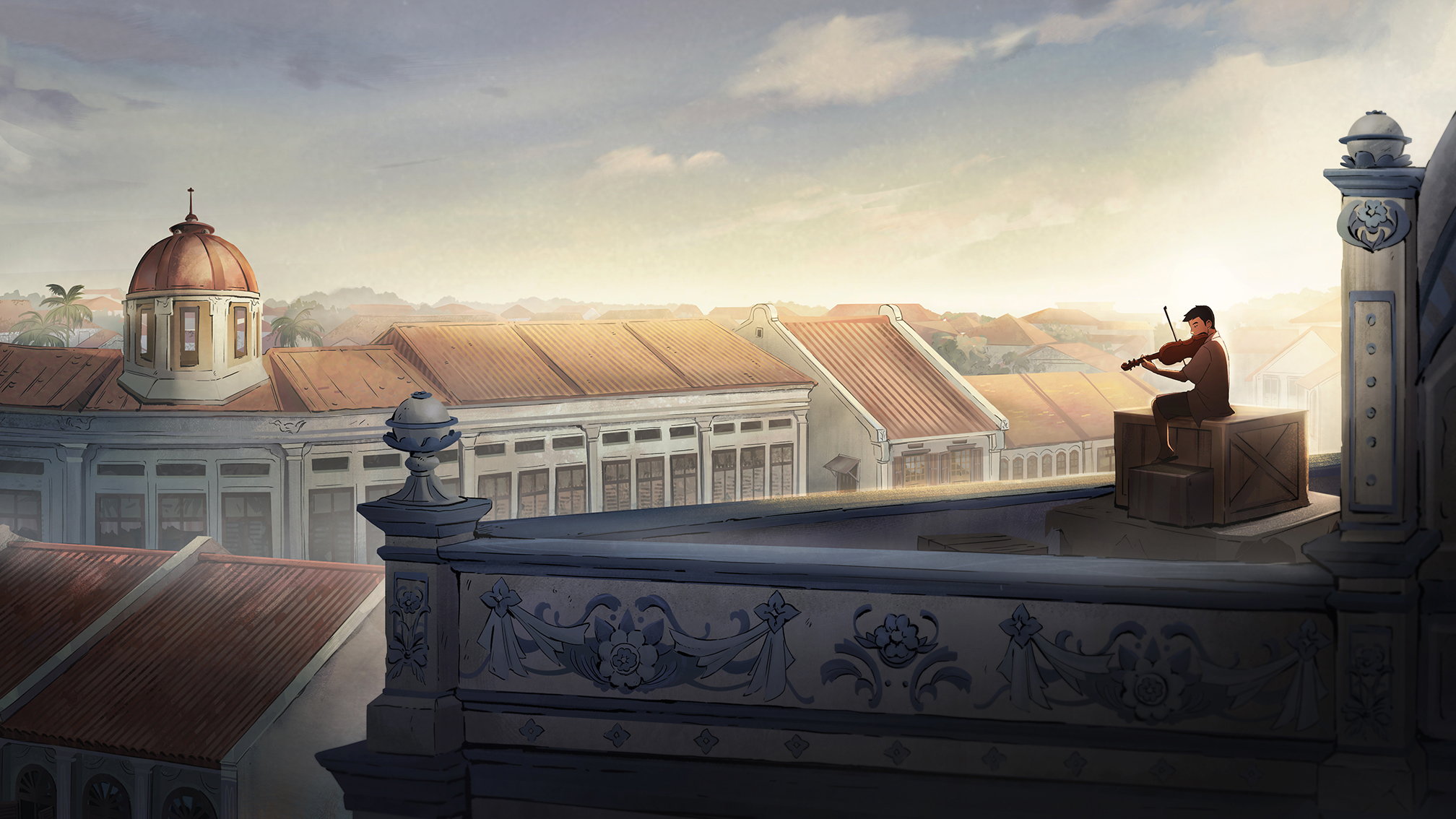
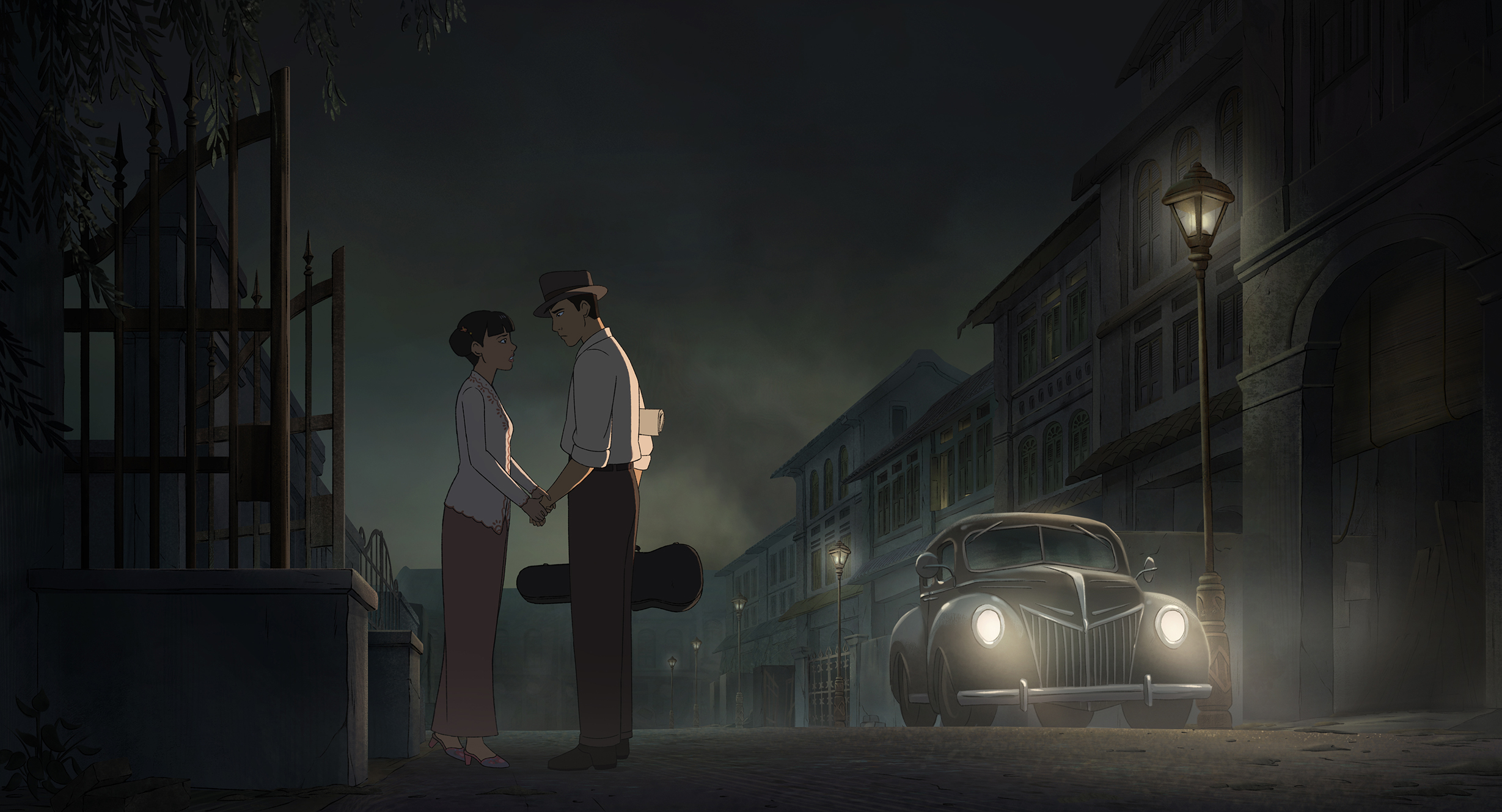
All’s well for Kai and Fei until December 1942 when the bombs dropped on Singapore. He gives up a scholarship to study music in the UK to join war hero Lim Bo Seng in his WW2 resistance movement. Kai was also in the midst of composing the “Sunset Sonata”, which he aspired to jointly debut with Fei. He’s determined to complete it, sending new pages to Fei through his resistance allies. Eventually they lose contact, Lim Bo Seng is caught, tortured and executed. The Sonata is unfinished. Part two of the story reveals Singapore’s darkest hours during WE2 but the best of humanity, celebrating our people’s courage and patriotic spirit.
It is in Part Two that I experience the most wonderful moment in the film. I term it the “Shawshank Redemption” moment: the lonesome Fei, broken-hearted from her seemingly endless separation from Kai, plays the violin into the night, touching the hearts and souls of a street full of victims – an opium addict, hungry children who have lost their parents, distraught mothers who have lost their children – lifting their spirits, all are finally able to fall asleep to the comforting strains of her music. Whoever thought or said that “art was inessential” must surely be swayed by this scene! For me, tears flowed.
Part three transits to modern, post-war Singapore. The years have not diminished Fei’s heartache and yearning for her sweetheart. She has resolved and risen to become one of the world’s best violinists in the hope of reaching Kai. She attempts to complete his sonata as best she can. Fei plays to lift her own spirits and ease her decades of pain. Will she ever be reunited with Kai? I’ll only disclose that the ending is truly bittersweet.
For a longtime arts advocate, I love the film’s overarching message that “stories and music are all we have!” These words, spoken by the character of Mr. Fernandez, a Spanish journalist, successfully teased the love story out of an aged Fei.
Viewed through the lens of being a Peranakan Museum docent, this story is about a Westernised Straits Chinese family, influential enough to have connections with the Governor, who we never see, as the presence of Singapore’s British administrators was downplayed. From a historical perspective, the film also rebalances our view of the Japanese. There were Japanese living here before WW2, like the cultured music teacher. Then, there’s the Japanese soldier who protected Fei even as he missed his musician wife and daughter. They are human, after all.
Bravo to all of the cast and production team. And to Ervin: I don’t know you, but you are my new hero and arts champion!
About the Author
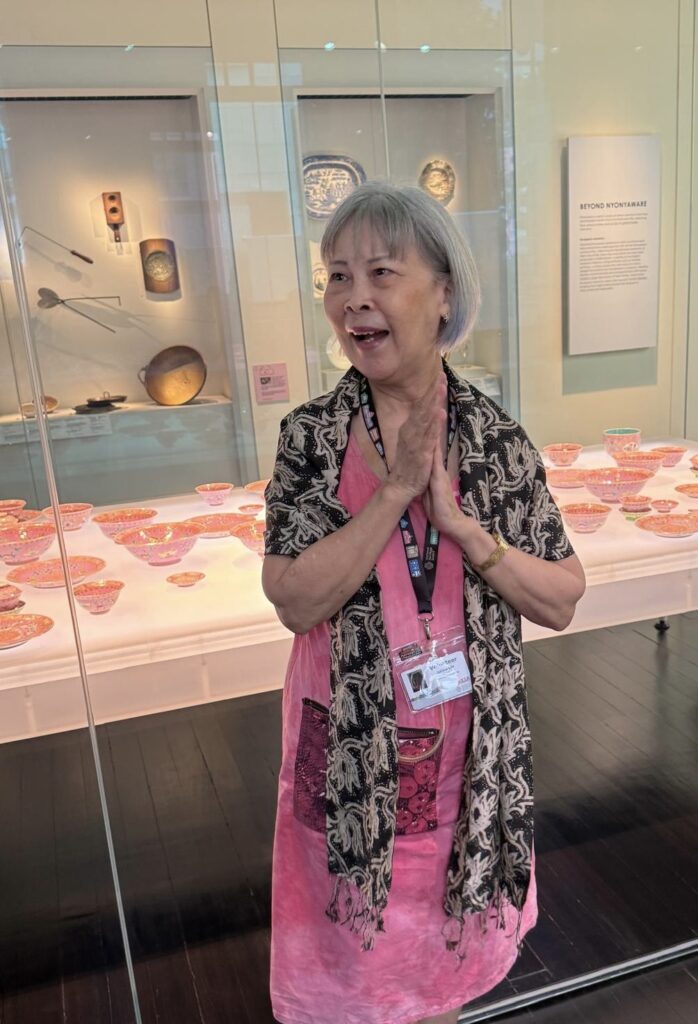
Juliana Lim spent 18 years in the arts management sector and now volunteers as a docent with The Peranakan Museum.