 THE PERANAKAN
Baba Ryan Su relates his family’s recent rediscovery of his great-grandfather’s grave during a trip to Cirebon.
As a child, I would hear my relatives speak sometimes of my great-grandfather. They told me that he was a very important person in Cirebon, apparently the Chief Clerk, who worked for British American Tobacco while under Dutch colonial rule. This was the highest position for a non-White at the time, and a formidable accomplishment. And when he died, there was a huge procession in the town, located on Java’s North coast. This was spoken lore in my family, and my father had never met his grandfather who had died in 1957 – three years before he was born.
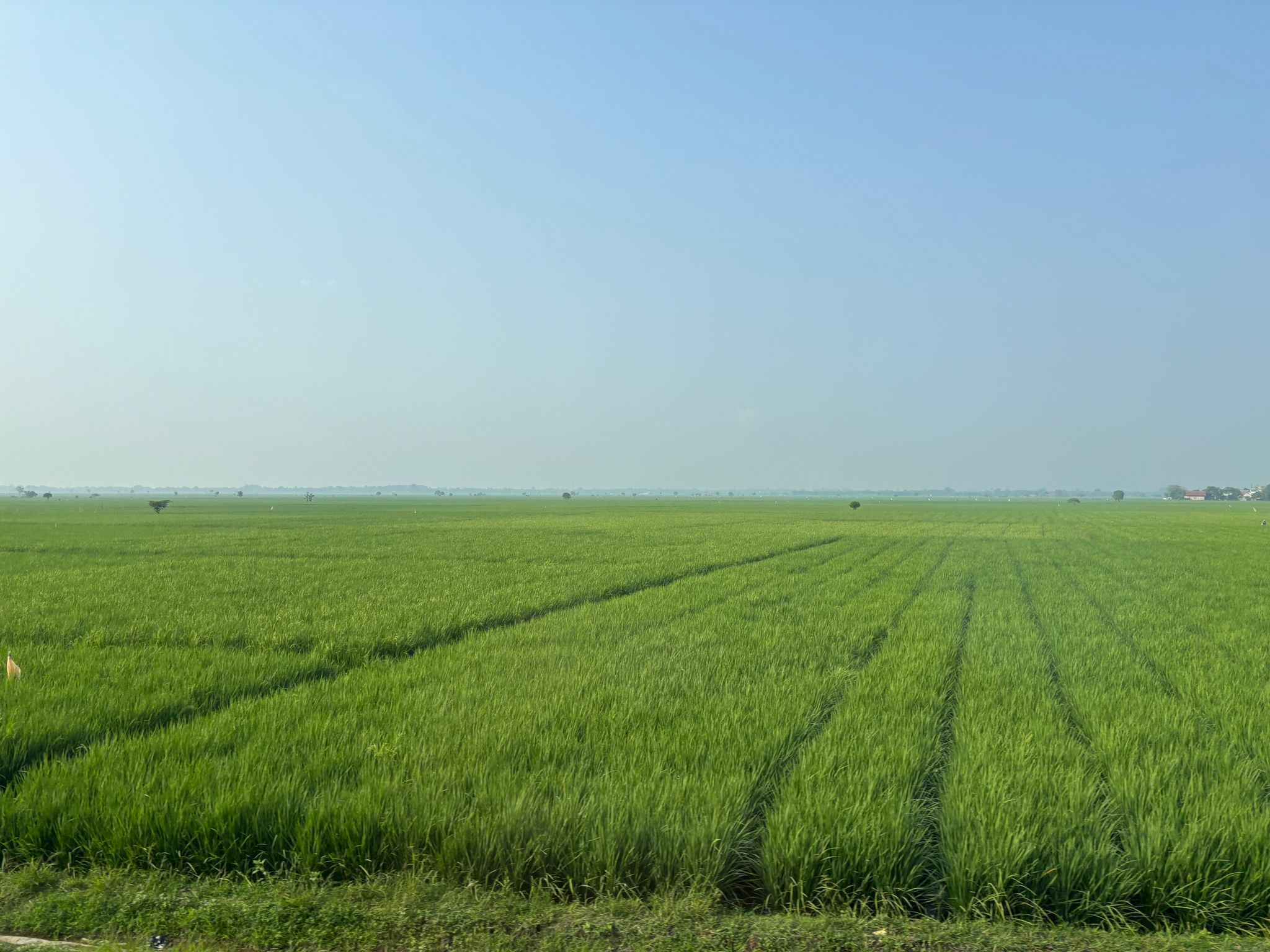
Cirebon as a city is renowned for its exquisite batiks, especially in the coastal Pesisir style with their characteristic bright colours much favoured by the Peranakans. As a port city, Cirebon batiks had tremendous Chinese influence from trade – dragons, phoenixes in the most flamboyant and auspicious colours. But perhaps the most enigmatic of all is the Megamundung, a repetitive stylised cloud motif like that seen in Chinese paintings and that is endemic to the area.
It had never occurred to me to go to Cirebon. I did not even know where Cirebon was. I was in Jakarta to work on a legal case, and my client’s mother, an Indonesian actress, insisted I go after I revealed that my great-grandfather had lived and died there. She was from Cirebon herself and instructed her driver to take me.
My impression was that young people, and people in general, were not interested in going to Cirebon today as there was simply nothing to see or do. In fact, people were leaving Cirebon for other cities. I, however, was very interested. There was my unproven family connection, my love of batiks, and the laidback vibe of a sleepy town by the sea. My first visit was brief, in and out in a day, four hours each way by car and I managed to have some of Ibu Nur’s famous Nasi Jamblang – a mixed-rice dish again endemic to Cirebon, like Nasi Padang but served on the large leaf of a teak tree.

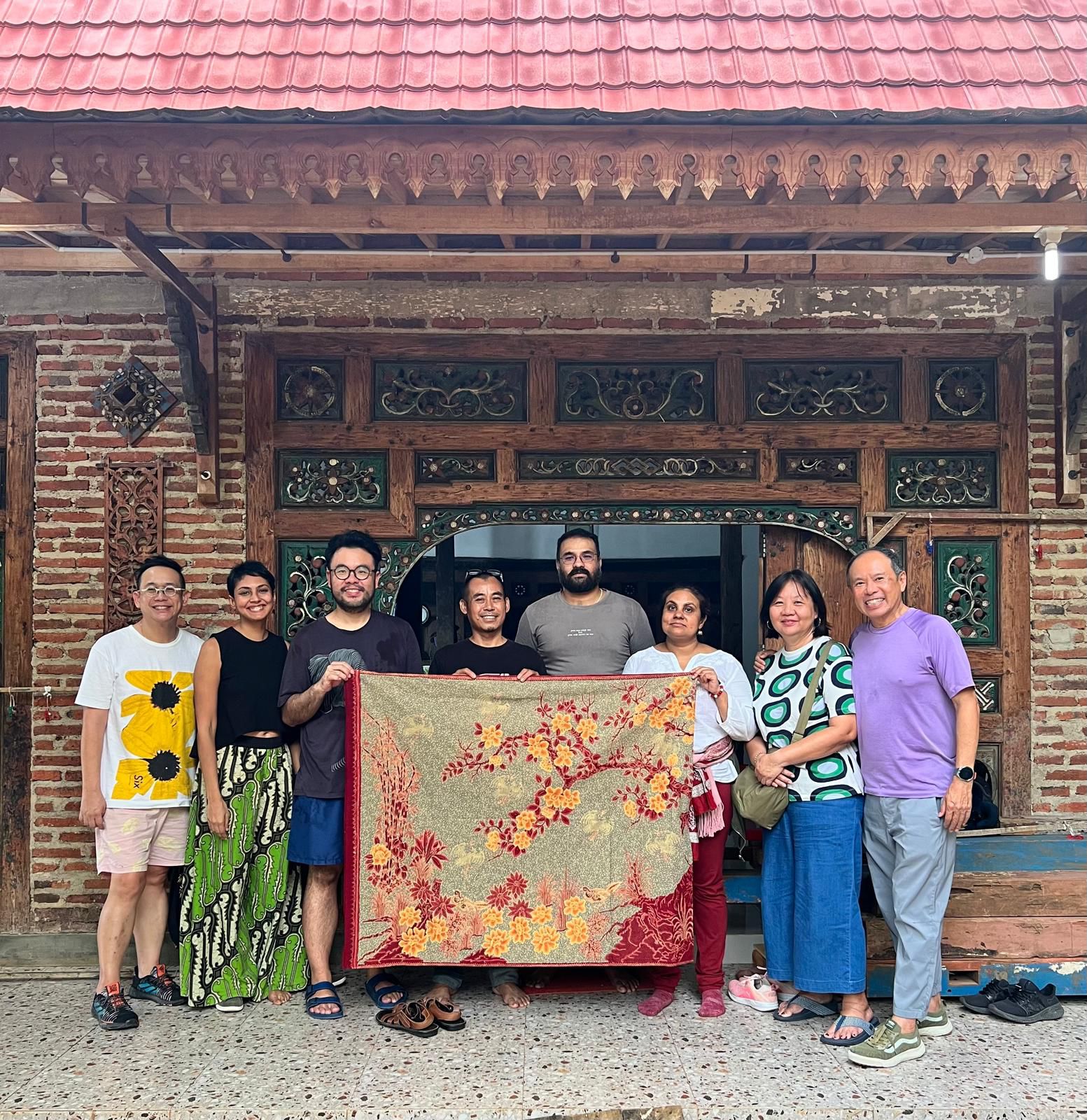
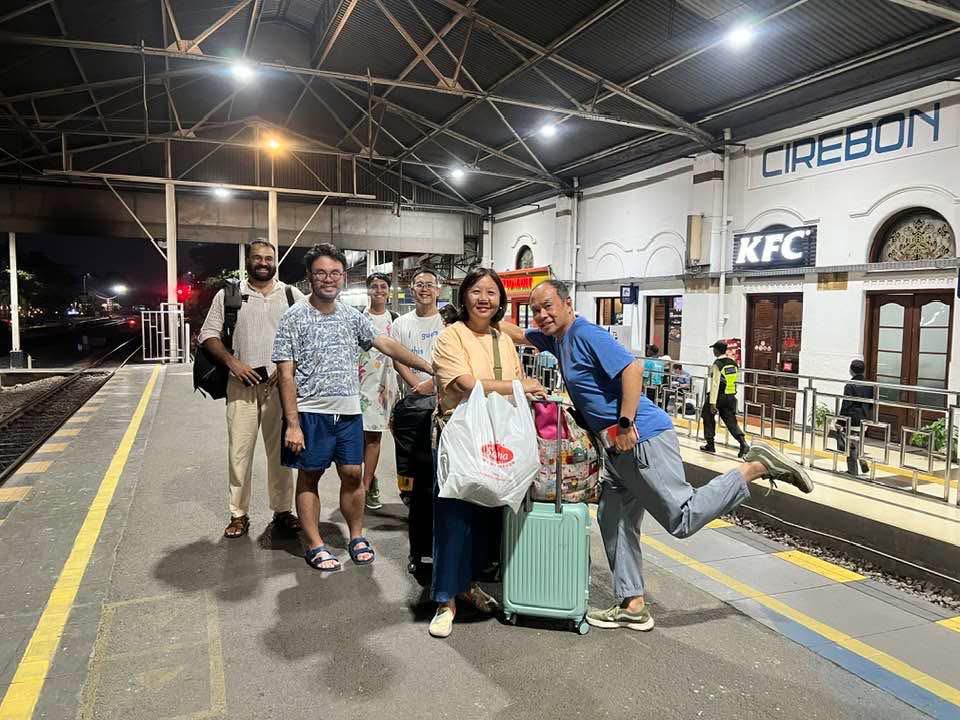
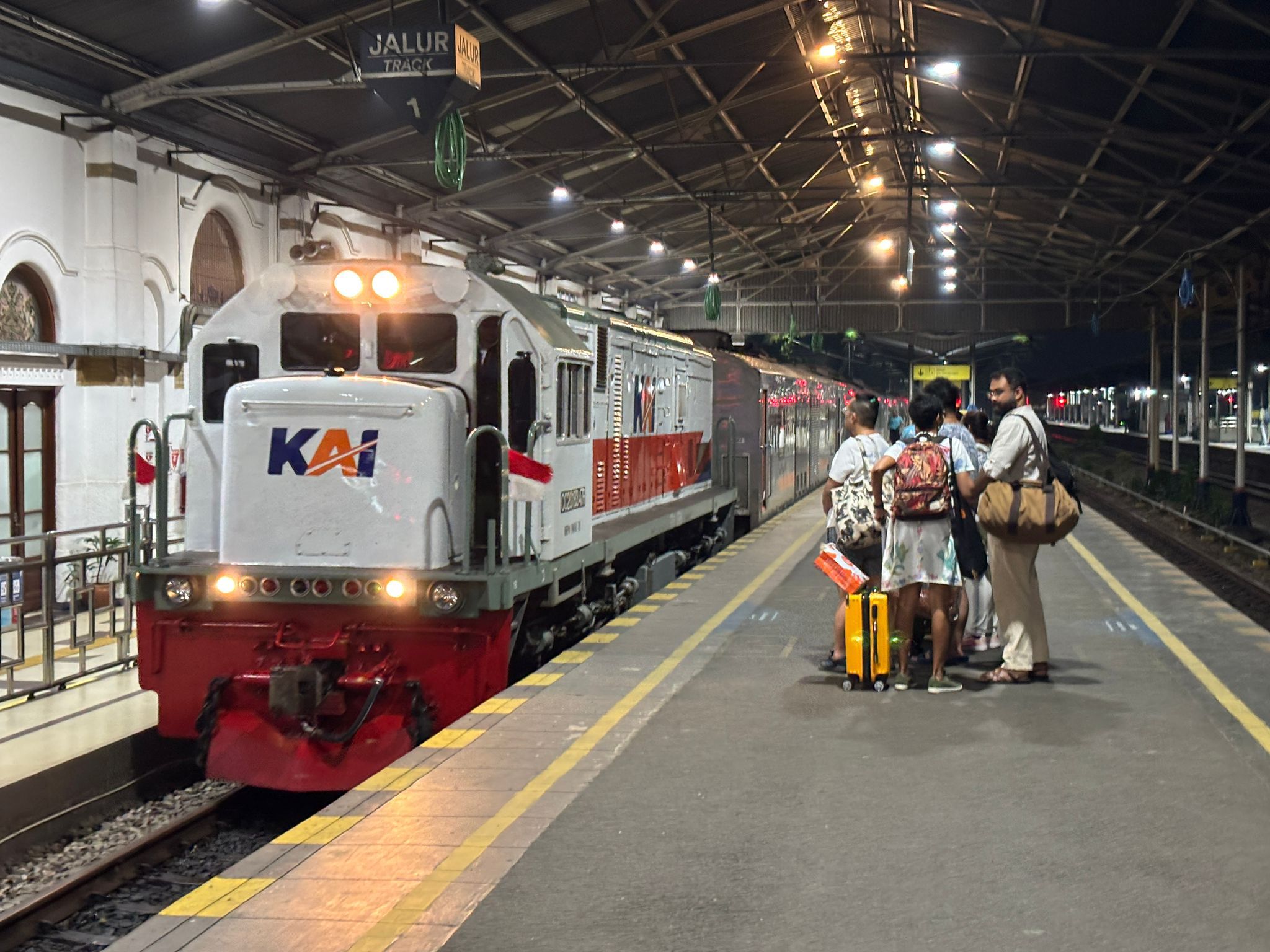
In August of 2025, we were invited to a handicraft fair in Jakarta organised by Bank Indonesia that showcased batiks and other crafts by small-medium enterprises and from artisans across Indonesia’s vast archipelago. I arrived with an entourage – my parents, Adrian and my friends – Sunita, Bindu, Shoeb and Ganesh who were perhaps Peranakan in their previous lives and fanciers of Indonesian batiks. Sunita and Ganesh are my ex-colleagues whose friendships at work have endured beyond the law firm we had worked at. After Jakarta, our plan was to take a jaunt by train to the batik cities of Pekalongan and Cirebon – with our first night in Pekalongan at The Sidji Hotel – itself being a grand 1920’s mansion that once belonged to a batik entrepreneur.
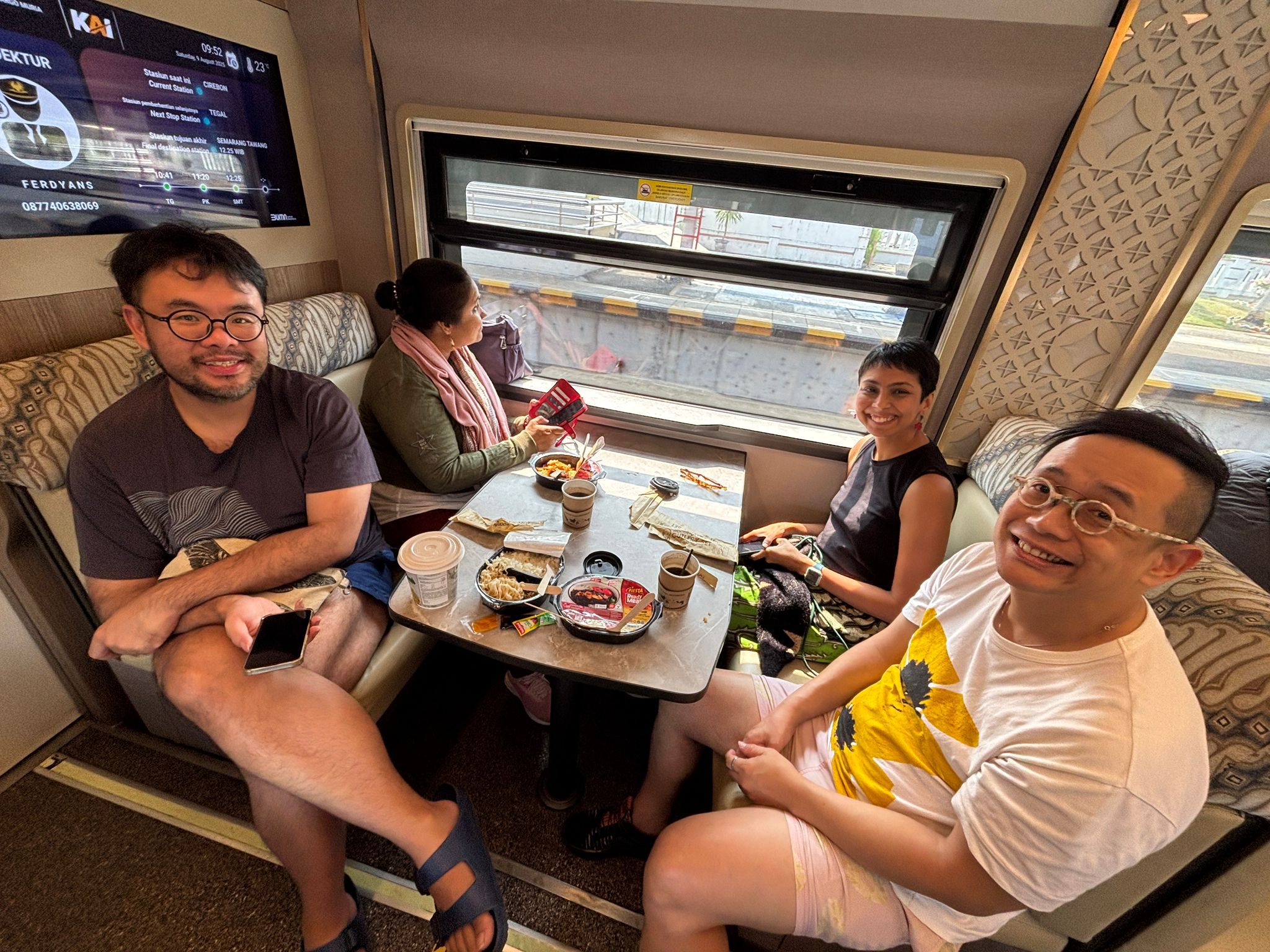
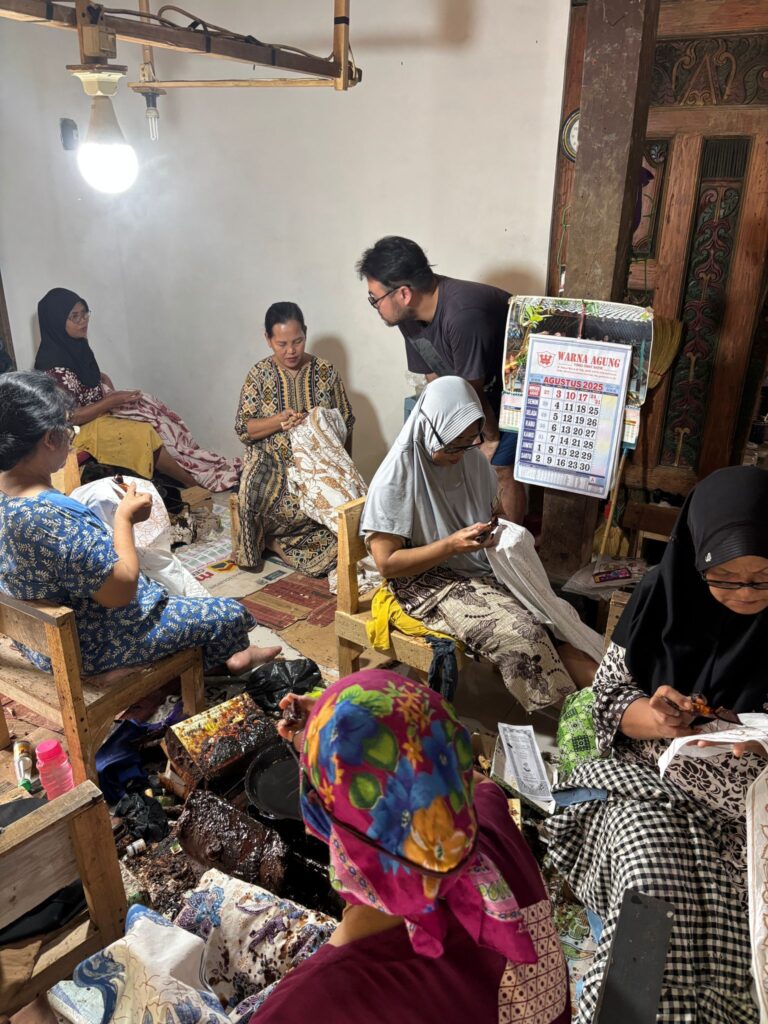
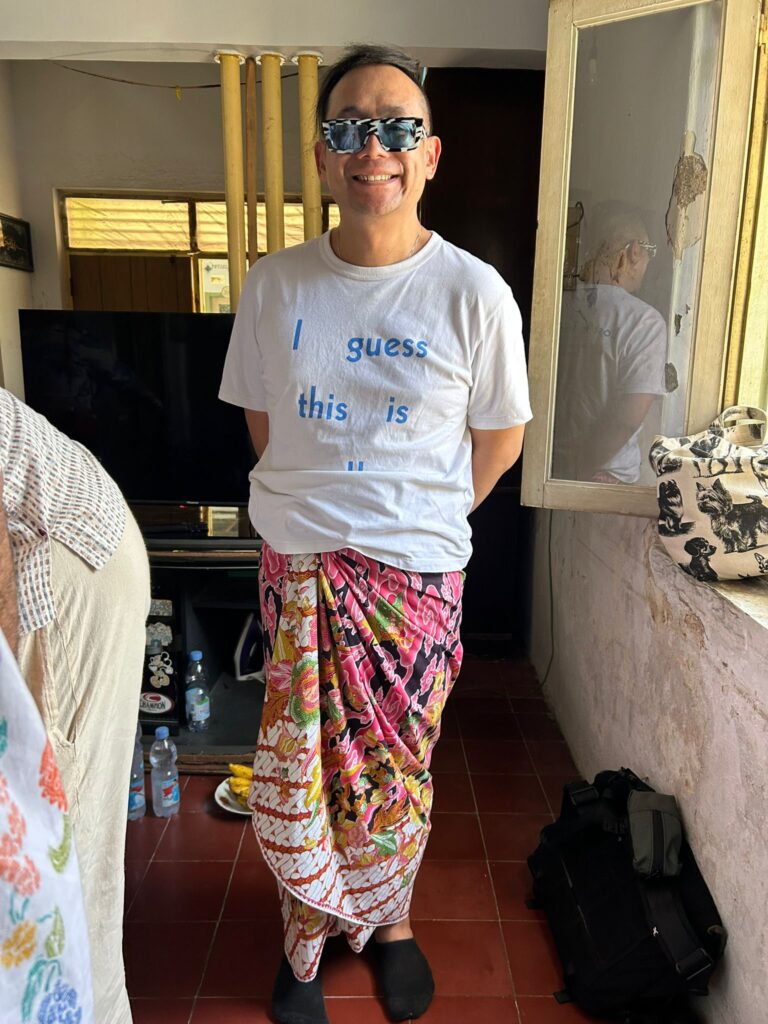
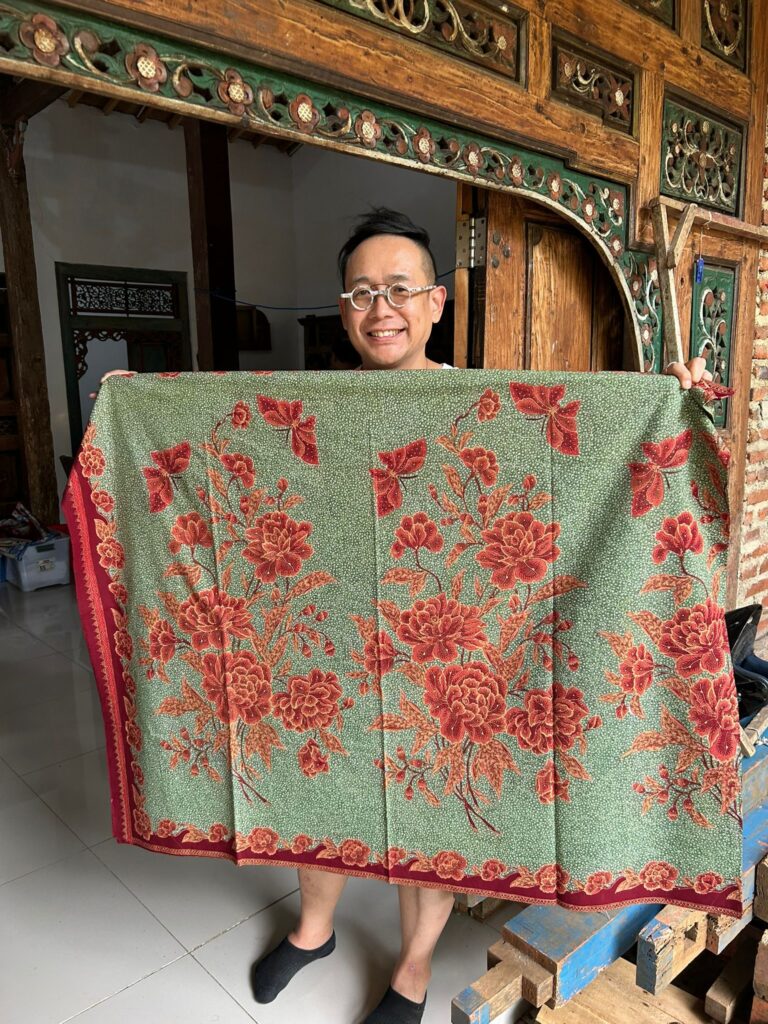
The next day, we journeyed by car to Cirebon – the city midway between Jakarta and Pekalongan. There, we visited more batik workshops and the mainstay stores of Batik Salma and Batik Trusmi – which, as usual, were a mixed bag and offered lots of prints, in addition to hard-drawn batik of varying quality. After lunch, we had some time before our train back to Jakarta. It was then I contemplated searching for my great-grandfather and to find out if he was indeed still buried in Cirebon.
Of course, the chances of finding his grave were close to zero. All we had were some old black-and-white photos of the grave taken in the 1960’s, and that of the large funeral procession through the town when he died in 1957. Some family members had gone to visit his grave subsequently around the 90’s but had no recollection as to its whereabouts.
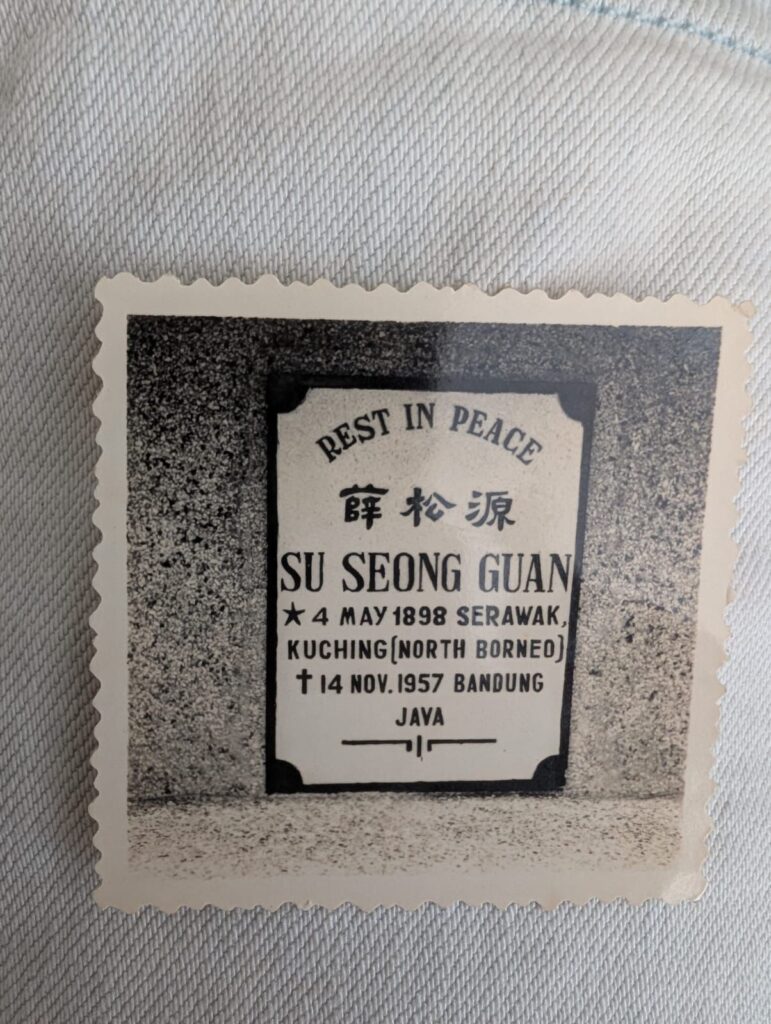
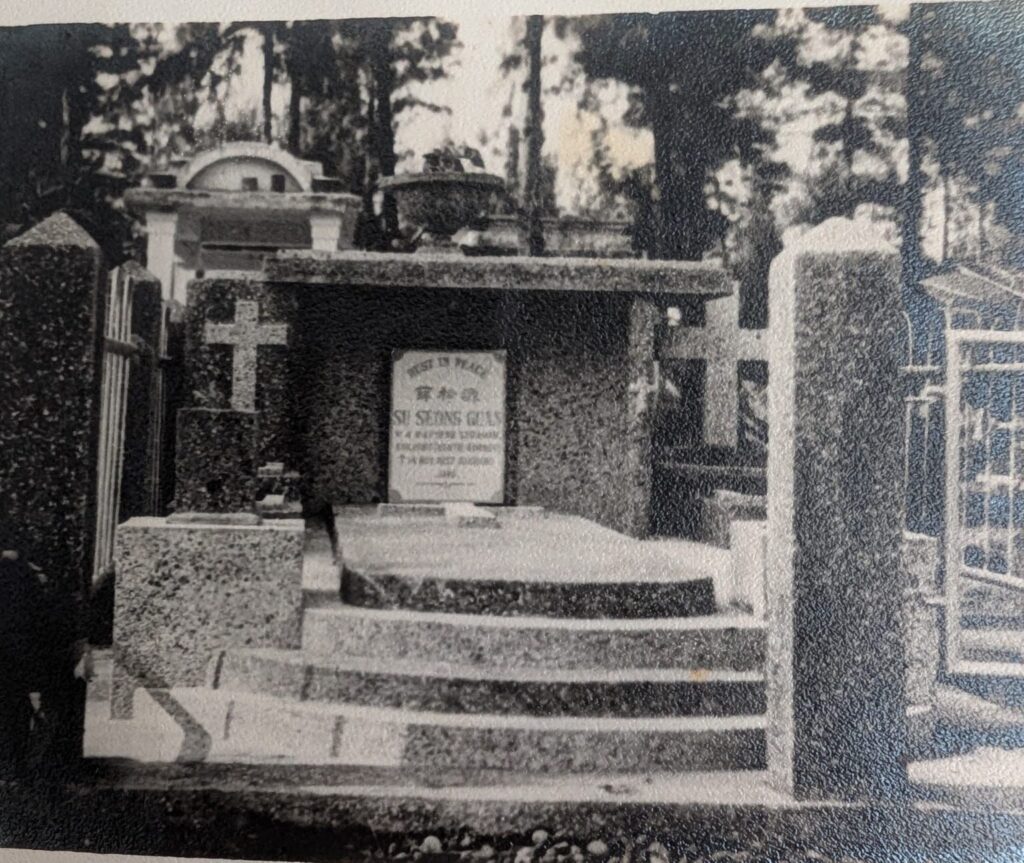
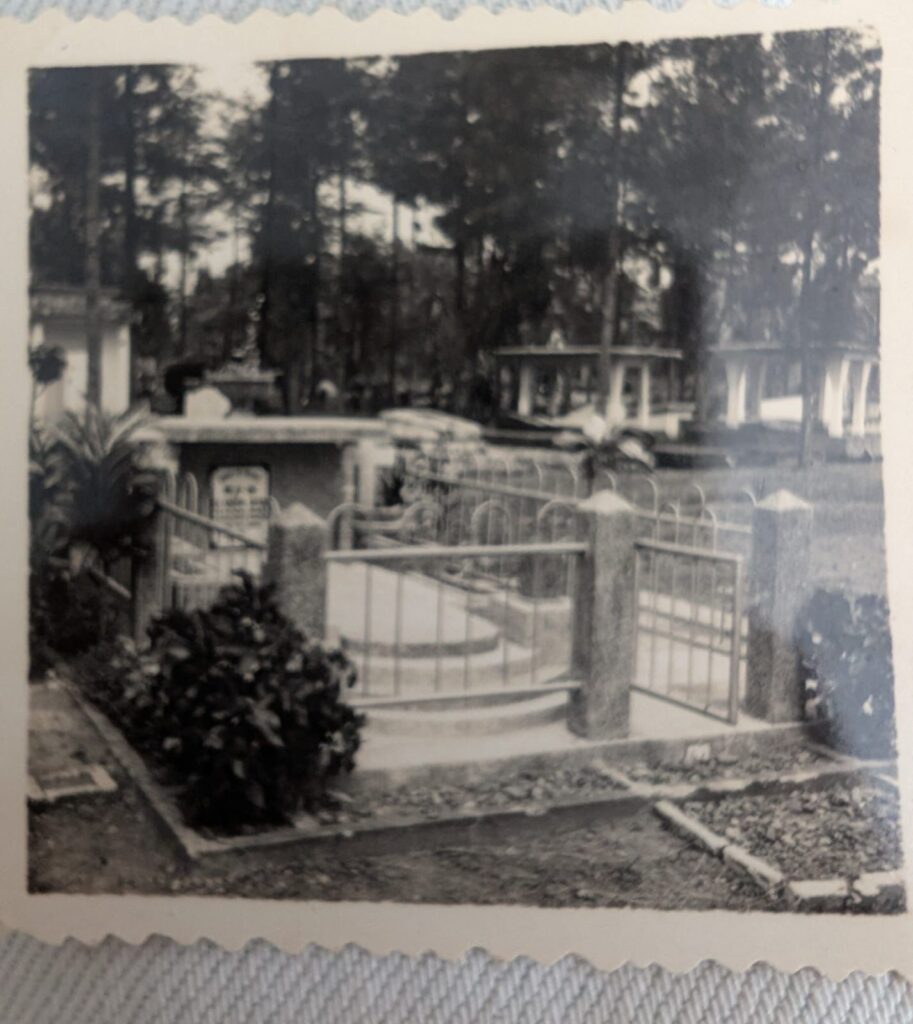
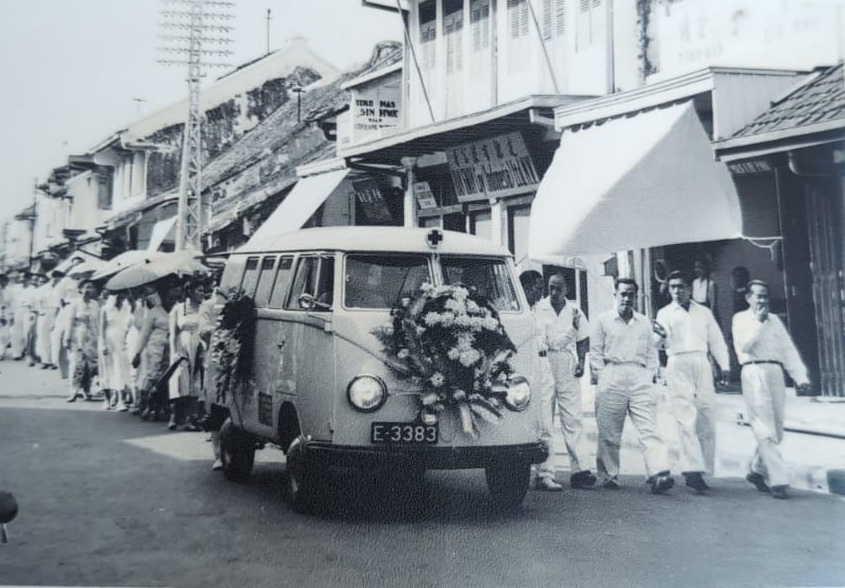
Sunita suggested we first go to any church to ask if they knew anything, since the grave looked like a Christian or Catholic one. Her suggestion took us to the Saint Joseph Catholic Church which had come up on Google, and we drove there in the hopes of obtaining some information. The church was closed, but some volunteers that were chatting near its guardhouse were more than happy to help us. They were excited and told us to immediately go to a certain cemetery – different to the ones I had initially planned to investigate – which our driver said contained predominantly Muslim graves. It did not matter whether my great-grandfather was Christian or Catholic – these were all considered the same, and campur-campur when interred.
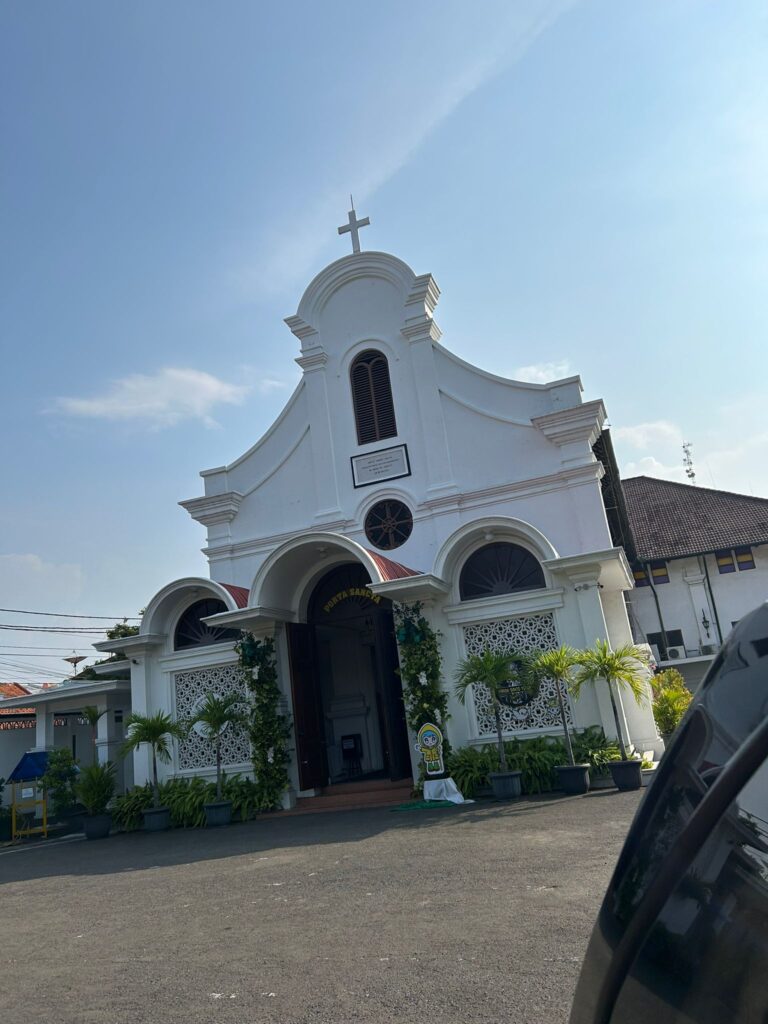
One of the church’s security guards escorted our car by motorbike to the cemetery for what felt like a half hour away. I now know the cemetery as the TPU Sunyaragi, or the Sunyaragi Cemetery. A de-facto caretaker of the cemetery escorted us around when we reached there and we searched for the grave together. It was all pretty disappointing. The graves were much newer and spanned into the 2000’s – nothing as old as 1957. It also did not look like the beautiful European-style cemetery in the old black-and-white photos from the 60’s that we had as our only evidence of his grave – set among rolling manicured lawns, pine trees and beautiful pergolas where visitors could rest. The graves were haphazardly dug and arranged. There were no paths other than the main road in – and visitors had to step over graves to get to the next one – including collapsed graves that had caved into the ground with gaping holes several metres deep. I dared not look down and we quickly passed. There was no landscaped garden – just weeds upon weeds and vines throughout that suffocated the gravestones.
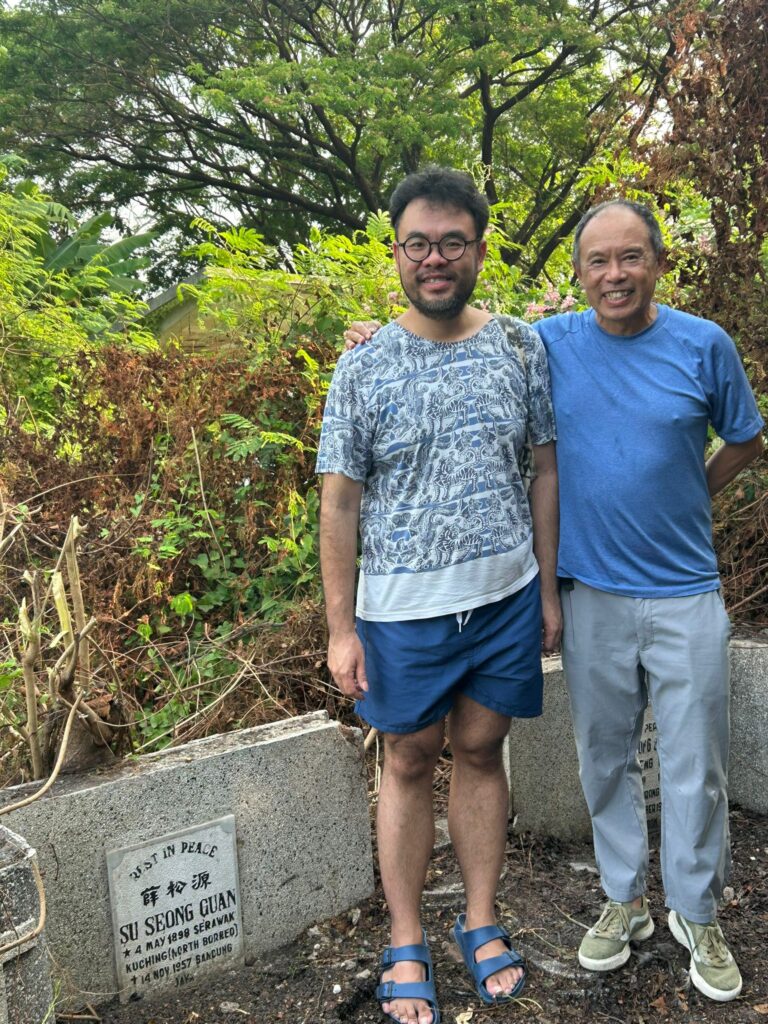
As we were about to give up under the sweltering heat, the caretaker kept asking us if we were looking for a certain Lauw Heng Nio – to which we answered no, as we did not know who that was. Deep into the cemetery and off the beaten track, and my father decided to just follow him to have a look anyway before heading back. What he found under a heap of vines surprised everyone. Next to Lauw Heng Nio was Su Seong Guan, my great-grandfather. “Nj. [Nonya] Lauw Heng Nio”, the name inscribed onto the gravestone, was his second wife from Cirebon and with whom they had no children. We found my great-grandfather, and there he was at Blok B, Kelas I of the TPU Sunyaragi. Perhaps he wanted to find us after all these years.
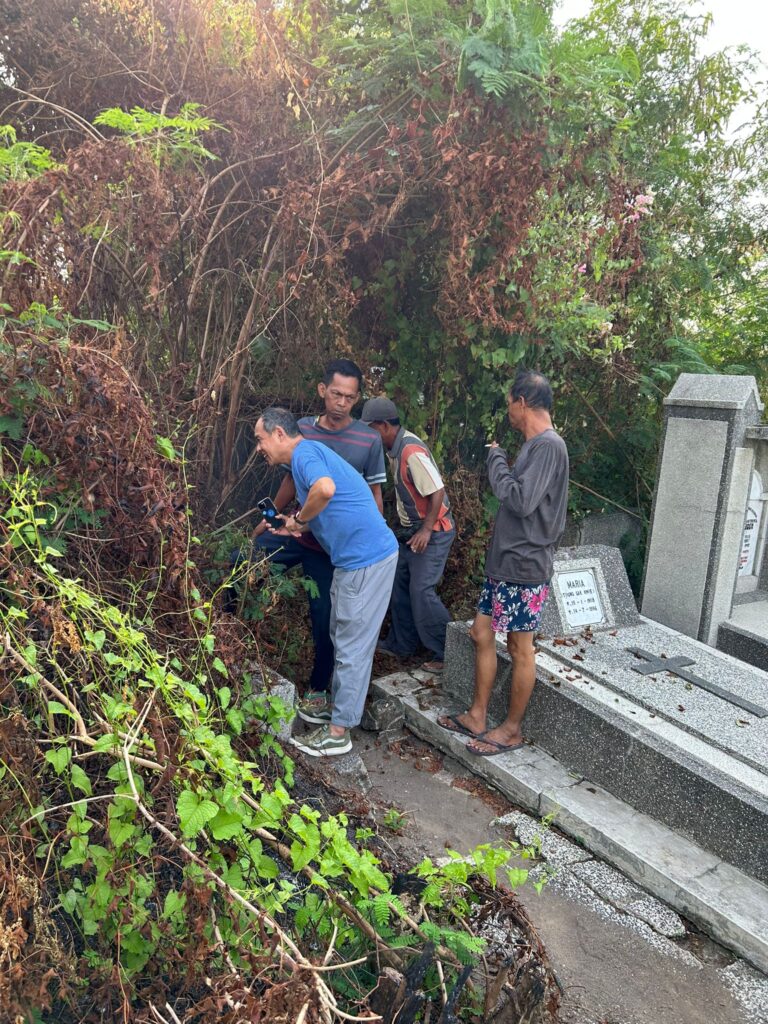
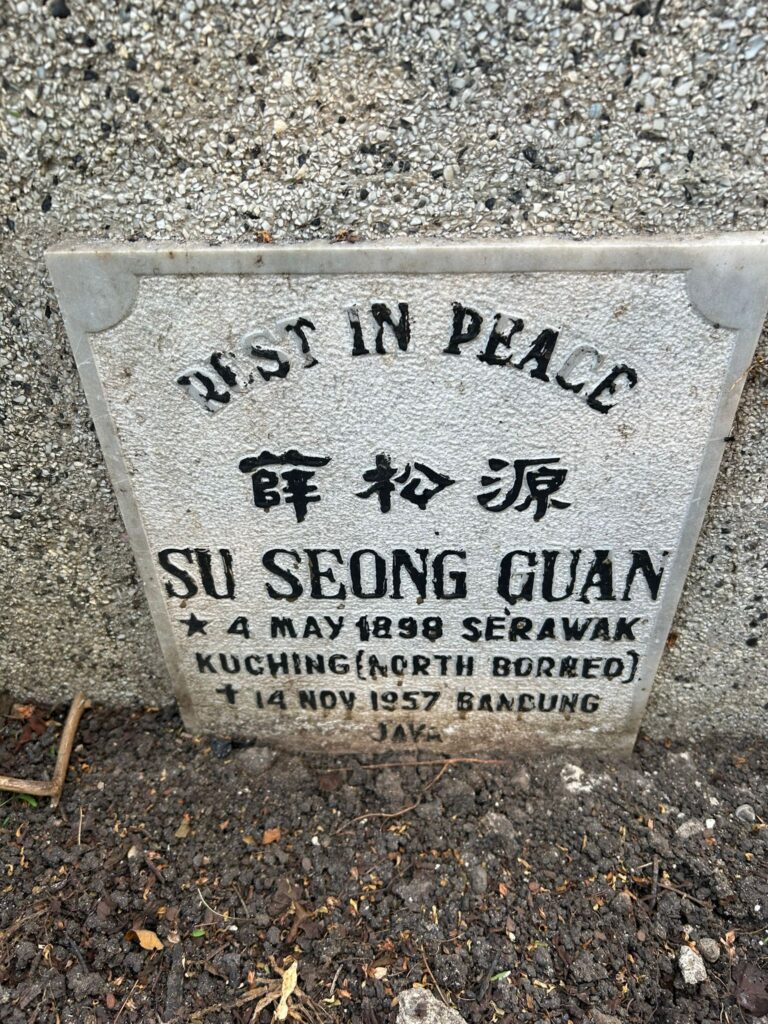
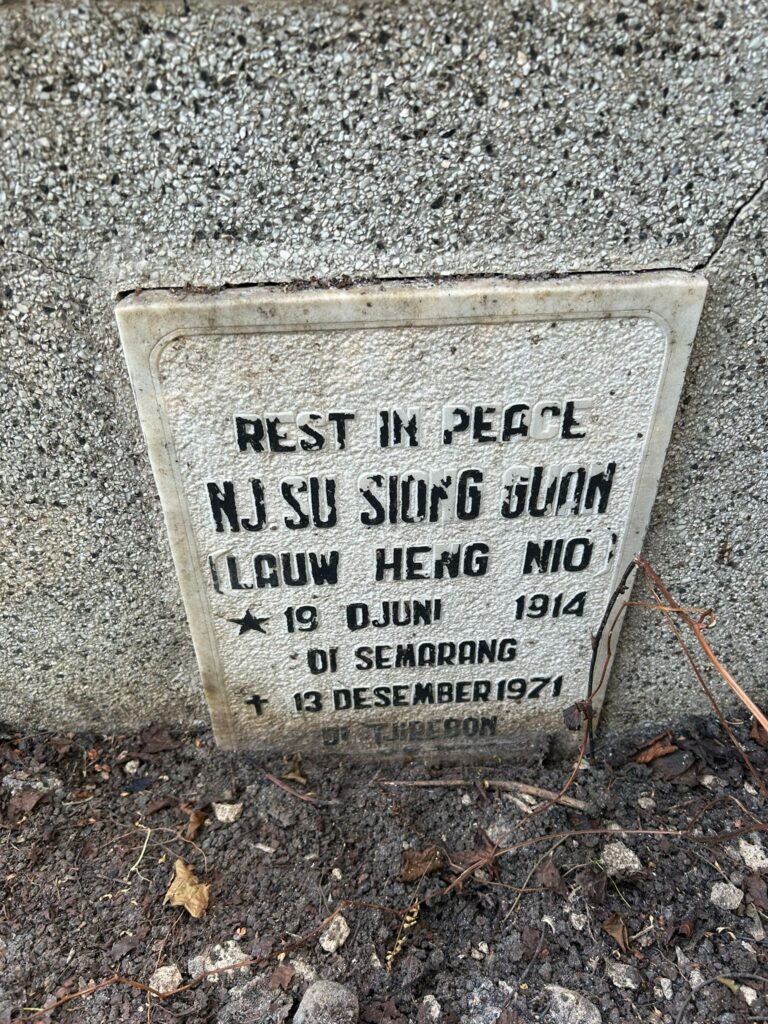
Lauw Heng Nio’s grave (right)
I had been fortunate to meet my great-grandmother when she was alive. She was his first wife who he married on 8 September 1924 and whose name was Pang Siew Eng alias Nya Chee, and who I only knew as Lao Ma. She gave birth to my grandfather four years later in 1928 in Batavia (Jakarta) and they moved to Singapore the next year.
Lao Ma was my introduction to the Peranakan world as a child. She was already very old and in her 90’s. Always dressed beautifully in a white or light-coloured nonya kebaya, with her sarong secured by a large silver belt and hair in a tight bun. She enjoyed giving her great-grandchildren sweets – Fox brand hard candy and coffee sweets which she kept in a metal tin. The smell of Snake brand prickly heat powder reminds me of her as she always had it around. I did not appreciate her beautiful clothes then, as I do now. Some of our old family photographs had been donated to The Peranakan Museum in Singapore.
Discovering the grave in Cirebon was a very special moment for us. On the way back, we drove past the British American Tobacco building which still stood in Cirebon. The former tobacco factory was still a formidable sight, despite part of it becoming a rubbish dump and the entire complex sealed to visitors. It is slated to become a JW Marriott – which would bring a lot of buzz to the quiet town of Cirebon. I do not know if this is a blessing or a curse. As my great-grandfather’s workplace, which was also a large part of his identity, faces an impending renewal, so is my renewed interest in my family’s heritage. I am still in the process of trying to locate a man in Indonesia who apparently is the keeper of the British American Tobacco’s archives. Searches on the Dutch Delpher archives yield rather interesting results – my great-grandfather played tennis and his scores were reported in several issues of the Cirebonese newspaper written in Dutch and dated 1938.
My family has spoken English for generations and it is no surprise that while my great-grandfather’s name was perfectly engraved in English, the Chinese character for his surname was incorrect. Very few people in Singapore share my Chinese surname of “司” or “Si”. This was confirmed when I consulted with fellow TPAS member Ni Qing who is fervently interested in Peranakan culture and who is a native Chinese speaker. She had kindly translated parts of my family book and revealed that my family, having descended from an ancestor from Shanxi, Northern China, slowly migrated Southwards since the Ming Dynasty, to present-day Hainan Island. We settled in the Malay Archipelago during Emperor Guangxu’s reign of the Qing Dynasty (1871-1908) around 150 years ago.
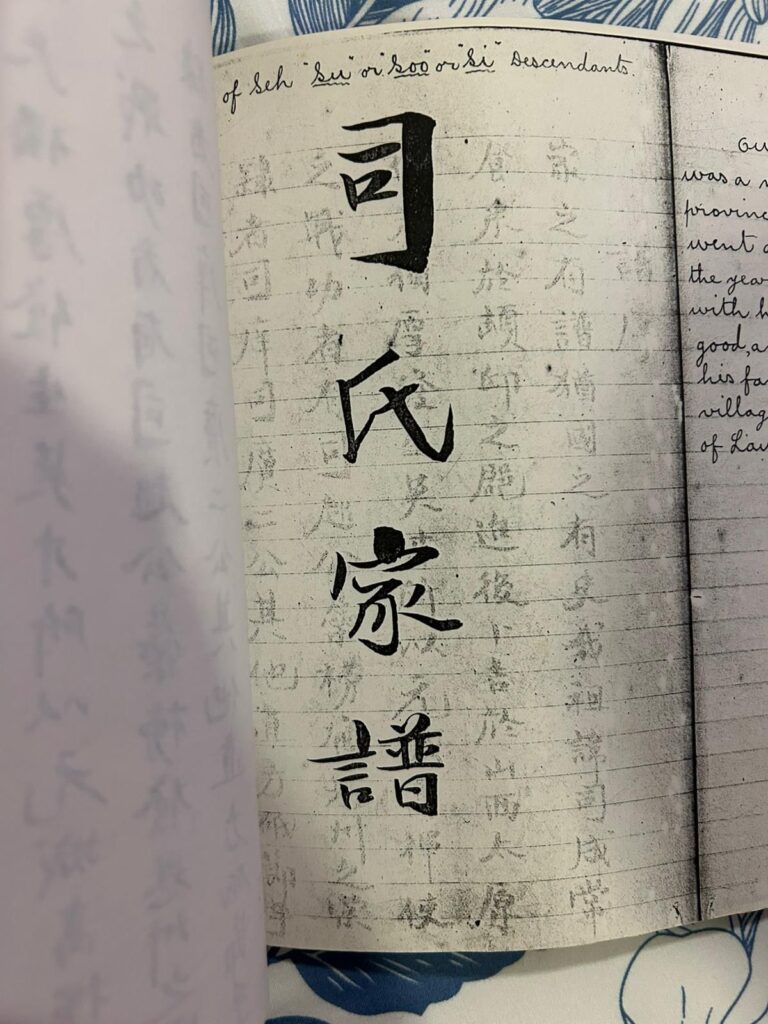
Cover of the Su family book (right)
My great-grandfather seemed like an interesting person, and I would have loved to meet him. He was born in 1898 in Kuching, Sarawak (North Borneo), and died in 1957 in Bandung – and transported back to Cirebon where he was buried. He, like my father and myself, attended Raffles’ Institution where he left in 1920. I hope to find out more about him.