


 Noreen Chan
Nyonya Noreen Chan explores how we can resurrect our culinary heritage.
Cuisines evolve and change over the years, and dishes die out and disappear. Sometimes it is due to changing tastes, or difficulty obtaining ingredients. For example, a recipe from my Mama’s book for ayer kaypua, a relish of prawns prepared in a similar manner to chinchalok, starts with “Prawns must be alive and kicking”.

Another recipe, a sweet treat called Kueh Mayang Pinang, which requires the blossoms of the areca (pinang) palm. Rice flour is made into a coloured dough, then “potong wajek” or cut into diamonds, before being placed between the fronds of the mayang pinang. You then squeeze the stalks together and twist lightly, creating a spiral pattern. The pieces of dough are placed on individual pieces of banana leaf and steamed; to be eaten with kinchar, coconut milk cooked in a double boiler with gula Melaka and pandan leaves (like pengat).


Right: Arecanut treeflowers
Baba Matt Tan has made it his mission to rediscover and revive old and disappearing dishes, such as masak mengkabo, which used to be quite common in Melaka. Old recipes called for the spice paste ingredients to be roasted before grinding, hinting at a possible Indonesian origin. It has many similarities to another Peranakan dish called babi assam.
Right: Masak mengkabo recipe from Mama Elsie’s cookbook

But the reality is that the most common reason for dishes disappearing, is that people stop cooking them. This is not a new problem. Mrs Lee Chin Koon, in her introduction to her classic eponymous cookbook – which she self-published in 1974 – already lamented that “the younger people in Singapore have lost the art of cooking Nonya food”. While it is true that certain Peranakan dishes like ayam buah keluak are labour intensive, we do not cook nor eat like that every day.
Daily food must be simpler, especially when one is a busy working parent. We also need to cook smart – prepare basic rempah or spice paste in larger quantities, and freeze. Or batch cook – many dishes freeze well, so cook a double quantity, and you’ll have something on standby for busy days. Start small and tweak to your taste.
The recipe for Satay Ayam can be adapted for pork (belly or shoulder works well too), or for a meat free version, young jackfruit can be used.
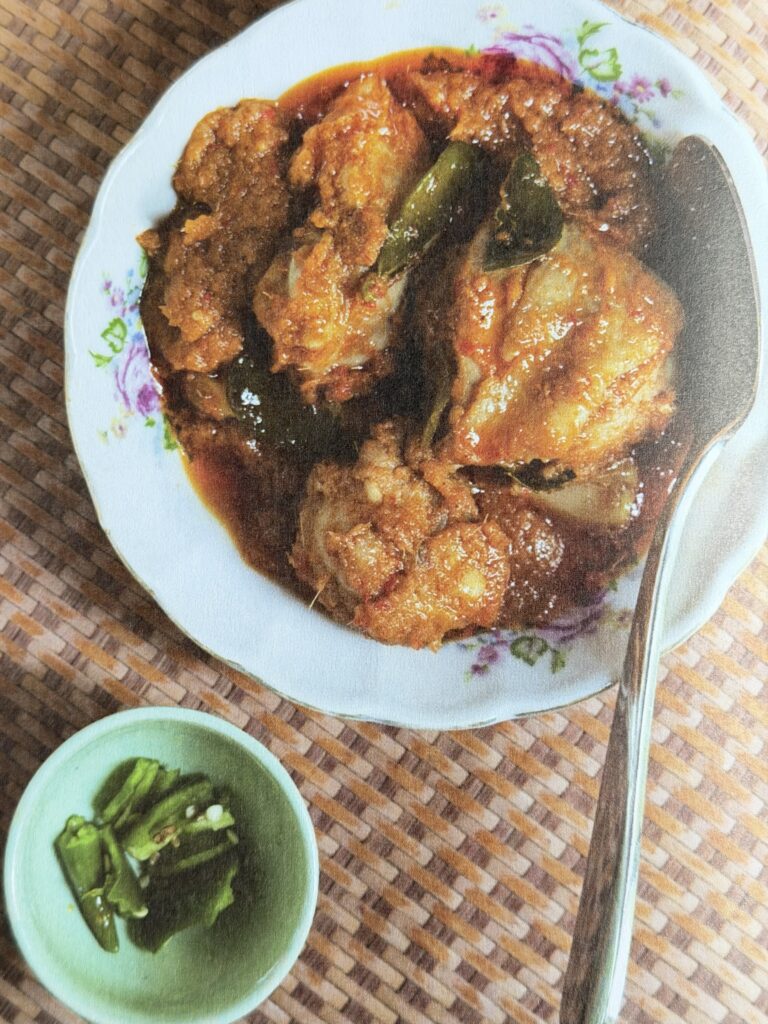
Satay Ayam
(adapted from Daily Nyonya Dishes by Lloyd Matthew Tan)
Ingredients
4 whole chicken legs
1 stalk lemongrass, bruised
5x5x1cm piece of belachan
8 kaffir lime leaves
3 tbsp oil, groundnut if possible
150ml or roughly ½ cup water
Salt and sugar to taste
Rempah (spice paste)
3 stalks lemongrass
30 shallots, peeled
6 candlenuts, washed and soaked for 10 minutes
4 red chillies
5 bird’s eye chillies (reduce or omit if you want it less spicy)
Method:
- Cut the chicken legs into pieces and marinate with 2 tsp salt. Leave for 30 minutes, then rinse before cooking.
- Meanwhile, rinse the kaffir lime leaves, peel away from the tough stalks. Finely shred 2 leaves for garnishing later.
- Grind the spice paste ingredients.
- Heat the oil in a wok. Add the bruised talk of lemongrass, fry until fragrant then add the spice paste and belachan. Over low heat, sauté the spice paste until the oil separates. Add 4 tbsp water and continue cooking until the water evaporates.
- Next, add the chicken pieces and fry until the meat is half cooked. Toss in the kaffir lime leaves, stir well. Add the rest of the water, cover and simmer until chicken is cooked.
- Season with salt and sugar to taste.
- Before serving, garnish with the finely shredded kaffir lime leaves.
For links to scanned versions of my grandmother’s recipe book in NUS Library’s Digital Gems, please visit these links: Dessert Recipes and Savoury Recipes.


