


Museums

Peranakan Museum
39 Armenian Street, Singapore 179941
The Peranakan Museum explores the art and culture of Peranakan communities in Southeast Asia, and possesses one of the finest and most comprehensive public collections of Peranakan objects.
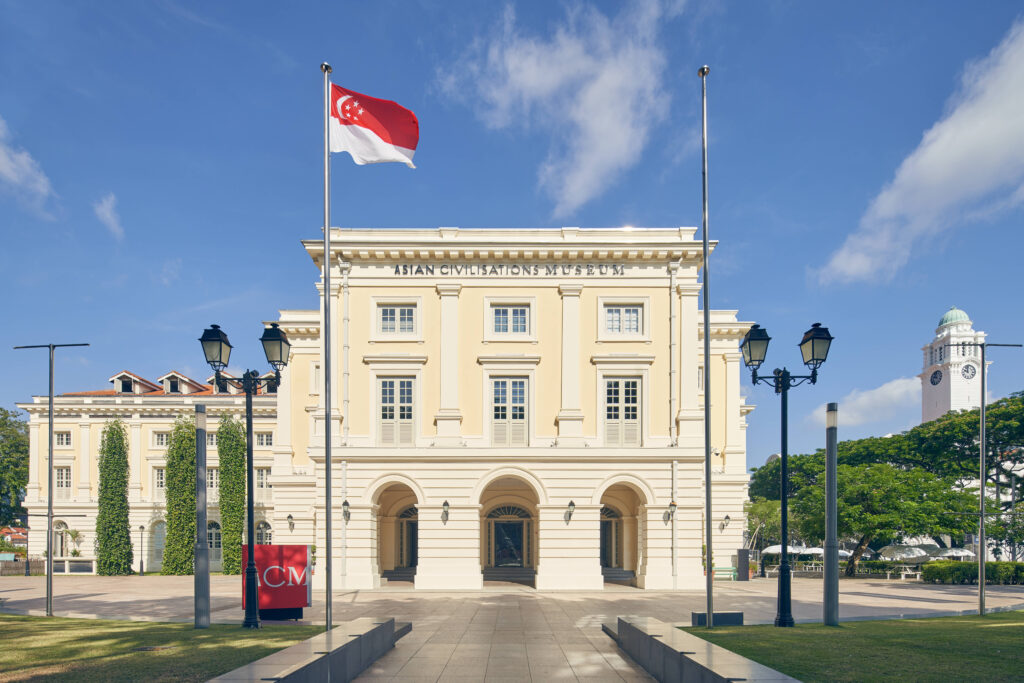
Asian Civilisations Museum
1 Empress Place, Singapore 179555
The first museum in the region to display a wide range of artefacts from across Asia, the ACM not surprisingly has some important Peranakan treasures. The Mary and Philbert Chin Gallery has some lavish examples of gold jewellery, sireh boxes and some paraphernalia, some encrusted with diamonds, and fine batik textiles from the north coast of Java, all made for the Peranakan market.
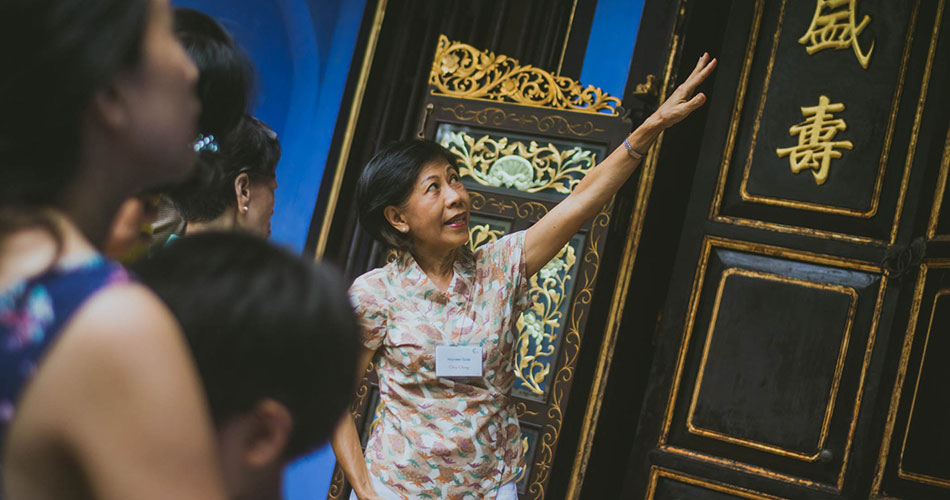
Baba House
157 Neil Road, Singapore 088883
Formerly owned by the Wee family (whose ancestor Wee Bin was a mid-19th century shipping magnate) since 1910. This heritage house goes back in time to 1928. Experience what a grand Peranakan terraced house would have been like. Visits are by guided tours. Please call the house for details
babahouse.nus.edu.sg
6227 5731
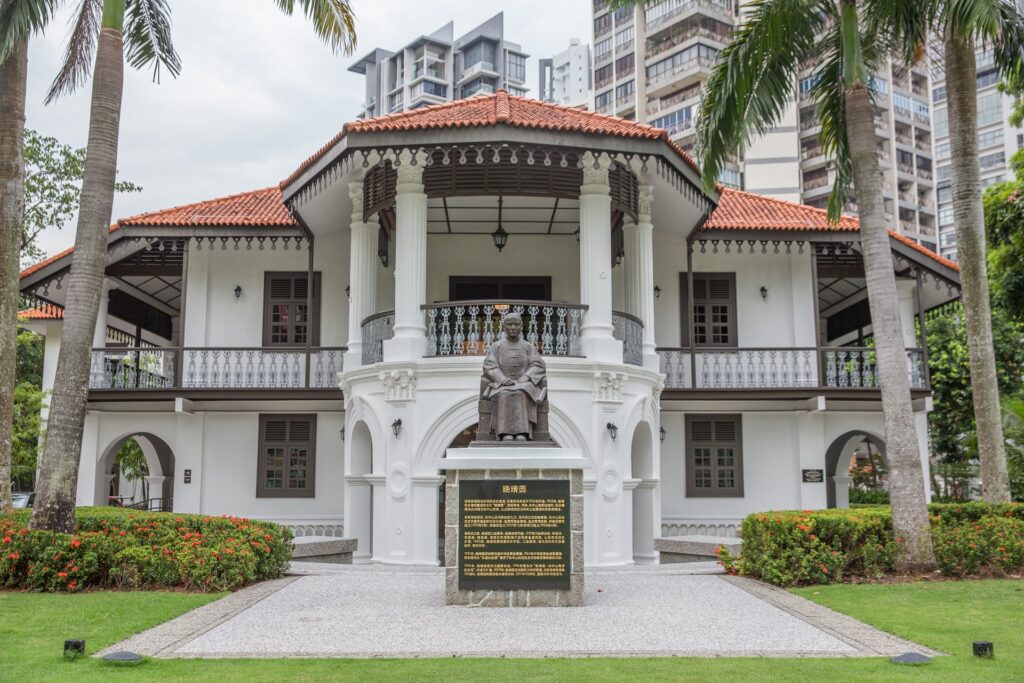
Sun Yat Sen Nanyang Memorial Hall
12 Tai Gin Road, Singapore 327874
The old Sun Yat Sen Villa reopened in October 2011 after extensive renovations with a new name. Fitting tribute is given to the former owners of the house especially Teo Eng Hock, a son of Teo Lee, one of the pioneer Teochew merchants in Singapore, together with his nephew Lim Nee Soon, were among the loyal supporters of Sun Yat Sen’s bid to overthrow the Qing government. The exhibits show how Singapore and the Chinese community here played an important part in this pivotal moment of world history. Intimate photos of the family life and of Teo Eng Hock’s nyonya mother, Mrs Teo Lee nรฉe Tan Poh Neo (granddaughter of the kapitan of Muntok), add charm and a Peranakan angle to the experience.
www.wanqingyuan.org.sg
6256 7377
Landmarks
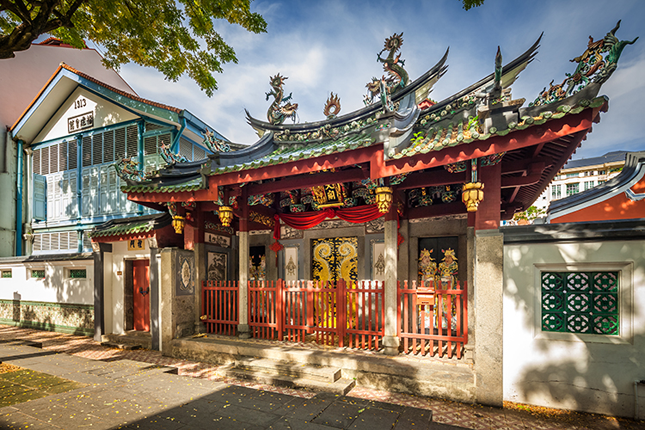
Thian Hock Keng
158 Telok Ayer Street Singapore 068613
The oldest Hokkien temple in Singapore was founded in 1821 although the present structure, built without nails, was completed only in 1841. The temple is dedicated to Mazu, the Daoist goddess of the sea and protector of all seamen. Many of the temple’s patrons were Peranakan pioneers, such as Tan Tock Seng, who donated $30,000 for renovations. He also founded the hospital named after him. The Hokkien Huay Kuan, a community organisation for Hokkien people in Singapore was housed at the temple and also helmed by Peranakan pioneers.
thianhockkeng.com.sg/
6423 4616
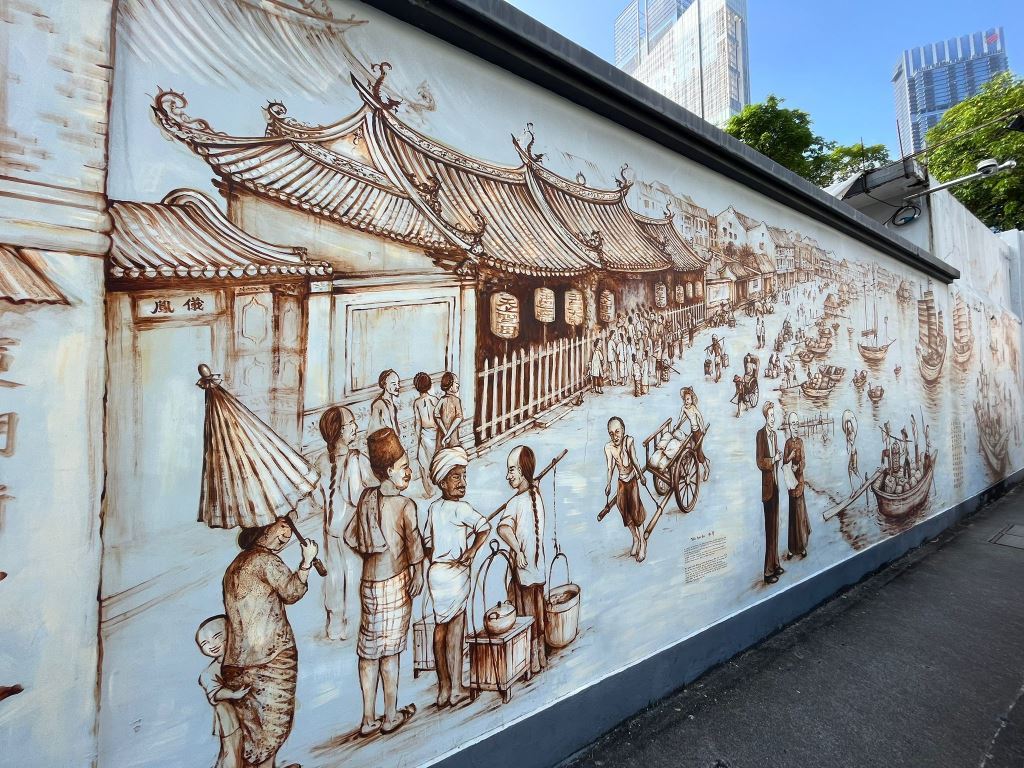
Amoy Street & Telok Ayer Street
One of the first Peranakan enclaves, now occupied by restaurants and offices. Many Peranakans from Melaka moved to this area as soon as the East India Company began to lease out land for sale.
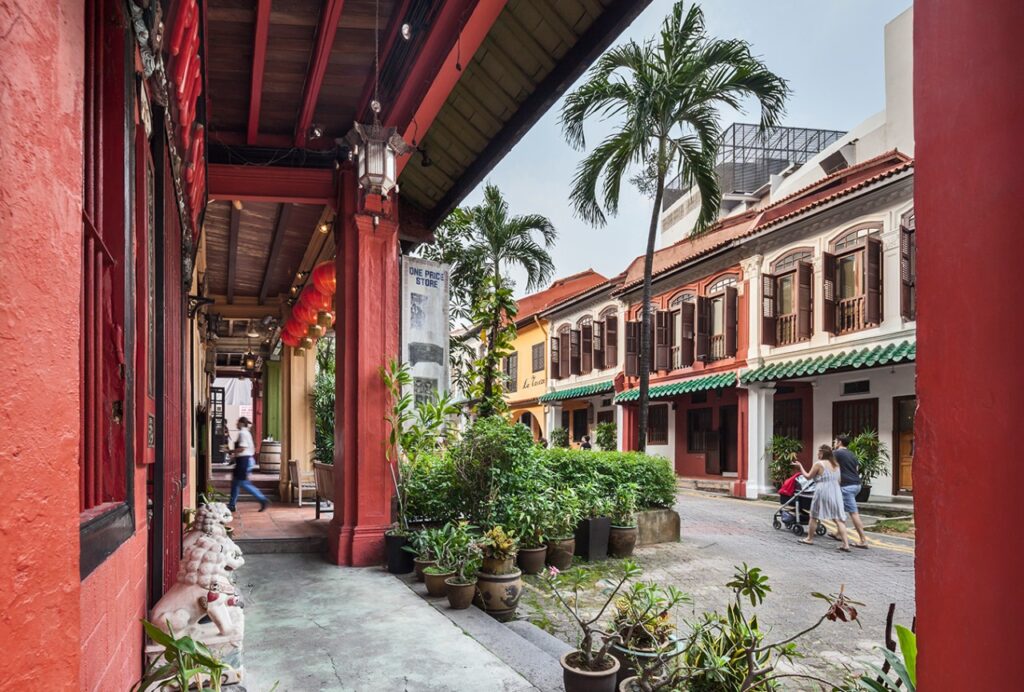
Emerald Hill Road
Another interesting residential district showcasing the best of eclectic Peranakan residential architecture, just off Orchard Road.
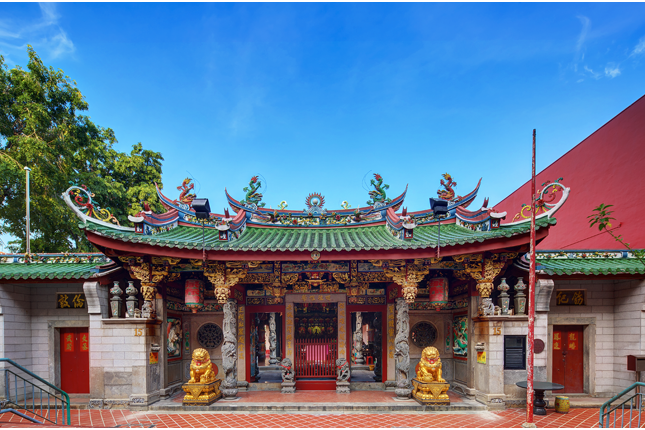
Tan Si Chong Su
15 Magazine Road Singapore 059568
Built in 1878, Tan Si Chong Su is the ancestral temple of the Tan clan, and was founded by prominent Baba philanthropists Tan Kim Ching, son of Tan Tock Seng, and Tan Bee Swee, the son of Tan Kim Seng. The first president of the temple, Tan Kim Tian, was a well-known Baba shipping tycoon. The temple consists of shrines for the ancestral tablets of Tan clansmen, as well as altars to the clan deities. The elaborate stone and wood carvings as well as the swooping ceramic roof finials makes this one of the most elaborate Chinese temples in Singapore, quaintly located amid the gleaming towers of the financial district.
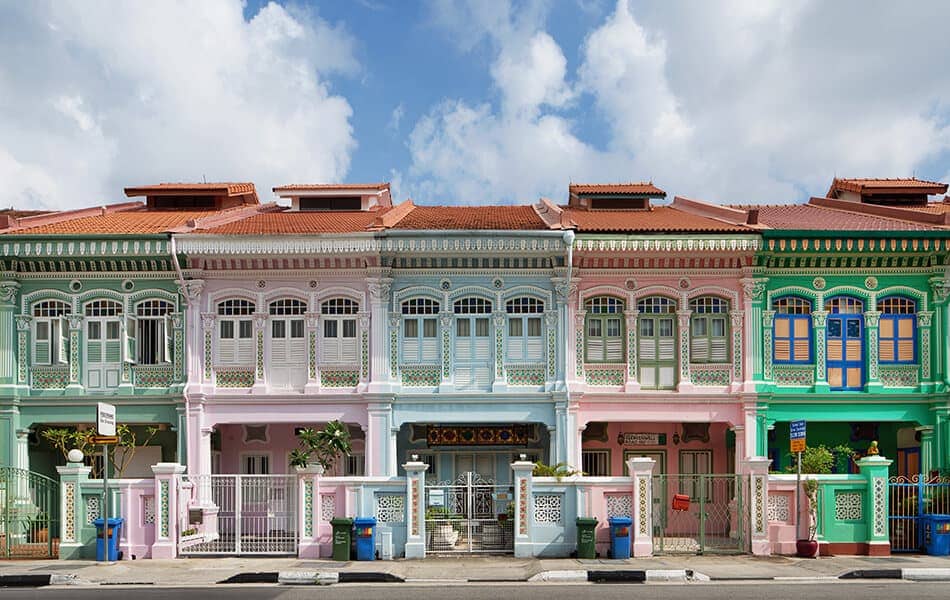
Katong & Joo Chiat
Once the nerve centre of Peranakan life in Singapore. In its heyday it was the site of nearby grand seaside villas and elaborate Peranakan terraced houses. The latter can still be seen in a walk along Koon Seng Road. Other Katong attractions include Peranakan icons such as Katong Antique House (208 East Coast Road), Rumah Kim Choo (109 East Coast Road), Rumah Bebe (113 East Coast Road), Straits Enclave ( 318A Joo Chiat Road) and The Intan (69 Joo Chiat Terrace). Google the names for more information and walk along this route to sample the great variety of food in the neighbourhood.