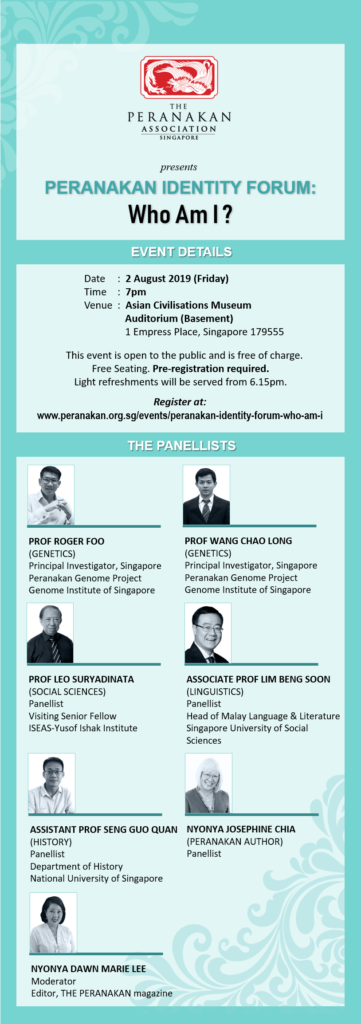
The Babas are descendants of an early Chinese community that settled in the Malay archipelago at least since the 17th century. Many members of the early community were seafarers who traded between the ports of southern China and those of Southeast Asia. The oldest Chinese communities can be found in Malacca. As Chinese women were by law not allowed to leave their native country until the middle of the 19th century, many of these early traders married non-Muslim natives of the Malay archipelago, such as Balinese or Batak slaves.
In the 18th and 19th centuries the Babas were involved in opium, sireh, nutmeg and liquor farming, pepper and gambier cultivation, tin mining, commodity trading and property. In the early 20th century, many Babas invested in rubber.
They also worked as compradores (Chinese middlemen) for big Western companies and banks. As a Chinese community that always considered Malaya home, many Peranakans were involved in civic projects and local government, and numbered among the key players in Malaysia and Singapore’s road to independence. Many Nyonyas also led the way in female emancipation.
In the 21st century, the Babas face the same dilemmas and problems as other Chinese communities in Singapore and Malaysia–the decline of traditions, the inability to speak the dialect, the growing number of mixed marriages. All these factors lead to the great changes in the culture and uncertainty about the future. However the growth in Baba cultural activities as well as in memberships of Baba organisations indicate a growing awareness of the community’s heritage and the importance of seeing it into the future.